
Every week, Talking Points gives you a worksheet to practise your reading comprehension with exercises about the story we’ve written.
In today’s fast-paced academic environment, many students struggle to stay motivated. However, a simple change in the colour scheme of one’s study space could boost energy levels and concentration.
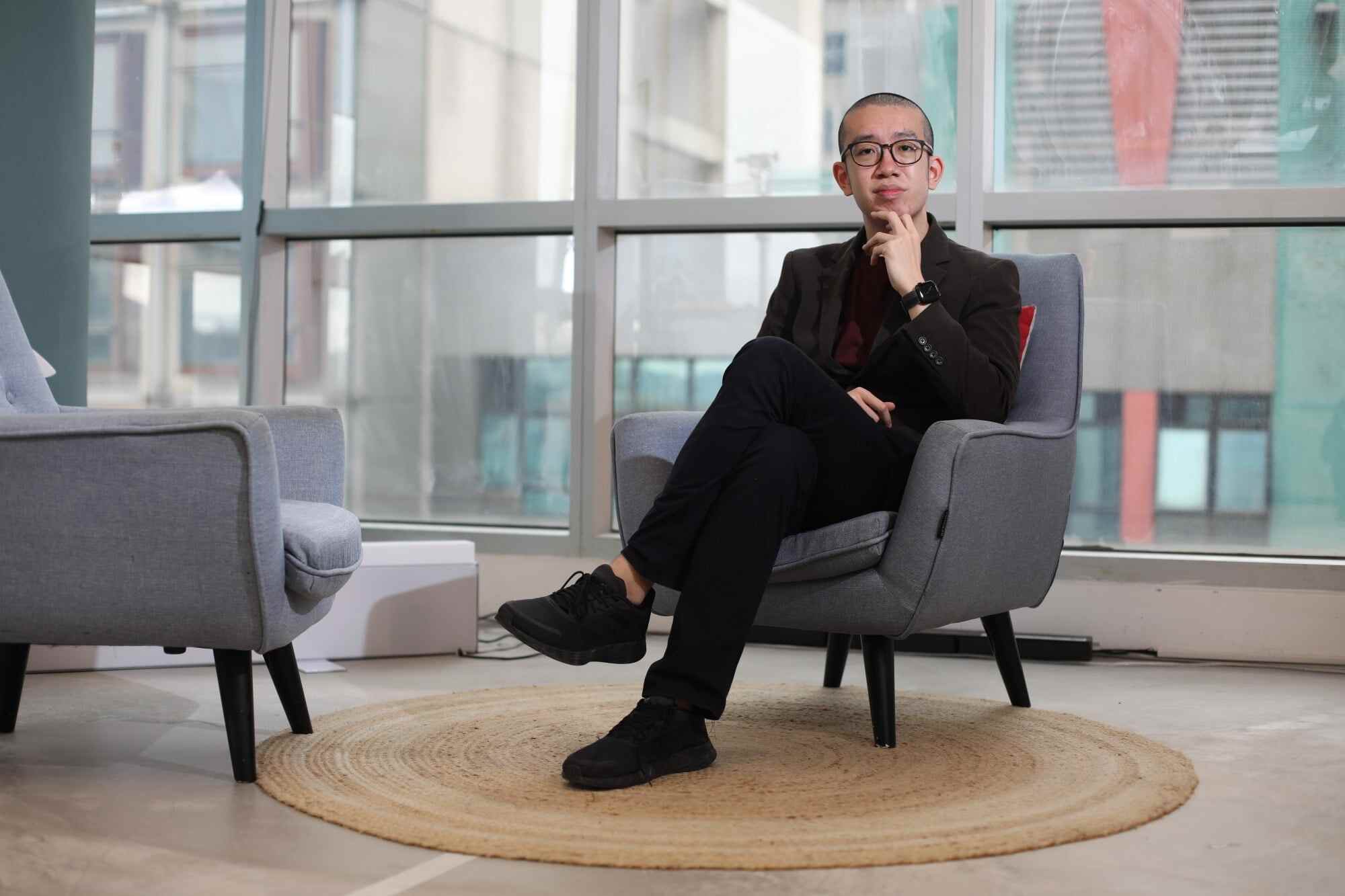
Psychology educator Peter Chan Kin-yan spoke to Young Post about how colour can influence students’ moods and improve focus.
“Humans are visual creatures. When we talk about vision, it mainly involves shape, colour and light,” he said, adding that “colour is the psychology of light.”
Chan is the founder of TreeholeHK, a company that promotes psychology education. He said that the way colours influence our emotions and decision-making can be explained by colour psychology, which examines our basic responses to colours.
Why we respond differently to different colours
According to Chan, our reactions to colours may be rooted in evolutionary psychology. Colours in the natural world have various symbolic meanings. For example, some associate the colour red with blood and danger, which may trigger fear. At the same time, red also signified ripe, nutritious fruit in early human history.
Classical conditioning also shapes our responses. Some people may feel anxious when they see red.
This is because it is frequently used to convey negative ideas, such as stock market losses. Mistakes are also often marked in red ink.
Colour theory in practice
Understanding how colours affect thinking is important when designing effective study environments.
Chan cited a 2009 study published in Science, which suggested that specific colours could encourage convergent and divergent thinking.
Convergent thinking involves following familiar steps to complete tasks, such as solving maths problems. Divergent thinking is used for generating new ideas, such as in creative writing.
The study found that red enhances focus on detail-oriented, error-avoidant tasks. Chan explained that it may be linked to the evolutionary association between red and alertness or danger. Red can encourage careful, convergent thinking.
In contrast, blue is often associated with the sky and the ocean. Many people connect blue with calmness, which can encourage divergent thinking and creativity.
Colour can also influence how we perceive space. For example, white is often seen as plain or inexpensive, while black can make a space feel smaller.
Tips for creating an ideal study environment
Chan said creating an effective study atmosphere involves considering colour temperature and natural light: “A piece of advice would be to study or work in a bright, cool-toned environment,” he said. “However, for sleeping, a softer colour tone is preferable.”
Cool-toned lights – white and blue – remind us of daylight and can improve focus. Warm-toned lights, such as yellow or orange, help release hormones that regulate the body’s circadian rhythm.
“This is very important for students because focusing on studying and getting a good night’s sleep are arguably two of the most important tasks,” he said.
Most Hong Kong students are unlikely to have separate study rooms and bedrooms, so Chan recommended adding a focal point to the room, such as a desk. “This makes it easier to create a feeling of ‘this is where I focus,’” he said.
You could also use brighter colours in study areas to visually separate them from relaxation spaces.
“You can consider installing a desk lamp with cooler light, while the room has a warmer, more yellow tone,” Chan suggested.
Still, personal comfort is more important than colour charts and psychological theories, he emphasised.
When designing a room, “it should first and foremost be comfortable for you personally,” Chan said.
He added that the colours and designs that make a student comfortable reflect their unique experiences and development.
Chan suggested checking out different room layouts while browsing furniture or home decoration stores.
“Try sitting in different room set-ups and asking yourself: ‘How do I feel right now? Where am I relaxed, and where am I tense? What does it remind me of?’ This is a process of meaning-making,” he said.