





Mars, also called the Red Planet, is one of the most familiar planets in our solar system – apart from Earth, of course! Famous for its distinctive colour, Mars has become a hot topic of conversation because of the prospect of settling there. The planet is located within the habitable zone of our solar system, meaning its distance from the sun indicates that liquid water could exist on its surface.
However, Mars is extremely cold and subject to severe dust storms. The adverse environment is challenging for humans to land on and explore. This is where a Mars rover comes in handy.
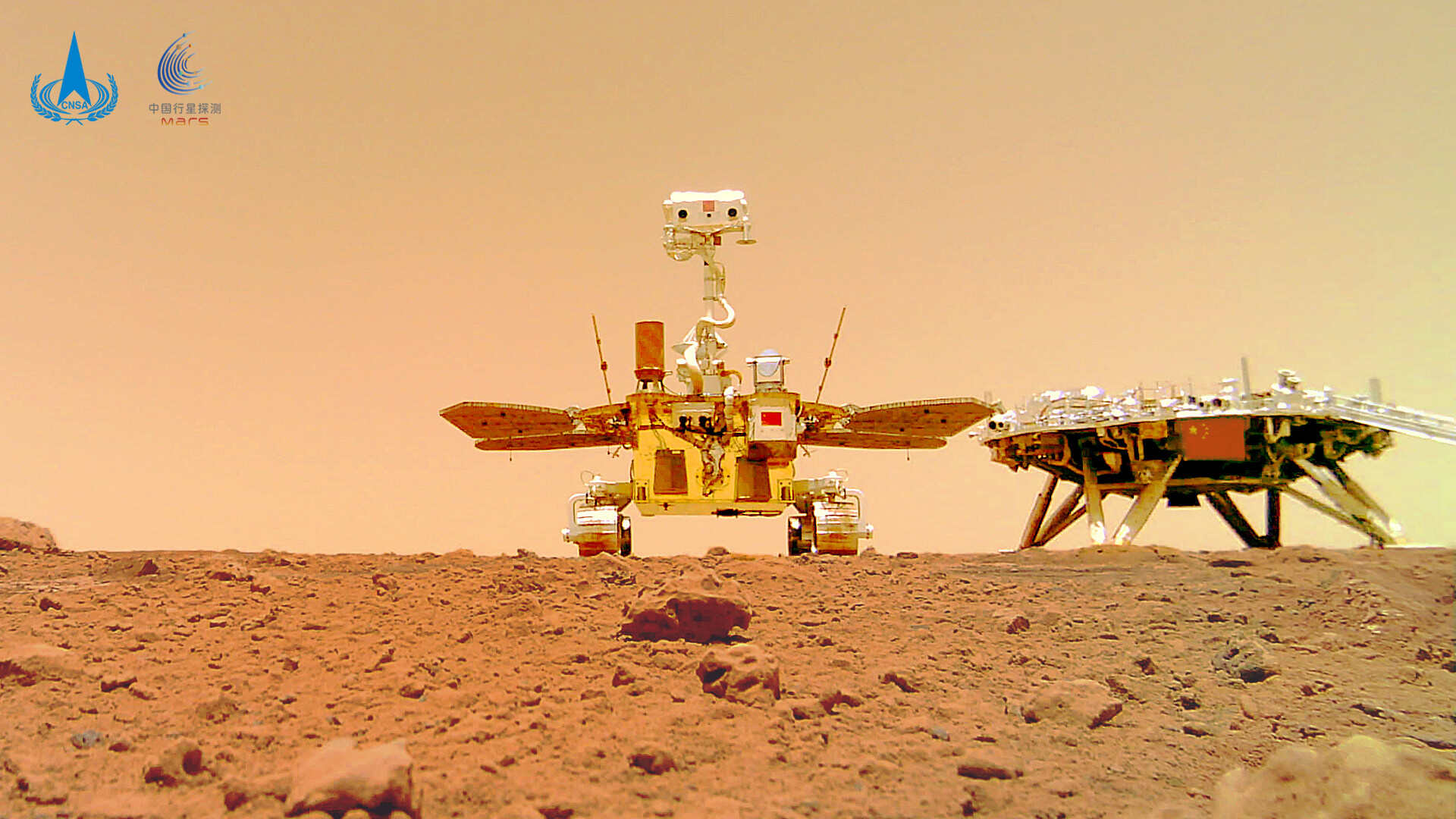
The Zhurong Mars rover is named after the mythological fire deity Zhurong and is part of China’s Mars Mission. It landed on Mars in 2021 and explored the surface for 358 Mars days before switching to dormant mode in 2022. It remains on the planet’s surface, in dormant mode, to this day.
A rover should be able to withstand the planet’s adverse environment while exploring the terrain and conducting scientific surveys. Rovers must maintain a consistent temperature and secure their electricity source to ensure their scientific instruments function properly in the freezing Martian climate, where temperatures can drop to -153 degrees Celsius.

For Zhurong, the secret to maintaining its temperature lay under the circular “windows” at its top. Under those windows, N-Undecane, a chemical that absorbs heat during the day and releases it at night, provides the perfect “heat pack” for the rover on freezing nights with the help of an insulating aerogel, which also ensures the cabin remains at an optimal temperature.
The solar-powered rover relies on sunlight to generate electricity. The solar panels cover its top and butterfly-like wings, but one thing hinders their full use: dust.
From dark matter to black holes, explore the mysterious dark sides of the Milky Way galaxy
A specialised anti-dust coating was applied to the panels to cope with the ample amount of dust from Mars’ fierce storms. This coating consists of a nanoscale structure similar to a bed of pins across the panel’s surface, greatly reducing the surface area where dust could land and making it harder for it to adhere to the panels. A slight flip of the panels removes the accumulated debris.
However, several months after Zhurong was meant to awaken from dormant mode, its mission designer said the rover was likely affected by an unpredictable accumulation of dust that impacted its ability to wake up and clean itself.
Still, Zhurong’s Mars mission exceeded its goals. The photos and data transmitted by Zhurong revealed what Mars looks like and our possibilities on the planet. Thanks to Zhurong, we are one step closer to a manned exploration on Mars. Let’s see how far we will go!
Content by

