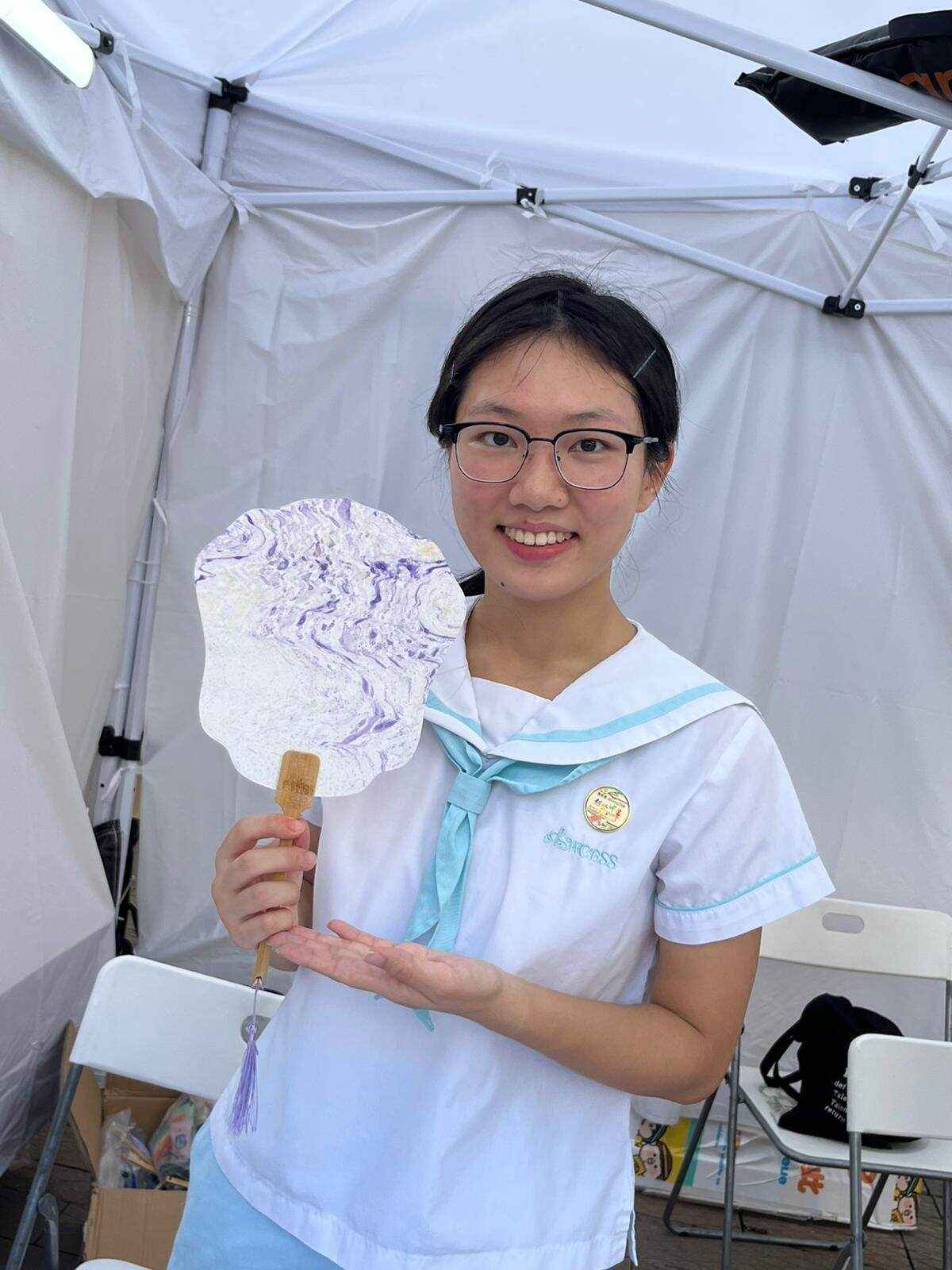
As a swirl of lacquer glistened under the summer sun in Hong Kong’s Tai Kwun heritage building, children designed and painted Chinese fans, reviving a centuries-old craft prized by emperors and scholars and proving that tradition can still fall into new hands.
For the past four days, the Chinese Culture Funfair has transformed Tai Kwun into a cross-generational playground of heritage.
Celine Li Yu-kam, a student from HKFEW Wong Cho Bau Secondary School, explained why her team chose to create a lacquered fan workshop for the event.
“We wanted an activity that would attract people’s eyes and spark their curiosity about Chinese culture. Lacquered fans seemed perfect. It’s fun, interactive and meaningful,” the 18-year-old said.
“Recently, hanfu and other traditions have been gaining popularity again, but some practices were once overlooked.”
To make these fans, a bamboo or wooden frame is coated with multiple layers of natural lacquer. The practice dates back over thousands of years, with lacquerware flourishing especially during the Han dynasty (206BC-AD220) and Tang dynasty (618-907).
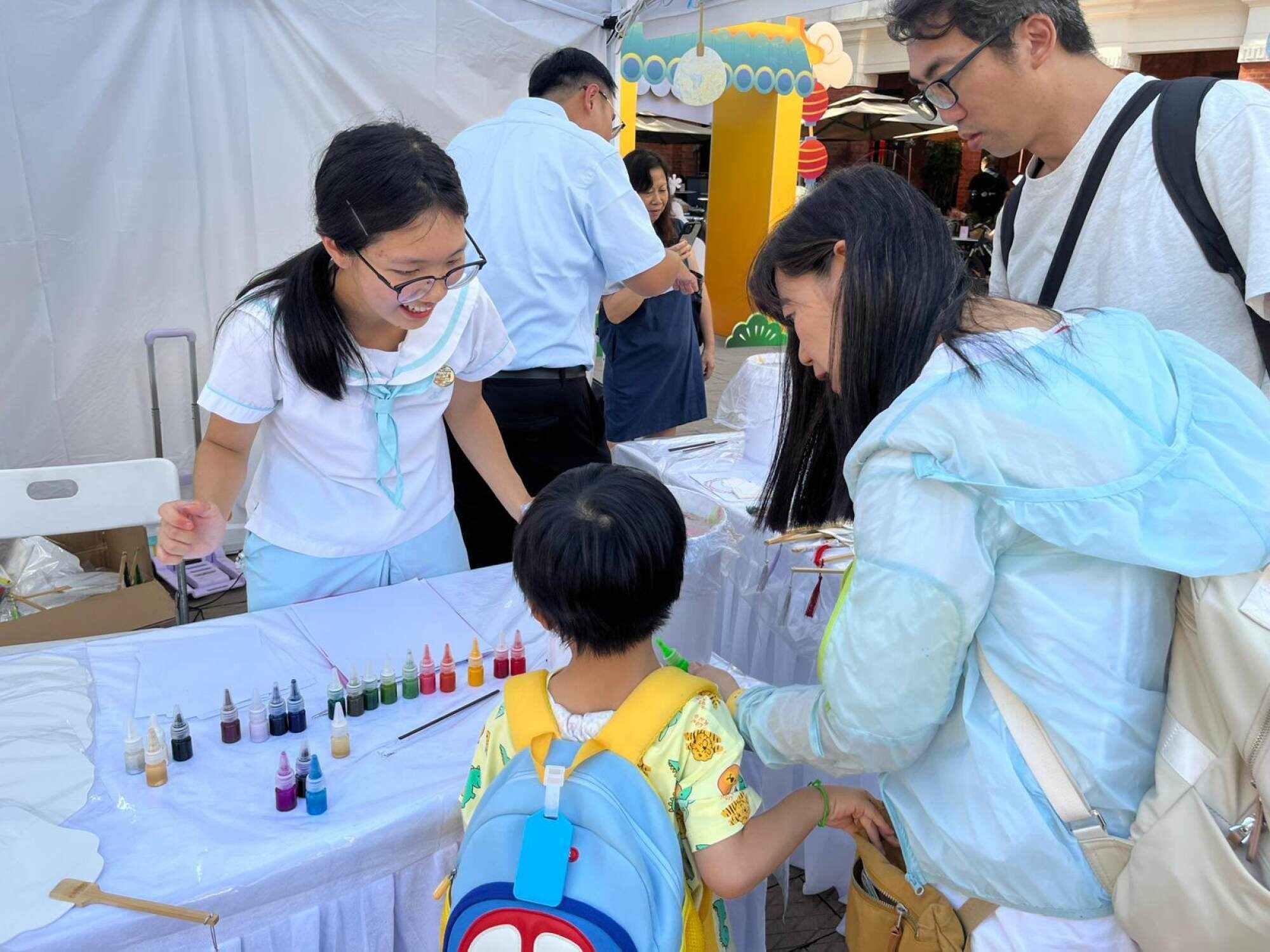
Li was one of 179 secondary school students chosen to be a Chinese culture ambassador for this inaugural event. They spent months preparing booths that reflected their personal engagement with Chinese culture.
Funded by The Hong Kong Jockey Club Charities Trust, organised by Our Hong Kong Foundation and implemented by the Academy of Chinese Studies, the funfair marks the finale of the first year of the Jockey Club Exploring Chinese Culture Ambassador Programme.
The event highlights how the next generation is learning to champion tradition in creative, interactive ways.
On Sunday, a music-theatre piece titled The Days the Tram Passed By combined Cantonese storytelling with live Chinese instrumental music, taking audiences on a journey through Hong Kong’s streets and its past.
Other performance highlights included Chinese shadow puppetry, dance, acrobatic theatre and hanfu fashion shows.
Li also joined the shadow puppet performance, which was a type of folk entertainment that featured historical tales and mythical legends.
“It’s rare for young people to see shadow plays in daily life,” the student said. “By performing, we feel we’re doing our small part to keep this art alive.”
Ho Lap College student Chris Lau focused his project on literature and word games because he wanted other young people to engage with classical poetry.
“It often feels intimidating,” the 18-year-old explained.
“I wanted to create riddles and activities where people would think, ‘Ah, I can actually answer this!’ That sense of achievement makes people more interested. Culture should be inviting, not alienating.”
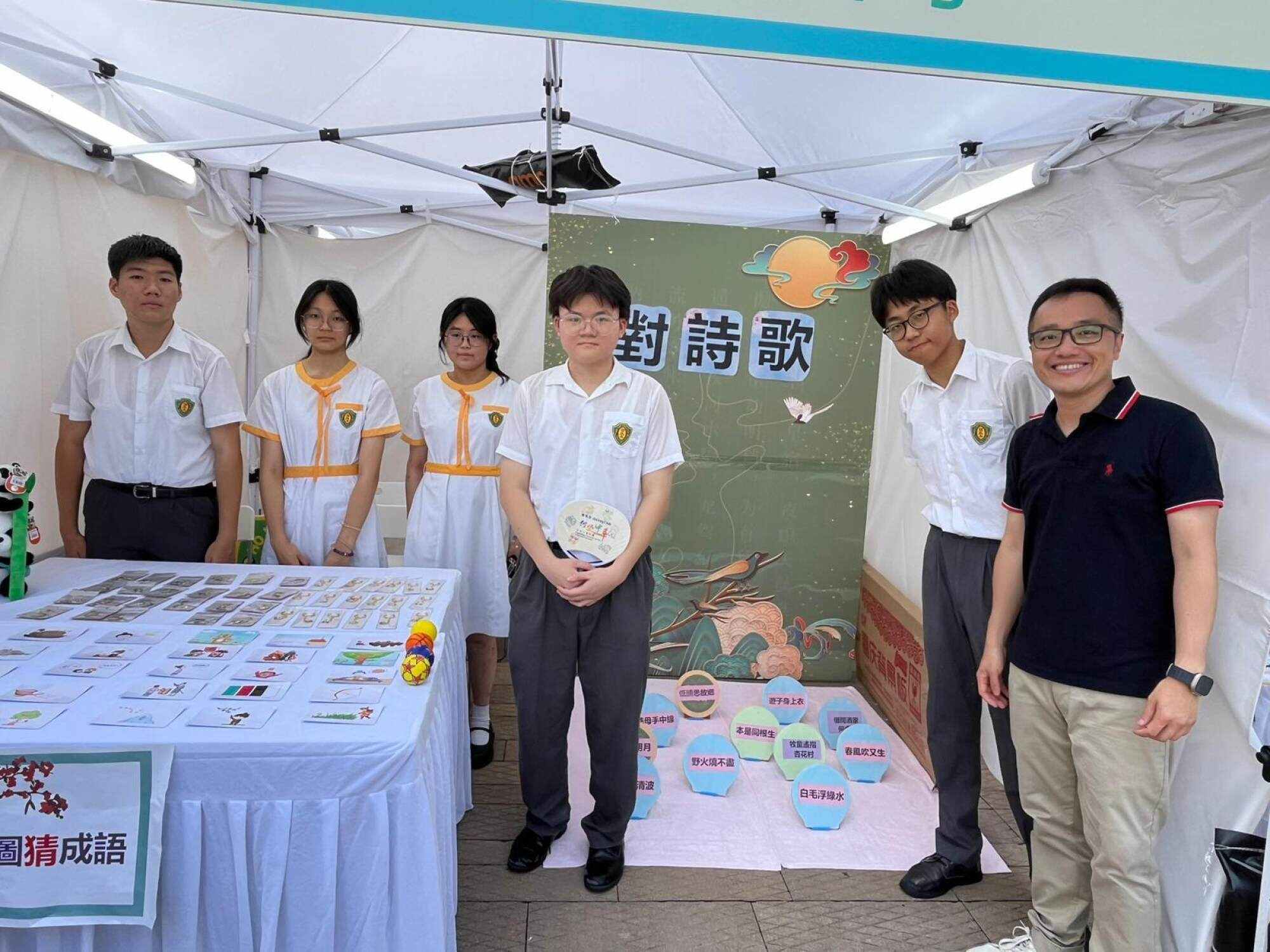
Lau’s booth highlights how cultural appreciation thrives when accessibility is prioritised – a central philosophy of the funfair.
A representative from Our Hong Kong Foundation explained how the initiative focused on reaching under-resourced schools and communities.
“We focus on underprivileged schools, such as those in Kwun Tong and Sham Shui Po, where cultural opportunities are fewer,” the representative said. “This ensures that every student – regardless of background – can access the richness of Chinese traditions.”
Over 10,000 students were involved in the wider programme, which featured more than 110 lectures and workshops. The 179 ambassadors were chosen to promote culture both inside and outside their schools.
The representative further stressed that the goal is not only to preserve culture but also to integrate it into everyday community life.
Students in the programme highlighted that the funfair was part of “making culture visible again” in public spaces. By encouraging youth to lead the events, the programme allows culture to evolve with the next generation.
As the funfair draws to a close, what lingers is not only the colour and spectacle of the performances but also the way culture is rooted in everyday experience – through a fan painted by a child or puppets animated by students.