





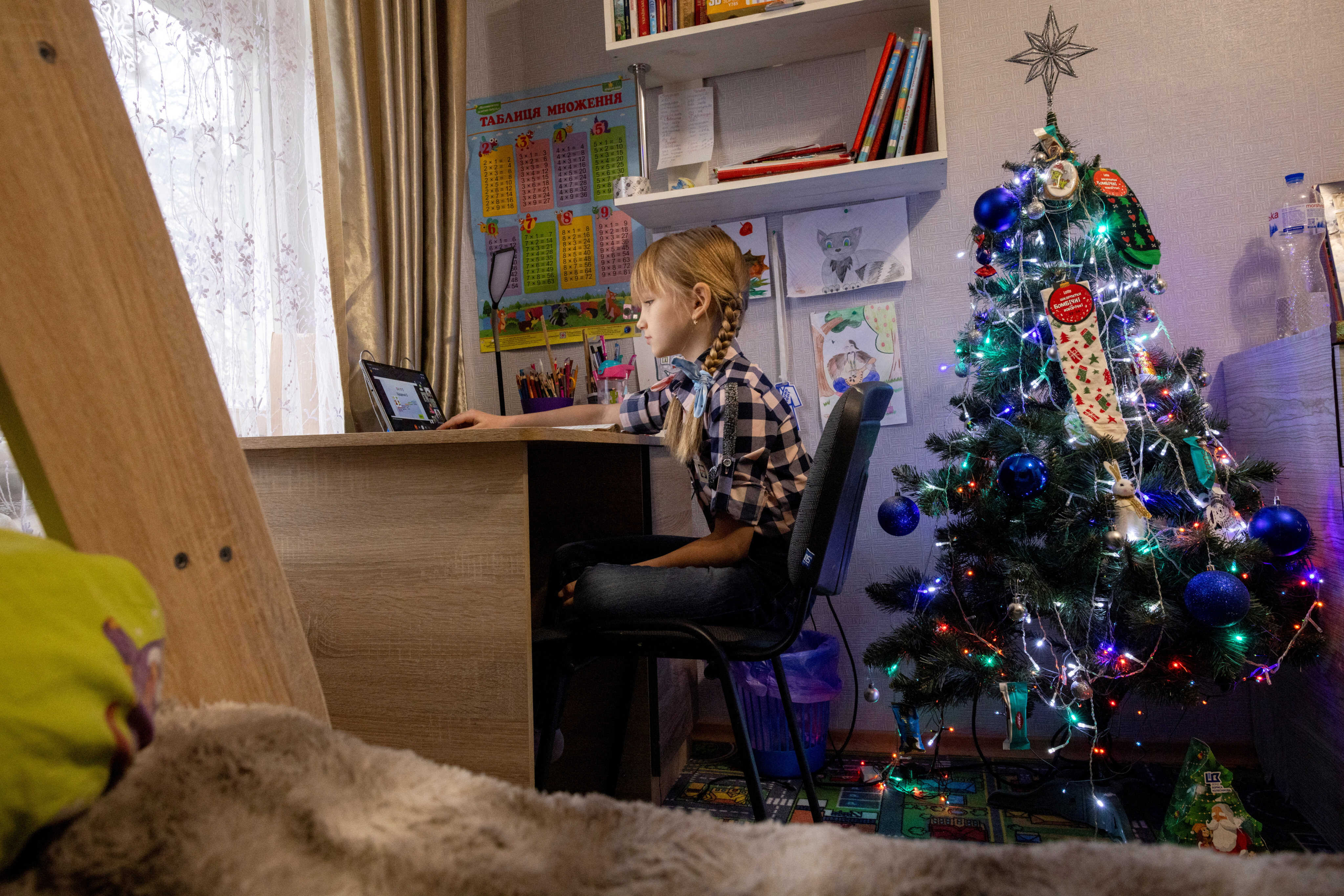
Ukrainian third-grader Arina Herasymova cuts a sad image as she sits alone in her bedroom with her teachers and classmates on a screen instead of being in the same room as her.
“I would like to go to school, to lessons. To play with friends during recess, not sit at home,” she said.
Herasymova, eight, lives near the front line of Russia’s invasion of Ukraine, which is nearing its two-year mark and has forced many local children into online learning.
Ukrainians taught how to make artificial limbs in Germany to help war wounded
The war has deprived younger students, especially, of the opportunity to start off their schooling like most of their peers elsewhere.
First the Covid-19 pandemic upended Arina’s daily schedule, then came Russia’s February 2022 invasion, according to her mother Iryna, 32, who said the once-active child is visibly sad.
“I look at her now, and she has completely changed,” she said. “She doesn’t want to do anything.”
Fighting rages as close as 40km (25 miles) away from their city, Sloviansk, in the eastern Donetsk region, which is under the regular threat of Russian air strikes.
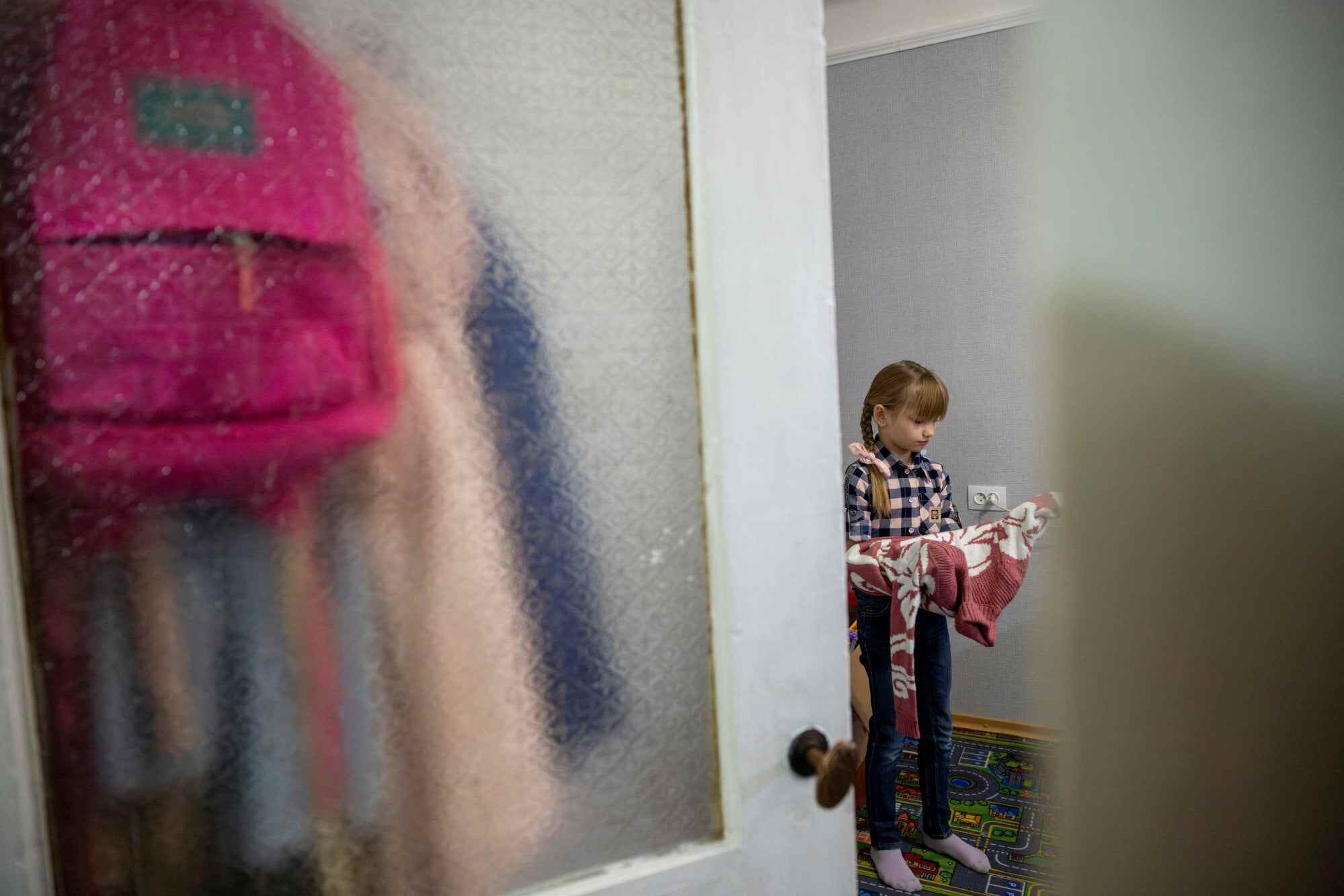
Arina’s teacher reminds her students that lessons are temporarily suspended if an air raid siren blares.
Local school director Anatoliy Pohorelov said classes in frontline areas like Sloviansk would remain remote unless better bomb shelters were built – or until the war ended.
In the northeastern Kharkiv region, which borders Russia, officials have begun building heavily fortified underground schools to allow children to safely return to in-person studies.
“Maybe when Ukraine retakes a major part of its territory, or all of its territory, we’ll be able to talk about mixed or in-person learning,” Pohorelov said. “But right now, we don’t have that opportunity.”
Your Voice: Innocent suffer in war in Gaza Strip (long letters)
As a result, both students and their parents say the lack of face-to-face interaction has taken a serious toll on the mental and social well-being of children.
“At school and in kindergarten, it was much more fun than online,” said third-grader Angelina Bondarenko, eight, who returned to Sloviansk last month for the first time since March 2022.
“At school I had friends, like Liza, we were two friends. Like twins.”
Both Angelina and Arina never meet their classmates, only know them from their little images online – an extraordinary situation given that most children forge their first true friendships at school.
