




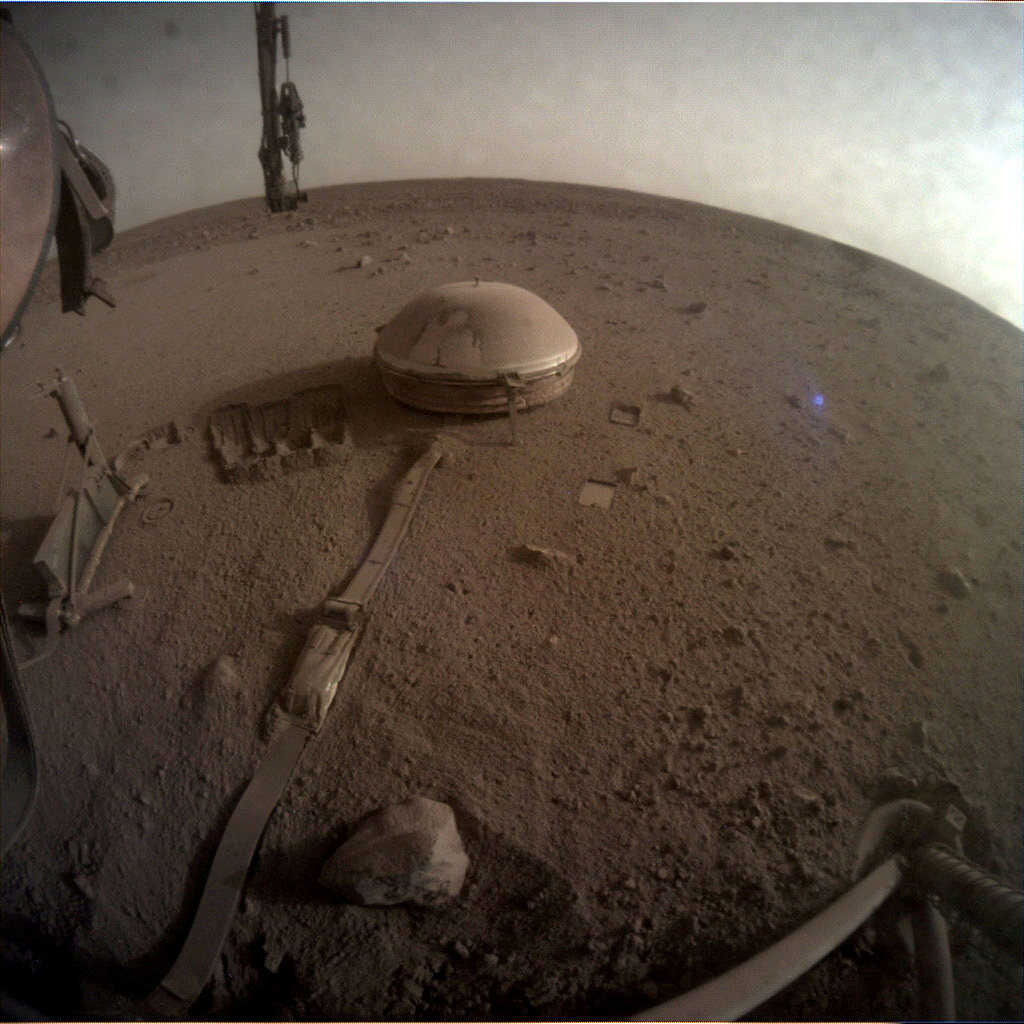
Researchers have found evidence of a large underground reservoir of liquid water on Mars. The water is enough to fill oceans on the planet’s surface.
Using data from Nasa’s InSight lander, the scientists estimated that the amount of groundwater could cover all of Mars to a depth of between one and two kilometres.
But the experts say the reservoir is unlikely to be of much use to anyone trying to tap into it to supply a future Mars colony.
It is located in tiny cracks and pores in rock in the middle of the Martian crust, between 11.5 and 20 kilometres below the surface. Even on Earth, drilling a hole a kilometre deep is a challenge.
Vashan Wright, a former postdoctoral fellow at UC Berkeley, in the US, who is now an assistant professor at UC San Diego’s Scripps Institution of Oceanography, said: “Understanding the Martian water cycle is critical for understanding the evolution of the climate, surface and interior.
Astronomers find black hole closest to Earth – 18,000 light-years away
“A useful starting point is to identify where water is and how much is there.”
Scientists on Earth have sent many probes and landers to Mars to find out what happened to the water that was on the planet some three billion years ago, as well as when it happened and whether life exists or used to exist on the planet.
Experts suggest the findings are an indication that much of the water did not escape into space but filtered down into the crust.
The researchers used data that InSight collected during a four-year mission ending in 2022.
The lander gathered information from the ground directly beneath it, including on the speed of Marsquake waves.
Using a model informed by a mathematical theory of rock physics, the researchers determined that the presence of liquid water in the crust most plausibly explained the data.
“While available data are best explained by a water-saturated mid-crust, our results highlight the value of geophysical measurements and better constraints on the mineralogy and composition of Mars’ crust,” the authors wrote.
The findings are published in the Proceedings of the National Academy of Sciences journal.
