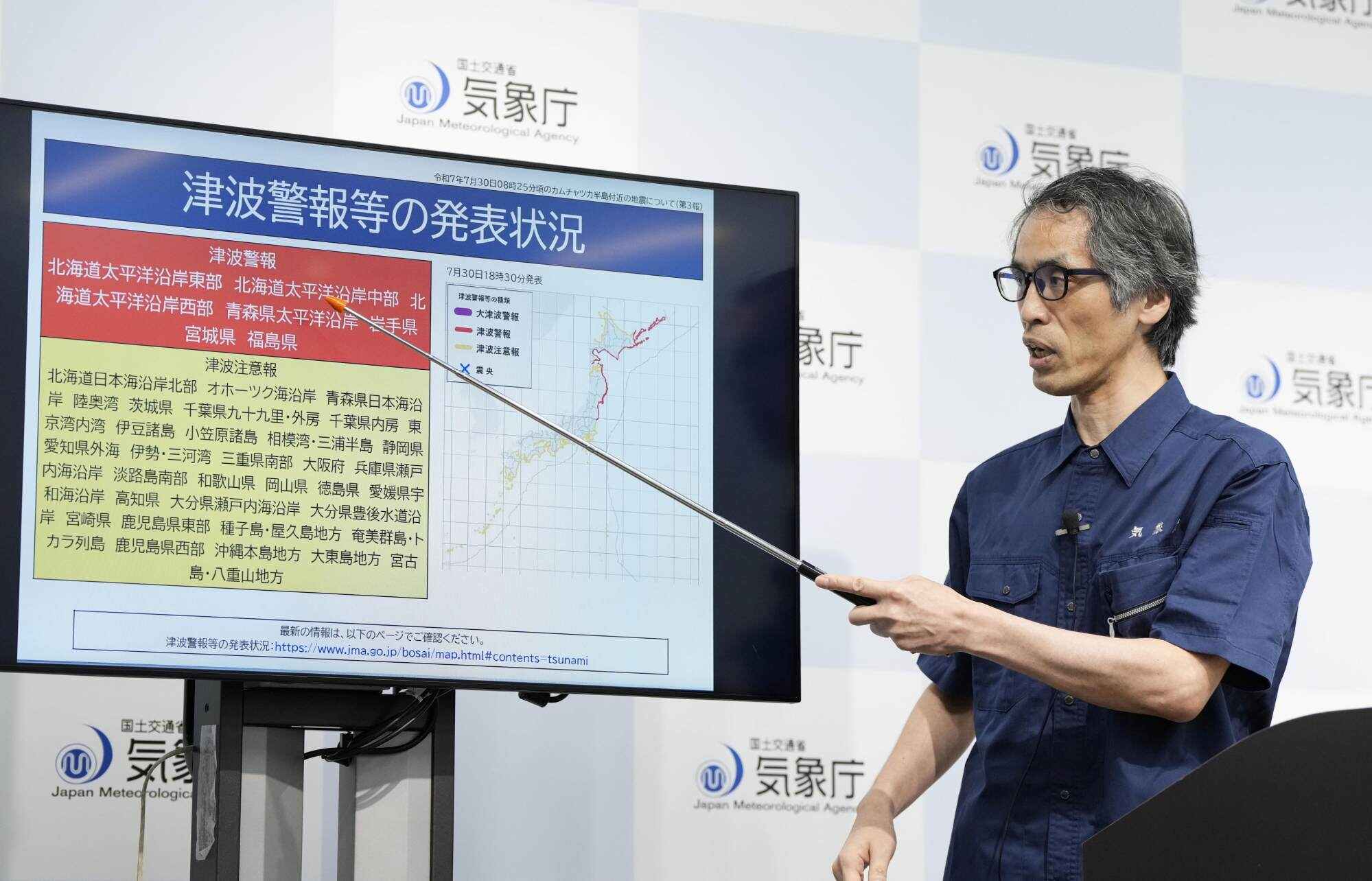
One of the largest earthquakes ever recorded – a magnitude 8.8 monster – hit the eastern coast of Russia on Wednesday. Despite its remote location, the sheer size of the megathrust earthquake signalled probable danger, including a potential tsunami that would affect a significant part of the world.
Tsunami alerts immediately went out, covering millions of people in Japan, the United States (US) and across the Pacific Ocean, reaching as far away as Hawaii, Chile and Ecuador. But for all its fury, the quake ended up not being a catastrophe.
Best-case quake scenario
Dangerous waves that rose more than 10 feet (3 metres) never materialised outside Russia. Even there, officials had no reports of deaths, and damage appeared to be limited.
“In this case, we mostly dodged a bullet,” said Mike Rademaker, harbourmaster for the Crescent City Harbour in California, US, a place that saw deadly tsunamis in 1964 after the magnitude 9.2–9.3 Alaska megathrust earthquake and in 2011 after a 9.0–9.1 undersea megathrust earthquake hit Tōhoku, Japan.
Those events represent worst-case scenarios. Wednesday’s represents a best-case scenario.
“With tsunamis, location and directionality are everything,” said Nathan Wood, a tsunami scientist with the US Geological Survey (USGS).
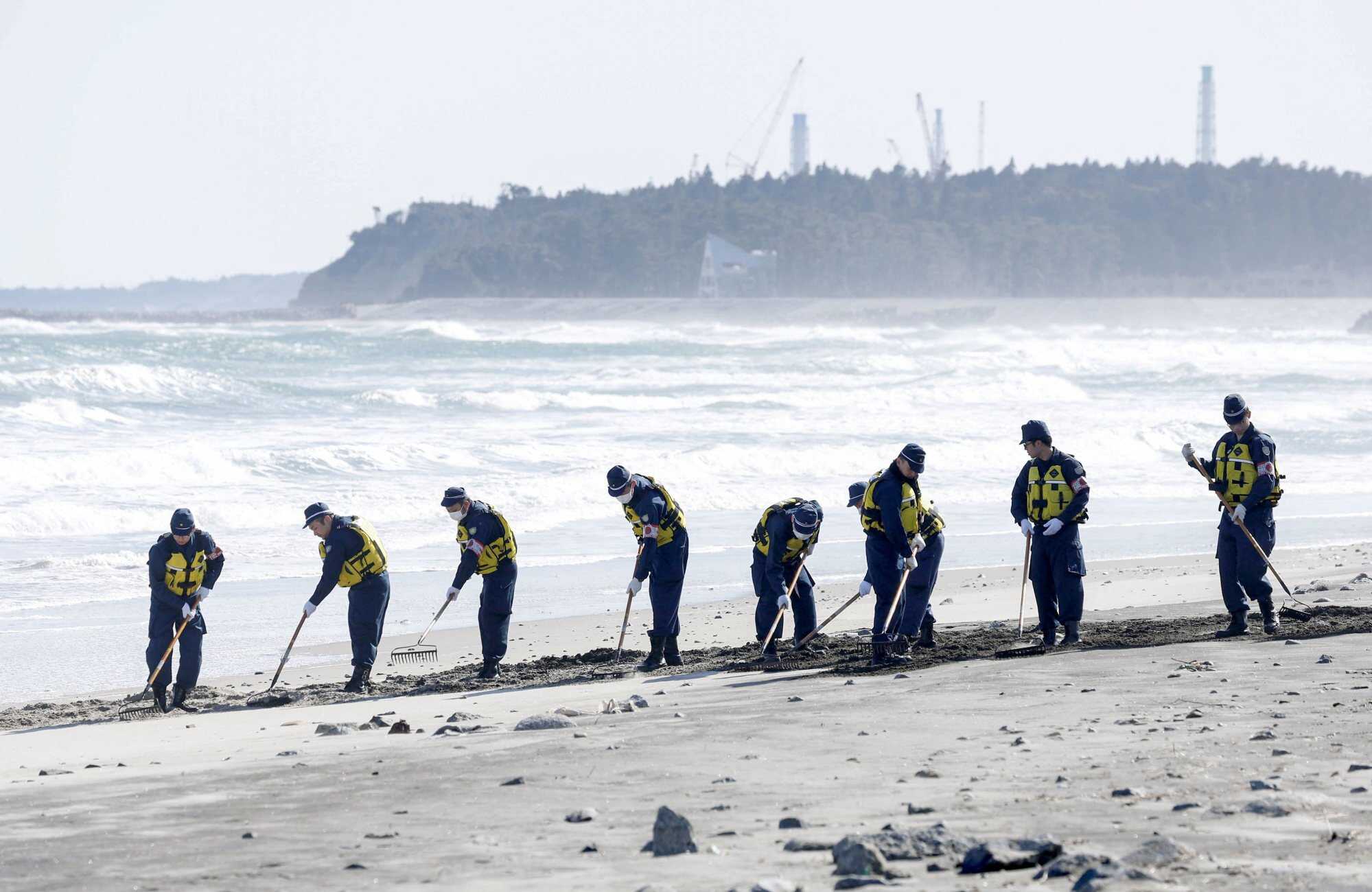
Scientists raced to forecast how extensive the tsunami could be. A magnitude 8.8 quake ranks as the sixth most powerful earthquake on record in the last 125 years. It is the largest since 2011, when a magnitude 9.1 tremor and subsequent tsunami struck off the coast of Japan and killed more than 15,000 people.
Wednesday’s Kamchatka earthquake is considered a megathrust, a characteristic shared by many of the planet’s largest recorded quakes.
How did a megathrust earthquake cause such little damage?
The area near the epicentre, off Siberia’s Kamchatka Peninsula, did see damage, but it was sparsely populated. Video of the town of Severo-Kurilsk, on an island just off the peninsula, showed a building being swept away.
But for areas farther out, initial modelling suggests the tsunami’s energy was directed into the open Pacific Ocean, roughly between Alaska and Hawaii, and had time to weaken before it hit more populated areas.
“It just kind of shot right between the two of those (states),” Wood said.
The tsunami affected “the local community that was right next to the source [earthquake] where it happened,” Wood said.
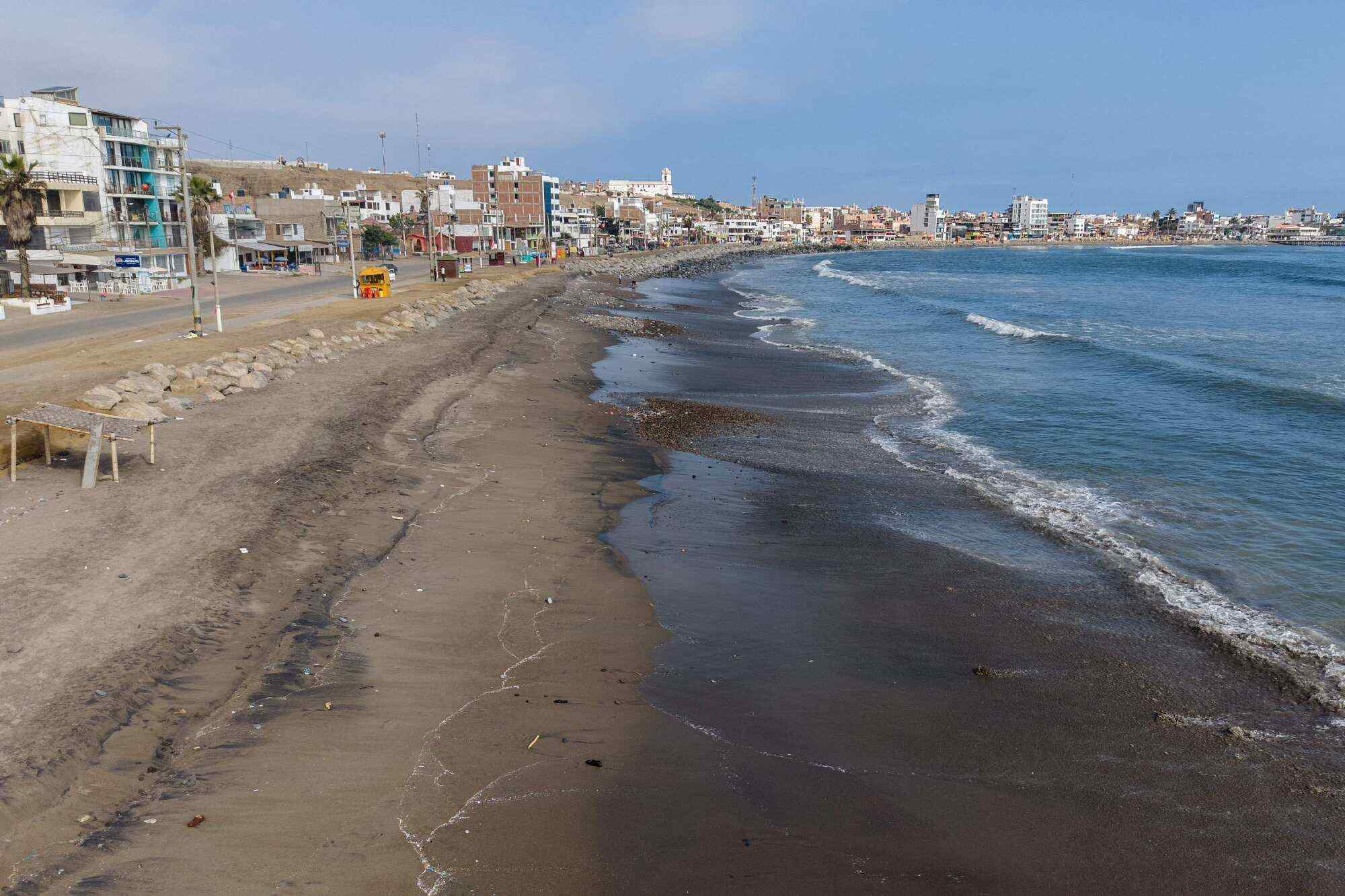
“But for everyone else, it kind of just shot right down this empty hallway – in between the Aleutian Islands chain and the Hawaiian Islands – and there wasn’t really a whole lot in its way. By the time it got to the West Coast, like California, Oregon, a lot of the energy had been dissipated.”
Russia saw tsunami waves as high as 16 feet (nearly 5 metres), according to news wire reports, but tsunami heights maxed out at 4 feet (1.2 metres) in Crescent City. The totals were even smaller in Southern California.
The highest wave in the US was 5.7 feet in Kahului, Hawaii, on Maui.
Dave Snider, the tsunami warning coordinator at the National Tsunami Warning Centre in Alaska, said it might be too early to assess how much damage this tsunami did, but “it is true, maybe this one wasn’t as bad as it could have been.”
A crisis averted
Awareness of tsunami alerts has improved over the years, in large part thanks to deep ocean pressure sensors.
“There were several, fortunately, in operation right off the Kamchatka subduction zone,” said Eric Geist, research geophysicist for the USGS.
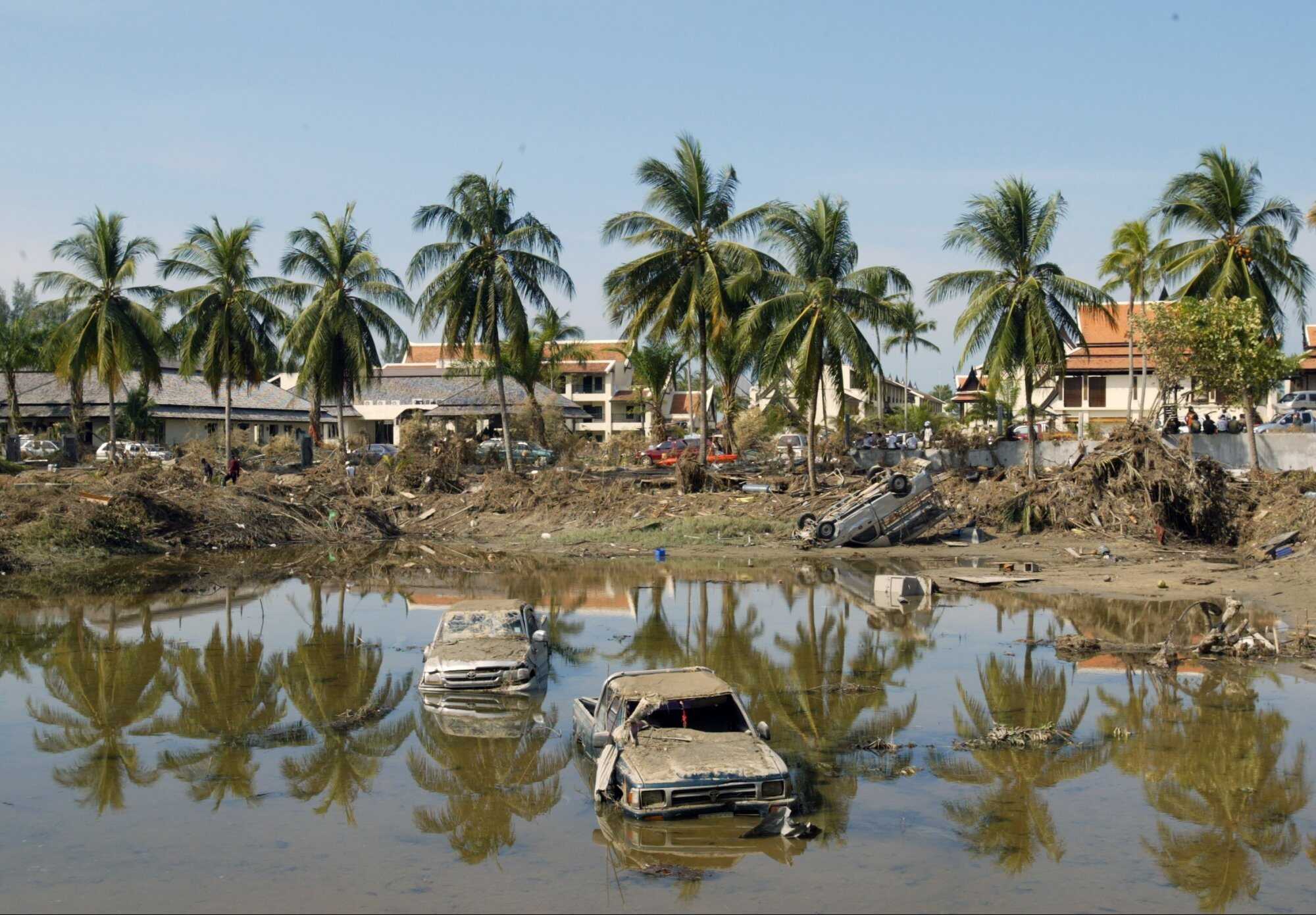
One of the tragedies of the 2004 Indian Ocean disaster, a 9.3 undersea megathrust earthquake and subsequent tsunami, was a lack of warning.
Waves rose up to 100 feet (30 metres), devastating communities and killing an estimated 227,898 people in 14 countries. Places hit very badly included Aceh in Indonesia, Sri Lanka, Tamil Nadu in southern India and Khao Lak in Thailand. It remains the deadliest tsunami in recorded history.