





Black particles found in the freshwater supply at two public housing estates are mainly bitumen, authorities have said, stressing that the water is safe to drink.
Director of Water Supplies Roger Wong Yan-lok sought to reassure the public on Thursday after government tests revealed the presence of the substance – which is banned from use in pipes – in most of the 126 samples collected from blocks in Queens Hill Estate and Shan Lai Court, both in Fanling.
“Bitumen is insoluble in water and is not harmful to humans,” he said.
Wong added that experts commissioned by the Water Supplies Department five years ago did not find any toxic substances in three litres of hot water boiled with 10 grams of bitumen.
“Even if residents drink water containing bitumen, there is no need to worry,” he said.
Hong Kong’s Global 6K for Water run highlights need for clean water
Residents at the two public rental and subsidised estates first reported the presence of black particles in their drinking water last Friday, prompting some to buy bottled water as speculation grew over the source of the mysterious dark specks.
Wong said the amount of bitumen – a black, sticky substance obtained from crude oil – found in the current samples was three-thousandths of the quantity per litre used in the department’s past experiment.
The latest tests showed the bitumen was found to be mixed with resin, a thick substance typically produced by plants.
Wong said the pipes supplying freshwater to the two estates, completed between 2021 and 2022, were not lined with bitumen. The substance has not been used as an inner coating material in pipes laid after 2005.
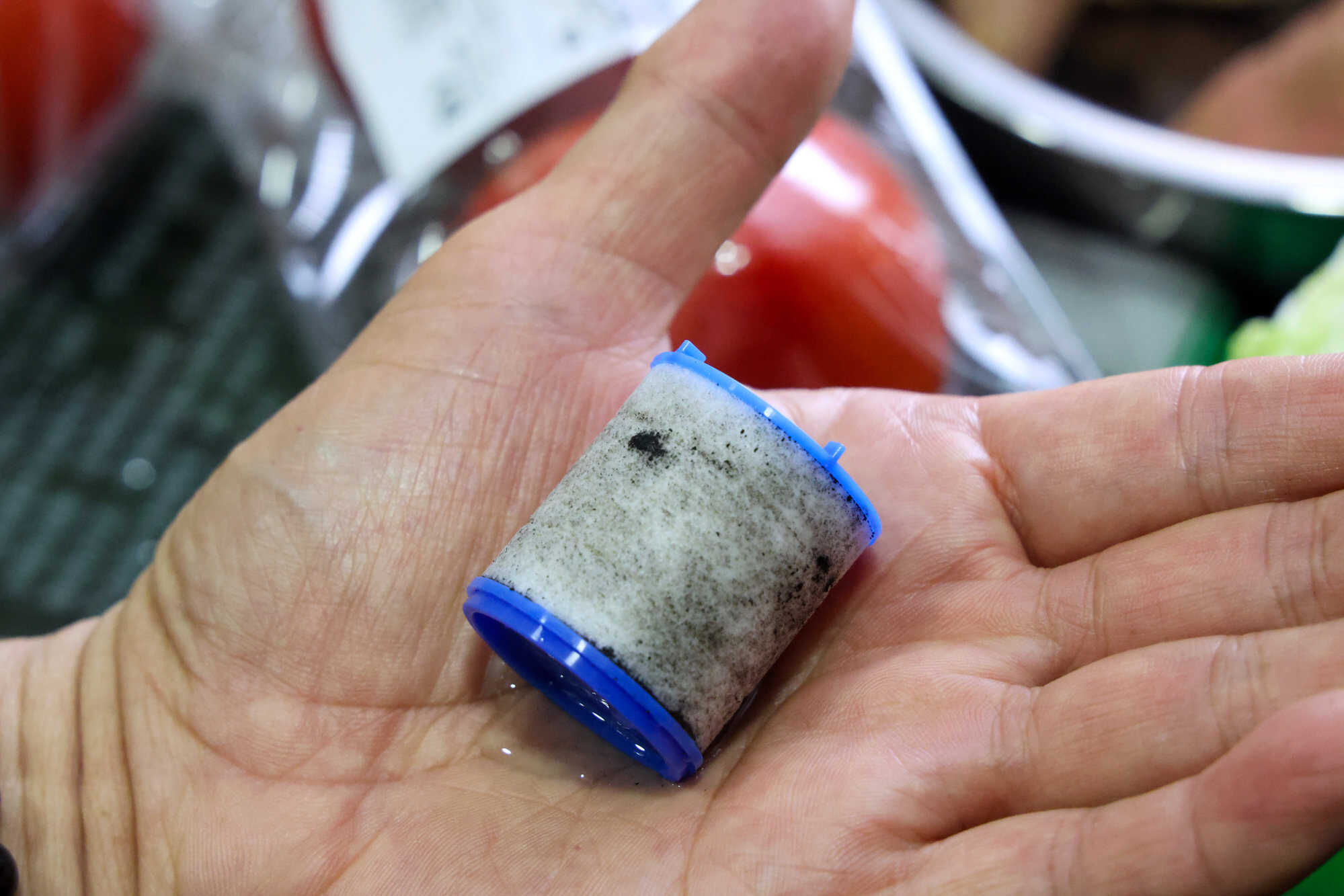
He said authorities believed that the bitumen could be left over from 2022 when the government received reports of a large amount of sediment flowing into the pipes of Queens Hill Estate.
The sediment could have stayed in the pipes when Queens Hill Estate was used as a quarantine facility the same year. Wong said authorities had cleaned the pipes and installed equipment that could filter out substances larger than 0.1mm in December 2022.
He noted that some sediment remained in the plumbing system, with the pieces becoming smaller and able to move over time. Wong also said the resin might be coming off the coating of valves in the plumbing.
The government will step up efforts to clean the residue in pipes and test the water quality daily until the problem is solved, Wong added.
Listen Up: Scientists uncover germs hidden in reusable water bottles that need cleaning
Authorities will also replace materials in valves when necessary, while additional filters will be installed at every block of Shan Lai Court.
The department later said it would upload its water test results daily on its website, adding that records showed the upper stream of the supply system in the area had a section that used bitumen as the inner coating material.
Despite repeated assurances over the safety of the water supply, residents have continued to voice their worries, with a mother at one of the estates finding that black particles stuck to the surface of bottles when she tried to prepare baby milk formula.
Asked whether he would apologise to the public, Wong said he could present his reassurances “in another way” in the future to address public concern.
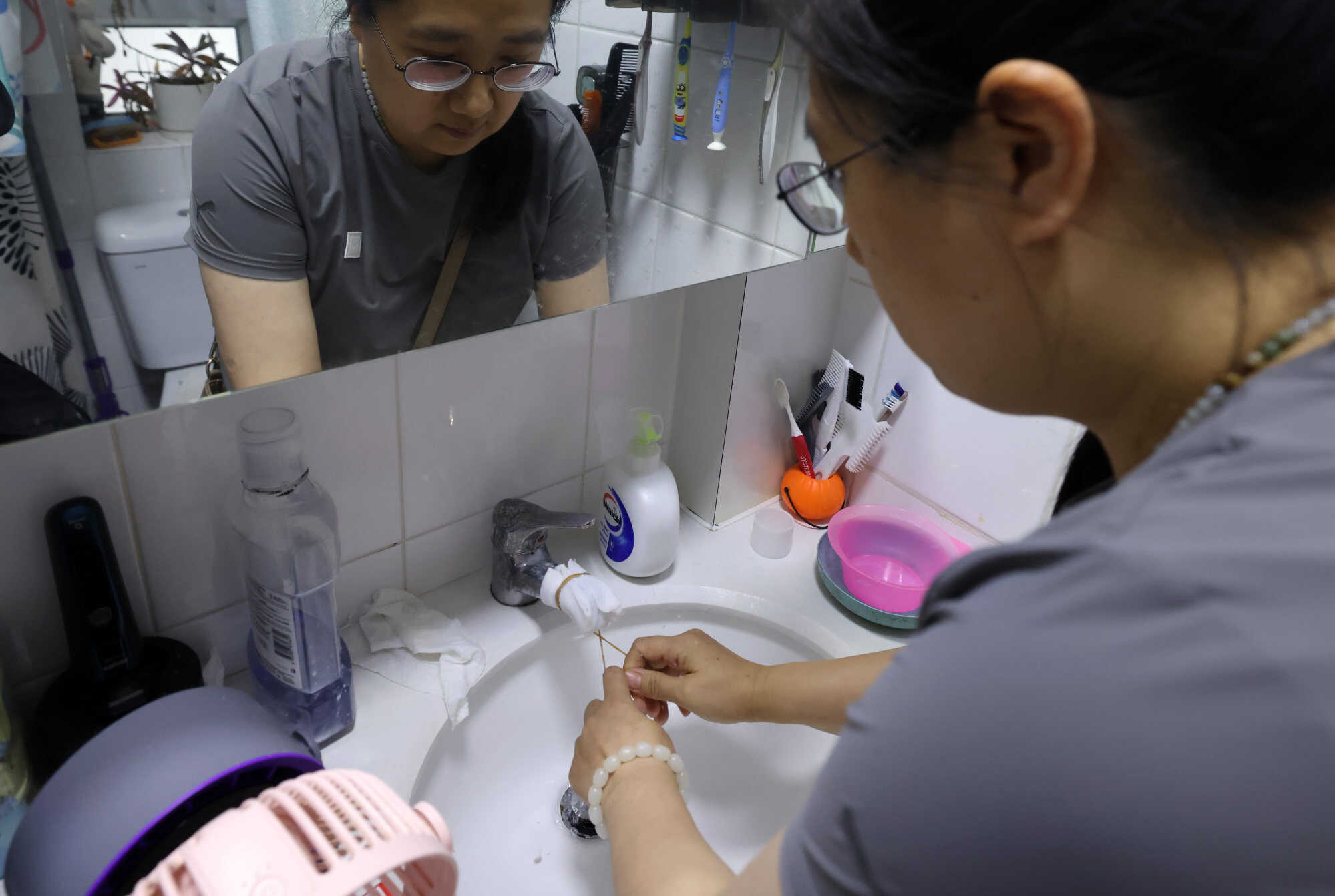
Wong King, executive president of the International Institute of Utility Specialists, said the bitumen could have come from old pipes outside the Queen’s Hill neighbourhood. He added that bitumen could have also fallen into the pipes accidentally when the estates were being built.
He said he believed that the incident was an isolated case, adding that it would be sufficient for authorities to clean the plumbing system rather than reinstall the pipes, as the latter would be inconvenient for residents.
Drinking Water Safety Advisory Committee chairman Chan Hon-fai said it was possible that the substance came from old public pipes and had remained in the upper stream of those in Queen’s Hill.
He said that sediment could not be washed away initially, as the water velocity was low, with very few residents moving into Queens Hill Estate a few years ago. As more residents moved in, the water velocity would increase and push sediment out through taps in flats, Chan added.
He suggested that authorities use technology as they continue to clean the pipes: “I believe they can deploy small robots to check whether there is sediment remaining in the pipes.”
Chan stressed that the water was safe but advised residents against consuming the particles.
