





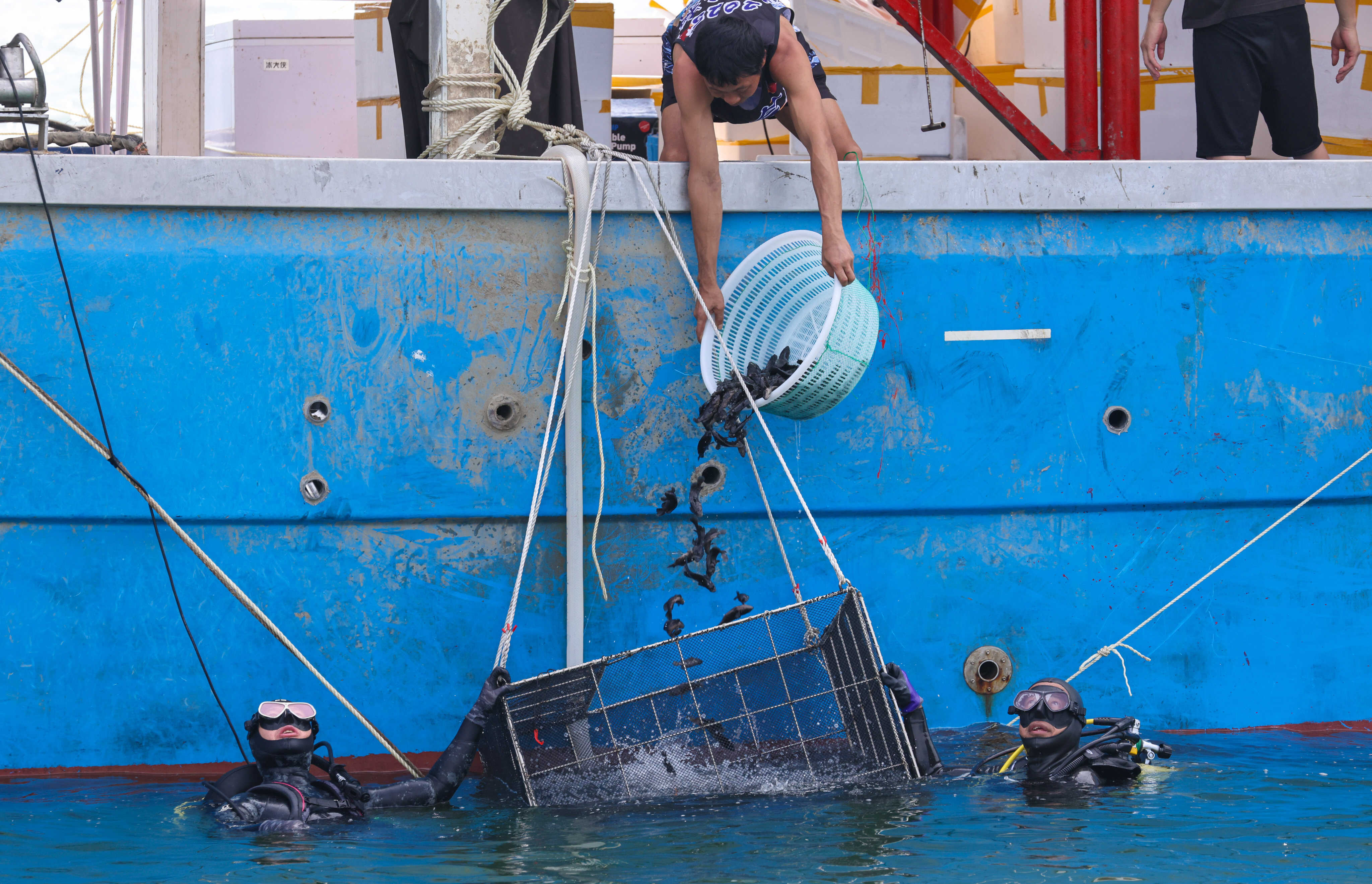
Hong Kong authorities have released 83,500 juvenile fish into waters near the airport and other locations. This is one event in a series aimed at enhancing marine resources.
The Airport Authority and the Agriculture, Fisheries and Conservation Department carried out the initiative on Friday. This was in observance of the annual National Fish Releasing Day, which is celebrated on June 6.
The authority, which oversees the city’s airport, released 60,000 “larger-than-fist-sized” fish into a vessel-prohibited area west of the airport’s central runway and 1 million tiger prawn larvae into waters off neighbouring coasts.
The department, meanwhile, introduced 23,500 fry fish, made up of five native species, into the waters around Tung Ping Chau and adjacent to Shenzhen in Mirs Bay.
Among the 60,000 fish released by the authority were 10,000 crescent sweetlips raised in the Sai Kung Sham Wan Culture Zone. The other 50,000 fish were reared in mainland China.
The authority said it had also finished deploying 500 artificial reefs as “housing” for the fish to help improve the marine ecology. It began setting them up at the start of the year.
Hong Kong scientists warn of more severe bleaching of coral reefs
Peter Lee Chung-tang, the statutory body’s chief sustainability officer, said: “Under this scheme, we aim to increase the marine ecological value of the area by providing habitats for small fish in this area of mostly soft mud in the seabed due to the deposition of sediments from the Pearl River Delta, and introducing common and local fish species to enhance biodiversity.”
Another 100 artificial reefs and 30,000 fish, made up of three species, were introduced to waters west of the airport’s south runway under pilot schemes in 2021 and 2023, he added.
Lee said the artificial reefs deployed four years ago now acted as habitats for 14 other local species.
Professor Kenneth Leung Mei-yee said that before the airport’s construction, the Chek Lap Kok area had more natural rocky shores that acted as substrates and allowed for species such as oysters and soft corals to thrive.
The natural structures were later replaced with vertical concrete sea walls that surrounded the island, he added.
Leung, who is the director of the Chinese University of Hong Kong’s State Key Laboratory of Marine Pollution, said that the current sustainability operations in the airport area could help to compensate for the loss of natural habitats following reclamation works as part of the airport’s construction.
“Providing a more diverse habitat is crucial to enhancing biodiversity. And installing artificial reefs and fish stocking is like gardening; creating a 3D habitat by providing a heterogeneous landscape for more species of fish in the originally desert-like area west of the airport,” he said.
“It is a way to raise biodiversity through artificial habitat enhancement.”
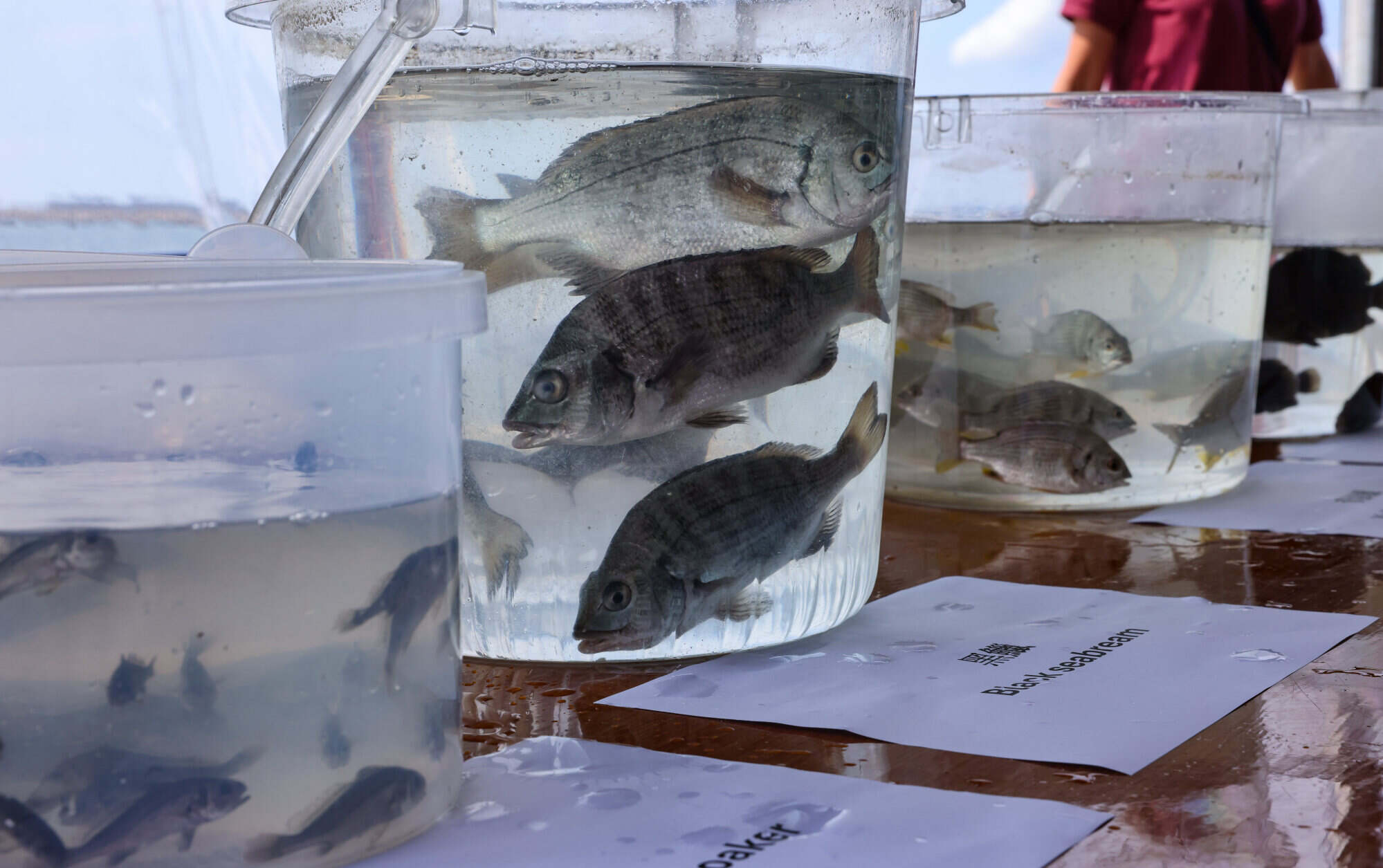
Lee of the Airport Authority said it had consulted local fishermen before releasing the 60,000 fish.
He added that the fish introduced to the waters near the airport comprised four species raised in various parts of the mainland and were made up of the green grouper, the yellowfin seabream, the black seabream and the white flower croaker – the last of which is a favoured food source for Chinese white dolphins.
Lee said the body had also acted on fishermen’s suggestions to release prawns into the waters to enhance the area’s overall marine ecological value.
The authority planned to introduce more fish to the area in the near future, as it had proved effective in enhancing the marine ecology, he said.
Asked about the long-term effects of the operations, Professor Leung said: “With the communities of species established in the area, they will attract other fish to hunt for food here and form a healthy ecosystem, with Chinese white dolphins potentially hunting and encouraged to eventually stay in the area.”
