





Have something to say? Send us a letter using this form.
We are our own villains
Kayley Cheng, International Christian School
The newly released Thunderbolts* was atypical for Marvel, given that previous films focused on better-known superheroes such as Captain America, Iron Man and Black Widow.
Thunderbolts* had a more relatable take on being a “hero” – showing how sometimes the hardest battles are ones that take place within ourselves; sometimes, we are our own villains. I deeply connected with its themes of man versus man and redemption.
This film is set after Avengers: Endgame and Captain America: Brave New World. It introduces an unlikely band of heroes – full of unheroic qualities – who must battle internally to first prove to themselves that they can step up and then to each other that they can work together as a team.
Marvel’s 5 best and 5 worst films and TV shows, ranked by an MCU fan
Although Marvel sticks to familiar formulaic action, I resonated with how they introduced and developed imperfect characters who must look within and redeem themselves. I felt this was a powerful message for society today, particularly for teenagers who struggle with identity issues and self-doubt.
Marvel tells you that you can achieve only by looking within and overcoming the worst things about yourself. Each character had to search their memories and find a dark secret from their past to reconcile with.
As each character delved deeper, they each had a close friend who accepted them, similar to a therapist who listened and showed encouragement – these scenes displayed positive and true friendships, which are frequently forgotten about. Given the changing nature of society and the internet, we need human connection, communication and empathy more than ever. Only then can humanity succeed.

Yelena Belova, played by Florence Pugh, stood out for her self-redemption arc. A trained assassin as a young child, she went through a childhood one should never have to experience, which left deep scars.
In this film, she continued to struggle with being labelled a human weapon, confronting numerous painful memories on her path to finding her inner self. After overcoming barriers, she learned the importance of confronting, not running from, your past.
As each character worked through their secrets, they came together as a team that could help others. The greatness they achieved as a team could not be done alone.
Yelena’s evolving friendship with the “villain” of the story symbolised the weight of empathy and how it is needed to heal.
By challenging the traditional concept of a hero, Marvel showed it understands its audience. This recent film celebrated teamwork and finding your inner self, a theme much more intimate than what is typically found in the superhero genre that Marvel excels at.
Write to Win: What would you do if your classmate told you they’re a superhero?
Comprehensive sex education
Sirius Cheng Pak-yeung, Wah Yan College, Hong Kong
Sex education in Hong Kong is lacking and outdated. If we fail to improve our students’ knowledge, they will develop distorted views about gender, sex and sexual intercourse.
Contrary to public belief, sex education does not lead to early exposure to sexual content. The main difference between sex education and sexual content is that one promotes factual and principled knowledge while the other focuses on stimulating viewers, usually through exaggeration.
Driven by hormones, teenagers are naturally curious about sex. A programme or class would give them the environment to discuss it openly.
Your Voice: formal sex education in schools (long letters)
Comprehensive sex education is essential for dispelling misconceptions and empowering young people to make healthy and safe decisions. Today’s students are flooded with content – much of it inaccurate and damaging. Providing sex education ensures they acquire a holistic understanding of sex and its impact. It also decreases the likelihood of them seeking out erotic content merely to learn about sex.
I echo Jerome Yau, the chief executive of Aids Concern, a charity specialising in community health and HIV/Aids response. Yau points out that teaching students only to abstain promotes guilt and shame and is ineffective in preventing early sexual activity.
Judging from the “playing badminton to distract from the desire to have sex” strategy in Hong Kong’s latest materials, it is crystal clear that sexual abstinence is widely promoted and deeply ingrained in the city’s education system. If this approach continues, students will focus on suppressing sexual urges and remain ill-informed about human reproduction, puberty, emotional shifts and sex.
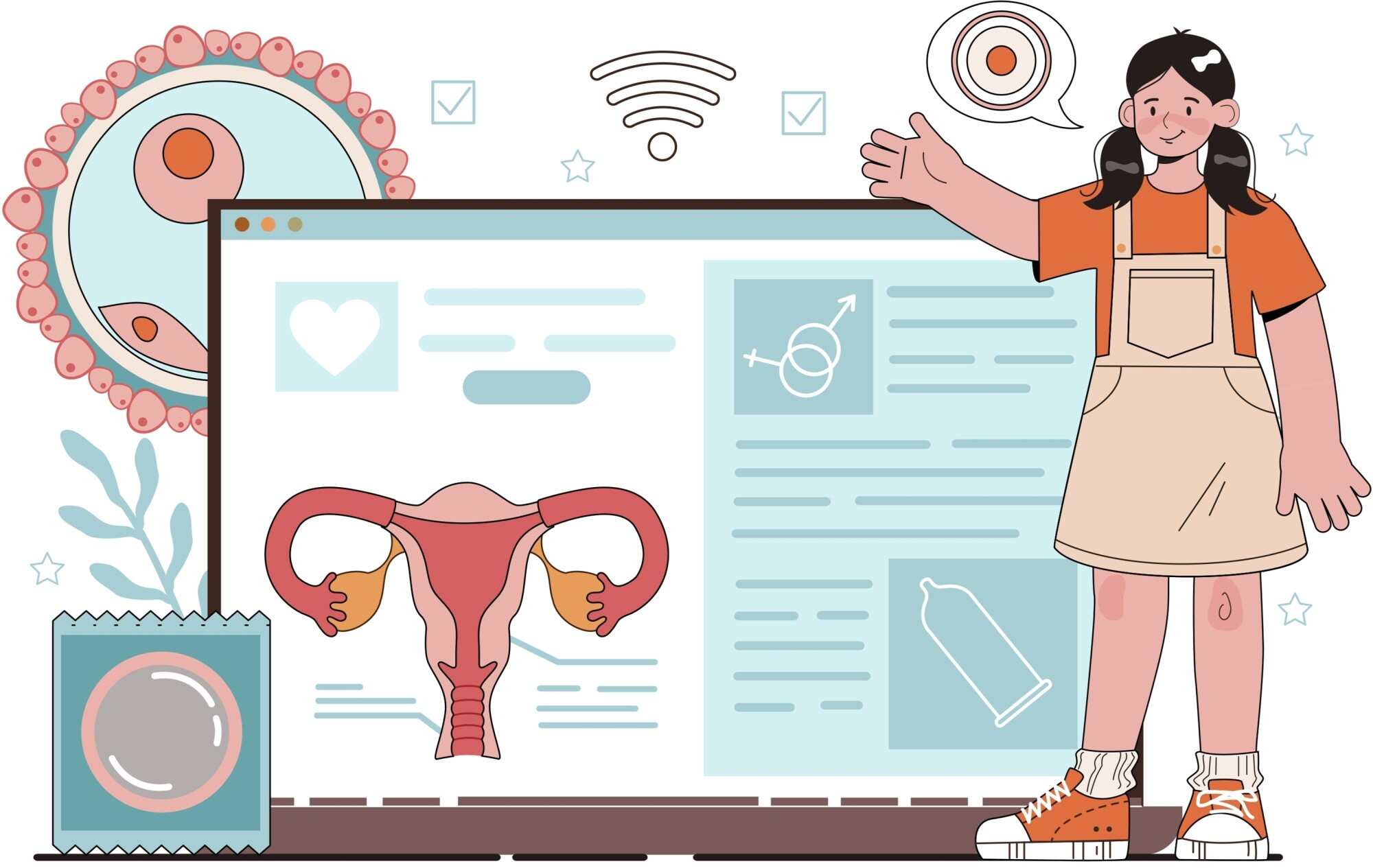
Puberty brings rapid physical and mental changes; sex education prevents misunderstandings.
Do we want our students to be completely clueless about their growing pubic hair and breasts? To feel ashamed when talking to someone they are attracted to? To enter adulthood without knowing how to deal with their emotions and desires?
We should teach students about the potential consequences of sex, physical, mental and emotional. Simply spoon-feeding “values” into students’ minds achieves little; teaching them objective facts is more persuasive and effective. Promoting critical thinking equips students to make informed decisions.
Students say Hong Kong needs a more progressive approach to sex education
Some argue that early sex education increases the risk of students engaging in sexual intercourse or committing sex-related crimes.
These claims are false; in fact, they reduce the likelihood of these actions. When students understand the potential consequences of early sexual activity and the penalties for sex-related crimes, they make more thoughtful decisions.
Sex education in schools addresses these issues rather than exacerbating them. Moreover, it informs students what to do if sexual crimes occur, enabling them to react swiftly and protect themselves. Sex education safeguards students.
I firmly believe all teenagers should receive comprehensive sex education in schools. I also urge the general public to educate themselves about sex.
