
Have you ever wondered why some people cannot stand bitter foods like kale, broccoli, black coffee or dark chocolate, while others enjoy them? This difference in taste is mainly because of a gene called TAS2R38.
What is the TAS2R38 gene?
The TAS2R38 gene is an important part of our DNA that helps us detect bitter flavours. It produces a type of protein that acts as a taste receptor on the tongue.
This gene makes people sensitive to some bitter chemicals, such as phenylthiocarbamide (PTC) and propylthiouracil (PROP). These chemicals are not naturally found in foods, but how we taste them is similar to how we taste other bitter things, some of which can be toxic.
Not everyone has the same version of the TAS2R38 gene. This gene comes in different forms, or variants, known as alleles. There are two main types: the “taster” allele (T) and the “non-taster” allele (t). Individuals who have at least one T allele are called “tasters”, and they are more sensitive to bitter tastes.
On the other hand, individuals with the tt genotype (two non-taster alleles) are known as “non-tasters” (see graphic). These individuals would not be able to notice the bitterness from PTC and PROP at all.
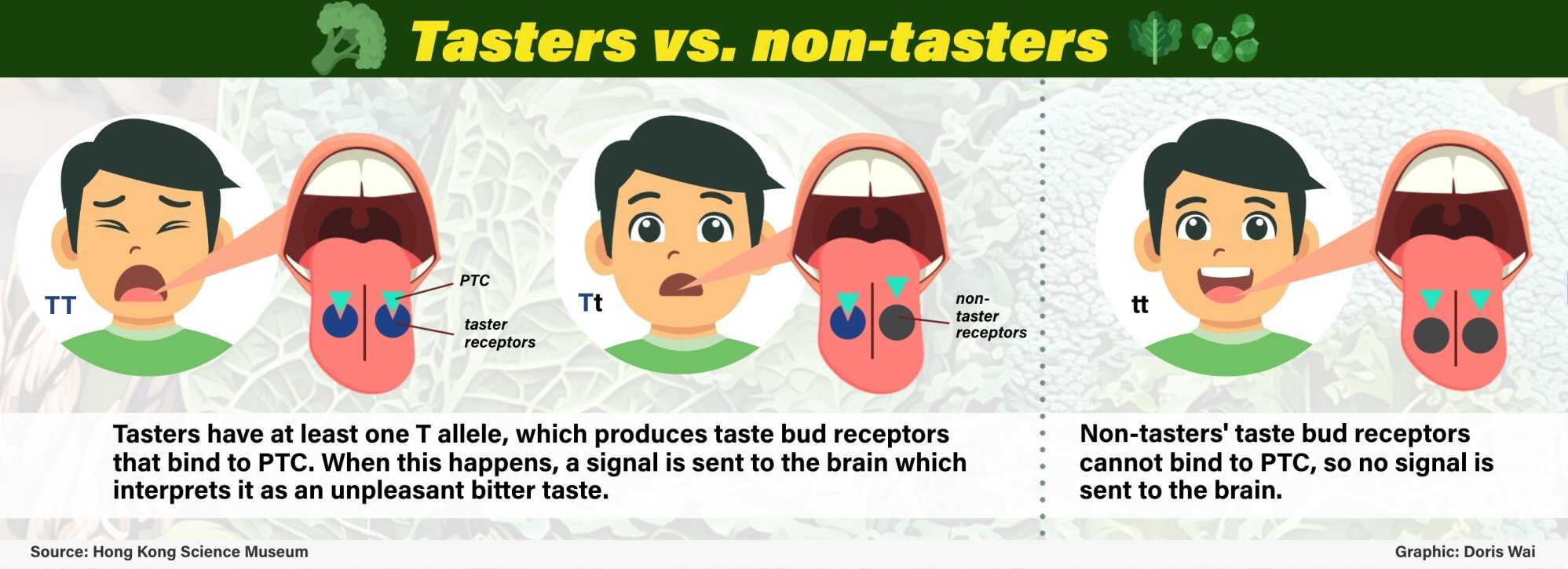
But if PTC and PROP are not naturally found in foods, why do vegetables such as Brussels sprouts, kale and broccoli taste bitter to some people? These foods contain chemicals called glucosinolates, which are similar in structure to PTC and PROP. As such, tasters may find the taste of these vegetables very strong and unpleasant.
Interestingly, studies suggest that “strong tasters” are less likely to smoke, as they find cigarettes very bitter and unpleasant.
Other factors in our ability to taste bitterness
While our genes play a significant role, several other factors also affect how we perceive bitter flavours.
One important factor is age. Research shows that children are generally more sensitive to bitter flavours compared to adults even when they share the same genetic traits. This can influence what children like to eat, as they may be more likely to avoid bitter foods like vegetables or even medicine.
Two other key influences are gender and hormones. Women may be more sensitive to bitter flavours compared to men. This sensitivity can also become heightened during times of hormonal shifts, particularly during pregnancy. This ability can help pregnant mothers detect flavours that could harm their developing baby.
Understanding processed foods: From minimal to ultra-processed and their impact on health
In addition, dietary habits and overall health can affect how we taste things. For example, those who frequently eat bitter foods may develop a higher tolerance to bitterness.
Certain medications or health problems can also change how we experience tastes.
For instance, certain medications like those used to fight infections (antibiotics), allergies (antihistamines), or high blood pressure (antihypertensive drugs) can sometimes change how things taste.
People with diabetes are more likely to have taste disorders, which can result in a decreased ability to detect sweet, sour, bitter or salty flavours. Difficulty in tasting is also often one of the first signs of a Covid-19 infection.
All of these factors together determine why people have different flavour preferences.
Content provided by