





Content provided by British Council
Read the following text, and answer questions 1-9 below:
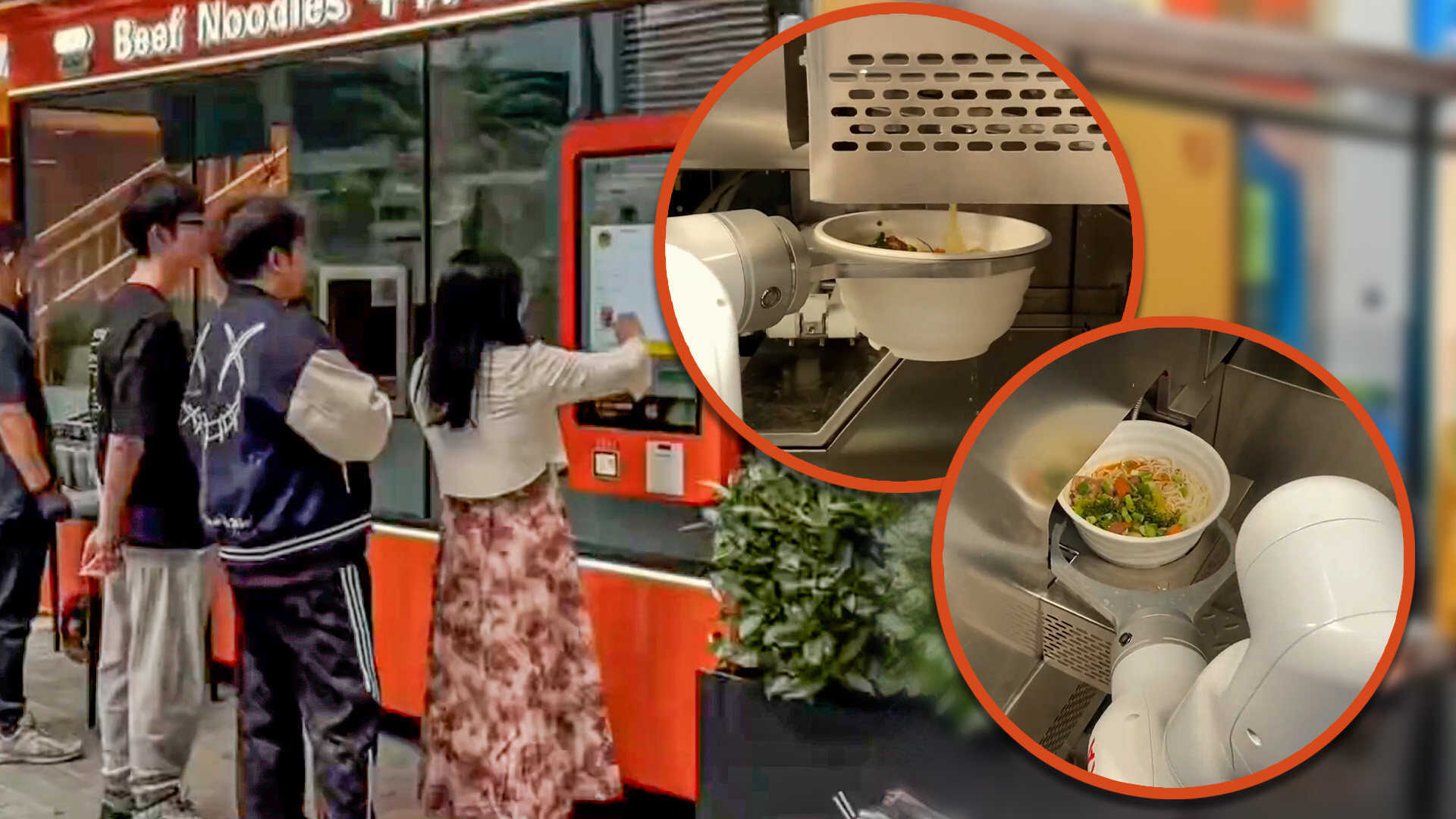
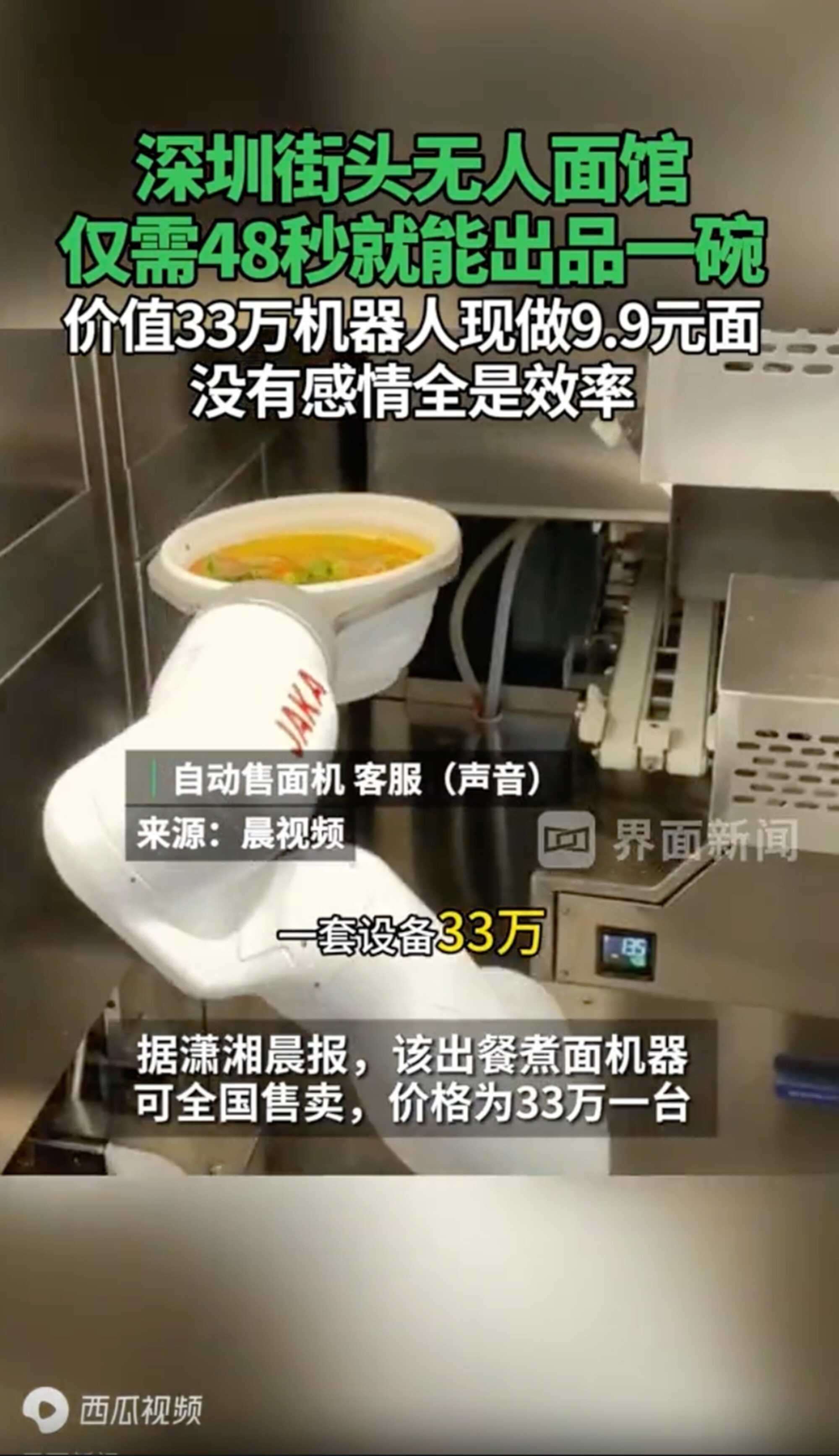
[1] A fully automated noodle shop located in southeastern China is able to serve a bowl of noodles in just 48 seconds. Prices start at 9.9 yuan (HK$10.60) per bowl, and no tip is required. Customers are lining up at the Future Noodle Restaurant in Shenzhen to experience this automated noodle-making process.
[2] The small restaurant, measuring eight square metres, offers more than 10 varieties of noodles. In addition to beef soup and stir-fried noodles, the menu includes side dishes such as marinated eggs and grilled sausages. Prices range from 6 to 20 yuan (HK$1 to HK$21). Customers place their orders at a self-service kiosk, make their payments and watch the entire cooking process through a transparent window.
[3] The robot combines water and flour, kneads the dough, shapes it into discs, and cuts it into noodles in under eight seconds. After that, beef and noodles are added to a bowl, hot water is poured, and the dish is cooked in just 40 seconds. Finally, a robotic arm serves the noodles, garnished with spring onions.
[4] One diner said: “The noodles are perfectly cooked, and the beef is fresh and tender.” Another praised it as “the most cost-effective restaurant”, adding: “A bowl of beef noodles outside would cost around 20 yuan.”
[5] However, one netizen had a different view: “Do noodles made this way have a soul? Is it really tasty?” Meanwhile, another netizen questioned the need for the machine, saying, “AI should focus on replacing tasks that are difficult for humans, like space exploration or deep-sea rescue, not take over everyday tasks humans already do well.”
[6] Wanjie Intelligent, the company behind the automated noodle restaurant, was founded in 1996. It is located in Henan province, central China. A representative explained that the development of the noodle-making machine took 10 years, with each unit priced at 330,000 yuan (HK$353,441).
[7] The machine is equipped with more than 20 types of blades, allowing it to create various shapes of noodles. According to the company, the machine can produce 120 bowls of noodles each hour and operates around the clock, significantly reducing labour costs. It is now sold nationwide, with Future Noodle Restaurant outlets appearing in supermarkets and office buildings.
[8] China is not the first to use fully automated kitchens. In 2015, the British tech company Moley Robotics launched the world’s first robotic kitchen, designed to make simple dishes. Fully automated services are rapidly expanding across China.
[9] In January, a robotic exoskeleton was introduced on Mount Tai in eastern China to help tourists. Humanoid robots have also been deployed in Shenzhen, patrolling the streets with human police officers.
Source: South China Morning Post, March 16
Questions
1. According to paragraph 1, customers can get their food in …
A. 10 seconds.
B. less than one minute.
C. 100 seconds.
D. 10 minutes.
2. What is the purpose of the transparent window mentioned in paragraph 2?
3. Decide whether the following statements about paragraphs 2 and 3 are True, False or the information is Not Given. Fill in ONE circle only for each. (4 marks)
(i) The restaurant only sells one type of noodles.
(ii) Customers can choose how many spring onions they want.
(iii) A special waiter robot takes customers’ orders.
(iv) A robot prepares the food from scratch.
4. The diners mentioned in paragraph 4 are happy with the noodles’ …
A. temperature and speed of delivery.
B. nutritional value and taste.
C. taste and cost.
D. spiciness and chewiness.
5. Does the person mentioned in paragraph 5 approve of robots making noodles, and why? (2 marks)
6. How long did Wanjie Intelligent take to develop the noodle-making machine?
7. Find a phrase in paragraph 7 that means “24 hours a day”.
8. According to paragraph 7, how does the noodle-making machine help restaurants save money?
9. How many robots are there in the first robotic kitchen mentioned in paragraph 8?
A. 20
B. 120
C. 2015
D. information not given
Answers
1. B
2. to let customers watch the cooking process
3. (i) F; (ii) NG; (iii) F; (iv) T
4. C
5. No, because they think robots should focus on replacing tasks that are difficult for humans, like space exploration or deep-sea rescue, and not take over everyday tasks humans already do well.
6. 10 years
7. around the clock
8. by greatly reducing labour costs
9. D
