Forget about the smell of blood and the shark-related fears we’ve developed from films like Jaws and shows like Shark Week. Recent research suggests that the first thing a shark notices about humans may actually be the unique sounds we produce while in the water.
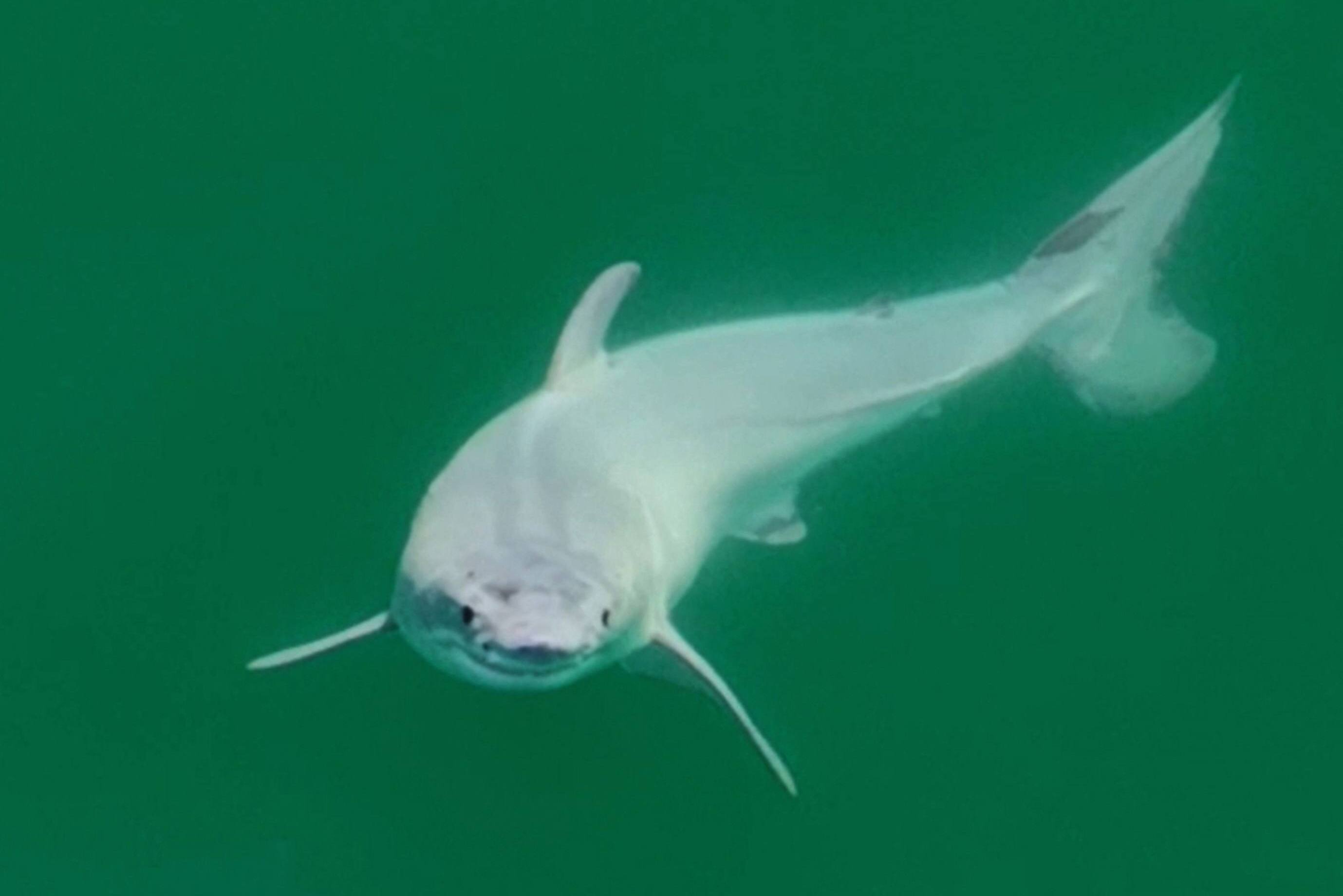
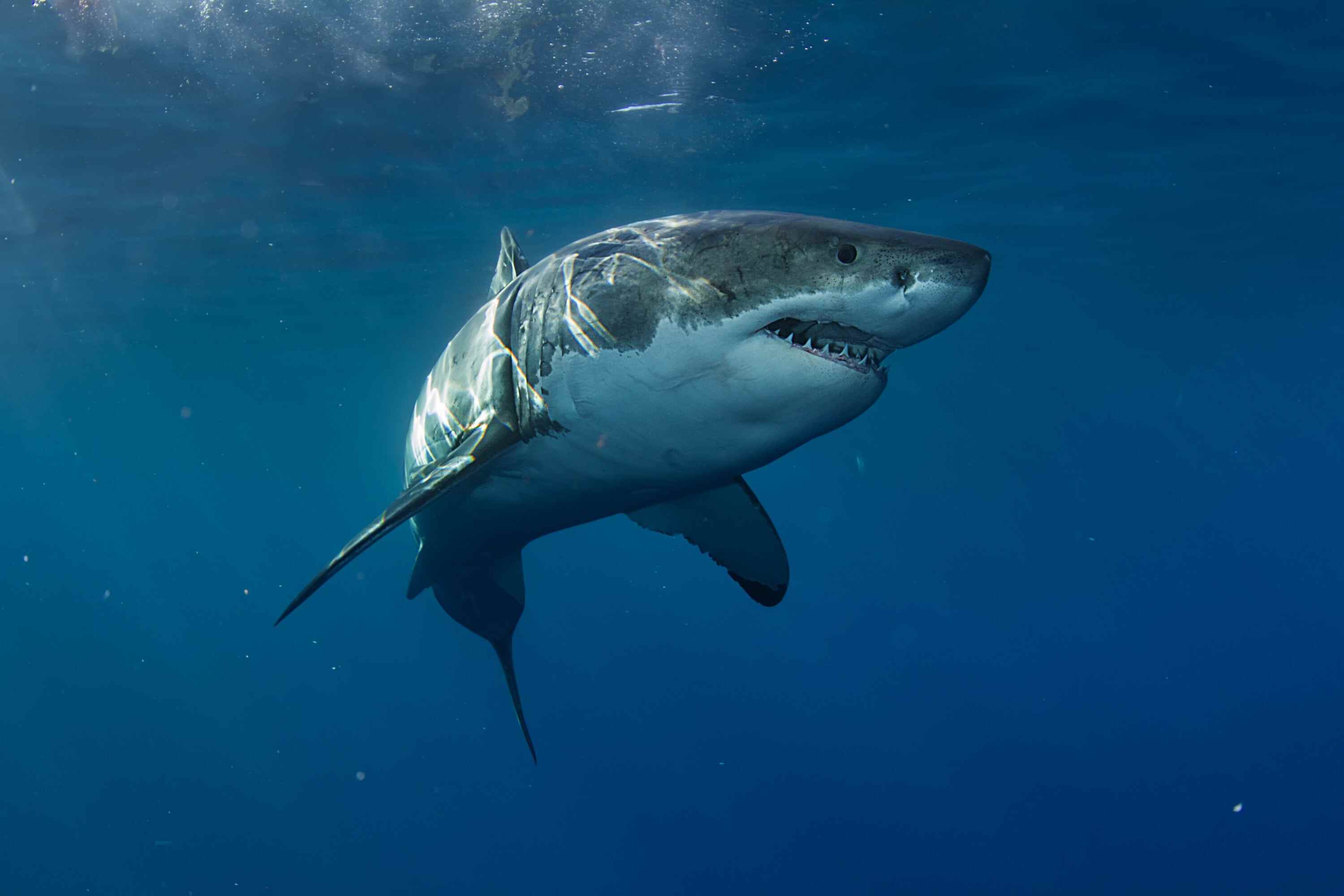
And great white sharks have really good hearing. Whether you are swimming, kayaking or paddling on your surfboard, even a juvenile can detect you from as far as 100 feet (30.48 metres) away (see graphic).
A new study revealed that while sharks respond to human noises, they can often tell from our splashing that we are not worth the nibble.
“There are dozens – if not potentially hundreds – of encounters daily at a beach with a lot of sharks and people. Why aren’t people being bitten?” said Chris Lowe, director of the Shark Lab in the US state of California. “We worked our way through all the different senses that a shark could use to go, ‘That’s a person,’ and we thought sound and vibration might be the most influential one.”
For years, Lowe and his laboratory have observed white sharks coming remarkably close to people in the water. The shark’s approach is never rushed or aggressive. As the shark gets closer to investigate, it often loses interest and simply swims away.
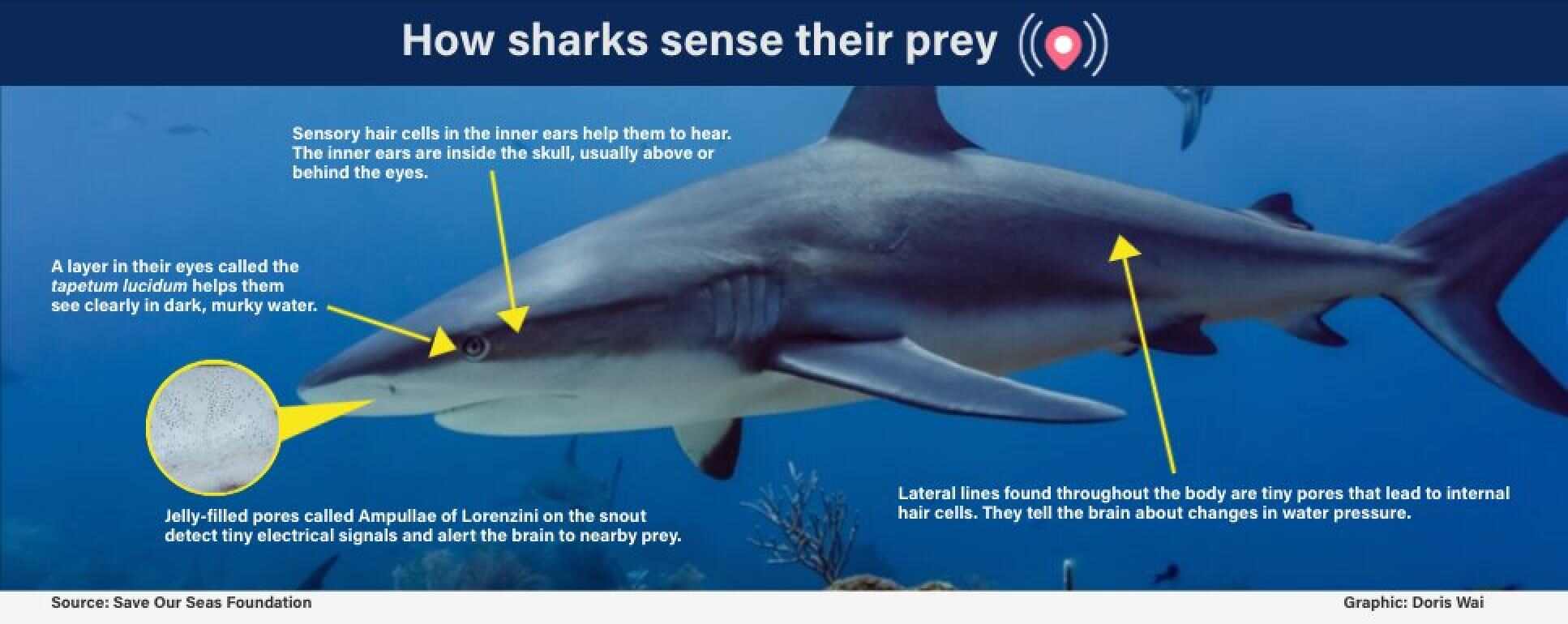
In a groundbreaking study, researchers developed a unique hearing test for sharks. They used a special multichannel hydrophone capable of capturing both sounds and their three-dimensional movements. The scientists systematically recorded themselves engaging in three common ocean activities: freestyle swimming, kayaking and paddling on a surfboard.
They then played back the “sound bites” at different distances underwater and observed whether a shark would change its angle and move towards the speaker.
This study is still ongoing, but the preliminary findings are striking. Sharks can clearly differentiate between three types of water activities.
Additionally, the louder, more erratic sound characteristics of freestyle swimming may increase the likelihood that a shark approaches from a distance.
While paddling on a surfboard, the sharks could clearly recognise the sound, but they more often tuned it out as background noise. And the gentle, more continuous sounds of kayaking elicited little reaction, said Whitney Jones, who led and designed the study.
“This is the first study to empirically show that they seem to be using sound to cue into people at these greater distances,” said Jones, who specialises in underwater acoustics and behavioural biology.
Jaida Elcock, a shark biologist with the Woods Hole Oceanographic Institution’s Marine Predators Group, said the more data, the better when it comes to dispelling our misunderstanding of sharks.
“Sharks can be found in every type of ocean ecosystem – they’re deep sea, they’re in shallow reefs, there’s even an Arctic shark,” Elcock said. “If we don’t even fully understand how they function in the world the way it is now, it is going to be even harder for us to understand how those vital parts of our ecosystems will function as the ocean continues to change.
How common are shark attacks?
Most sharks feed on smaller fish and invertebrates. Some of the larger shark species prey on seals, sea lions and other marine mammals. Shark attacks are very rare. On average, there are about 60 to 65 unprovoked shark bites each year worldwide.
Out of these rare incidents, around six people die each year. In fact, numbers show that a person has a higher chance of getting hit by an asteroid than being killed by a shark.
Sharks sometimes attack humans when they are confused or curious. If a shark sees a person in the water, it may swim closer to see what is happening, which can lead to an accidental attack.