Deep Dive delves into hot issues in Hong Kong and mainland China. Our easy-to-read articles provide context to grasp what’s happening, while our questions help you craft informed responses. Check sample answers at the end of the page.
News: Chinese vertical dramas are booming in the US
-
Chinese platforms are hosting bite-sized soap operas that draw big audiences
-
The short-form series are shaking up the streaming market in the US
Chinese filmmakers are becoming increasingly known as pioneers of “vertical dramas”, known as “duanju” in China.
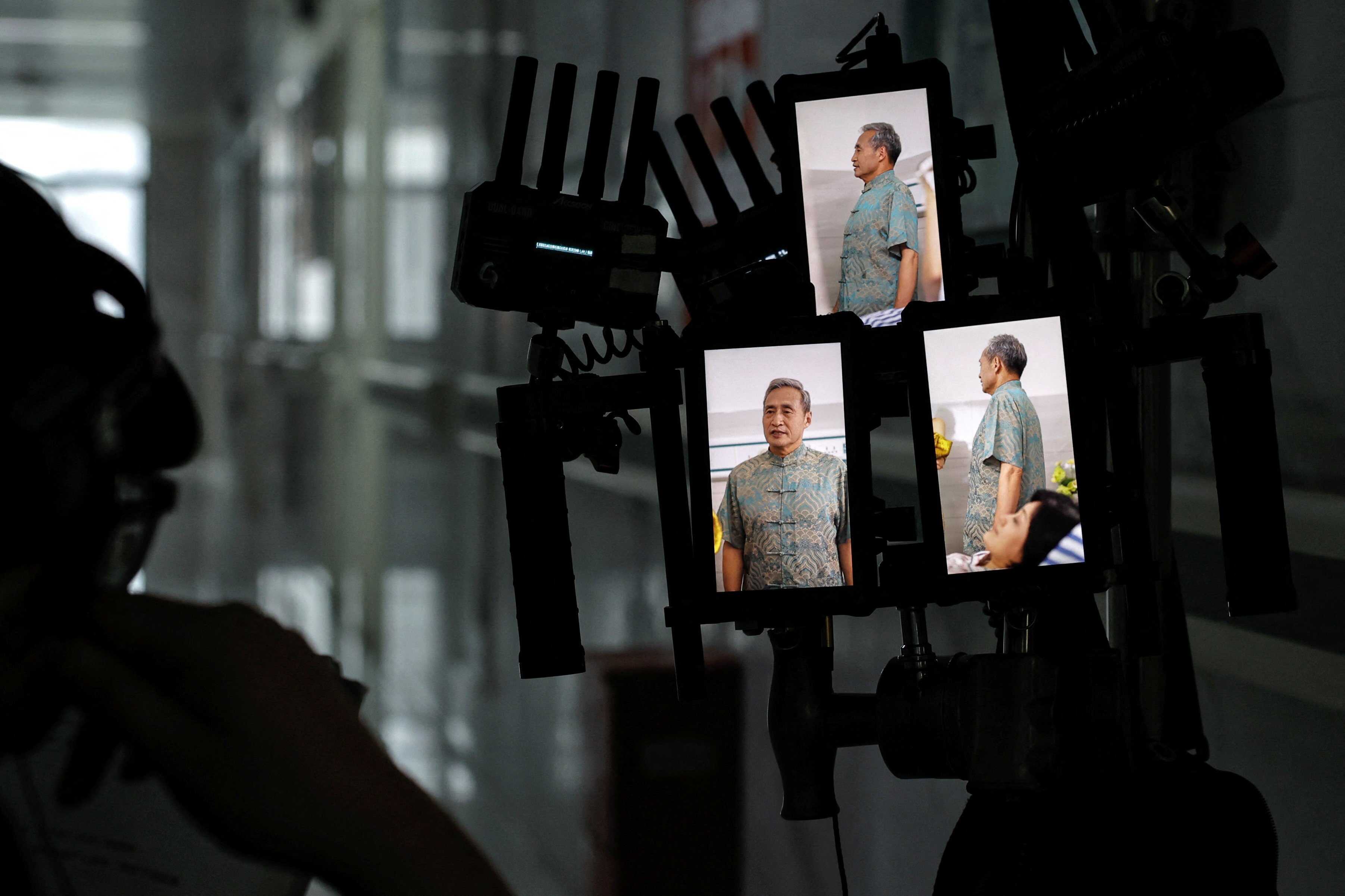
This new format reimagines television shows for the short-form video generation. Fast-paced, melodramatic and crammed with cliffhangers, the shows are bite-sized and low-cost, engineered for easy consumption and to give viewers a quick dopamine hit.
These microdrama series often feature werewolves, evil stepmothers or brooding billionaire husbands. A full series can comprise many episodes, often 20 to 100, with a total runtime comparable to one or two feature films.
They have become somewhat of a global phenomenon, sparking discussions in the United States.
While critics have dismissed the shows as trashy and vulgar, they have captured a massive audience in such a short period that even industry giants like Disney and Netflix are starting to take notice.
“When television was first invented, no one thought it would surpass movies,” director Xiang Sining said. “Vertical dramas are the same today.”
Vertical dramas first took off in China during the pandemic. By late 2024, more than 660 million people in China were watching them, according to data from the China Netcasting Services Association. The shows generated revenues of 50.4 billion yuan (HK$55 billion) that year – more than the Chinese film industry’s total box office, according to the digital research firm DataEye.
Over the past few years, dozens of Chinese-backed vertical drama platforms have launched on global app stores. Several have attracted large user bases, including ReelShort, DramaBox and GoodShort.
The industry began to attract mainstream attention in the US in late 2023, when The Double Life of My Billionaire Husband became a breakout hit, garnering over 485 million views on ReelShort alone.
In May, Netflix announced it was launching a mobile-only vertical feed, allowing users to scroll through short edited clips of the company’s shows. Then, in late July, Disney unveiled plans to invest in DramaBox through its accelerator programme.
For Jennifer Cooper, a diehard vertical drama fan from the United Kingdom, these shows are taking off because they are fast, fun and fill a hole for romantic dramas in today’s entertainment market.
“I am always looking for romantic storylines, especially romantic comedies,” she said. “Hollywood doesn’t make many any more. I got bored with Hallmark.”
Staff writer
Question prompts
1. Which of the following are not features of vertical dramas mentioned in News?
(1) full-length films with slow, detailed storylines
(2) short-form series that are fast-paced and filled with cliffhangers
(3) expensive, high-production dramas made for cinemas
(4) reality shows with unscripted, real events
A. (1), (2) only
B. (2), (4) only
C. (1), (3), (4) only
D. (2), (3), (4) only
2. List ONE reason why vertical dramas are gaining traction, particularly in the US.
3. In your opinion, how might this new format affect the film and television industry? Explain using News, Glossary and your own knowledge.
Photo

Question prompts
1. Why does Jennifer Cooper find vertical dramas appealing, and why might they attract Western viewers like her?
2. How have major Western streaming platforms responded to the vertical drama trend, and should they consider producing their own vertical dramas? Explain using News and your own knowledge.
Issue: Are vertical drama companies throwing spaghetti at the wall?
-
Creating vertical dramas is an intense process
-
Many question their creative process and risky business models, despite current success
For director Xiang Sining, it is only a matter of time before more Western production companies jump into the vertical drama market, as short-video apps like TikTok have “fundamentally changed the way people consume entertainment products”.
Currently, Chinese platforms continue to dominate the vertical drama scene, with American-educated filmmakers like Xiang acting as bridges between a largely Chinese industry and a rapidly expanding global audience.
Shooting these shows is an intense process, with the platforms putting pressure on filmmakers to deliver at speeds that are unprecedented in the industry. For the platforms, the strategy is to churn out a huge volume of titles at an ultra-low budget – a kind of “throwing spaghetti at the wall” approach to hit-making.
“Normally, a crew might shoot four to five pages of a script per day,” Xiang said. “But in vertical drama production, we shoot about 10 pages a day, finishing an entire script in eight to 10 days.”
The scripts are typically written by teams in China before being sent to Xiang in Los Angeles. He works with a mostly Chinese crew and production staff, but the cast is almost entirely Western.
Ma Wendi, another Chinese filmmaker who got into vertical dramas after graduating from film school in the US, now flies his cast from North America and Australia to a studio in Zhengzhou, China, to save on filming costs.
Ma noted that filming in China allows creators to rent helicopters, stage car crashes and access many other resources within a tight budget, which is impossible in the United States. These opportunities have allowed him to move beyond the romantic drama genre, which has dominated the industry up to now.
“Our next project will target a male audience,” Ma said. Once a show is released, she said the platforms rely on “massive investment” in advertising on social media to drive traffic.
Most shows will flop, but the profits from a hit series can offset the losses of multiple failed shows. If a show generates a net profit of 50 per cent after production and promotion costs, it is considered highly successful in the industry, Xiang said.
But not everyone is sold on this business model. Eric Zhang, the founder of LSP, a US-based media company that produces vertical dramas, said the industry’s reliance on “traffic investment” has made it highly risky for investors.
Though the platforms’ skyrocketing revenues and viewing figures looked impressive, many shows barely made a profit after massive ad spend, he stressed. In the long run, this approach could be unsustainable.
“Many vertical drama companies are riding a tiger they can’t dismount,” Zhang said. “In my view, this is a bubble floating on molten lava.”
Xiang and Ma also questioned the platforms’ current creative process, which focuses on using Chinese writing teams to produce new scripts or rework domestic hit dramas for export.
“Remaking domestic hits with the same themes and formulas will lead to vertical dramas with settings and cultural elements that feel very ‘unlocal’,” Ma said. “Many products fail to sell and flop in the market for this reason.”
For Xiang, standards in the industry are bound to improve as time goes on.
“This is an emerging industry,” he said. “As major players like Netflix enter the scene, breaking through with high-quality production and creative content is the only path for vertical drama companies to succeed.”
Staff writer
Question prompts
1. List ONE reason why American-educated filmmakers are entering the vertical drama industry.
2. What is ONE advantage and ONE disadvantage of the current production process for vertical dramas?
3. Why did Eric Zhang say many vertical drama companies are “riding a tiger they can’t dismount”? Explain using the information in Issue and your own knowledge.
Chart
Question prompts
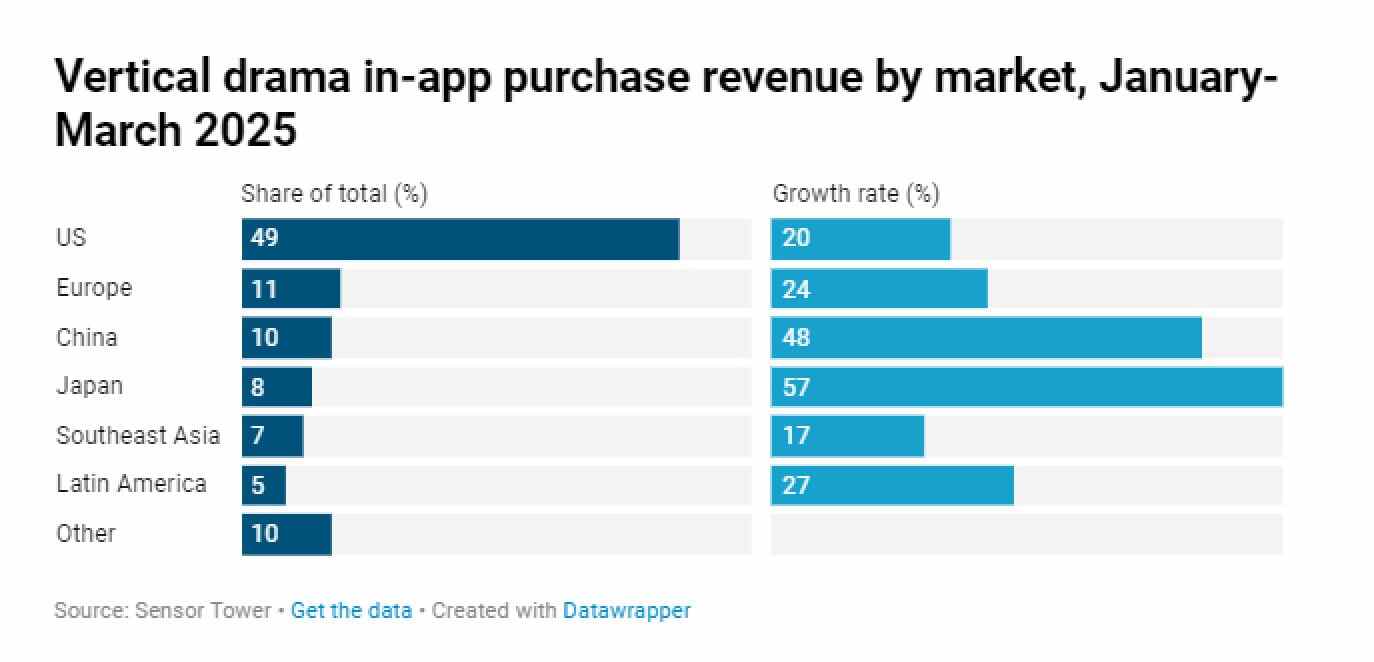
1. Which country made the most in-app purchases on these vertical drama apps? List ONE disadvantage of the entertainment industry in that country that makes filming vertical dramas there difficult.
2. Do you think the vertical drama trend and current business model will last in the entertainment industry? Explain using Issue and your own knowledge.
Glossary
vertical dramas: short-form scripted video series filmed and edited for vertical viewing on smartphones, also known as microdramas
cliffhangers: a tension-building plot device that leaves a situation or story with an uncertain ending or result, compelling viewers to watch the next episode immediately to find out what happens
ReelShort: a vertical drama streaming app founded to introduce “duanju” or Chinese-made vertical dramas to international audiences, especially in the US
throwing spaghetti at the wall: an unreliable and impractical way to do something, such as producing a large number of vertical dramas in hopes that at least one or two will be successful

Sample answers
News
-
C
-
Vertical dramas have gained traction because they fill a gap in today’s entertainment market, especially for audiences seeking quick, engaging romantic or dramatic storylines. As one fan noted, Hollywood produces fewer romantic films and series now, making vertical dramas a fun and accessible alternative.
-
Vertical dramas could reshape the entertainment industry by pushing traditional studios to adapt to changing viewing habits. Just as television once challenged feature films, short-form vertical dramas are now competing for audiences’ time and attention with their addictive, easy-to-consume format. They could lead to more investment from major platforms, such as Disney or Netflix, to capture this audience. It could also lead to a shift towards shorter, mobile-friendly storytelling and greater global reach for non-Western entertainment.
Photo
-
Jennifer Cooper finds these shows appealing because they are fast, fun and fill the gap in romantic dramas that are rarer in Western entertainment. She enjoys romantic storylines but feels Hollywood produces fewer of them. For audiences like her, vertical dramas offer quick and accessible content that satisfies their desire for engaging romance.
-
Netflix launched a mobile-only vertical feed in May, and Disney invested in DramaBox through its accelerator programme in July. Given the massive global audience and revenue growth potential, it would make sense for these platforms to explore producing their own vertical content. Doing so could help them tap into younger, mobile-first viewers and stay competitive in a rapidly evolving entertainment market.
Issue
-
American-educated filmmakers are entering the vertical drama industry because it offers huge opportunities in a rapidly growing global market. These creators, such as Xiang and Ma, act as bridges between Chinese platforms and Western audiences, enabling them to leverage their cross-cultural experience to produce content with broader appeal.
-
Advantage: The industry’s quick and low-cost production model enables platforms to rapidly release a large number of shows, increasing the chances of producing a hit. Downside: The reliance on formulaic scripts written in China often results in stories that feel culturally disconnected or “unlocal”, causing many shows to flop in overseas markets.
-
Eric Zhang believes the industry is unstable and high-risk because it relies heavily on massive advertising spending to drive traffic, while only a few shows generate significant profits. Although a single hit can cover the losses of many flops, this approach is financially unstable in the long run. As competition grows and ad costs rise, companies may find it harder to sustain this model, creating a “bubble” that could burst if revenues slow.
Chart
-
US. Filming is expensive. It is impossible to rent helicopters, stage car crashes and access other resources within a tight budget in the United States – but it is possible in China.
-
The trend is likely to last, but the business model will need to evolve. Vertical dramas suit modern viewing habits, shaped by TikTok and other short-video platforms, and have attracted massive audiences worldwide. However, the current high-risk, high-volume strategy is not sustainable. To stay relevant, companies will need to focus on quality, localisation and a more stable business model, something platforms like Netflix and Disney may help drive as they enter the market. (accept all reasonable answers)