Deep Dive delves into hot issues in Hong Kong and mainland China. Our easy-to-read articles provide context to grasp what’s happening, while our questions help you craft informed responses. Check sample answers at the end of the page.
News: Hongkongers who escaped a scam compound in Myanmar share details about the forced labour they experienced
-
A victim recounted her traumatic experiences while being trapped in the fraudulent operation
-
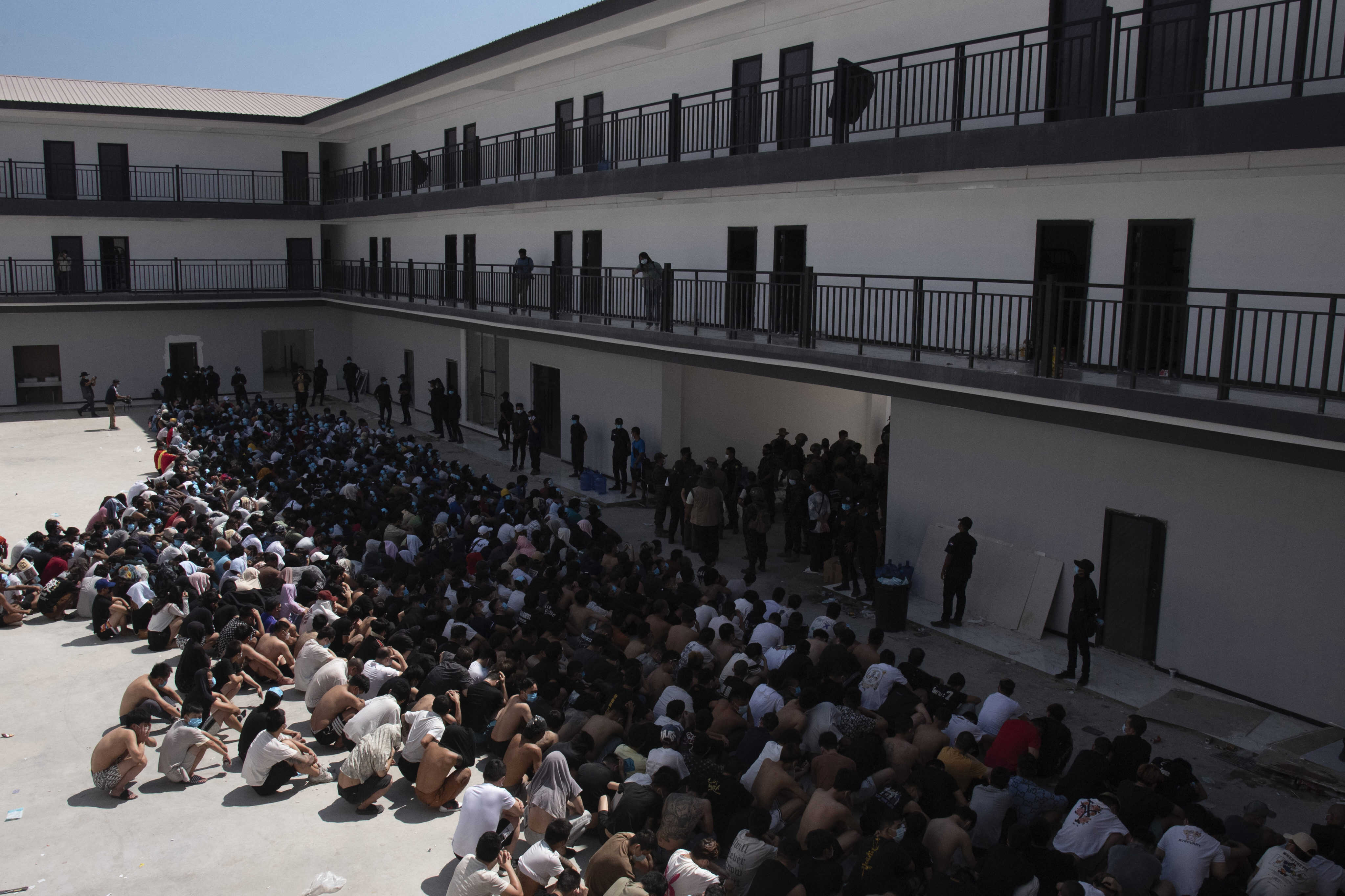
Hong Kong authorities have been working with their Thai counterparts to assist city residents trapped in Myanmar.
Nancy, who grew up in Hong Kong, never imagined that an overseas job would lead to six months of forced labour in a scam operation.
Like thousands of others drawn to Southeast Asian scam farms, Nancy hoped to make some quick money when a “friend” referred her for a job involving cross-border purchases in Thailand. Unfortunately, the experience became traumatic for her.
After arriving in Thailand, Nancy, who is in her twenties, was taken to a scam operation in neighbouring Myanmar. There, she was forced to participate in swindling activities, primarily targeting wealthy elderly Americans through various schemes, including get-rich-quick scams and fake online romances.
Nancy considered herself among the “lucky” ones who managed to flee. “I hope to share all my experiences to emphasise the importance of staying alert and being cautious. It is crucial not to chase quick money,” she said.
Each scammer was provided with four mobile phones and a computer to connect with victims. Their daily key performance indicator was to obtain two new phone numbers from their social media contacts.
Besides being beaten up, common punishments included whipping, electric shocks or being locked in a room with a black bear for a night, Nancy said.
The harsh reality of scam farms operating in lawless border regions of Cambodia, Myanmar and Vietnam often gains attention following high-profile cases, including the rescue of mainland Chinese actor Wang Xing this year.
Many others who were not rescued had to find their own way out, and the process was as challenging as surviving on the farm.
From the beginning of 2024 until the end of July this year, law enforcement agencies in the city recorded 29 cases involving Hong Kong residents suspected of being detained in Southeast Asian countries due to scams.
Of these cases, 26 individuals have returned to Hong Kong, while two others have stated that they no longer need assistance. Hong Kong authorities are collaborating with their Thai counterparts to assist residents who are trapped in Myanmar.
However, rescue efforts have proven to be challenging because most of the trafficking incidents did not occur in Hong Kong and may involve regions impacted by armed conflicts.
Staff writers
Question prompts
1. Which of the following statements about Nancy’s situation are true?
(1) Nancy volunteered to work in a scam farm in Myanmar.
(2) Workers at the scam farms can resign if they do not want to continue working.
(3) Nancy had to scam people to survive.
(4) Victims face long working hours and the constant threat of punishment.
A. (1), (2) only
B. (1), (3) only
C. (2), (4) only
D. (3), (4) only
2. What was Nancy required to do while she was at the scam farm?
3. In your opinion, how likely is it that these scam farms will be able to lure more Hongkongers? Explain using News and your own knowledge.
Graphic
Question prompts
1. Describe the victims’ living and working conditions in the scam farm.
2. What makes survival and escape from the scam farms so difficult? Use News to support your answer.
Illustration

Question prompts:
1. Based on Issue, what message is this illustration trying to convey?
2. What could happen if workers do not meet their targets in these scam farms?
Issue: Hong Kong police chief is in talks with regional counterparts about scam prevention initiatives
-
Hong Kong officials met with security officials from Asean countries to discuss combating scams
-
Hong Kong police commissioner announced plans to expand the Frontier+ alliance, a platform for fighting against fraud, to more countries
Hong Kong’s police chief has met with top security officials from four countries in the region, including Cambodia and Singapore, to discuss enhancing collaboration in combating scams and improving training. These efforts aim to expand an international law enforcement coalition.
Recently, the multibillion-dollar illicit industry has surged in Cambodia, with thousands involved in online scams. Some participate willingly, while others are coerced by organised criminal groups, experts say.
Amnesty International reported that abuses in Cambodia’s scam centres are occurring on a “mass scale”. There are at least 53 scam compounds in the country engaging in human trafficking, forced labour, torture, deprivation of liberty and slavery.
“We are now trying to expand our overseas engagement strategy and trying to reach out to more Asean [Association of Southeast Asian Nations] countries, as well as some belt and road countries, to see how we can collaborate more,” said Hong Kong Commissioner of Police Joe Chow Yat-ming.
In his meetings with officials from Vietnam, Singapore and South Korea, Chow discussed how law enforcement could work together more effectively to tackle scams.
The police chief, who led a 10-member delegation to Jiangsu, said the discussions with South Korea and Singapore, both members of a 10-jurisdiction joint law enforcement platform called Frontier+, mainly centred on intelligence sharing to fight scams.
“For South Korea and Singapore, we do share the same problem,” Chow said. “We will continue our efforts in Frontier+, and hopefully in areas of asset tracing and how to freeze the money.”
The commissioner also revealed there were plans to expand the Frontier+ alliance to more countries.
The current alliance members include Australia, Canada, Thailand, Malaysia, the Maldives, Macau and Indonesia.
Regarding Cambodia and Vietnam, Chow mentioned that the city is considering offering training courses to law enforcement, while intelligence sharing would occur on a case-by-case basis.
“For example, we have a new training course named the security and major event coordinating course,” Chow said. “This is more like our experience in organising huge events, say for example those in Kai Tak [Sports Park].”
Other areas Hong Kong could offer its expertise include financial investigations, as well as commercial crime and cybercrime, the police chief added.
Staff writers and Agence France-Presse
Question prompts
1. According to Chow, what problem do South Korea and Singapore share with Hong Kong?
2. List Hong Kong’s area of expertise that it can share with other Asian countries as they work to combat these scam farms.
3. How might international cooperation help address the problem of human trafficking and scam farms? Explain using Issue and your own knowledge.
Glossary
-
forced labour: work or service taken from someone by threatening them with punishment. In these cases, people have not offered their work voluntarily
-
key performance indicator: a measurable value that shows how effective a company or individual is in achieving their goals
-
human trafficking: the recruitment, transport, harbouring or receipt of people through exploitative methods such as force, coercion or deception
-
asset tracing: the process of finding and recovering funds or property that have been stolen or illegally moved
-
Frontier+: Hong Kong’s Anti-Deception Coordination Centre (ADCC) has collaborated with anti-scam centres from nine countries and regions, including Australia, Canada, Indonesia, Macau, Malaysia, the Maldives, Singapore, South Korea and Thailand, and established the Cross-border Anti-Scam Collaboration Platform since October 2024

Sample answers
News
1. D
2. She was forced to try to swindle people, primarily targeting wealthy elderly Americans through everything from get-rich-quick schemes to fake online romances.
3. It is highly likely that these scam farms will continue to successfully lure more Hongkongers, despite recent high-profile cases and official efforts. First of all, with rising unemployment and a slowing economy, more workers could be tempted to earn “quick money” by working overseas. As long as the scammers powerfully advertise the economic incentive, it will continue to attract desperate individuals.
Secondly, the recruitment mechanism is scarily effective, using deception through familiar connections. Nancy thought it was an overseas job at first when her friend referred her to a role making cross-border purchases in Thailand. These methods are likely to sound convincing to workers.
With at least 29 recorded cases of Hongkongers suspected to be detained since 2024, it confirms that the scam networks remain active. As the authorities noted, rescue efforts are severely hampered by the farms operating in “lawless border regions” and areas of “armed conflict”. The difficulty of intervention ensures that the perpetrators can maintain their operations with relative impunity, allowing the recruitment cycle to persist.
Graphic
1. The victims’ living quarters are rudimentary and severely constrained. Eight people share a room with bunk beds in a tight space with no privacy. The workplace prioritises efficiency and control of forced labour. Workers use a computer and four mobile phones simultaneously. The dense workspace is strictly controlled and monitored by group leaders and supervisors.
2. According to News, victims suffer corporal punishment and abuse if they do not conform to the rules in these scam farms. Escape is severely complicated because the scam farms operate in lawless border regions and areas experiencing armed conflict. Authorities said that rescue efforts are difficult due to the location.
Illustration
1. Based on Issue, the red whip signals the authorities’ efforts to combat illicit activities and abuse in these scam farms.
2. Apart from being beaten up, other common types of punishment included whipping, electric shocks or being locked in a room with a black bear for a night. Some punishments were carried out in front of others held on the farm.
Issue
1. According to Chow, South Korea and Singapore also suffer from the threat of scam compounds. Its citizens have also been lured into forced labour.
2. Hong Kong can offer training courses, such as the security and major event coordinating course. Other areas in which Hong Kong could provide its expertise include financial investigations, as well as commercial crime and cybercrime.
3. Cooperation between Hong Kong, Thailand and Myanmar could help locate and rescue victims, share intelligence and coordinate law enforcement actions against scam operations. For instance, Hong Kong authorities have already sent a task force to Thailand to work with local and Chinese embassy officials to assist victims trapped in Myanmar. However, these efforts face major challenges because the trafficking occurs outside Hong Kong’s jurisdiction and often in lawless or conflict-ridden border regions, making investigations and rescues extremely difficult.