Students sitting the citizenship and social development (CSD) paper in Hong Kong’s university entrance exams on Tuesday were tested on the “One Country, Two Systems” governing principle and faced more questions that needed explanation using their own knowledge.
About 50,300 candidates sat the CSD paper for the Diploma of Secondary Education (DSE) this year, up from 48,000 last year. The CSD subject, which replaced the controversial Liberal Studies curriculum, is graded only as “attained” or “not attained”. Last year, the paper had a passing rate of 93.2 per cent.
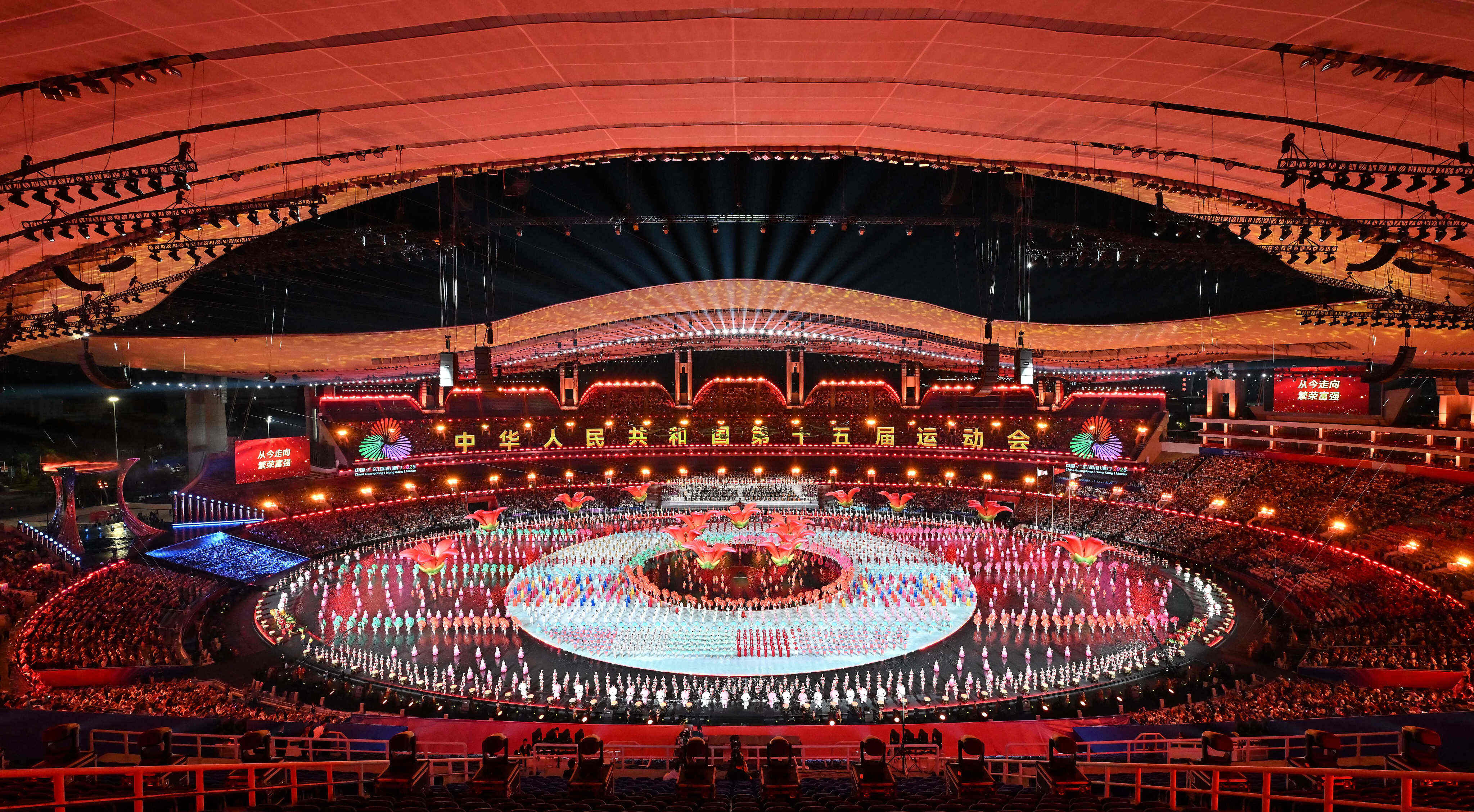
While foundational national education concepts remained central to the paper, educators noted a shift towards testing students’ broader social awareness through current affairs, including the 15th National Games and South Korean pop culture.
Tuesday’s exam also featured prominent questions on the constitutional relationship between Hong Kong and mainland China, as well as Greater Bay Area integration.
Social insight to answer questions
Former Liberal Studies tutor and secondary teacher Liu Tin-yan noted a clear shift in this year’s exam, suggesting it was testing students’ “information sensitivity” and external knowledge.
She said the revamped subject appeared to be drawing on elements of the old Liberal Studies curriculum by requiring candidates to demonstrate broader social insight.
“The materials from the first two years felt very ‘governmental’ – often using government data or national documents, which felt quite heavy. But this year, the materials are clearly much more lively and active,” Liu said.
“While the patriotic or national education components are still there, the selection of materials shows they want students to have social insight. They want you to understand international developments.”
Liu noted that there were more questions requiring students to explain using their own knowledge instead of relying solely on the provided texts. This skill was included in five of the nine written-response questions this year, compared with three last year.
“Furthermore, even the standard four-point questions, which are usually straightforward tasks like describing or identifying, now come with added constraints,” the teacher said.
She pointed out an eight-mark question that asked how young people could equip themselves to adapt to development trends in the new economy. Another question required candidates to categorise their answers specifically into “policy” and “infrastructure” while also applying their external knowledge.
“These added layers of requirements make it much harder for students to express themselves freely and secure high marks,” Liu said. “It’s clear the examiners want to strengthen the focus on understanding and analysis. They are providing more ‘conditions’ for the students to meet in their answers.”
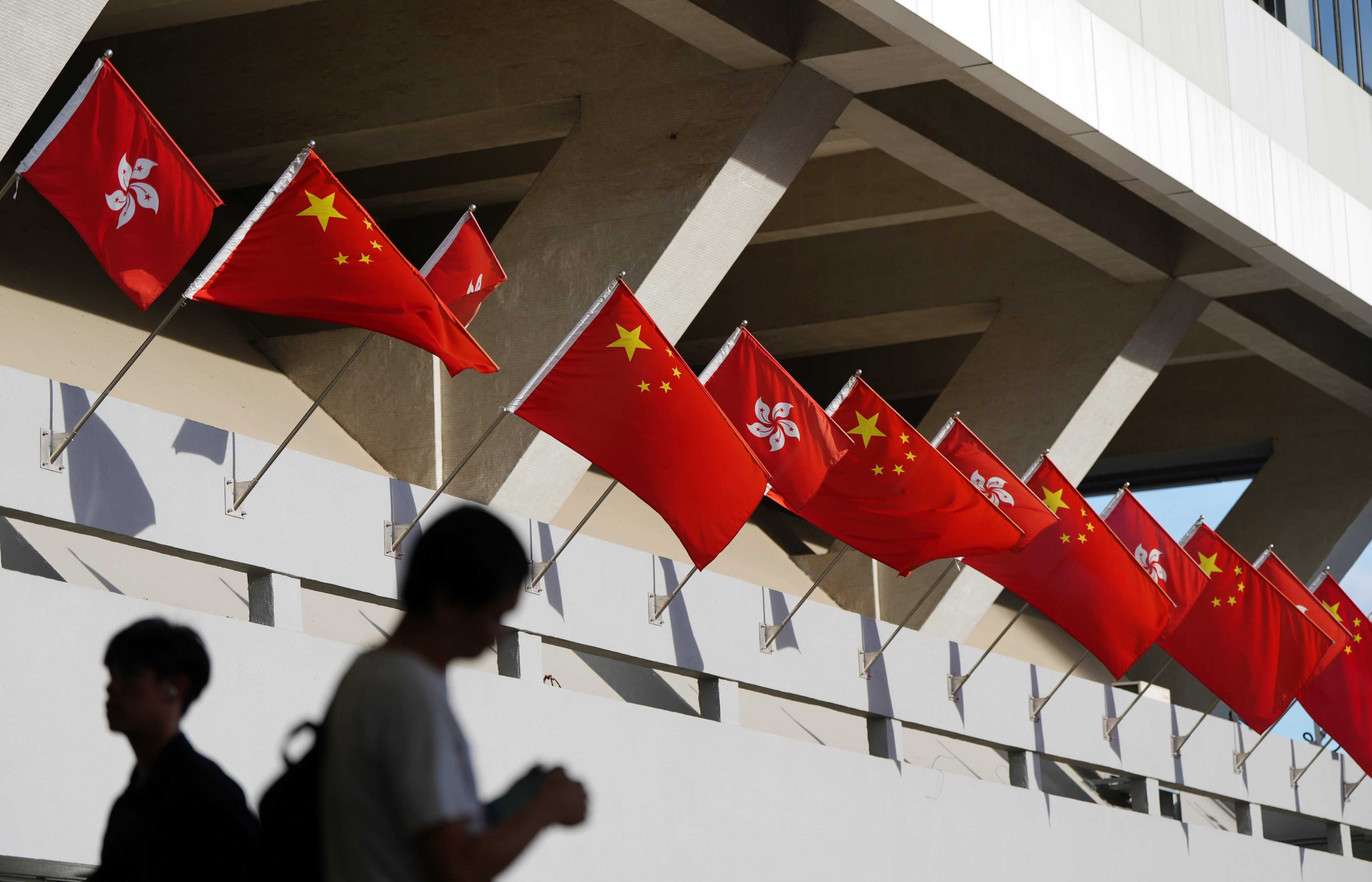
Other questions focused on the “One Country, Two Systems” principle, asking why it could ensure Hong Kong’s prosperity and stability, and about the constitutional relationship between the city and the mainland.
One question also tested students on the development of the Greater Bay Area and Hong Kong’s integration into the overall development of the country.
Student responses to the exam
Candidates generally welcomed the broader scope of the paper.
Chan Wai-wun, a 17-year-old from Queen Elizabeth School Old Students’ Association Secondary School, said that this year’s exam was more relevant to society.
“It not only mentioned Hong Kong’s long-standing ‘one country, two systems’ policy, but also covered more current social issues, including online tourism promotion – how South Korea promotes its tourism and [how] Hong Kong invites different online celebrities to promote its tourism, and the new economy,” Wai-wun said.
“It can encourage students to think critically, rather than blindly copying. To answer questions correctly, they might review relevant current events, showing greater emphasis on CSD than before, and thus gain a better understanding of Hong Kong.”
The student shared that the part she most enjoyed learning about was Hong Kong’s culture and policies.
“As a Hongkonger, I have a certain affection for this land, and naturally, I want to learn more about its history and culture,” she said.
Another student, Roniya Law Nok-yau, 18, from CCC Kei Yuen College, found this year’s exam to be less challenging, adding that one of the more surprising questions was about the National Games.
“That surprised me a bit because it’s not in the textbooks; it’s a very current affairs-based topic,” she said. “It asked why we have cross-border cooperation – specifically, what the advantages are for Hong Kong to collaborate with the mainland this time.”
Law was also taken aback by the first long question that examined the constitutional relationship between the People’s Republic of China and the Hong Kong Special Administrative Region. She felt that it was the hardest question in the paper, and many of her peers struggled to give a complete answer.
“I’m just not sure because I did not know what kind of ‘relationship’ they wanted me to describe. The prompt was very vague about the relationship between the HKSAR and China. I did not know if they wanted me to answer with something very substantive or regarding a specific area,” she added.
For Law, the significance of the CSD subject was to “recognise and understand the motherland”, and to acquire exam skills such as integration and elaboration – finding important information within many materials.
“It also helps us learn about what is happening in our society and the world,” she said.
The DSE exams will conclude on May 5, with results scheduled to be released on July 15.