Read the following text and answer the quiz below.
[1] Telling human stories through images is what Nicole Tung does best. The Hong Kong-born freelance photojournalist is best known for her award-winning work focusing on the humanitarian impact of war. Now based in Istanbul, Turkey, a key focus of her work is West Asia and North Africa. Since 2012, she has documented the Syrian civil war, including the fall of Bashar al-Assad’s regime in December last year, the revolution in Libya that led to the overthrow of Muammar Gaddafi, and the Arab Spring protests in Egypt.
[2] But her series as the laureate of the 15th edition of the Carmignac Photojournalism Award captured a different kind of battle – one between humans and the ocean. Open to photographers of all nationalities, the award was established by French entrepreneur and art collector Édouard Carmignac and recognises investigative photo reportage on human rights violations and geostrategic issues.
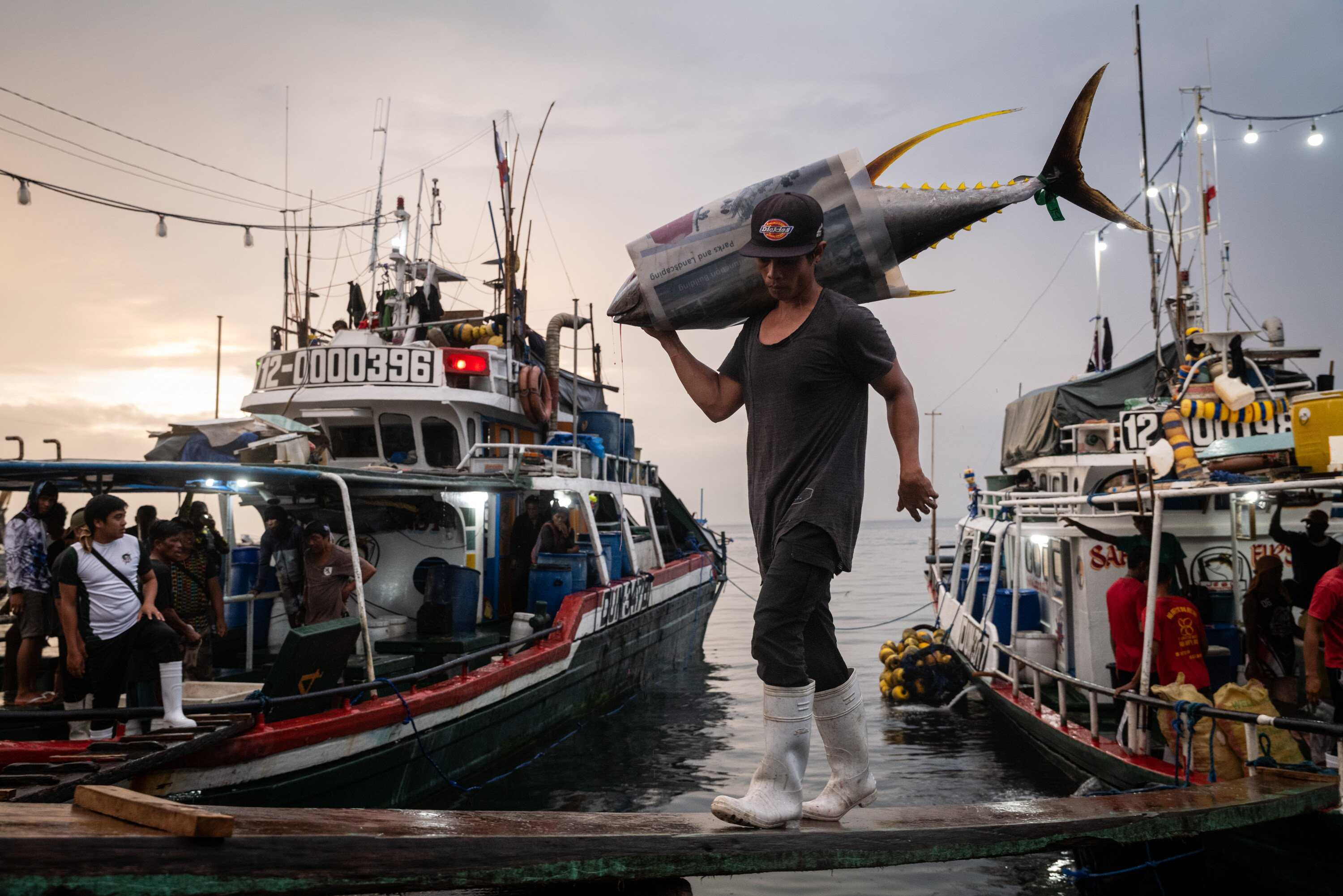
[3] As its laureate, Tung was supported by the foundation during her nine-month stay in Southeast Asia. She captured human and environmental violations linked to illegal fishing and overfishing, exposing the complex dynamics of industrial fishing and its consequences for marine ecosystems and coastal communities. Working in Thailand, the Philippines and Indonesia, Tung explored how geopolitical pressures affected local fishers and the working conditions of migrant labourers at sea. She also looked into the shark trade. The meat is sold locally, while fins and bones are exported, mostly to China and Hong Kong, for use in cosmetics and traditional medicine.
[4] Tung’s interest in photography began at age 15 when her grandfather gifted her a Leica camera. During a study break while attending New York University, she went backpacking across Bosnia. “I think that was a formative experience in the sense that I met a lot of people who shared their experiences of a war that I had read so much about,” she said.
[5] People also shared stories about the genocide in Srebrenica, a small mountain town in Bosnia and Herzegovina. In July 1995, more than 8,000 Bosniak Muslim men and boys were massacred there during the Bosnian War. “I realised the kind of power of being able to speak to people and use the camera as a way of documenting what I was seeing,” she said, adding that a pivotal point was meeting widows who had fled Srebrenica 10 years earlier. “They were still living in a displaced persons camp. Meeting them was significant because they shared their stories.”
[6] Documenting the reality of conflict is crucial, Tung said. She wants people to emotionally engage with her images and not become “fatigued” by them. “We’re seeing so much horror on the news and on social media, but I think the power of photography can cut through the apathy and people becoming numb to it,” she added.
[7] Navigating ethical dilemmas is part of the job, Tung said, adding that she leans heavily on her instincts to guide her. “There are a lot of ethical dilemmas that come up in the field that you have to make split decisions on. Usually it’s just trusting your gut and knowing that something is worth documenting, but doing it in a very sensitive way,” she said.
Source: South China Morning Post, September 8
Content provided by British Council