Read the following text and answer the quiz below.
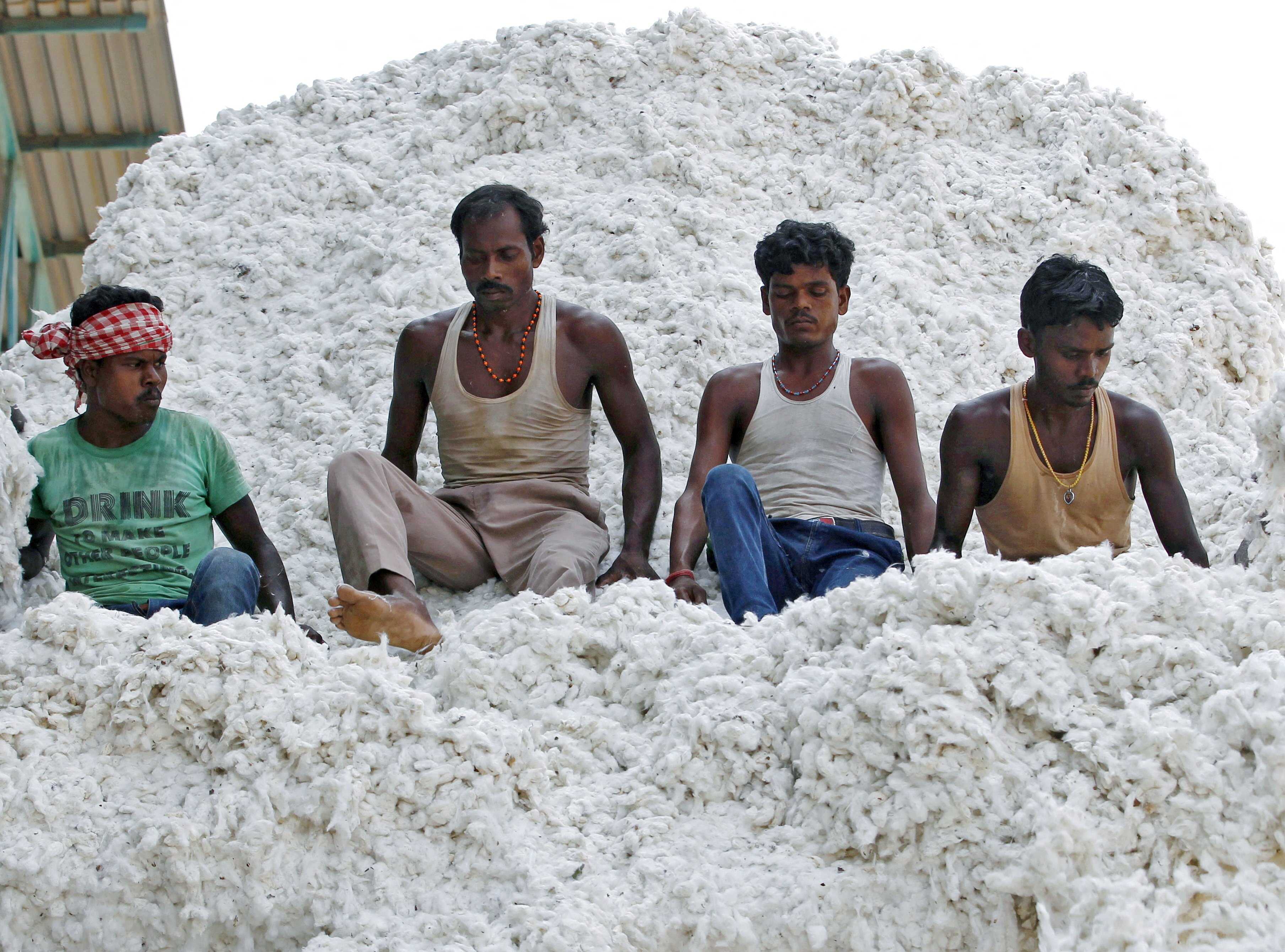
[1] Cotton, the world’s most profitable nonfood crop, is used more than any other natural fibre. Known for its comfort and durability, it has been used since antiquity in fabrics and other goods. At least four species are grown commercially. One is dominant and accounts for about 90 per cent of global production.
[2] With some genomic sleuthing, scientists have unravelled the domestication history of this important species. Called Gossypium hirsutum, or upland cotton, it was first taken from the wild in Mexico in the northwestern part of the Yucatan Peninsula. It was populated by Stone Age farmers at the time, before the Maya civilisation flourished there.
[3] Jonathan Wendel is a botanist and evolutionary biologist at Iowa State University. He said this domestication occurred at least 4,000 years ago, perhaps up to 7,000 years ago. The researchers pinpointed where domestication occurred. They compared the genetic information of the domesticated species to wild cotton species found in the Yucatan, Florida and the Caribbean islands of Puerto Rico and Guadeloupe. The domesticated species most closely matched wild Yucatan cotton.
[4] Wendel is the co-senior author of the study. It was published in the Proceedings of the National Academy of Sciences journal. He described wild cotton plants as “woody, multibranched shrubs or small trees, long-lived, with relatively sparse flowering and smaller flowers, fruits and seeds than under cultivation.” He added that some human groups must have taken an interest in the wild forms, which set in motion the process of domestication. The modern crop form would arise over thousands of years.
[5] Corrinne Grover is a geneticist and evolutionary biologist at Iowa State University and a co-senior author of the study. She explained that early farmers saw potential in the “sprawling plant with hairy seed” as a source for soft materials. “Early weavers could spin fibre by hand and use it for weaving cloth, fish nets, ropes and other goods,” she said.
[6] Upland cotton was introduced to the rest of the world following Spanish conquests in the Americas in the 16th century. Today, China, India, the United States and Brazil are the world’s leading cotton producers. Grover said research shows that the process of domestication – “transforming short, coarse and brownish fibres into the fine, white and superior textile we know today” – likely involved many genes operating in a complex symphony. Wendel added that the fibres themselves are just single-celled seed hairs, “but are among the most exaggerated and remarkable cells in plants”.
[7] The study found that the domesticated cotton plant has far less genetic diversity – the variety of genetic characteristics within a species – than its wild counterparts. Less genetic diversity can lower a species’ ability to adapt. Grover said: “Domestication often leads to a loss of genetic diversity as early farmers were selecting for valuable traits.”
[8] She explained, “We can see what this means globally for the cotton genome, and how it compares to what still remains in the wild. This wild diversity is important because traits that were inadvertently lost – certain pest resistance, for example – may be valuable in incorporating into our modern cultivars.”
Source: Reuters, May 18
Content provided by British Council