[1] Jang Hye-jin and Choi Woo-shik, stars of Bong Joon-ho’s Oscar-winning South Korean satire Parasite, reunite in Number One. This peculiar drama by Kim Tae-yong, director of Set Me Free (2014), casts them once again as mother and son. The highlight of the film, however, is the delicious regional culinary delights that sustain their relationship.
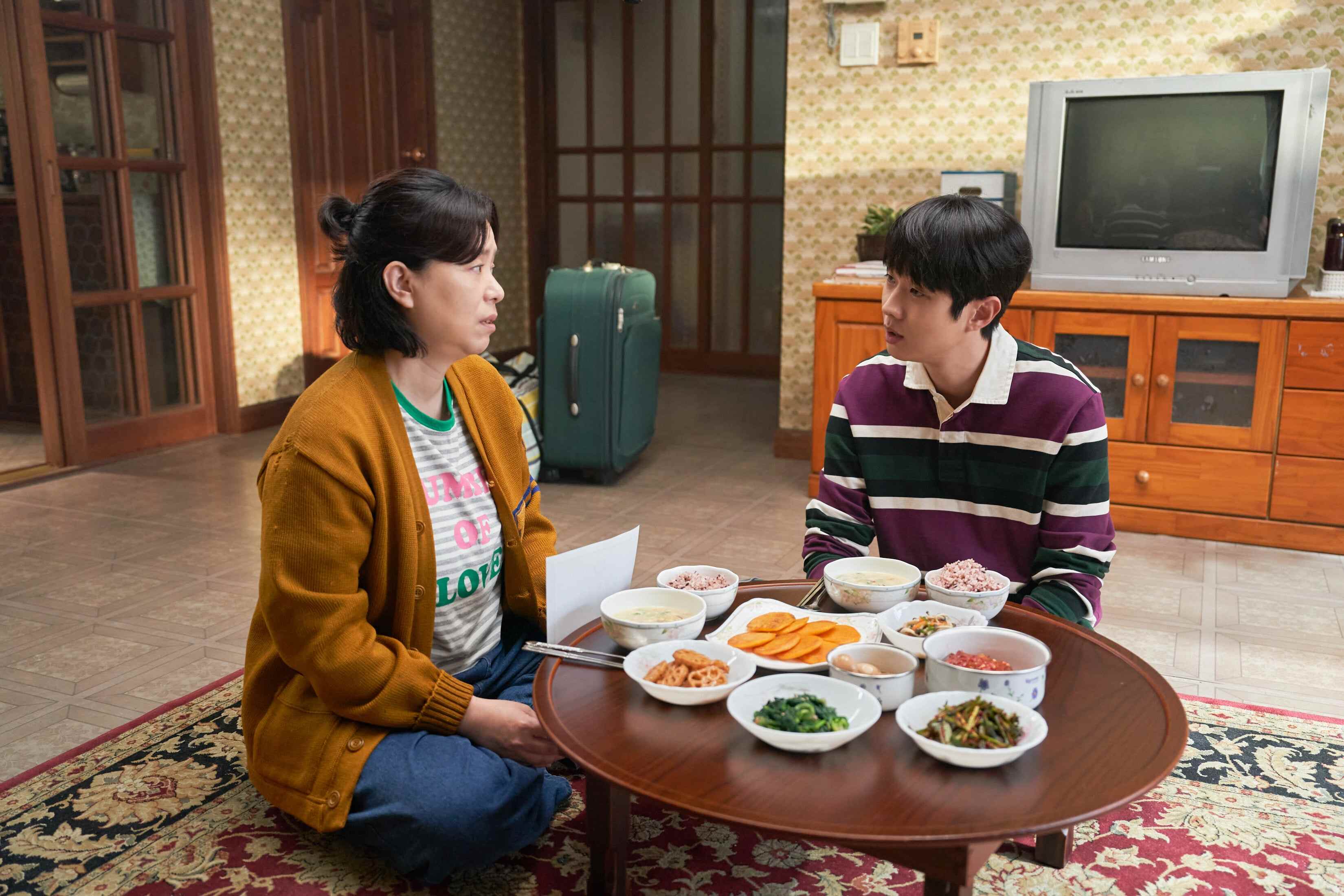
[2] Food often serves as a love language between family members, and nowhere is that more apparent than between Eun-sil (Jang) and her spoiled sons. Growing up in Busan, Ha-min (Choi) was raised on a robust diet of beef and radish soup and other local dishes served up by his prematurely widowed mother.
[3] Everything changes the day his elder brother (Jang Yeon-woo) is killed in a car accident at the age of 18. Inexplicably, Ha-min blames his mother for the tragedy. From then on, whenever he eats her food, numbers appear in front of him, counting down from 365 with every meal. Ha-min becomes convinced that this bizarre phenomenon, visible only to him, is a countdown to his mother’s death. He feels he has no choice but to stop eating her food, move to Seoul and cut ties completely.
[4] For 15 years, Ha-min lives this way, never returning home or speaking to his mother. But events come to a head when he proposes to his girlfriend, Ryeo-eun (Gong Seung-yeon). An orphan, Ryeo-eun has never had a proper family and will only accept Ha-min’s proposal if his mother comes to live with them – an ultimatum he cannot agree to. Fate then deals him a cruel hand, forcing him to return home.
[5] Number One is a difficult film to embrace, not least because Ha-min is such a wholly unlikeable character. While the story’s fantastical premise provides a reason for his behaviour, it can only excuse it so far. Eun-sil lost her husband on the day Ha-min was born, and her elder son just 18 years later. Her only way to express her love is through her cooking, which her sole surviving offspring refuses to eat.
[6] Jang is a delight as always, and Eun-sil’s developing relationship with Ryeo-eun proves far more rewarding than the one with her ungrateful son, even as the film ties itself in head-scratching knots attempting to explain the true meaning of the mysterious digits.
[7] Rather than showing that a mother’s love is unconditional, all Number One really proves is that mummy’s boys like Ha-min are undeserving of a single serving.
Source: South China Morning Post, August 5