Content provided by British Council
Read the following text and answer the quiz below.
[1] How can we engage young people in lessons about saving, budgeting and investing? The founders of Talents Foundation, a charity based in Hong Kong, believe that lectures are not the way to go. They aim to teach youngsters how to manage their finances and achieve their goals in a fun way.
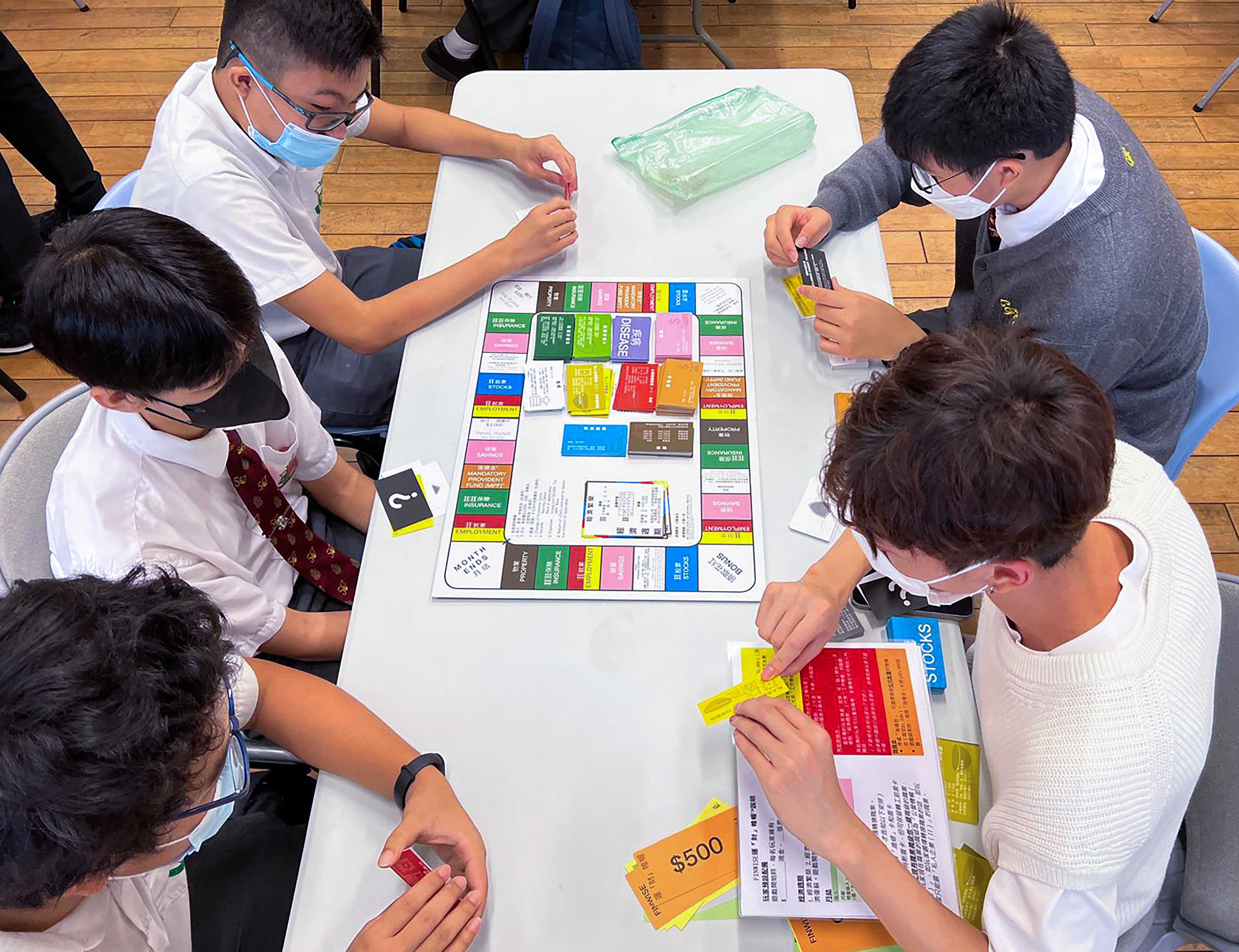
[2] Founders Arthur Hui Ka-yu and David Wong have developed a curriculum that includes a Monopoly-like board game. This programme teaches primary and secondary school students how to seize opportunities, such as job promotions and stock investments. It also helps them handle real-life challenges, including lay-offs and stock market crashes. “They learn more this way. They remember the lessons better,” Wong said.
[3] He and Hui founded the charity in 2022 after noticing a lack of financial literacy training in many schools. “They might teach macroeconomic concepts such as inflation or commerce, but not on a personal level,” said Hui, the programme director, adding that many parents also did not talk about finances with their children.
[4] The board of directors at Talents Foundation is composed primarily of retired or current school principals. Since its inception, the foundation has provided financial literacy courses to 12,000 students in 140 local schools. The project’s goal is to empower young people to break the cycle of debt and intergenerational poverty through financial literacy sessions.
[5] In the first session, students are asked to create a budget for their “family”, initially without limits. Later, they are given a budget of around HK$30,000 (US$3,850) – Hong Kong’s median monthly household income – and must try to meet everyone’s needs within it. “They realise it’s not enough, so they have to add and subtract,” Hui said. The exercise gets them to consider expenses they might not normally think about.
[6] In the second session, students play the foundation’s board game, Finwise, which simulates adult life and teaches them to handle unexpected challenges, such as unemployment, workplace injury or even a stock market crash. “For the stock market crash, for example, they learn not to put all their eggs into one basket,” Hui said. “We even throw in Covid.” Like Monopoly, there are winners, but the difference is that everyone can win if they reach the goals they set for themselves. “It’s real life. Winning or losing doesn’t matter. It’s about your life decisions,” said Lam Ting-yu, a teacher at Chong Gene Hang College, a long-time partner school of the charity.
[7] In the third session, students draw up a savings plan for themselves and begin setting aside money towards something they want to buy. In the fourth session, held after some time has passed, the charity assesses the course’s impact on students’ behaviour and whether they acted on their savings plan. The school’s principal, Wong Sai-yiu, said the course encouraged children to think about how to be smart with money.
Source: South China Morning Post, January 18