Content provided by British Council
Read the following text and answer the quiz below.
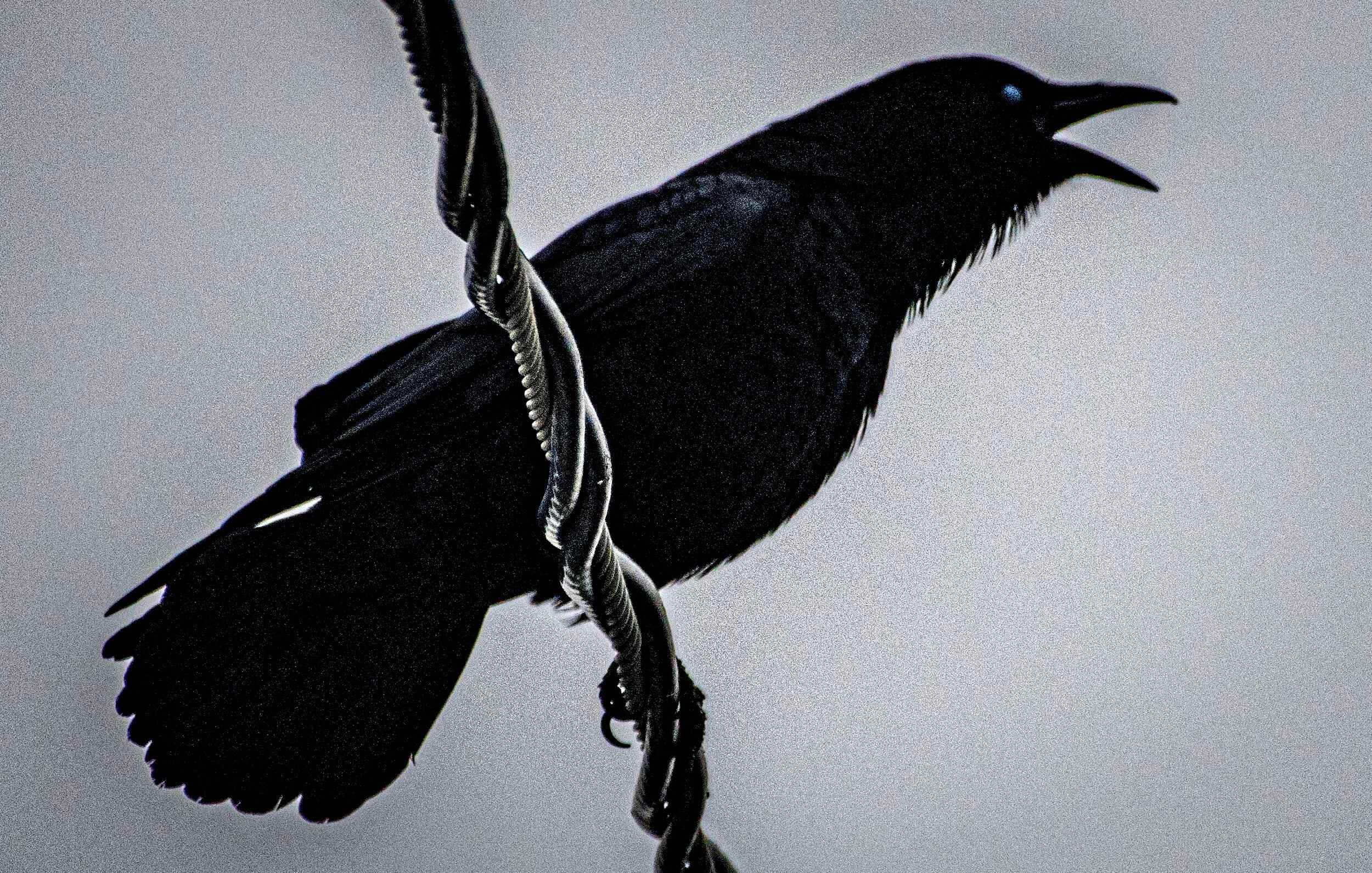
[1] A survey conducted in December showed the number of crows in Japan’s capital had fallen to less than 20 per cent of its peak in the early 2000s. In the 1990s, soaring numbers of the winged scavengers turned Tokyo’s alleys into feeding grounds. Drawn to plastic garbage sacks left outside restaurants overnight, the crows learned to rip them open and feast before morning collection.
[2] The large, intelligent birds also became increasingly aggressive during the breeding season. They swooped at passers-by and raided the nests of smaller species. Parks where the crows roosted were coated in droppings, while the birds’ taste for bright wires and shiny parts led to power outages and damaged fibre-optic cables.
[3] By 2001, researchers counted a record 18,658 crows at Tokyo’s three main roosting sites: Meiji Jingu shrine, Toshimagaoka Cemetery and the National Museum of Nature and Science. Complaints to the metropolitan government reached into the thousands. That picture has now changed dramatically. In 2024, just 293 complaints were filed, fewer than one-tenth the number at the start of the century.
[4] Kevin Short is a naturalist and former professor of cultural anthropology at Tokyo University of Information Sciences. He said the drop in numbers was even noticeable in neighbouring Chiba prefecture, where he lives. Officials employed a variety of measures to control the crows, including trapping, nest removal and poisoned bait. The city also built communal rubbish stations secured with heavy metal lids, while subtle social pressure ensured public compliance.
[5] Other cities have also taken steps to rein in the crow menace. In December 2010, the city of Minoh, on the outskirts of Osaka, passed an ordinance that prohibited residents from leaving food out for crows. The ordinance included a fine of up to 100,000 yen (HK$4,983) for anyone caught feeding the pests or refusing officials access to their gardens.
[6] A Japanese scientist has further turned the tables on the crow population by developing a device that projects warning cries to scare the creatures away. Dr Naoki Tsukahara is a professor of biosciences at Utsunomiya University who is widely regarded as Japan’s foremost authority on crows. His company, CrowLab, has created a device that can be placed alongside rubbish and uses a sensor to detect when a crow is approaching.
[7] The device then plays a recording of a cry that the birds use to warn each other that danger – a cat, hawk or even a human – is nearby. Tsukahara estimated that he recorded 10,000 crow calls before he was able to isolate those that served as warnings. Farmers, golf course operators, solar plant firms and warehouse operators are now leasing the equipment, according to CrowLab.
[8] Short said the absence of large numbers of crows was also proving to be beneficial to other bird species in big cities. “It is good for biodiversity as the hoshi boso crow [carrion crow] has a powerful bill that is designed to tear the meat off dead animals in its normal mountain environment, but they caused huge damage to the sparrow population of Tokyo,” he said. “They would raid nests, and I myself have seen them swallow a fledgling sparrow whole.”
Source: South China Morning Post, January 13