Every week, Talking Points gives you a worksheet to practise your reading comprehension with exercises about the story we’ve written.
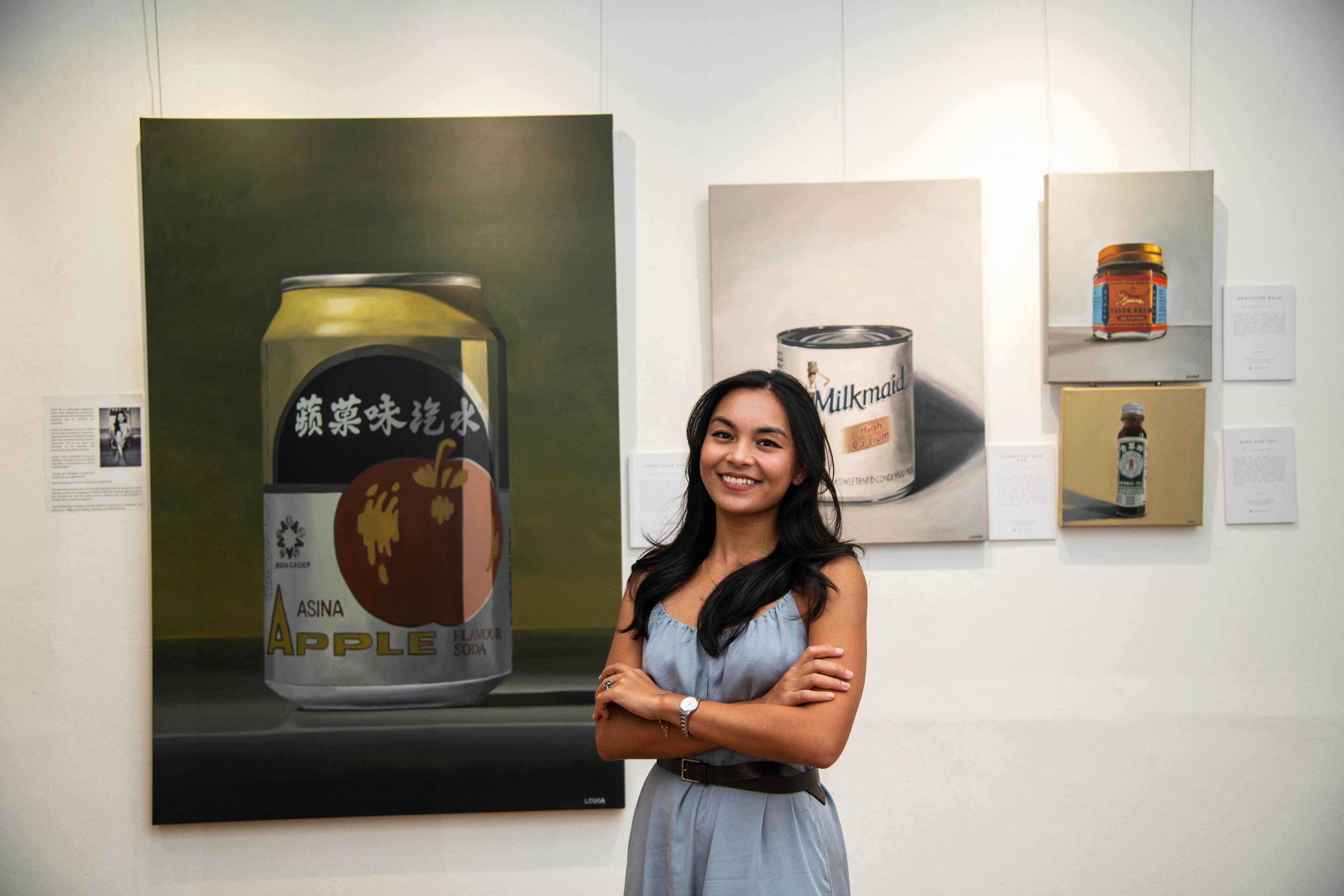
We all have that one thing that pulls us back to the centre when the world gets too overwhelming. For painter Louisa Raj, that grounding force is a grain of rice – a symbol of family and togetherness.
Her debut solo exhibition, “Rice is Nice”, was dedicated to rice sacks. In the exhibition, which ended last month, the Singaporean artist invited audiences to find the extraordinary within the ordinary.
“Growing up in Singapore, rice wasn’t something I saw in fields – it was the bright, familiar bags in supermarkets and at home. This project is really about slowing down and paying attention to something we see every day, but rarely think about – what rice actually means to us,” the 36-year-old artist said.
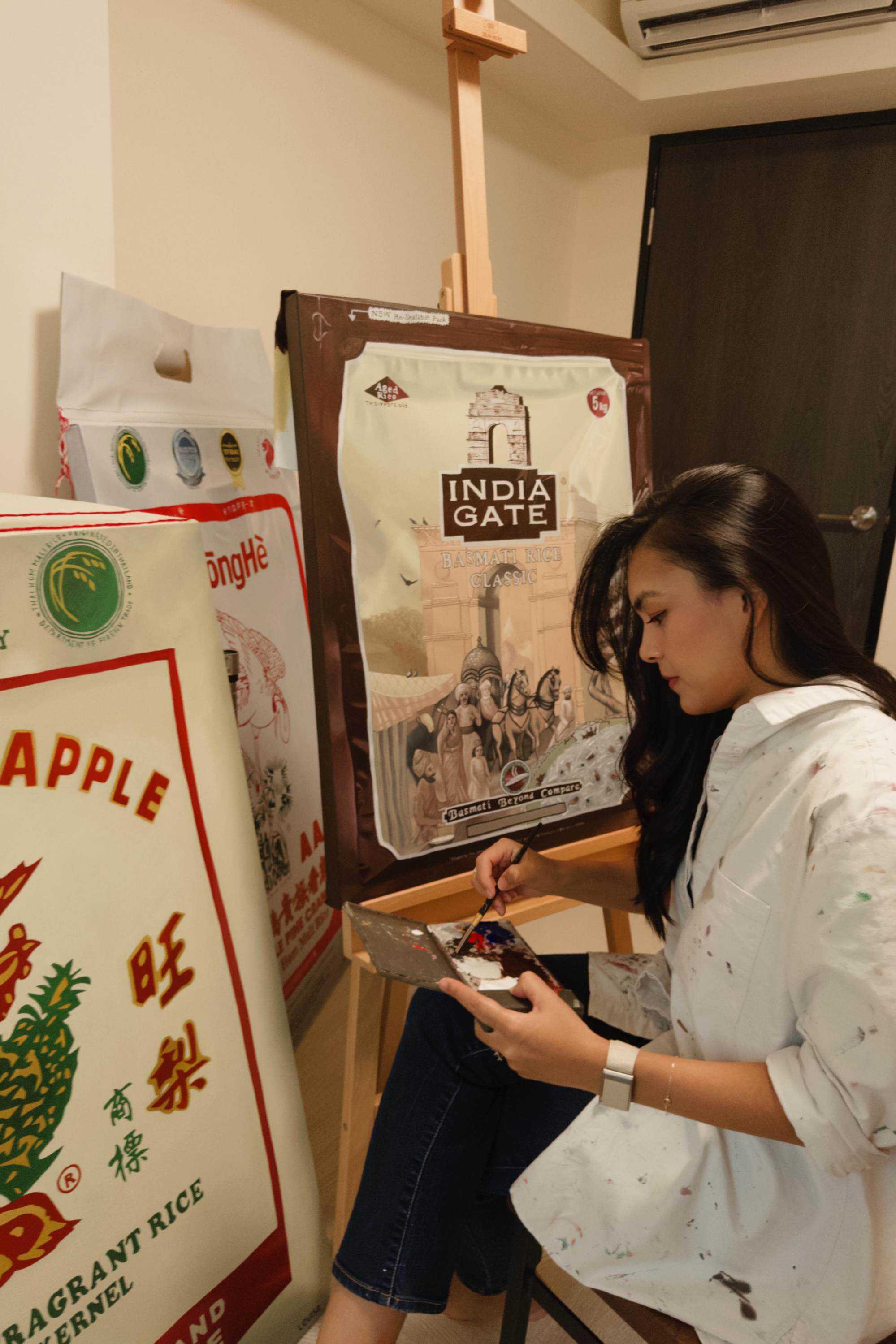
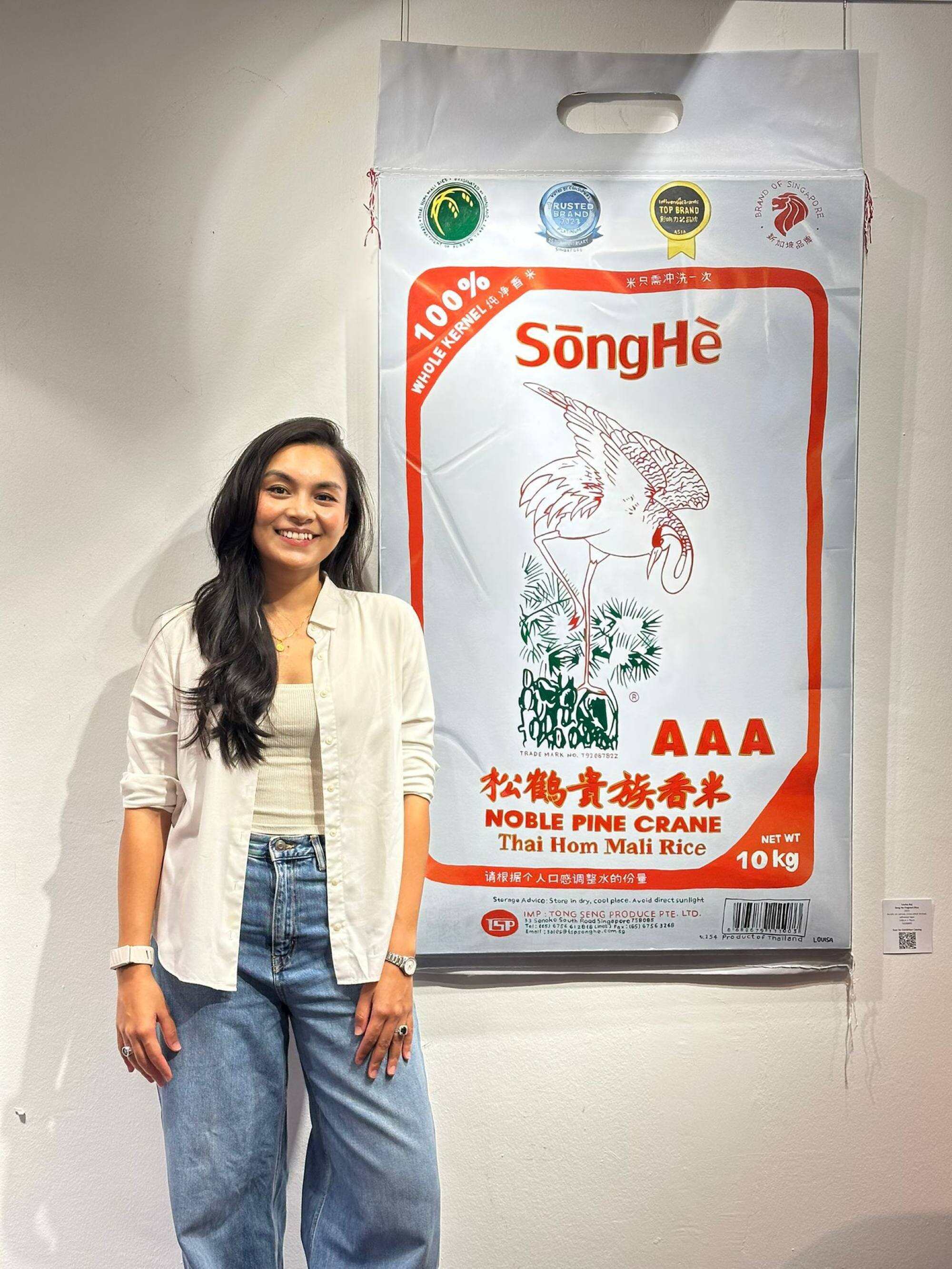
The exhibition featured six rice bags and two sculptures of renowned rice brands found in Singapore. To achieve a hyperrealistic effect, the artist stretched her canvas to mimic the flaps of a rice bag. The result is a series that blurs the lines between a supermarket staple and a gallery masterpiece.
Raj shared that she chose this subject because rice was something people ate almost every day, yet barely noticed. She saw that once objects became part of everyday routines, they faded into the background.
Universal familiarity
Coming from a mixed Indian and Chinese heritage, rice has been a staple in her life. Raj noted that even though these two cultures can seem worlds apart, they are similar in how they view rice as a symbol of prosperity.
“However, this exhibition isn’t just about my personal heritage,” the artist said. “Rice is a rare universal thread that weaves through different cultures, from Hong Kong households to Mexican kitchens and African traditions. It is a foundation for building family and community.”
While each painting took four to six weeks to complete, her creative process began long before that. To prepare for the series, she visited supermarkets to research and photograph various rice bags, visualising how each one would translate onto a canvas.
“I want to look at some packaging that [is] very classic. For example, Song He’s 10kg rice packaging – it’s remained exactly the same for over three decades, even as their other products’ packaging went modern,” she said, referring to a Singaporean brand founded in 1990.
“Seeing it evoked this strong sense of nostalgia in me – it’s been a constant my entire life, and there’s a real, timeless beauty in that kind of familiarity.”
A calculated risk
While Raj has been practising her craft for six years, she only made the leap to become a full-time artist last March. It was a calculated move. She waited until she was confident that her art could provide a stable income before transitioning from a career in financial technology to painting.
“I wanted to build something sustainable, so I started really preparing for that,” she said. “I started posting my work online, and I think that helps me reach more people.”
For teenagers keen to explore this path, Raj recommended not just perfecting their craft but also treating their art as a business and developing the marketing skills necessary to be seen.
Consistency is also important. Raj resonated with Olympic champion freestyle skier Eileen Gu when she said in an interview that sports are honest because one cannot lie to themselves about the effort they have put in.
“Similarly, in art, no one is forcing you ... Because this is something you’ve chosen to do for yourself, you are your only judge; only you truly know the level of effort you’re pouring in.”
Everyday value
Raj’s focus on human effort may also have led the artist to the subject of rice.
“[While painting], I keep returning to Min Nong, a Chinese poem I learned in primary school that has been passed down for over 1,000 years,” she said.
She said the poem’s closing lines reminded her that every single grain in our bowl is the product of gruelling labour: “As children, we were taught these words by our parents to ensure we didn’t waste our food, but as an adult, the wisdom has expanded. This isn’t just about rice. It’s about the hidden labour behind everything we consume,” Raj said.
“Whether it is an expensive meal or an affordable staple, nothing is truly simple.”
While preparing for the exhibition, Raj learned that rice farming is still a very physical and laborious process – even with modern machines, many farmers still harvest rice by hand.
And the artist hopes to remind her audience that the true value of everyday objects lies not in their price tag but in the hearts and hands that brought them to life.