





Artificial intelligence (AI) can write stories, solve maths problems and even beat humans in their favourite games. In the future, AI might also be your new “colleague”, called AI agents.
What is an AI agent?
An AI agent can learn information and make decisions without much help from humans.
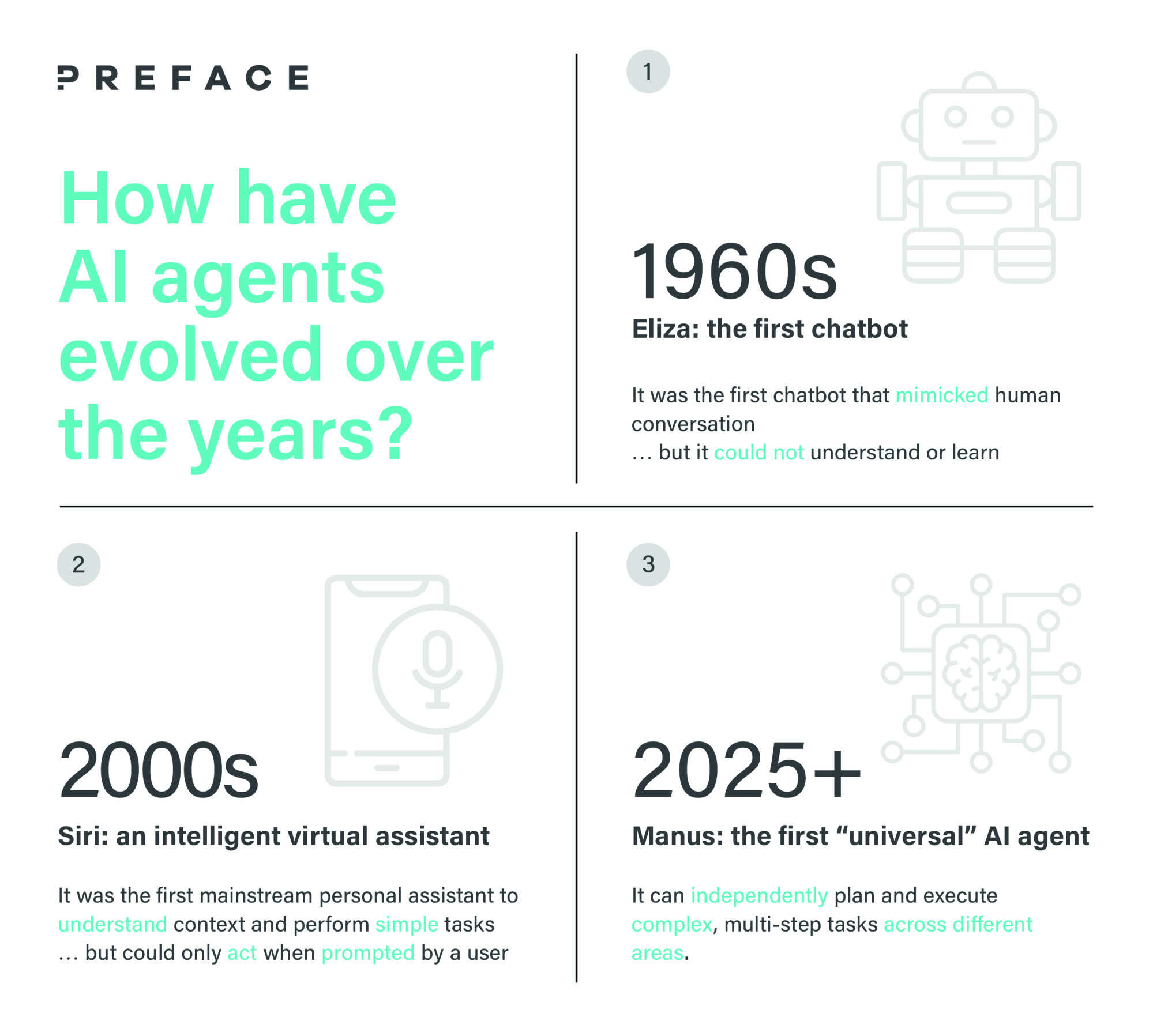
Over the years, AI agents have evolved to take on increasingly complex tasks (see graphic). Many companies are trying to create the best AI agents, but most of these are still works in progress.
What makes this technology different from AI chatbots? AI chatbots respond to questions, but this is simple compared to what AI agents can do.
If you give AI agents a task, they choose the best plan and can complete tasks on different platforms. After you send your first instruction, they will not bother you until their work is complete.
What are different types of AI agents?
Here are three types of AI agents and examples that show how they can be helpful.
-
Computer-using agents (CUAs) can help you book a restaurant, buy things online and more – all at the same time. CUAs scan a webpage and type, click and scroll to finish their task. For example, OpenAI launched a CUA in January, called Operator, but it is still a work in progress.
-
Multi-agent systems have several AI agents working together to handle complex tasks. For example, Anthropic has made a feature that uses multiple Claude AI agents to do research. In this system, each AI agent adjusts its research based on what it finds. This is like how humans search for information, but with many AI agents working together, the process is much quicker.
-
Hybrid agents have a human working together with the AI agent. The user makes sure that the AI agent is making good decisions. This is similar to Microsoft’s Copilot, which uses AI to give suggestions to users. Some believe that keeping humans involved in this process is especially needed if AI agents are making decisions that have a lot of risk.
Unlocking creativity: the impact of AI on digital art
Can we trust AI agents?
If AI agents are making decisions and taking action on their own, we need to make sure they are working safely.
Last December, the World Economic Forum released a report on AI agents. It said that AI could create false information, show favouritism and have misunderstandings.
The report urged the importance of testing and researching the effects of AI agents before launching them.
As AI systems become more complicated, we will need to deal with the risks if we want to take advantage of the benefits they offer.
Sponsored by

Preface invites you to try their quiz on AI – how much do you understand about this new technology? Click here for more information.
