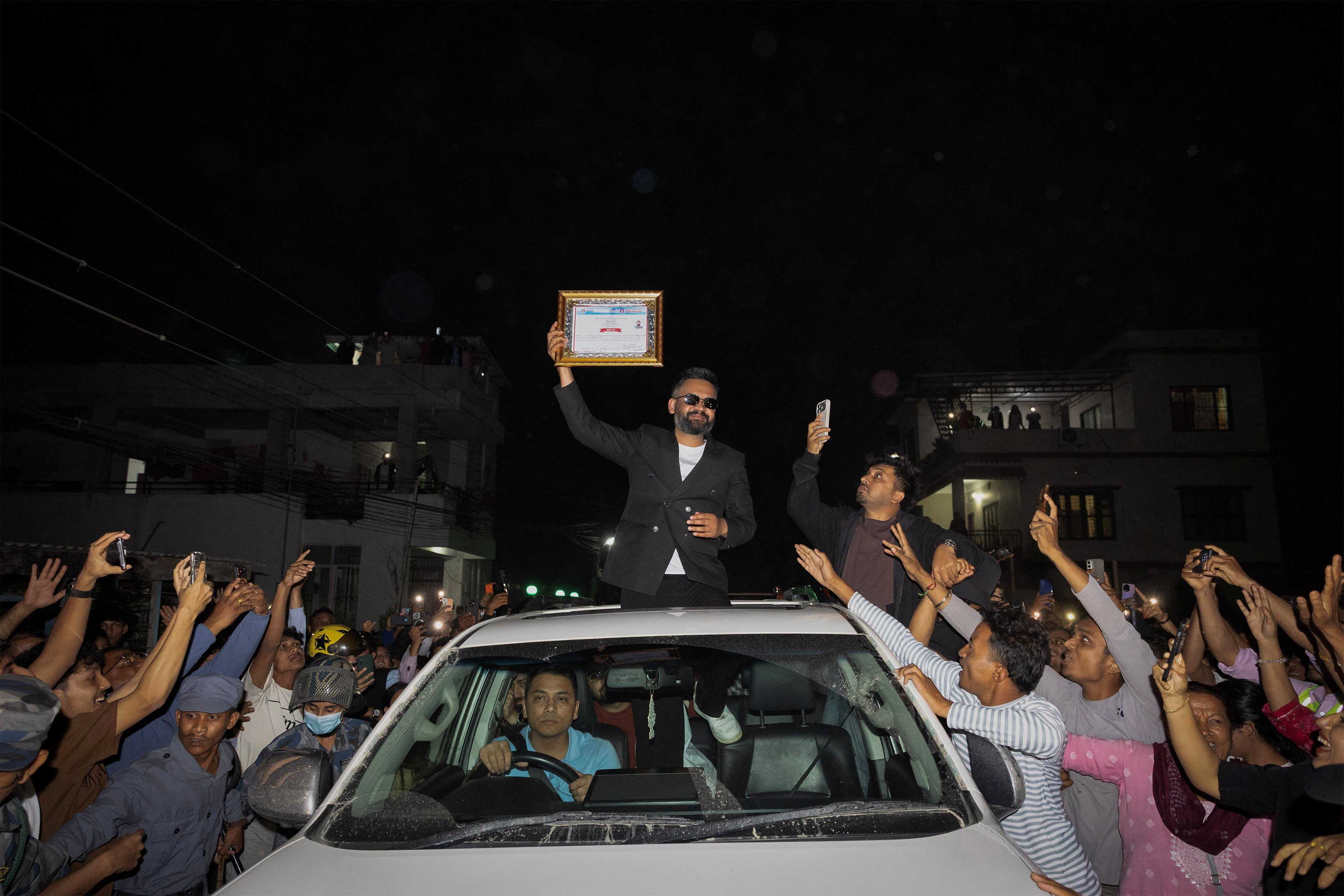
A 35-year-old rapper and engineer who entered politics just four years ago has beaten a former prime minister in Nepal’s crucial parliamentary election – a vote that could mark a generational shift in leadership after last year’s youth uprising.
Balendra Shah, widely known as Balen, is the former mayor of Kathmandu. He surged ahead of 74-year-old communist leader K.P. Sharma Oli in a race for a seat in Nepal’s House of Representatives in the eastern district of Jhapa, election commission data showed on Saturday.
Shah secured 68,348 votes against Oli’s 18,734, according to the commission when it called the election.
The Rastriya Swatantra Party (RSP) leader will become the Himalayan republic’s next prime minister if his party’s strong showing nationwide is confirmed.
Both men contested from the eastern district of Jhapa, which observers have dubbed an “election epicentre”. Oli has won the Jhapa seat six times over the past three decades.
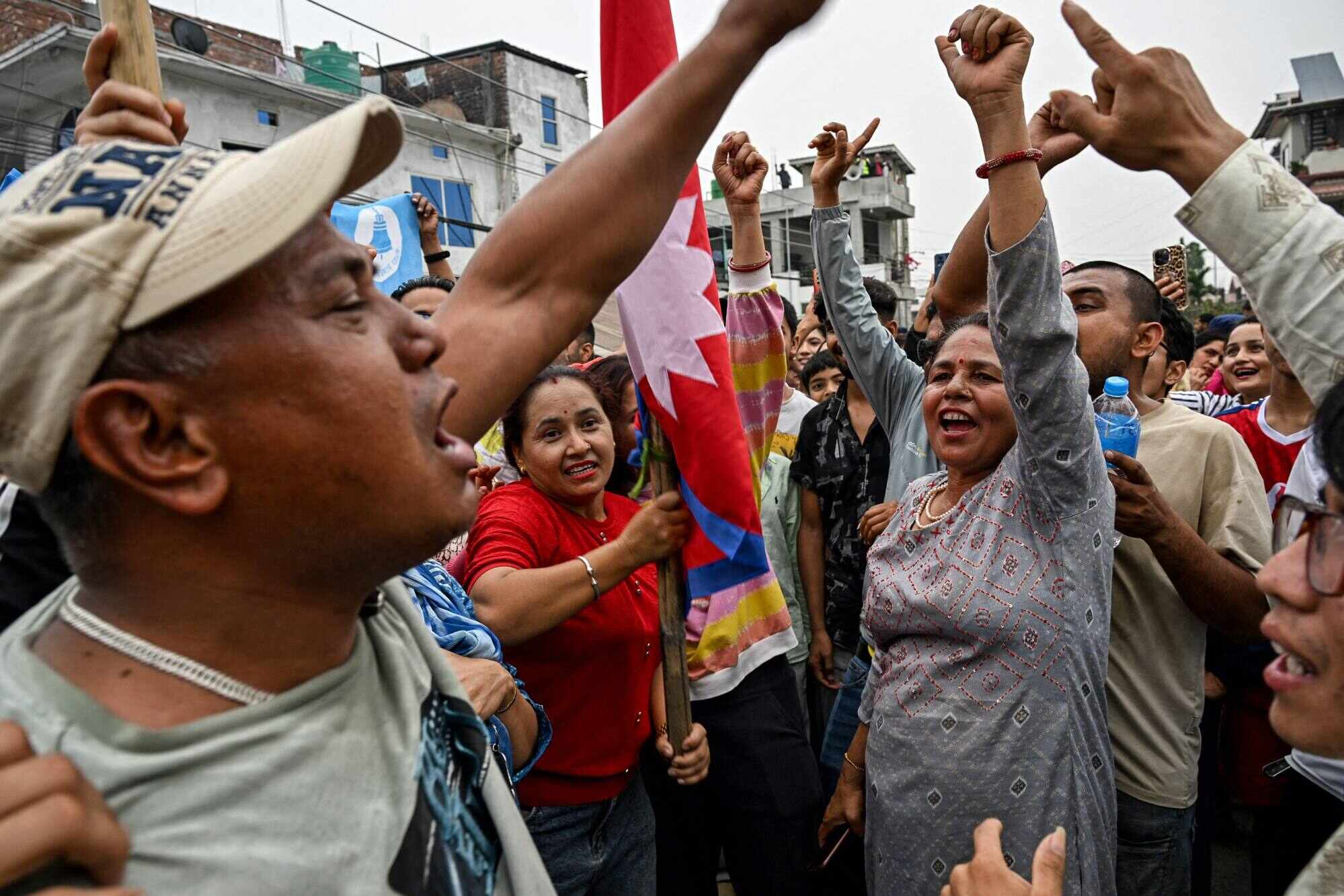
Once staunch supporters of Oli’s party, Neha Karki and 79 members of her extended family voted for Shah’s RSP this time.
“I thought I needed to convince them, but they had already made up their mind to vote for RSP,” the 29-year-old said, describing the mood in Jhapa as “ecstatic”.
“We’re really happy to see Balen as the prime minister, and we have big expectations from RSP. We hope they will bring the change that we hoped for in the next five years.”
Nepal’s election commission had expected to announce results for 165 directly elected seats in the 275-member lower house within 24 hours after polls closed on Thursday, although counting was delayed.
The remaining seats are allocated through a proportional representation system based on the share of votes cast for each political party, a mechanism designed to ensure the inclusion of women and minorities in Parliament.
Preliminary estimate from the election commission shows 60 per cent of votes were cast during Thursday’s polls, around 1 per cent less than the previous election in 2022.
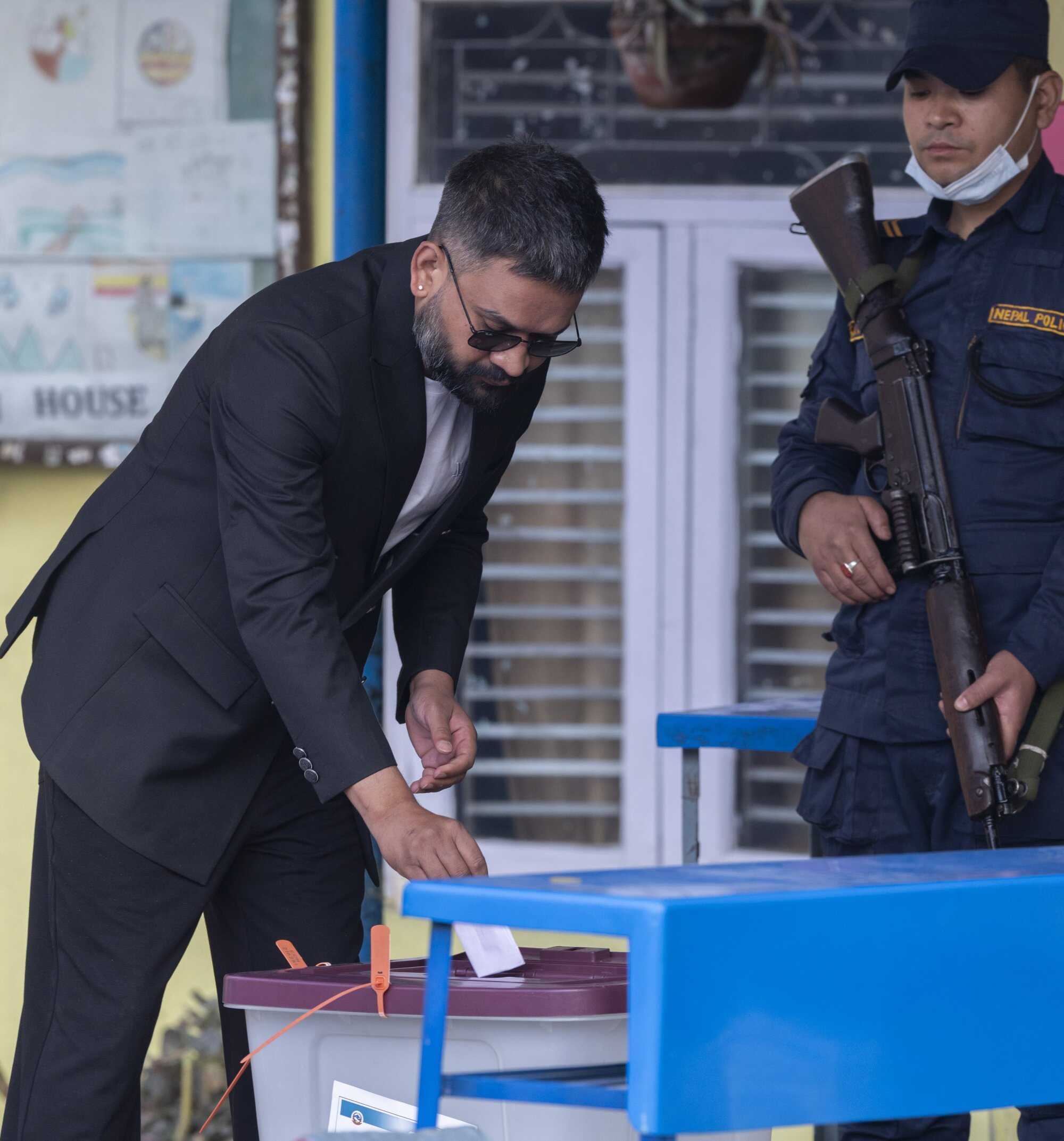
Youth action
Generation Zs made up most of the 900,000 newly added voters among Nepal’s nearly 19 million registered electorate – a dynamic that analysts said appeared to have worked in the RSP’s favour.
The party has drawn support from many younger voters by embracing Gen Z candidates and echoing the demands that fuelled September’s uprising, particularly calls for stronger anti-corruption measures – even as its president is embroiled in corruption scandals.
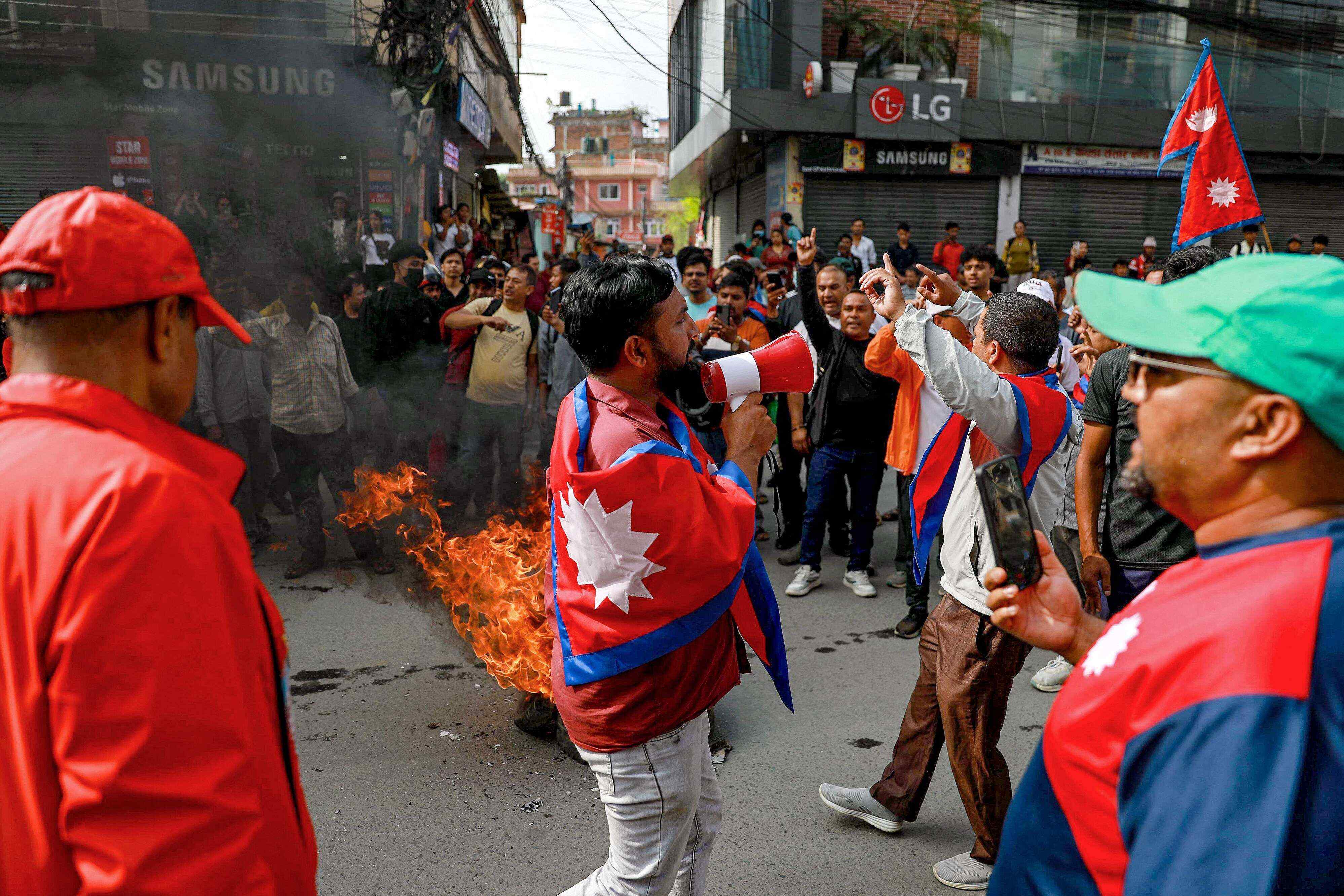
RSP, seen as an anti-establishment party, is leading early counts across Nepal, which observers say could provide it with “an unprecedented victory”. The party has swept all 10 constituencies in the capital, Kathmandu.
“The shift in public sentiment shows people’s frustration with old political parties and their willingness to give new faces a chance,” political analyst J.B. Biswokarma said.
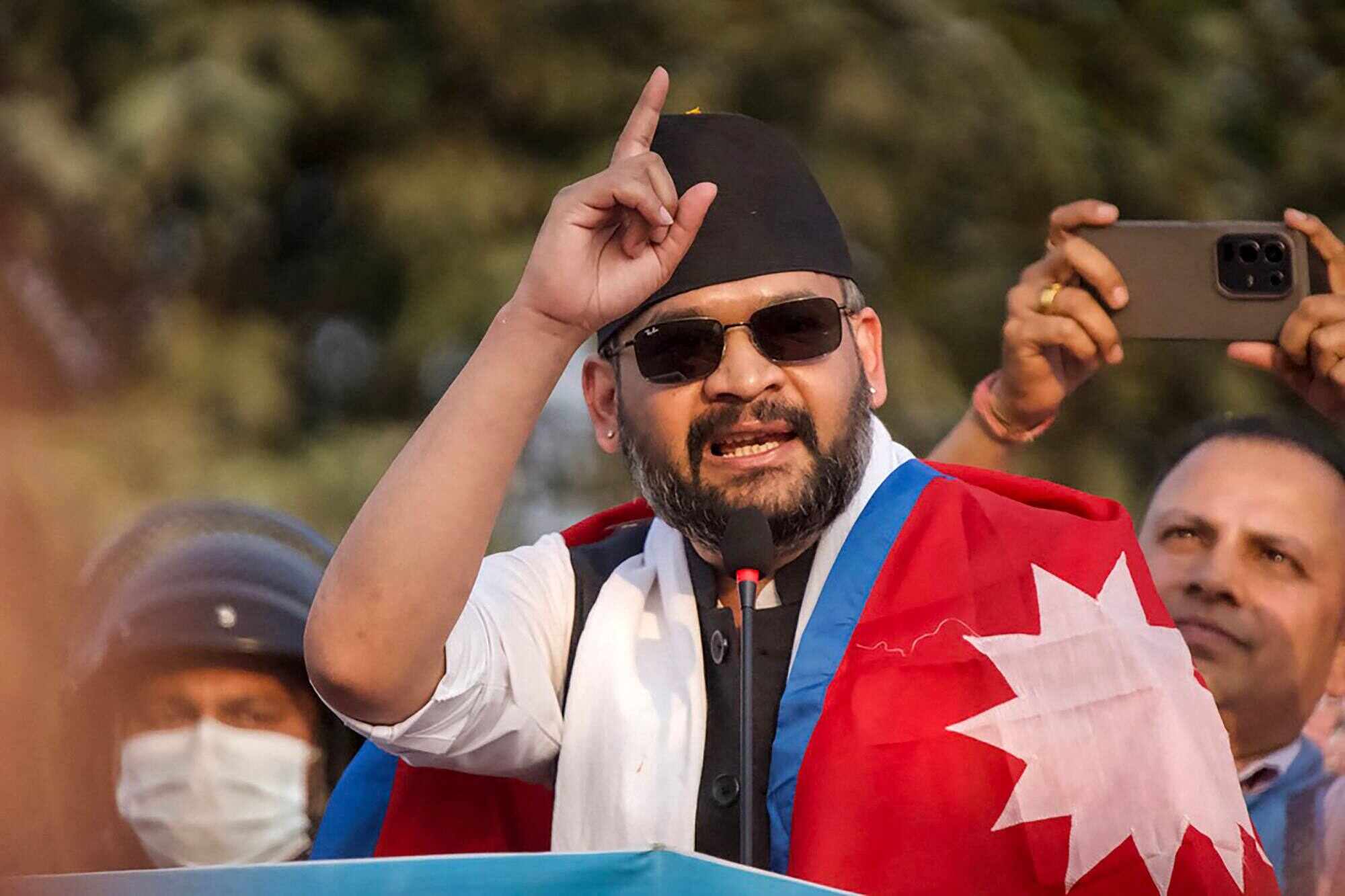
In a country long dominated by ageing political heavyweights, Shah – a schoolboy during Nepal’s 1996–2006 Maoist civil war, which killed thousands and eventually ended the monarchy – upended the script when he entered Kathmandu’s mayoral race as an independent candidate in 2022.
Campaigning on the promises of change and anti-corruption drives – themes he had channelled in his rap songs – he turned from an outsider to a political disrupter.
One of his songs, “Ma Nepal Haseko Herna Chahunchu” (“I Want to See Nepal Smile”), became one of the unofficial anthems of last September’s uprising as thousands of youth flooded the streets demanding good governance and an end to corruption.
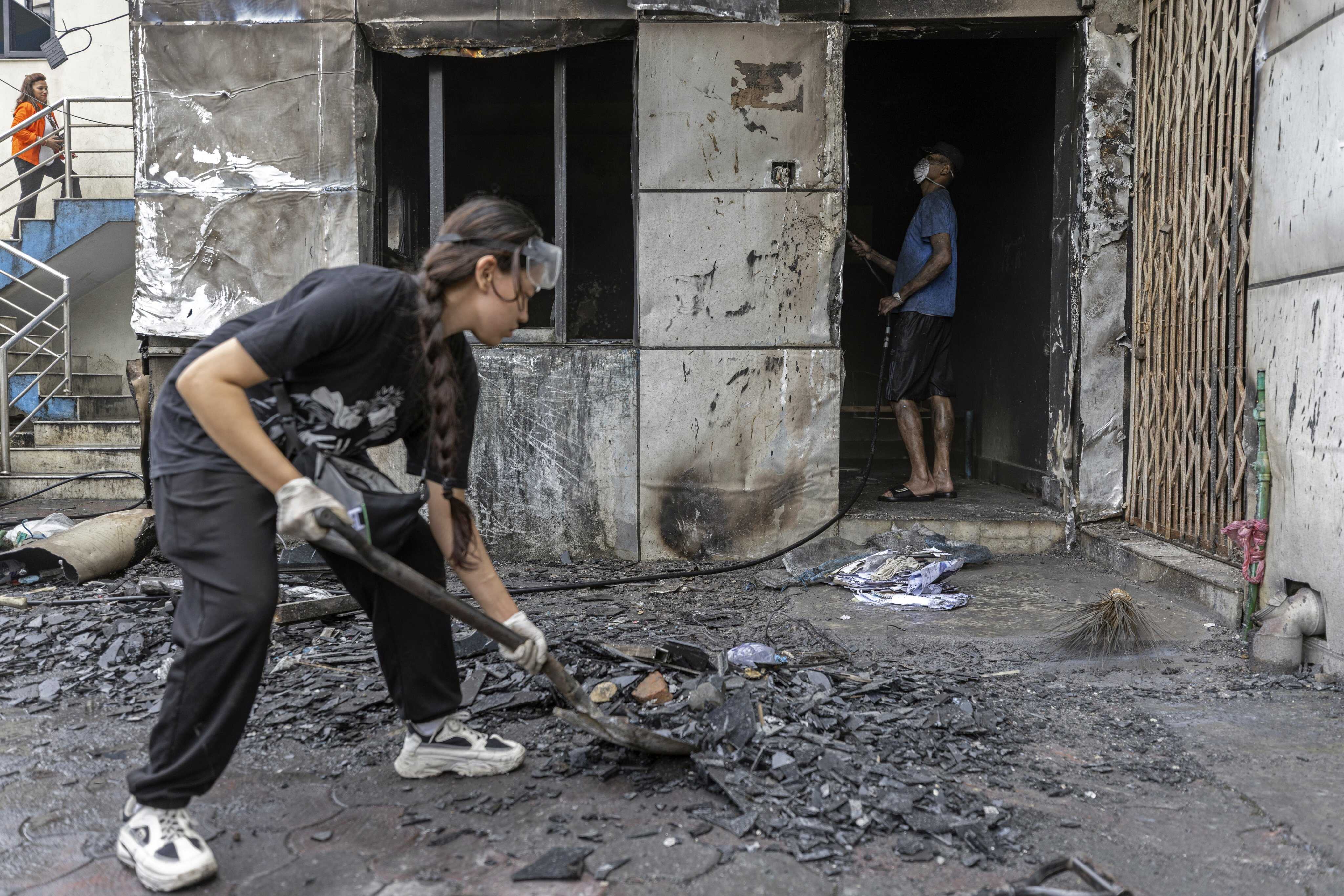
At least 77 people – including three police officers – were killed in the deadly crackdown and a wave of violence that forced Oli to resign.
Young voters say the protest sent a stark warning to political elites, whose years of corruption and nepotism had robbed them of opportunities, leading to a mass exodus of youth to foreign countries in search of employment. More than 2,300 people leave Nepal each day to seek employment abroad.
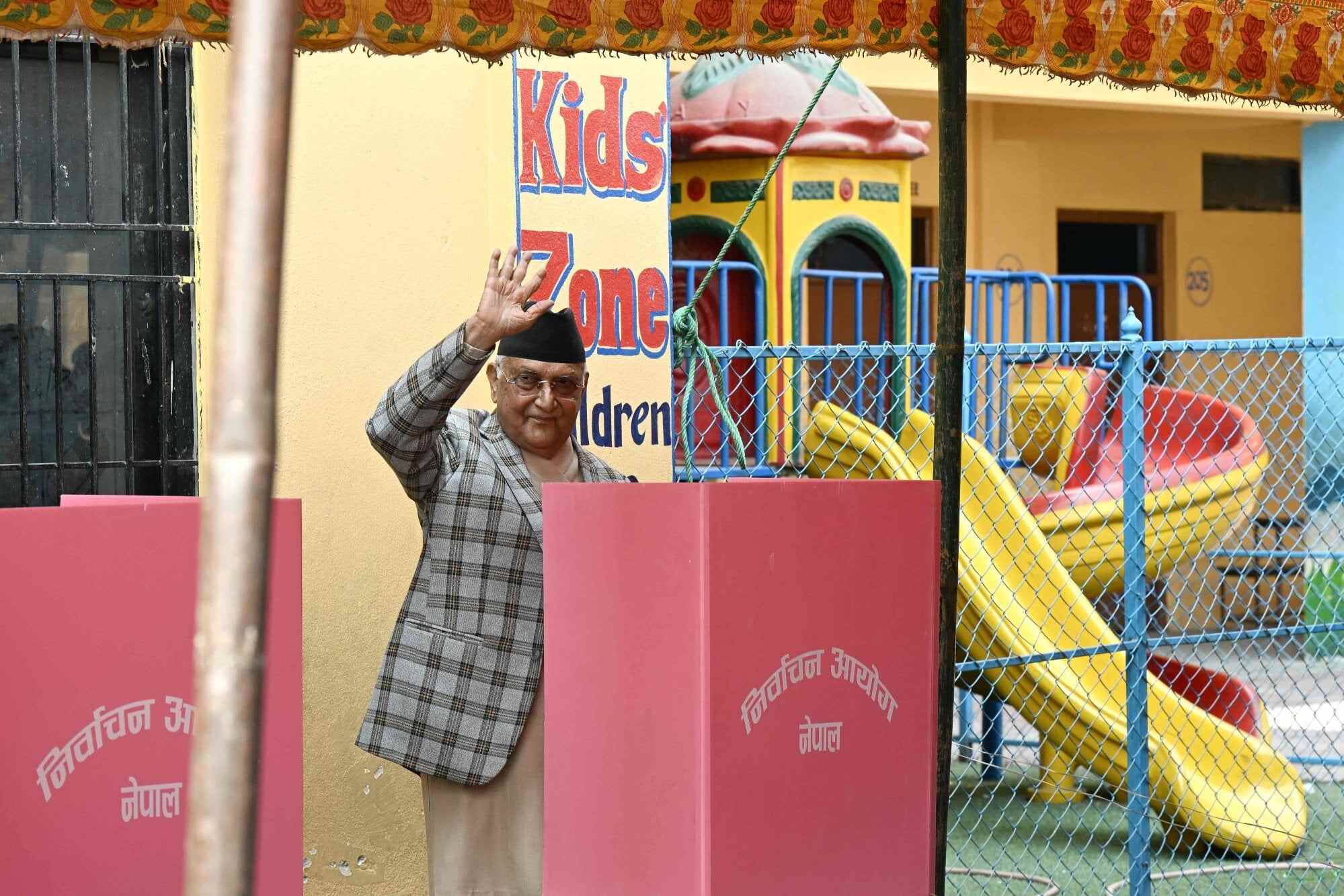
Out with the old
Biswokarma said Oli’s defeat, along with the poor performance of his Communist Party of Nepal (Unified Marxist–Leninist), could be attributed to an arrogance that kept him above the party, unwilling to prioritise people’s struggles, deliver good governance and address corruption scandals even as a four-time prime minister.
This election was a “rejection of such patterns”, he said.
Oli often mocked new faces joining politics, indicating that his popularity had not waned since the uprising, which demonstrators and analysts blame on his poor governance and arrogance.
On election day, he said that the polls would “bring the constitution and federalism on track”.
The election result has also dealt a blow to pro-monarchy parties, which had projected strong public support for restoring the institution during and ahead of their campaigns.
Current projections suggest that RSP will emerge as the largest party just four years after it captured the public imagination as an alternative force for change. In the 2022 parliamentary election, it became the fourth-largest party, with its electoral symbol, the bell, turning into a metaphor for change.
“There was voter fatigue with the so-called established parties – not just because of their failures but because of their complete disconnect from the people and their hubris,” Kathmandu-based journalist Sanjeev Satgainya said. “When the moment came, people rang the bell. For better or worse. That’s democracy!”
Additional reporting by Agence France-Presse