Around 170 secondary schools in Hong Kong will offer Japanese, Korean, French and other languages as electives for junior form students. This initiative is part of a pilot scheme that provides each school with HK$250,000 (US$32,000) in subsidies over the next two academic years.
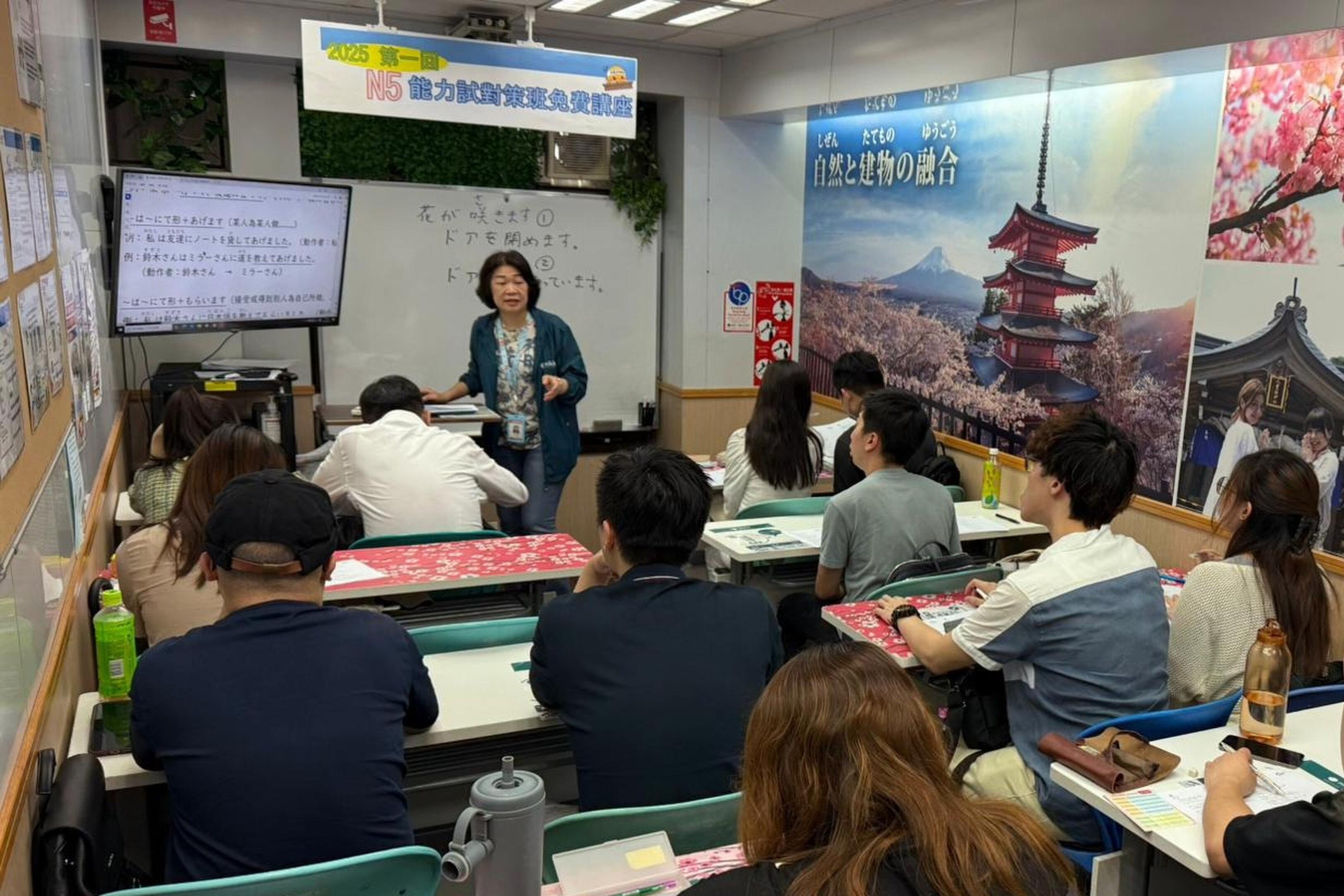
An education sector representative said Japanese was a popular option among schools applying because its similarities to Chinese could make it easier for students to learn.
In a reply to the South China Morning Post, the Education Bureau said that about 170 applications had been approved for publicly funded secondary schools, including those for students with special needs, to offer languages other than Chinese and English for the 2025-26 and 2026-27 academic years.
“Each successful applicant will receive a lump-sum grant of HK$250,000 on or before August 31, 2025, to provide designated other language courses for junior secondary students in the 2025-26 and 2026-27 academic years,” a spokeswoman said.
The volume of applications means the Quality Education Fund, which is funding the pilot scheme, is set to provide at least HK$42.5 million worth of subsidies to the first round of applicants over the next two academic years.
The pilot scheme is set to launch a second application round between January and April next year, with funding to cover courses held in 2026-27 and 2027-28.
As part of the policy, schools are encouraged to gauge how many students are interested in learning the additional languages they plan to offer, as well as the pupils’ current levels of proficiency in them.
Another suggestion is for schools to offer an intermediate-level course in the second year after the first year of the new language class.
In the first round of applications, the most popular extra languages chosen by schools were Japanese, followed by Korean and French.
Chief Executive John Lee Ka-chiu unveiled the pilot scheme in his annual policy address last October, saying it aimed to encourage publicly funded secondary schools to apply for funding to provide opportunities for students to learn other languages.

The scheme also aims to develop students’ learning interests and capabilities, as well as enrich their educational experiences and boost their global competitiveness.
Earlier this year, the bureau said institutions should prioritise providing courses that were already available as elective subjects in their senior forms, including French, German, Japanese, Korean, Spanish and Urdu.
Lee Yi-ying, chairwoman of the Subsidised Secondary Schools Council, said the number of applications accounted for about 40 per cent of publicly funded secondary schools, describing it as “not so few”.
“The reception among schools is quite popular as it is just a pilot scheme,” said Lee, who is also the principal of Kowloon True Light School.
She said her school was already offering Japanese as an elective, as it was easier to recruit teachers for the language due to the market having a sufficient supply.
Lee said her school planned to join the second application round for the pilot scheme.
She said the reason most schools had chosen Japanese was that students were likely to find it similar to Chinese. Sometimes learners who knew Chinese could guess the general meaning of Japanese texts, she noted.
“It seems to me that, for a beginner, if you know Chinese, it will help you learn Japanese,” she said.
The principal said it was also cheaper to offer Japanese courses compared with French and German, given the subsidy was limited to HK$250,000.
The one-off handout is for buying learning and teaching materials, such as textbooks and workbooks.
All schools joining the scheme are required to submit a course plan, a progress report and a final report over various stages.