Deep Dive delves into hot issues in Hong Kong and mainland China. Our easy-to-read articles provide context to grasp what’s happening, while our questions help you craft informed responses. Check sample answers at the end of the page.
News: The lure of the DSE for mainland Chinese students
-
More mainland Chinese pupils are choosing to take Hong Kong’s DSE over China’s gaokao
-
Tutorial centres run by mainland operators are expanding their footprint in the city
An increasing number of mainland Chinese students are taking Hong Kong’s university entrance exams.
More than 55,000 candidates took this year’s Diploma of Secondary Education (DSE) exams, with 960 non-local private candidates, up from 238 in 2023 and 549 last year.
Leslie Wang Ziqi, 18, is a student in Shenzhen. He switched from the gaokao, the university entrance exam in mainland China, to the DSE as a private candidate at the beginning of his final year of secondary school.
“Compared to the gaokao, the DSE is less stressful,” Wang said. He added that the DSE was also internationally recognised and opened up more pathways for attending university abroad.
Wang travelled to Hong Kong to purchase study guides and used AI tools to organise his notes.
“A lot of study materials are publicly available, so it’s very suitable for self-study,” he said. Wang hopes to pursue a science degree at the University of Hong Kong (HKU).
Mainland students had an edge in mathematics and science because those subjects were of a higher standard under the gaokao system. However, many of them struggled more in English, as the DSE demanded more complex vocabulary and higher proficiency.
A lack of understanding of local culture also makes the exam more difficult, as the content for the English papers is closely related to local life.
However, the DSE could be less stressful, as the exams are spread out over a month. The gaokao crams all tests into two or three days.
At the same time, more mainland pupils are coming to Hong Kong through the city’s top talent scheme.
To cater to these new arrivals, two mainland Chinese tutorial school operators are expanding their Hong Kong presence and offering DSE tutoring courses.
The entrance of mainland companies has intensified competition among local operators, which have faced challenges from a shrinking student population and a curriculum overhaul. The number of centres run by three major tutorial chains in the city has nearly halved from 102 in 2016 to 56 at present.
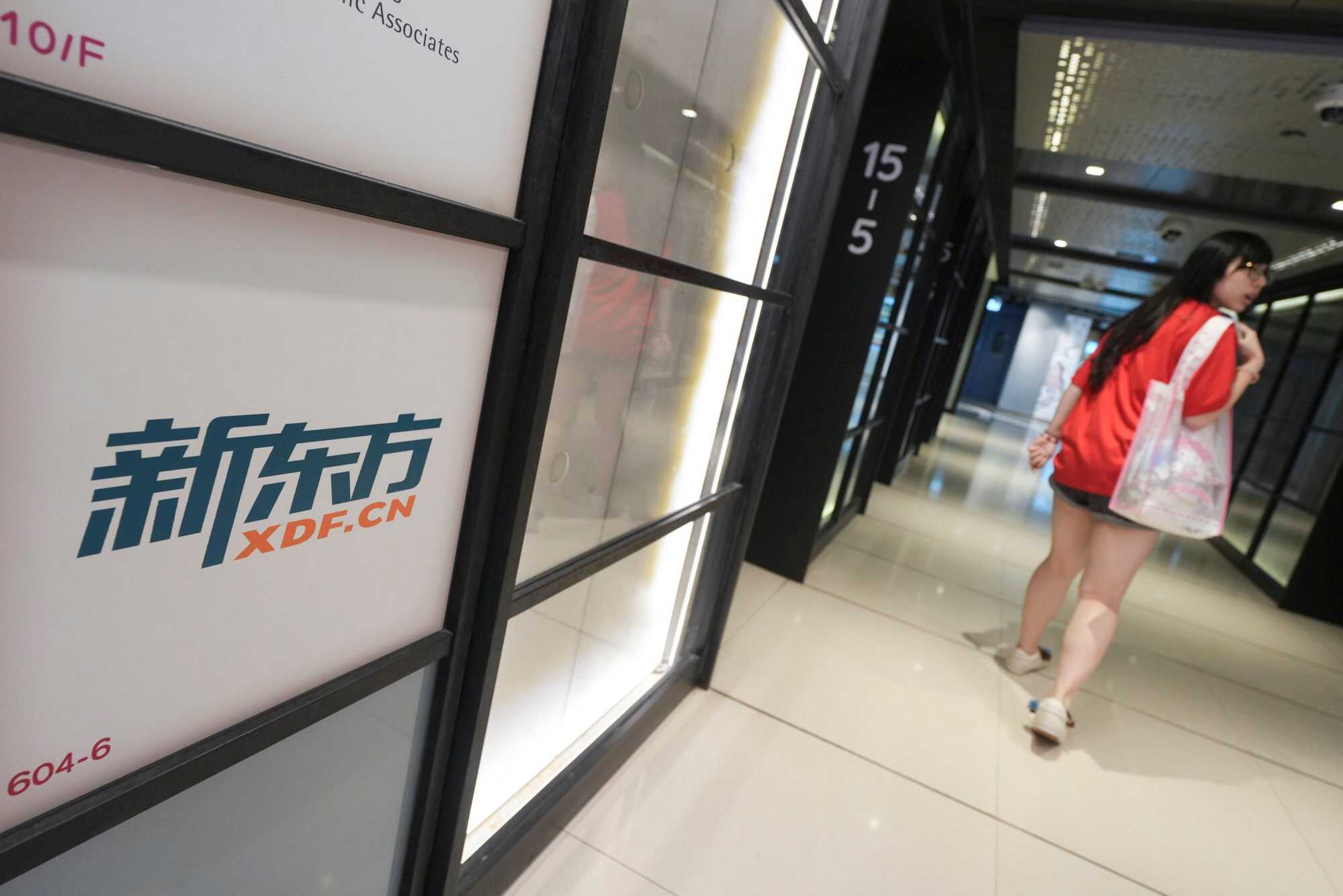
New Oriental, the largest tutoring group on the mainland, opened its first Hong Kong campus in July.
Think Academy is a sister brand of mainland tutoring centre Xueersi. It opened two branches in Whampoa and Kowloon City this year, after expanding two existing outlets in Kowloon. Its DSE courses target both local secondary students and new arrivals.
Staff writers
Question prompts
1. According to News, why are more mainland Chinese students choosing to take Hong Kong’s DSE exams instead of the gaokao?
(1) The DSE is less stressful and spread out over a longer period.
(2) The DSE is internationally recognised and offers more diverse career pathways.
(3) The DSE requires less English proficiency than the gaokao.
(4) Study materials for the DSE are publicly available and suitable for self-study.
A. (1), (2) only
B. (1), (2), (3) only
C. (1), (2), (4) only
D. all of the above
2. List ONE advantage and ONE disadvantage mainland students have on the DSE.
3. What challenges are Hong Kong’s tutorial chains currently facing? Suggest ONE way to help them sustain their business. Explain using News, Glossary and your own knowledge.
Photo
Question prompts
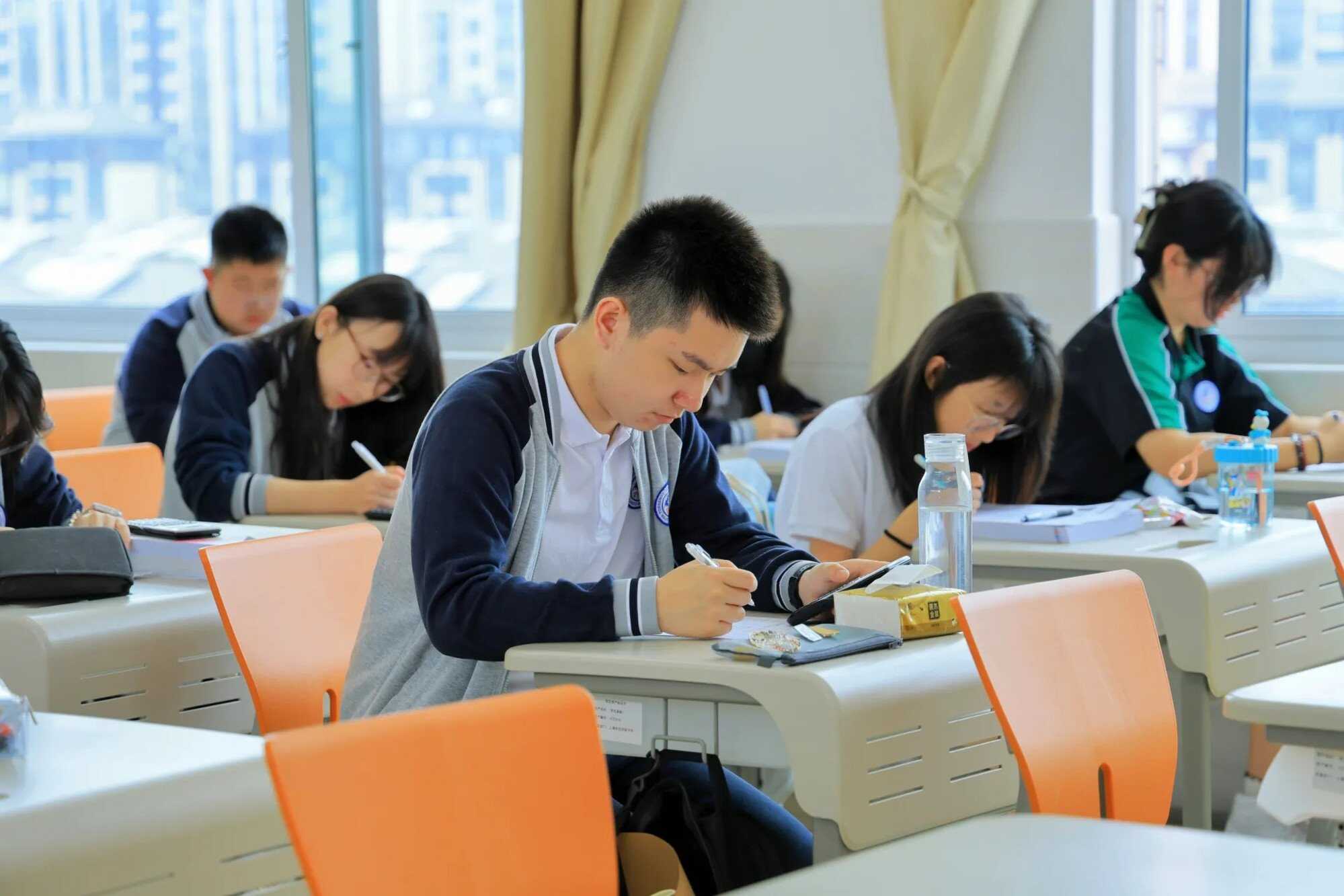
1. What is being shown in the photo? How does it relate to the information in News?
2. How might the expansion of mainland tutorial chains in Hong Kong affect local counterparts in the long term? Explain using News and your own knowledge.
Issue: Will the DSE be internationalised?
-
Rising popularity of the assessment has prompted calls to attract more non-local candidates
-
Fight for Hong Kong’s university spots to heat up as more private candidates achieve top marks on the exam
Hong Kong’s education minister has said she is open to developing an international version of the city’s university entrance exams. However, details such as the implementation of electronic testing still need to be discussed.
Secretary for Education Christine Choi Yuk-lin stated that the largest market for the DSE may be for overseas students seeking to study in mainland China. Currently, 145 mainland institutions recognise the DSE.
She noted that “internationalising” the DSE would align with national policy to attract foreign students.
However, the rising trend of students on the mainland taking the DSE has raised concerns.
Some principals said they had noted that this year’s Form Six graduates faced stronger competition for university places due to more students living on the mainland sitting the DSE and joining the allocation system. They said that, unlike in previous years, those who attained median scores in the university entrance exams failed to secure places in their preferred courses.
A number of DSE students made similar complaints on social media.
Only 37 per cent of students applying for local university places under a centralised allocation system secured a place this year, compared with 40 per cent in 2024.
Mainland students can sign up for the DSE as private candidates, also known as non-day school candidates.
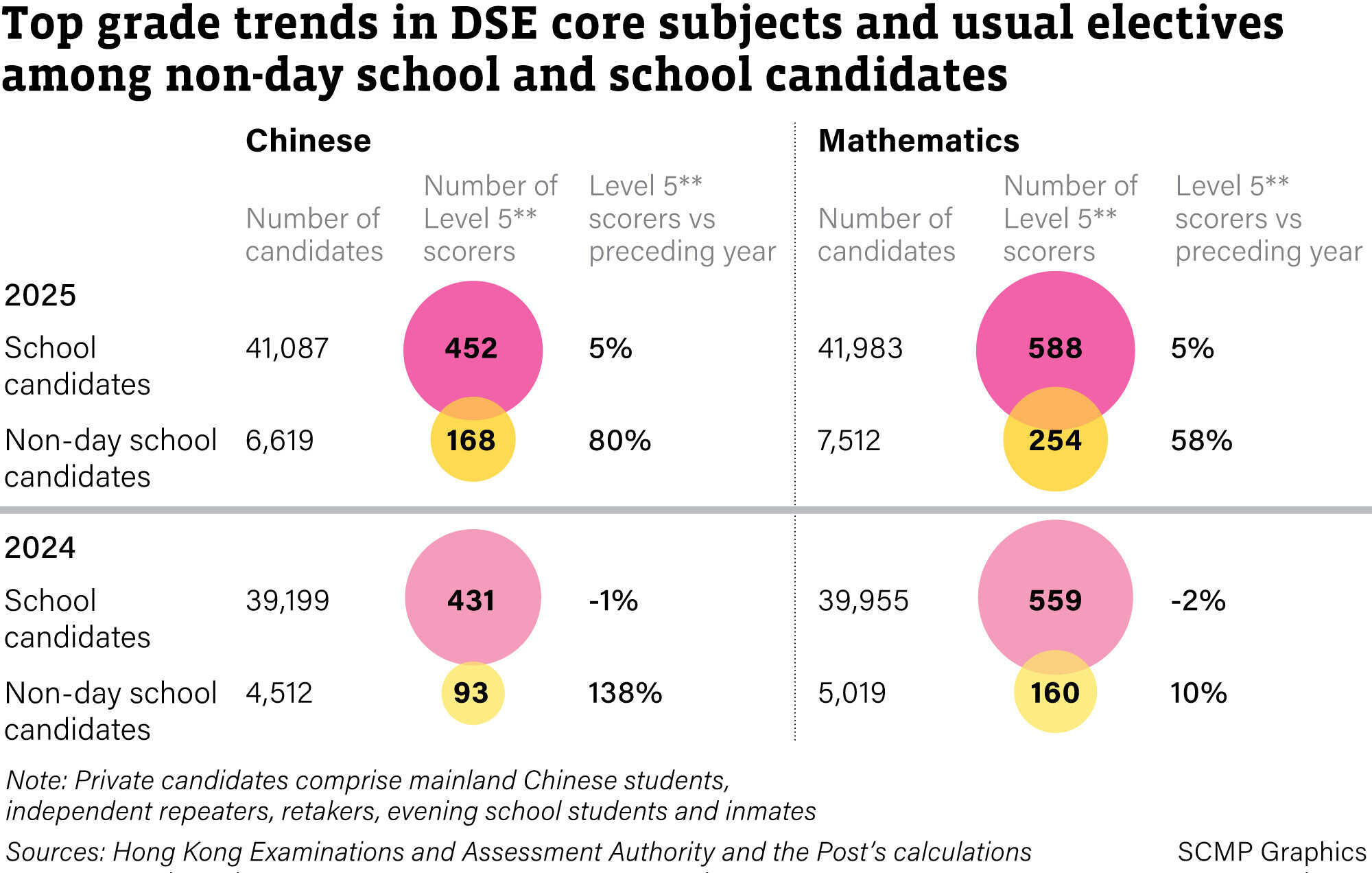
An analysis of official data by the SCMP showed that the number of non-day school candidates securing Level 5**, the highest grade of the DSE, increased at a much faster rate than those from the regular pathway.
More than a quarter of the 2,700 private candidates enrolled in the DSE through a special entry route in 2025. This route allows those who have completed or are currently pursuing a non-DSE curriculum in the year before the exams to sit the DSE. Most of those candidates are from the mainland.
The total figure jumped 90 per cent from about 1,400 in 2024, when applicants entering through the special route accounted for just 18 per cent of all private candidates.
Lee Yi-ying, the chairwoman of the Hong Kong Subsidised Secondary Schools Council, said that some mainland schools screened students to determine who would be allowed to study for the DSE.
“Mainland students taking the DSE are heavily drilled, and only the capable ones are chosen to take the DSE,” another school head said.
In comparison, Lee explained that most Secondary Six pupils in Hong Kong, no matter their academic backgrounds, could only choose to take the DSE to get into university, which was why their results tended to be similar each year.
Staff writers
Question prompts
1. List TWO reasons why Hong Kong is open to internationalising the DSE.
2. Using Issue, list ONE way mainland candidates from a non-DSE curriculum can sit the DSE.
3. Do you agree that the DSE should be internationalised, given the rising demand? Why or why not? Explain using News, Issue, Glossary and your own knowledge.
Chart
Question prompts
1. Using the chart, list TWO observations about the number of non-day school students achieving top grades on the Chinese and mathematics exams.
2. Using News, Issue and the chart, explain the factors that might have led to these observations.
Glossary
gaokao: China’s university entrance exam, also called the National Higher Education Entrance Examination, which takes place every year in June
private candidate: someone outside the normal school system who registers to take the DSE exam. This could include mainland Chinese students, independent repeaters, retakers and inmates.
major tutorial chains: refers to Hong Kong’s biggest tutorial companies – Modern Education, Beacon College and King’s Glory Education. In 2016, Modern Education operated 19 branches while franchising another 42. Beacon College directly operated 16 branches, and King’s Glory Education had 25. This year, Modern has nine self-operated centres and franchises another 27. Beacon has 13 branches, while King’s Glory has five self-owned centres and two franchised ones.
New Oriental: the largest tutoring group on the mainland, which operates in Hong Kong under the name New Oriental International Education. The company’s Hong Kong-based firm provides school placement and transfer services for new mainland arrivals at a cost of up to HK$45,800. It also offers tutoring courses for the DSE. The group had 1,025 branches on the mainland as of May 31, 2024.
allocation system: refers to the Joint University Programmes Admissions System (JUPAS) for full-time undergraduate programmes in Hong Kong. JUPAS covers all government-funded degrees and sub-degree programmes offered under the University Grants Committee, as well as most other full-time degree programmes provided by higher education institutions in Hong Kong.
Sample answers
News
-
C
-
Advantage: Mainland students have stronger foundations in mathematics and science because the gaokao has a higher standard in those subjects. Disadvantage: Many struggle with English, as the DSE requires more complex vocabulary and a better understanding of local culture.
-
Hong Kong’s tutorial chains are facing challenges, including a shrinking local student population, a curriculum revamp and rising competition from mainland operators such as New Oriental and Think Academy. To sustain their business, they could focus on providing specialised English language and local culture training for mainland students, since these are areas where such students struggle most in the DSE. By using their expertise and reputation in the local exam system, tutorial centres can attract this growing customer base and maintain competitiveness despite demographic changes. (accept all similar answers)
Photo
-
New Oriental (XDF), the largest tutoring group on the mainland. It is expanding its business in Hong Kong due to the rising demand for the DSE.
-
In the long term, the expansion of mainland tutorial chains such as New Oriental and Think Academy is likely to intensify competition and put pressure on local tutorial centres. Since mainland operators have larger networks and strong brand recognition, they may capture a growing share of the market, especially among mainland DSE candidates who trust their teaching style. Local centres could lose students unless they adapt to serve the struggles of mainland students. If local chains fail to innovate, many may close down, leading to market dominance by mainland operators. (accept all reasonable answers)
Issue
-
To attract more overseas students, aligning with national policy to draw foreign talent. More than 100 mainland institutions already recognise the DSE, creating demand from non-local candidates.
-
They can apply through a special entry route, which permits students who have completed or are pursuing a non-DSE curriculum in the year before the exams to sit the DSE.
-
Yes, I agree that the DSE should be internationalised because there is a clear rise in demand from mainland and overseas students. The text shows that over 100 mainland institutions already recognise the DSE, and the number of non-local private candidates has grown rapidly, especially through the special entry route. Internationalisation would attract more foreign students and align with national policy, boosting Hong Kong’s role as an education hub. However, it also creates challenges, as stronger competition from non-local candidates could make it harder for Hong Kong students with average results to secure university places, which has already led to complaints on social media. Therefore, while internationalisation could benefit Hong Kong globally, the needs of local students must be carefully balanced. (accept all reasonable answers)
Chart
-
The chart shows that non-day school candidates recorded a sharp rise in the number of top scorers in both Chinese and Mathematics between 2024 and 2025. In Chinese, the number of Level 5** achievers increased from 93 to 168, representing an 80 per cent jump, while in Mathematics the figure rose from 160 to 254 over the same period.
-
In 2024, only 18 per cent of private candidates enrolled in the DSE through the special entry route, many of whom are from the mainland. However, in 2025, they made up more than 25 per cent. According to Lee, students from the mainland sitting the DSE have sometimes already been screened to determine if they want to take this route, so these are the students who are more likely to achieve a higher score. Also, as mentioned in News, the level of the science and mathematics subjects in the gaokao system is higher than those in the DSE, so mainland students would have an advantage here.