Deep Dive delves into hot issues in Hong Kong and mainland China. Our easy-to-read articles provide context to grasp what’s happening, while our questions help you craft informed responses. Check sample answers at the end of the page.
News: Super Typhoon Ragasa brings Hong Kong to a standstill
-
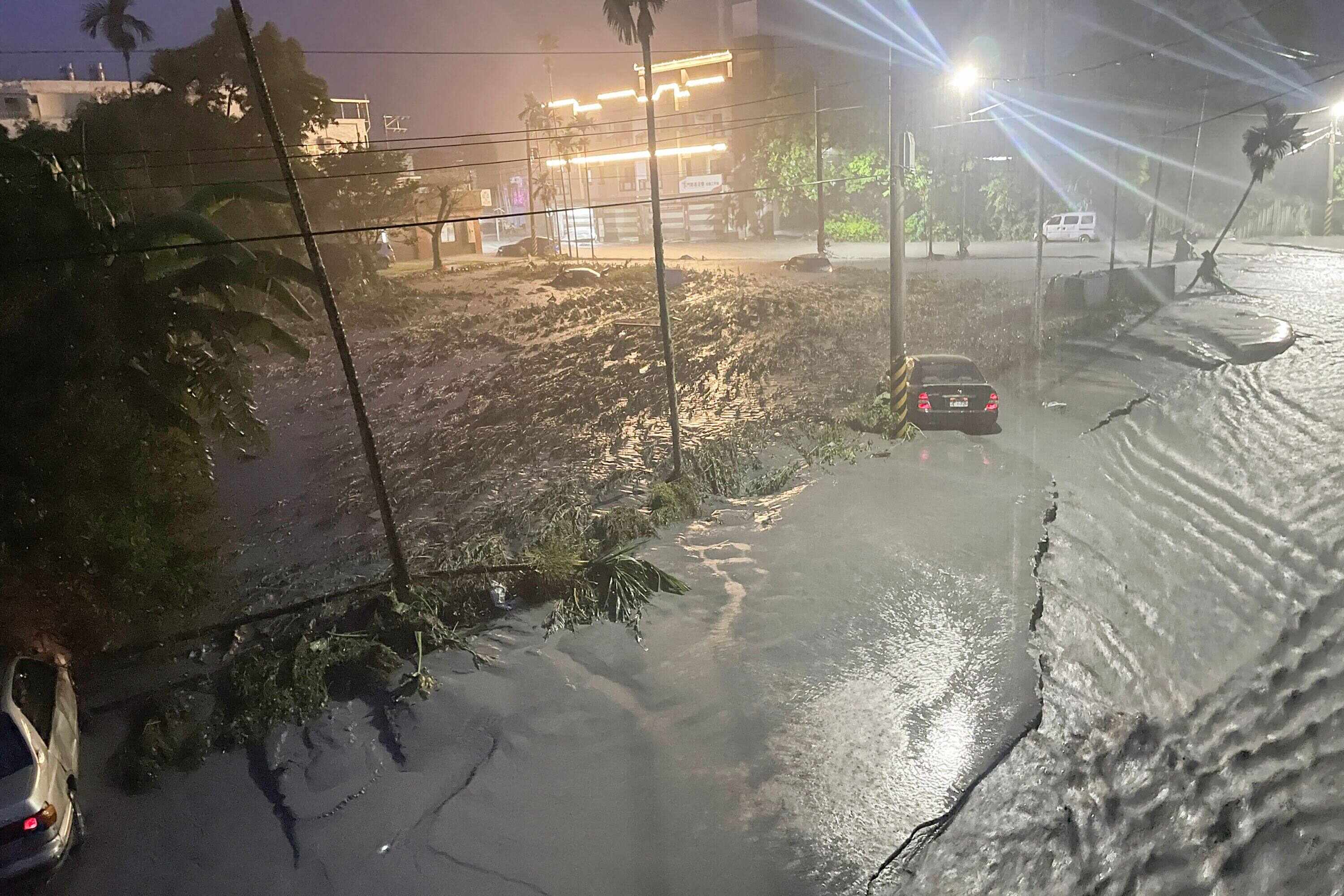
Significant flooding affected low-lying regions in the city, including Tseung Kwan O
-
Experts call for better flood-proof solutions to minimise the impact of future typhoons
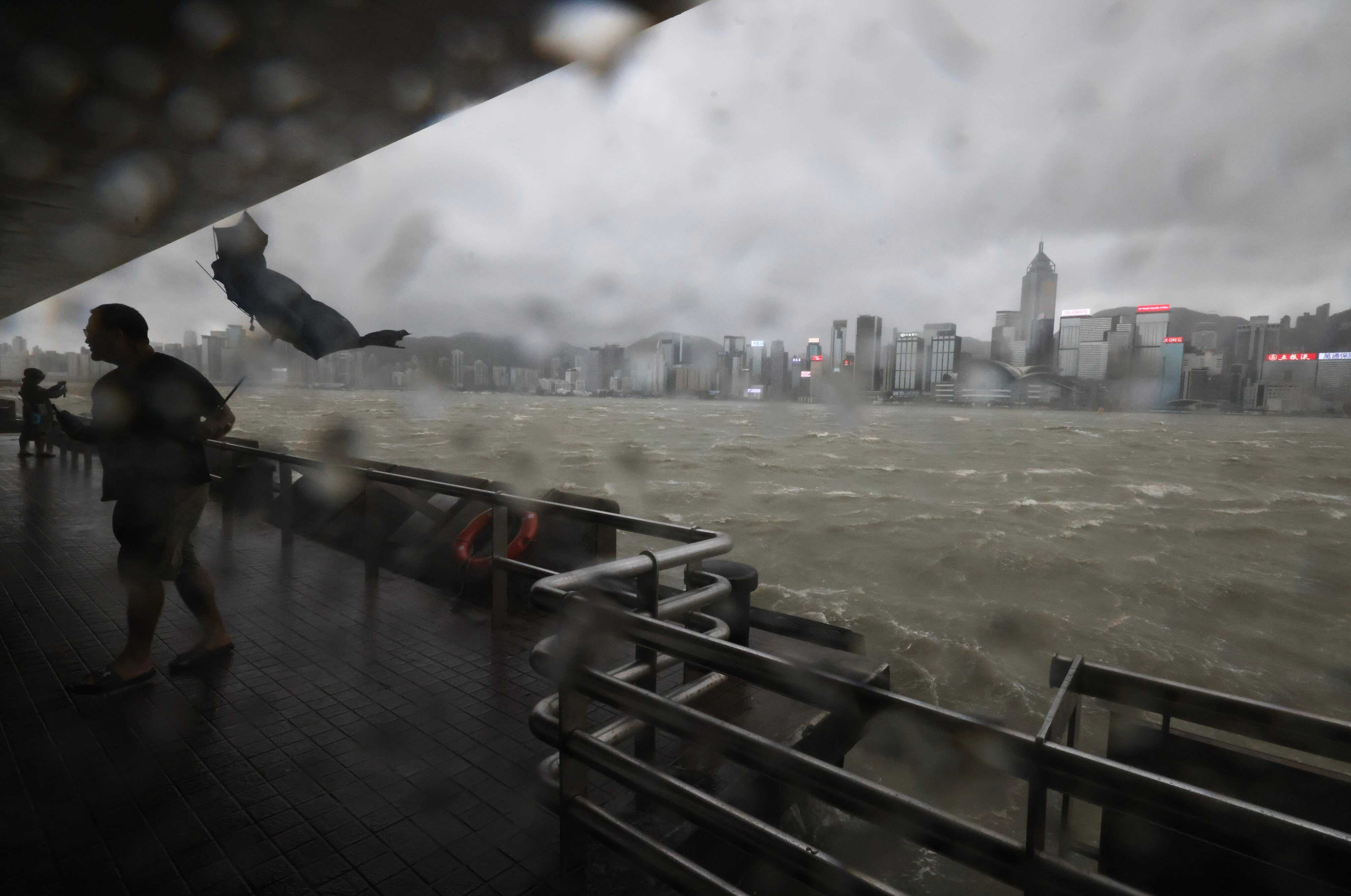
On September 24, people in Hong Kong woke up to the damage caused by Super Typhoon Ragasa, which triggered a No 10 signal for almost 11 hours.
According to the Hospital Authority, 101 people got hurt and needed help at hospitals. There were also reports of 1,224 fallen trees and 22 cases of flooding.
Coastal and low-lying areas in the city were badly affected by the typhoon. It caused problems with work and transportation, while school classes were cancelled for almost three days.
The Hong Kong Observatory reported that water levels in some places went up to 12.5 feet or more above chart datum, a standard level used to check tide heights.
In Tseung Kwan O, strong winds blew away flood barriers in front of three restaurants by the sea. Plates, glasses, chairs, tables and cushions from the restaurants ended up in a big pile of junk.
In the nearby promenade, parts of metal railings were ripped out and bent, blocking sidewalks and bike paths. Large pieces of stone came off concrete walls and bricks.
Lei Yue Mun experienced flooding due to waves hitting low-lying areas, including the promenade and streets. Because of this, the Drainage Services Department sent in a strong pumping robot to help remove the floodwater.
Sandbags did not keep the water from flooding the shopping streets of Tai O on Lantau Island. The water went up to people’s knees.
Professor Benjamin Horton, the dean of the school of energy and environment at City University, said that Hong Kong is facing more frequent and stronger super typhoons. This could lead to serious damage, especially when a storm surge happens during high tides.
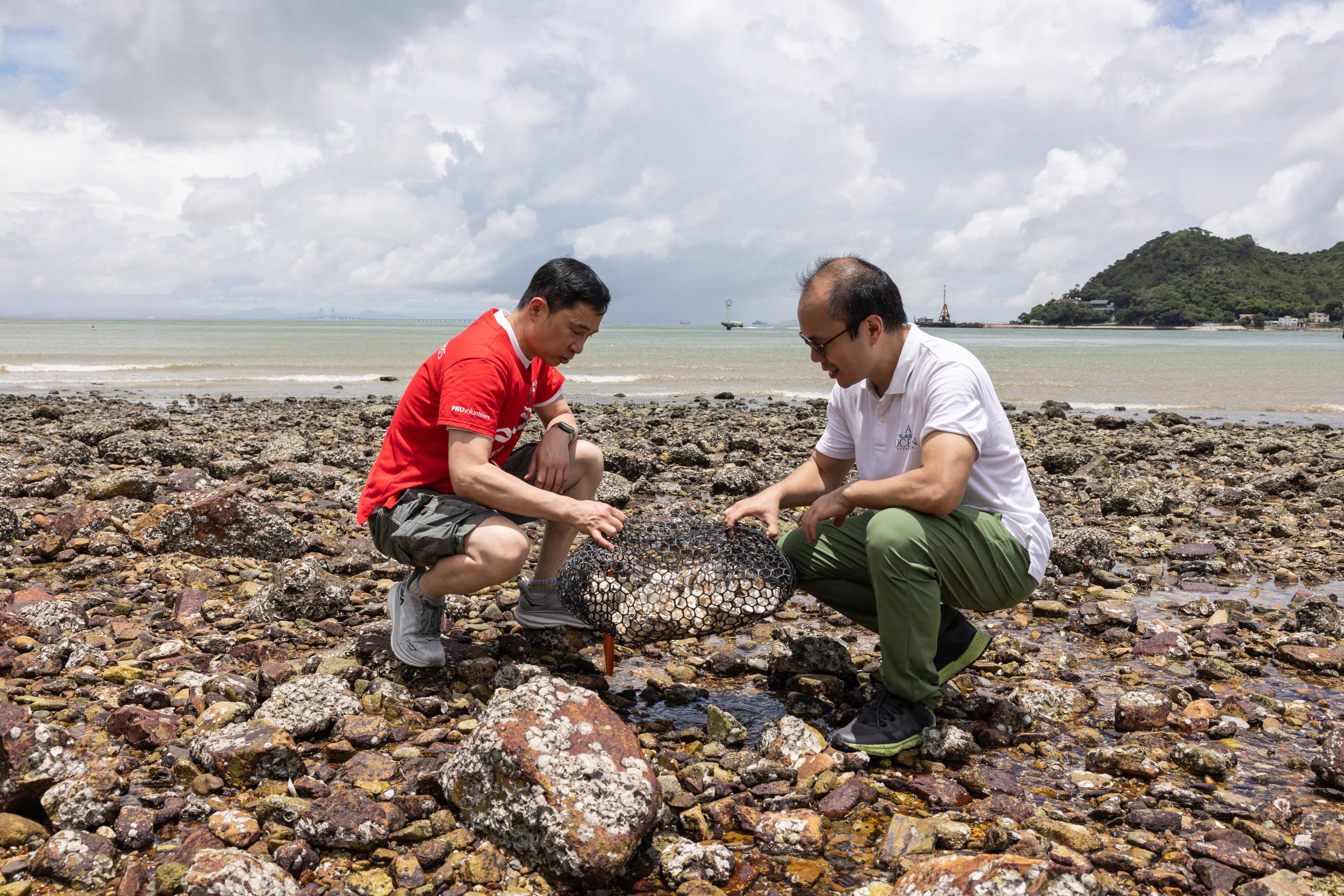
Horton said things will get worse because sea levels are rising. He urged the government not to be careless and to use natural ways to adapt, like planting mangroves and building oyster reefs along the shore to act as natural barriers.
Tony Za Wai-gin, a former chairman of the building group at the Hong Kong Institution of Engineers, stated that the breakwaters in low-lying areas should be taller to provide better protection.
“Low-lying areas may not have tall enough breakwaters to cope with more extreme weather,” he said.
Secretary for Development Bernadette Linn Hon-ho had earlier promised to look at coastal facilities. She said that flood prevention measures will be taken in high-risk areas like Tseung Kwan O and Aberdeen.
Staff writers
Question prompts
1. Which of the following statements about Super Typhoon Ragasa are true?
(1) Pumping robots were seen in Lei Yue Mun to clear floodwaters.
(2) Some parts of Tseung Kwan O promenade were flooded.
(3) Water reached knee height in the fishing village of Tai O.
(4) Only Hong Kong was affected by Ragasa.
A. (1), (2) only
B. (1), (2), (3) only
C. (1), (2), (4) only
D. all of the above
2. Using News, list TWO ways Super Typhoon Ragasa impacted Tseung Kwan O.
3. Do you think there will be more typhoons like Ragasa in the future? Why? Explain using News and your own knowledge.
Infographic
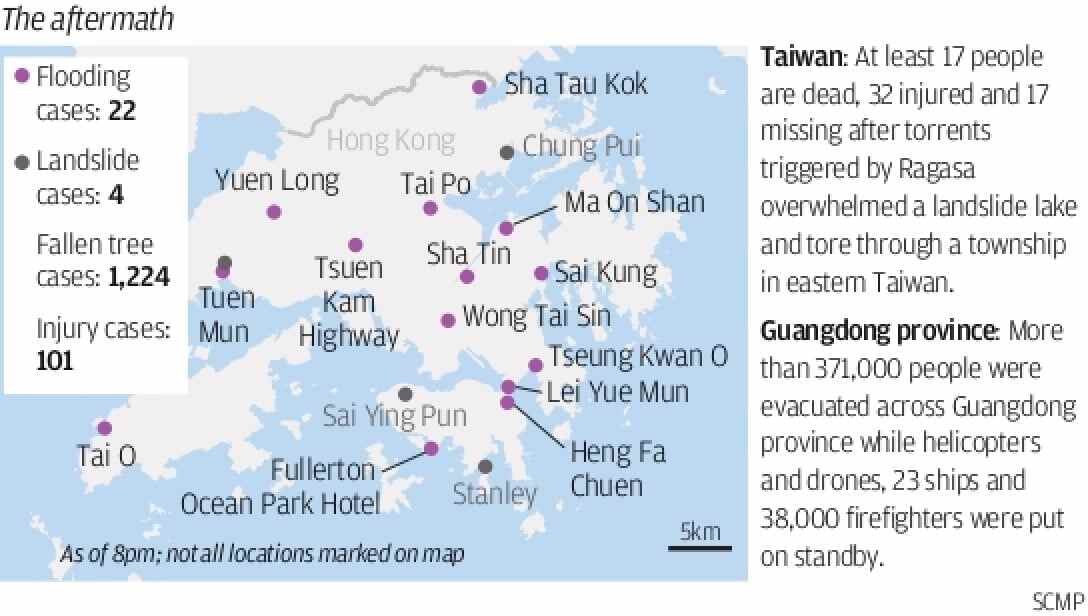
Question prompts
1. According to the infographic, what is a common trait shared by many of the places affected by flooding?
2. What more can Hong Kong do to prevent flooding in these areas? Explain using News, Glossary and your own knowledge.
Issue: Hong Kong cracks down on storm chasing
-
Two women were arrested for endangering children while taking selfies outside during the typhoon
-
City will consider new laws to curb storm chasing
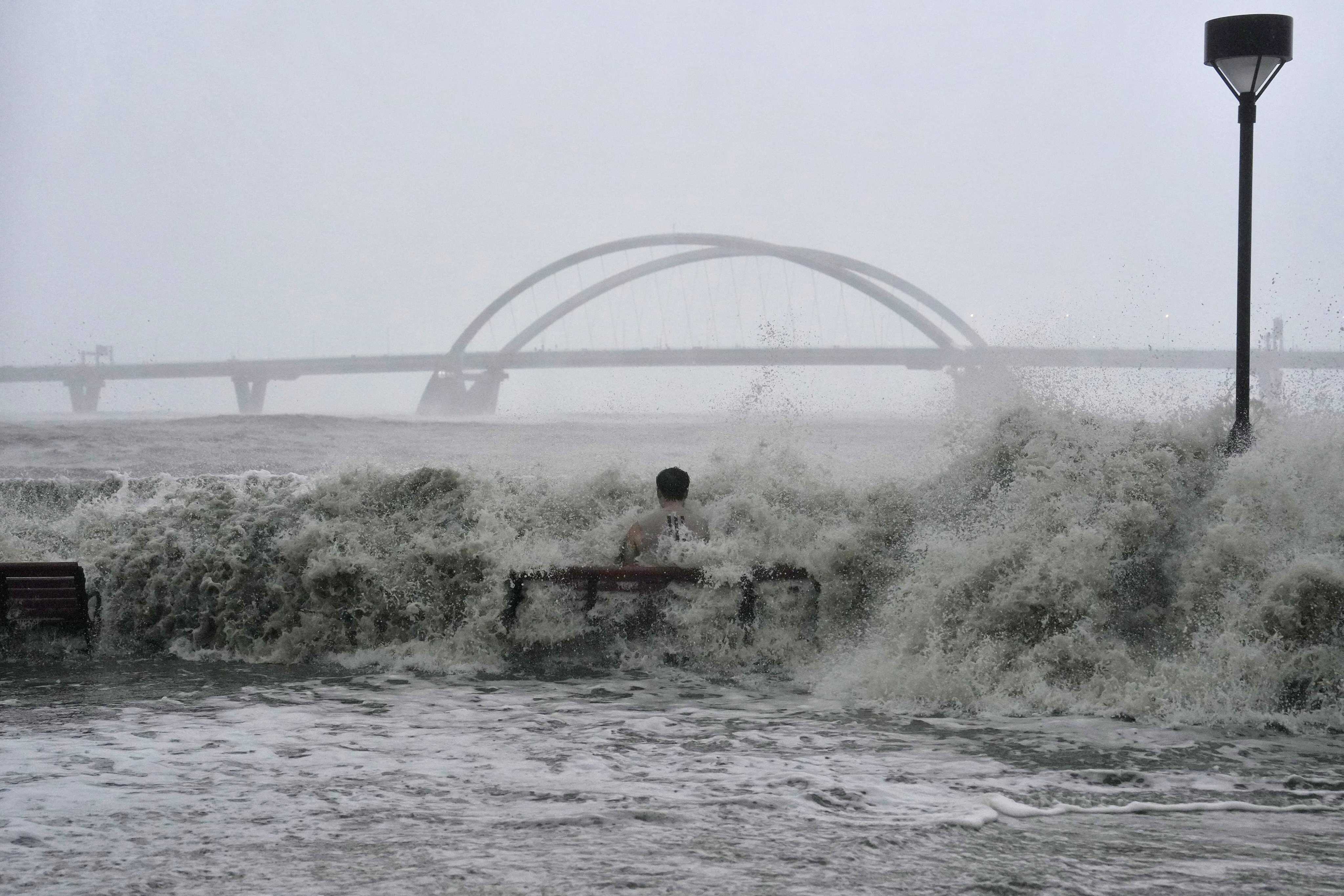
Hong Kong police have arrested four people on suspicion of taking youngsters to watch the waves during Super Typhoon Ragasa last month, while a 54-year-old man has been prosecuted for allegedly swimming at a closed public beach when the No 10 signal was in effect.
A 46-year-old local man and a 33-year-old foreign domestic helper were also accused of child neglect, an offence punishable by up to 10 years in prison.
The pair allegedly took the man’s two sons, aged four and six, to watch the waves during the typhoon in Kennedy Town while the No 10 signal was in effect, according to the force.
The two adults had taken photos with the children even as the sea surged and water washed onto the pavement.
Another case saw two women arrested for allegedly bringing an eight-year-old boy to take selfies and film the stormy seas at a housing estate in South Horizons.
A massive wave then swept the trio into seawater.
Police said the child was sent to the hospital for examination with obvious abrasions on his limbs.
Hong Kong’s security chief vowed to review existing legislation addressing storm chasing and consider enacting new laws after dozens of residents ignored government warnings and gathered to watch the waves during Ragasa.
Secretary for Security Chris Tang Ping-keung warned earlier that bringing children to such dangerous activities could constitute neglect.
In a separate incident, a woman and her five-year-old son were hospitalised in intensive care after waves swept them into the sea, prompting the father to jump in and nearby fishermen to rescue them.
The family had gone to the breakwater at Ka Yip Street in Chai Wan to watch the waves. The No 8 warning was in force at the time.
However, some legal experts argue that Hong Kong should not impose a blanket ban on storm chasers.
Lawyer Eric Chan Pak-ho said a balance should be struck when regulating such acts.
“On the one hand, Hong Kong should be a free society where individual freedoms should not be unduly restricted,” he said. “On the other hand, society should discourage reckless acts that put themselves and others at risk of serious injury.”
Legislator Edward Leung Hei suggested that Hong Kong could adopt Macau’s approach of designating specific areas as high-risk zones.
According to its Civil Protection Law, which took effect in 2020, it divides public emergencies caused by natural disasters into five levels, from “general” to “catastrophe”.
Once authorities declare a public emergency of Level 3 or higher, they have the authority to forcibly evacuate people in danger and prohibit individuals or vehicles from entering or passing through specific areas.
He said prohibiting people or vehicles from staying in or passing through specific areas could more effectively deter the reckless behaviour of “storm chasers”.
Staff writers
Question prompts
1. According to Issue, why were some people arrested following Super Typhoon Ragasa?
2. Identify ONE reason why Hong Kong’s security chief is considering new laws aimed at storm chasing.
3. Do you think the government should introduce new legislation to tackle storm chasing? Why or why not? Explain using News, Issue and your own knowledge.
Photo
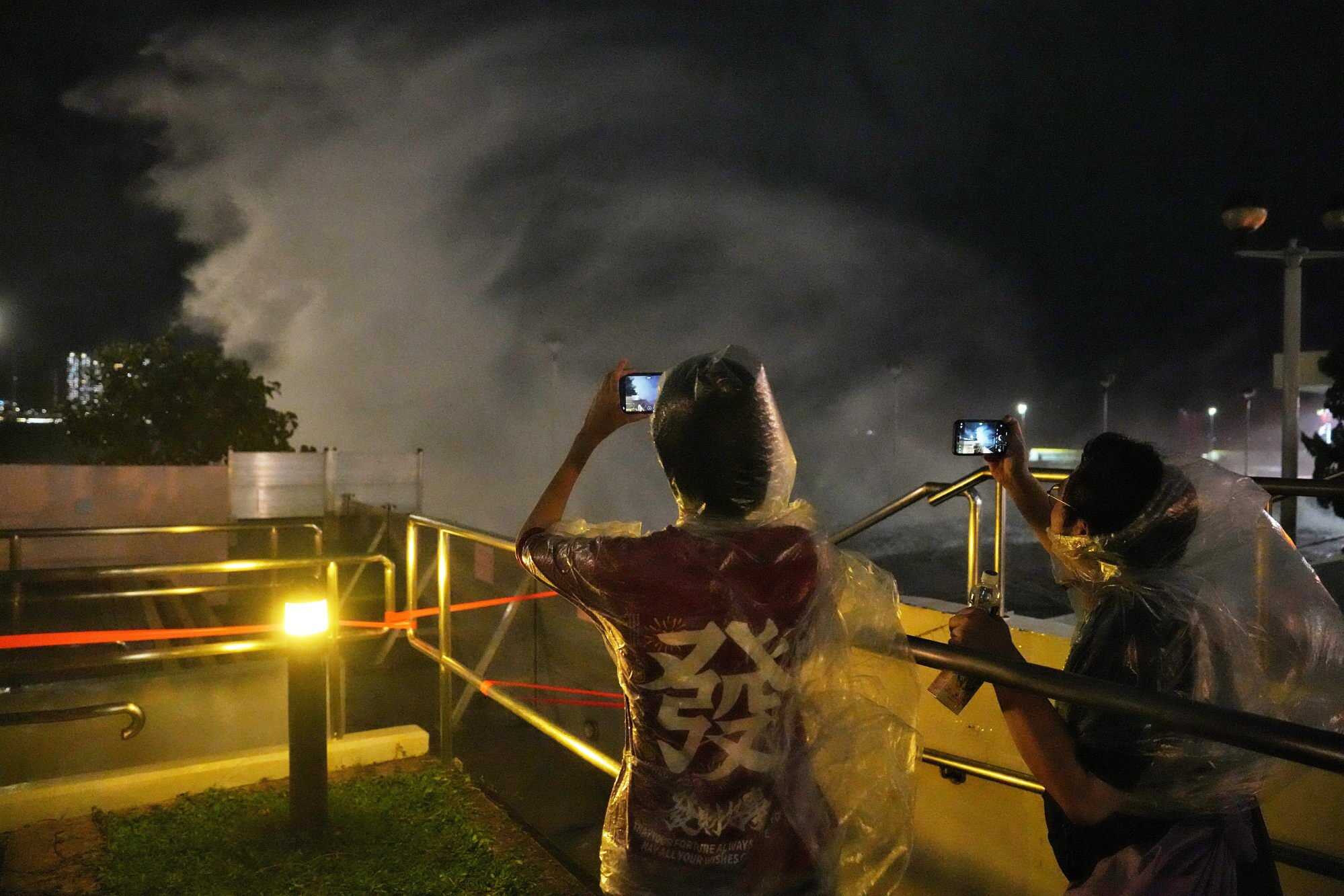
Question prompts
1. What are the people in the photo doing, and when? Do you agree with their behaviour?
2. What could have happened if people continued to behave this way during the typhoon? What should we do to protect ourselves during bad weather? Explain using Issue and your own knowledge.
Glossary
-
Super Typhoon Ragasa: a powerful storm that hit the Philippines, Taiwan, Hong Kong, Macau, southern China and Vietnam in late September 2025. At the time, it was the most intense tropical cyclone recorded for the year, resulting in extensive flooding and landslides and causing at least 29 fatalities and 219 injuries in the regions it affected.
-
No 10 signal: Hong Kong’s highest typhoon warning signal. Raising this signal means that hurricane force winds of 118 km/h or more are expected or already blowing when the signal is issued. Super Typhoon Ragasa was the second time the Hong Kong Observatory issued a No 10 signal this year, the previous one being Tropical Storm Wipha in July. It was the first time the signal has been hoisted twice in a year since 1964.
-
flood barriers: structures, often temporary or movable, designed and deployed to prevent or reduce the flow of water into an area. They can include walls, gates or inflatable systems.
-
breakwaters: permanent, artificial offshore or coastal structures built to protect a harbour, anchorage or shore from the full force of waves and tides by breaking their impact.
-
neglect: when a parent or guardian places a child in a situation of unnecessary danger or risk. According to the Offences Against the Person Ordinance (Cap. 212), the maximum penalty for ill-treatment or neglect of a child by a person in charge is 10 years in jail.
-
Civil Protection Law: a law in Macau which establishes the framework for disaster prevention and response to safeguard public life and property. Those who violate the law can be sentenced to a maximum of two years’ imprisonment or a daily fine for up to 240 days.
Sample answers
News:
-
B
-
In Tseung Kwan O, flood barriers in front of three harbourfront restaurants were blown away. On the Tseung Kwan O promenade, the typhoon blew off and twisted sections of metal railings welded into the ground.
-
Yes, there will be more intense typhoons due to climate change. According to Professor Benjamin Horton, these super typhoons could cause severe damage.
Infographic:
-
Most of the places that experienced flooding are near the water.
-
To minimise the impact of typhoons, the government should build natural barriers by planting mangroves and building oyster reefs along the shores. Authorities should also build taller breakwaters, especially for low-lying areas. This way, artificial and natural barriers can work in tandem to protect these higher-risk areas.
Issue:
-
Four people were arrested for allegedly taking children to watch the waves during a super typhoon, endangering their lives.
-
Dozens of Hongkongers ignored government warnings and went to watch the super typhoon’s big waves. This could show that existing laws are not strong enough to deter storm chasers.
-
I support having new laws to address storm chasing because it can create more consequences equal to the danger people are putting themselves in. Current laws are not enough to deter this dangerous behaviour. / I do not support having new laws to address storm chasing because the existing laws are enough to protect children, who are the most vulnerable to the dangers of this activity. If adults choose to venture out during a super typhoon, they should be wise enough to decide what is safe and reasonable for themselves. (accept all similar answers)
Photo:
-
The people in the photo were taking photos of the waves caused by Typhoon Ragasa. I disagree with storm chasing because it is dangerous and we should not underestimate its impact. (accept all similar answers)
-
This behaviour could cause life-threatening situations. If storm chasing increases in popularity, this is especially dangerous for young people who may not be able to keep themselves safe. We should stay indoors during super typhoons like this and pay attention to government warnings to stay away from the shores and evacuate low-lying areas.