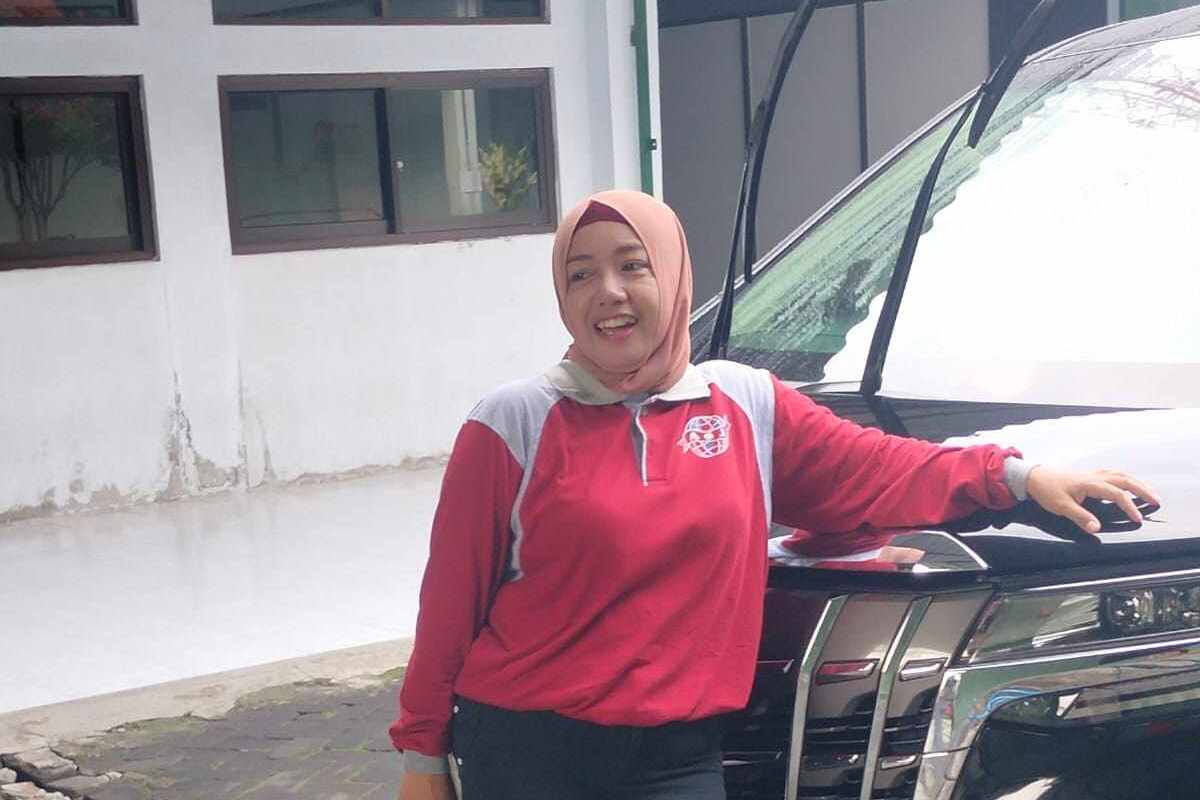
The last time Sugeng Widodo spoke to his wife, Indonesian domestic worker Sri Wahyuni, something did not feel right for him. It was around 1pm Hong Kong time on November 26, just a few hours before a devastating fire would rip through Wang Fuk Court in the city’s Tai Po district and eventually kill at least 159 people.
The body of Wahyuni, 42, was found in a room in a fourth-floor flat at the estate, hugging her employer, a 93-year-old woman, according to Widodo, citing information provided to him by Hong Kong’s police.
“Usually, we would speak for around 30 minutes and just chat about her work and about our daughter’s school. But we spoke via video call for over an hour and a half,” an emotional Widodo said of the final time he would get to speak to his wife.
In the hours before the tragedy, Wahyuni had gone to check on the employer under her care, according to Widodo, and she had urged her husband not to hang up and to wait 10 minutes while she got the elderly woman ready for her afternoon nap.
“When she got back, she asked me to hug her over the phone, which she never did, and said she missed me more than anything,” Widodo said.
The 49-year-old carpenter later heard from his wife’s sister that a fire had broken out at the estate. He did not know the block where Wahyuni was working and was desperate to find out news about her.
After three agonising days of waiting, Widodo was informed that Wahyuni did not survive the blaze. Her body was found by firefighters on November 29. She was reportedly lying on the same bed as her employer.
Widodo said the Hong Kong police told him that the two women had their arms around each other and were covered in a blanket “like they were just sleeping”.
Wahyuni was originally from the city of Blitar in East Java and had been in Hong Kong for almost two years, looking after the elderly woman at Wang Fuk Court. Most of the time, Wahyuni was in a sunny mood whenever Widodo spoke to her. But on November 26, Widodo said his wife seemed unusually gloomy and nostalgic.
“She said she missed her sisters, two of whom work in Malaysia as domestic helpers and one in South Korea. She said that when she finished her contract in February, she wanted to return to Indonesia and for her sisters to come back too, so they could all live together.”
Wahyuni was even talking about her sisters ending their contracts early and returning home immediately, Widodo said. “She would pay for everything so that they would never be apart again.”
Widodo sensed his wife was speaking as though she did not want him to leave her side. “The way she was talking gave me goosebumps. She was saying so many strange things about the future that didn’t make sense.”
Widodo said that when he hung up the phone, he had an ominous feeling that all was not well. In hindsight, his wife seemed to have a premonition that she would not escape the towering inferno that was about to engulf Wang Fuk Court.
At around 5pm Hong Kong time, some two hours after the fire started, Widodo said he received a frantic call from his wife’s sister, Yayuk Setyowati, who was also working as a domestic helper in the city.
“She said there was a fire, but I didn’t believe it at first. She sent me videos of the building, and I knew it was the same place my wife worked. I just lost control. I couldn’t keep my thoughts in order, and I forgot to shower or eat.”
He said he was sure his wife would have survived the blaze had she prioritised her safety. The fourth-floor flat was close to an emergency stairwell, and Widodo said Wahyuni could have escaped “in minutes” if she had fled immediately.
“But she didn’t think about saving her own life. I heard that people in flats on higher floors escaped or were rescued,” he said.
Widodo was also sure that his wife did not fall asleep, as her bed was in a separate room from her ward, and she had told him when they last spoke that she was going to cook soup, which would have taken several hours to prepare.
The grieving husband surmised that the pair chose to stay in the flat and wait for rescue due to the older woman’s mobility issues. He was not surprised to hear that Wahyuni had stuck with her ward till the very end.
“She was an extremely responsible person. She had such strong principles. We used to joke that she was the one who dealt with all the practical matters on this earth, whereas I always have my head in the clouds.”
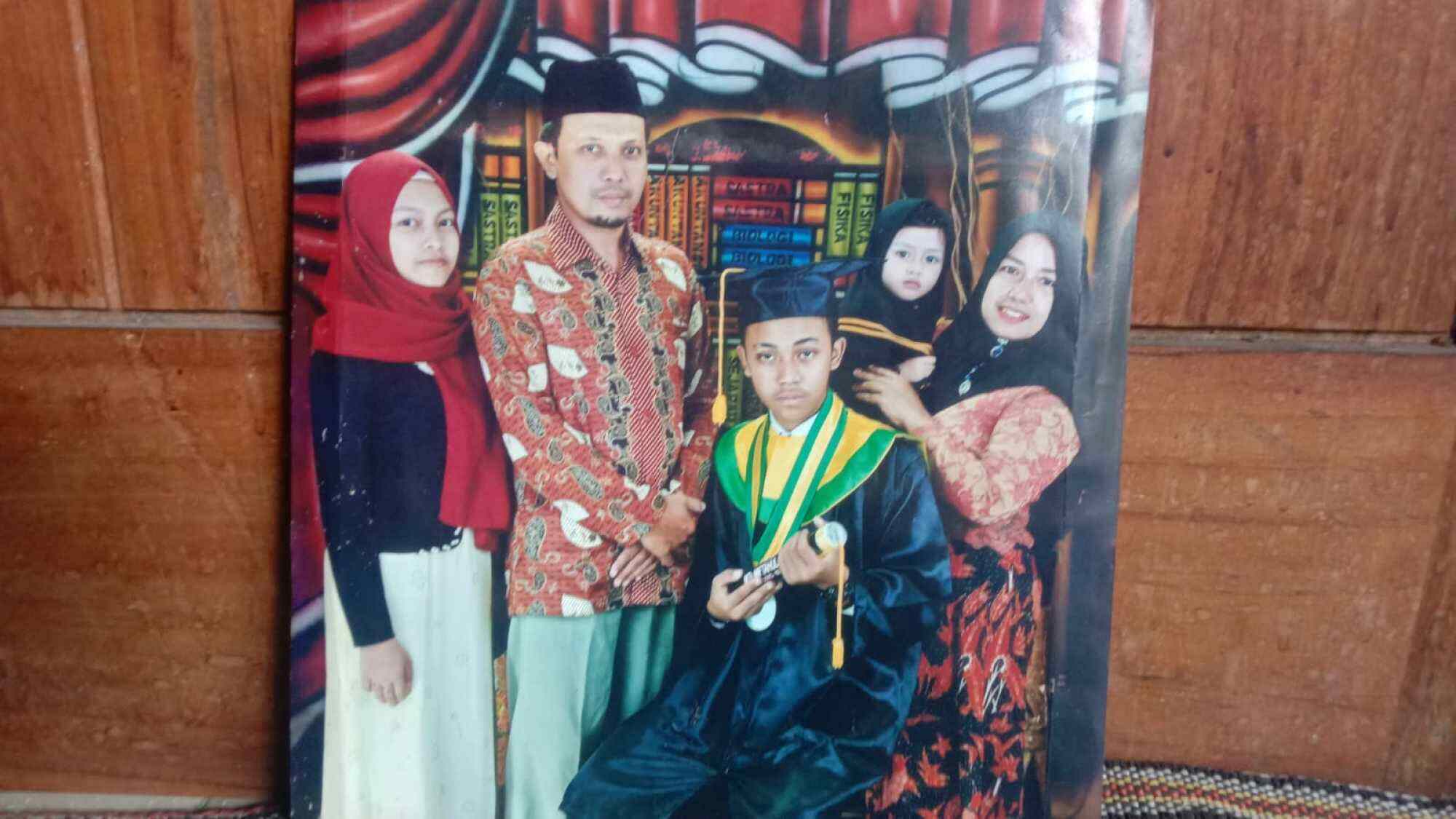
When Wahyuni went to Hong Kong, their two eldest children, son Ahmad Nurudhim, now 21, and 20-year-old daughter Nurun Khoriul Miftah, were still studying. Their youngest, a daughter named Fadilah Nurdaya, was just six at the time.
Fadilah, now eight, has been struggling to accept her mother’s death.
Rather than think about compensation and legal responsibility, Widodo said he hoped his wife’s body would be returned soon, so that a proper funeral and burial could be held.