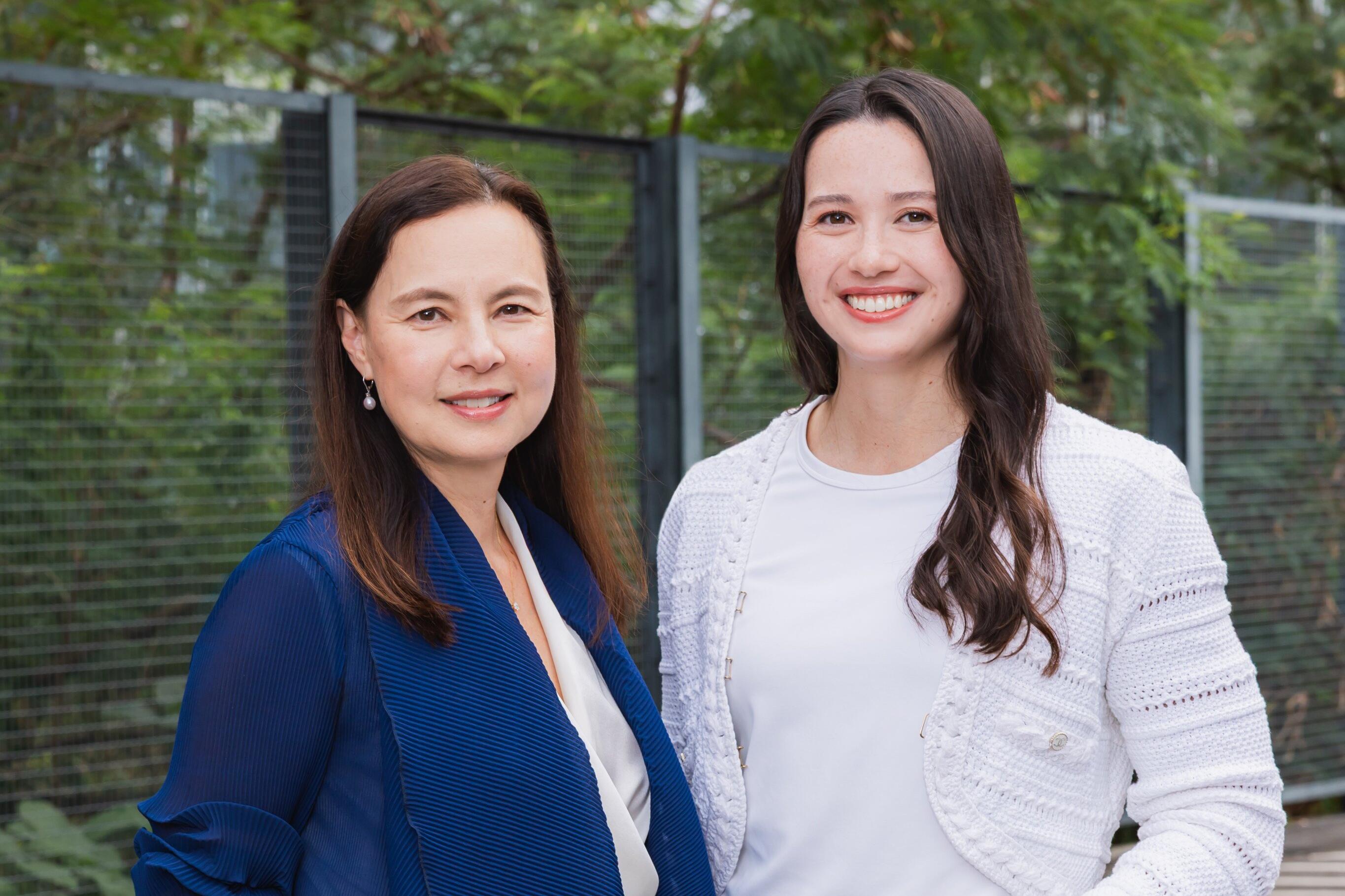
Hong Kong Olympic medallist Siobhan Haughey and entrepreneur Joanna Hotung recently came together to champion the enduring power and irreplaceable human connection of reading, urging students to prioritise deep reading over the convenience of artificial intelligence (AI).
“AI can give you logic and something that is objective, but it really leaves a big part of the emotions out,” Haughey said during the “Empower Through Reading” panel, a fireside chat supported by Chanel that brought together dozens of local students.
For Haughey, the difference between a bot and a book is the difference between a checklist and a heartbeat.
She gave an example from a book she recently read, The People We Keep by Allison Larkin, describing a scene where the protagonist, a struggling teenager desperate to reach a singing audition, steals her neighbour’s car.
“If AI were to summarise this ... I would say, ‘oh, she did a bad thing, she stole her neighbour’s car, and it’s wrong’,” Haughey explained.
The star swimmer noted that AI operates in black and white; it sees a crime and categorises it. But humans live in the grey areas. Because Haughey read the text herself rather than relying on a summary, she navigated that grey area of human desperation and lived the character’s struggle page by page.
“I was really rooting for her; I have this empathy for her,” Haughey said. “It’s you who adds the emotion part to it. You’re the one who’s going to judge ... how do I feel about this action?”
The message highlighted a critical takeaway for students: AI is a tool for memory, but reading is a tool for thought.
“We cannot outsource our thinking to machines,” said Joanna Hotung, the founder of KG Group Education and the director of the Hotung Mills Education Foundation.
Describing herself as having grown up in an era when “reading was her entertainment,” Hotung challenged students to consider the “curiosity gap”.
She argued that while AI is excellent at retrieving data that already exists, it kills the creative spark required to imagine what is yet to come: “We read to prepare for a world we cannot envisage,” she said. “So when we are stuck with something we’ve never seen before – where there is no historical data for the AI to draw from – we choose to think instead of just remember.”
Growth through reading
Before she was breaking records in the pool, Haughey was simply a girl trying to fit in. Her reading journey began with comic books like Old Master Q (老夫子).
“There are a lot of pictures, but not a lot of words. It’s quick and easy and simple, and it’s very fun as well,” she recalled. This anecdote carried an important message to the audience: start with what you love instead of the pursuit of achievement.
As she grew older, books became a mirror for her own life. Haughey shared how the memoir Everything I Know About Love by Dolly Alderton affected her.
“When I first read it, I thought this book was about my life,” Haughey revealed. She described how the author recounts the messy, relatable evolution of growing up – from the naive views of love at age five to the complexities of adulthood.
“You see her go through her life through all these different chapters ... Love is not just about romantic love. It’s also about love between your friends, your family, self-love,” Haughey said.
It was a connection she could never have forged through an AI summary – the realisation that her own struggles were shared and understood by a stranger across the page.
Reading does not have to be a lonely journey, Haughey added, explaining that it can be a way to build a community of intellect and empathy.
She described hosting reading meet-ups, where she and her friends would sit together in a coffee shop or park, reading separately but together.
“We’re alone doing our own reading, but then we’re together ... It’s a great way for me to connect,” she said.
She added that they also created a book exchange, which helped them discover new stories.
Identity and resilience
As the discussion moved towards the impact of reading on personal identity, Hotung shared how books served as her companions during lonely times at boarding school. She credited Susan Cain’s book Quiet for helping her embrace her identity as an introvert.
“You do not have to be a loud, noisy person to actually be someone with influence,” Hotung told the students. “Often the quieter people are the ones who are more thoughtful.”
This exploration of identity even extends to the popular Myers–Briggs Type Indicator (MBTI) personality test, Hotung said. While many students might see their personality traits as a fixed identity, she used her own experience to show that personality is fluid – and reading helps navigate that growth.
“When I did [the test] maybe 30 years ago, I was [an] ISTJ,” Hotung shared. People with ISTJ traits are typically described as introverted and reserved.
“But as I grew and developed, I became more confident. I actually shifted ... to ESTJ,” she explained, describing a more extroverted personality type.
Hotung said that personality traits exist on a spectrum that you move along as you grow. Reading allows you to experiment with that spectrum.
By stepping into the shoes of different characters – some loud, some quiet, some brave, some fearful – you learn that you aren’t limited by a label.
“It allows me to experience what I would normally not do,” Haughey agreed, adding that reading lets her explore identities she wouldn’t dare try in real life.
But her most resonant point came when she discussed resilience, and Hotung shared a graphic that compared the structure of a novel to the trajectory of a human life.
In a book, when a character faces a disaster – a break-up, a failure, a loss – the reader does not close the book and assume the story is over. The reader knows it is just the middle of the tale.
Hotung urged students to apply that same narrative mindset to their own lives.
“When things go wrong, hang in there. It’s just a plot twist,” Hotung said. “Just imagine yourself as being the lead character in your own life, in your own book ... Things are going to come back and get back on track.”