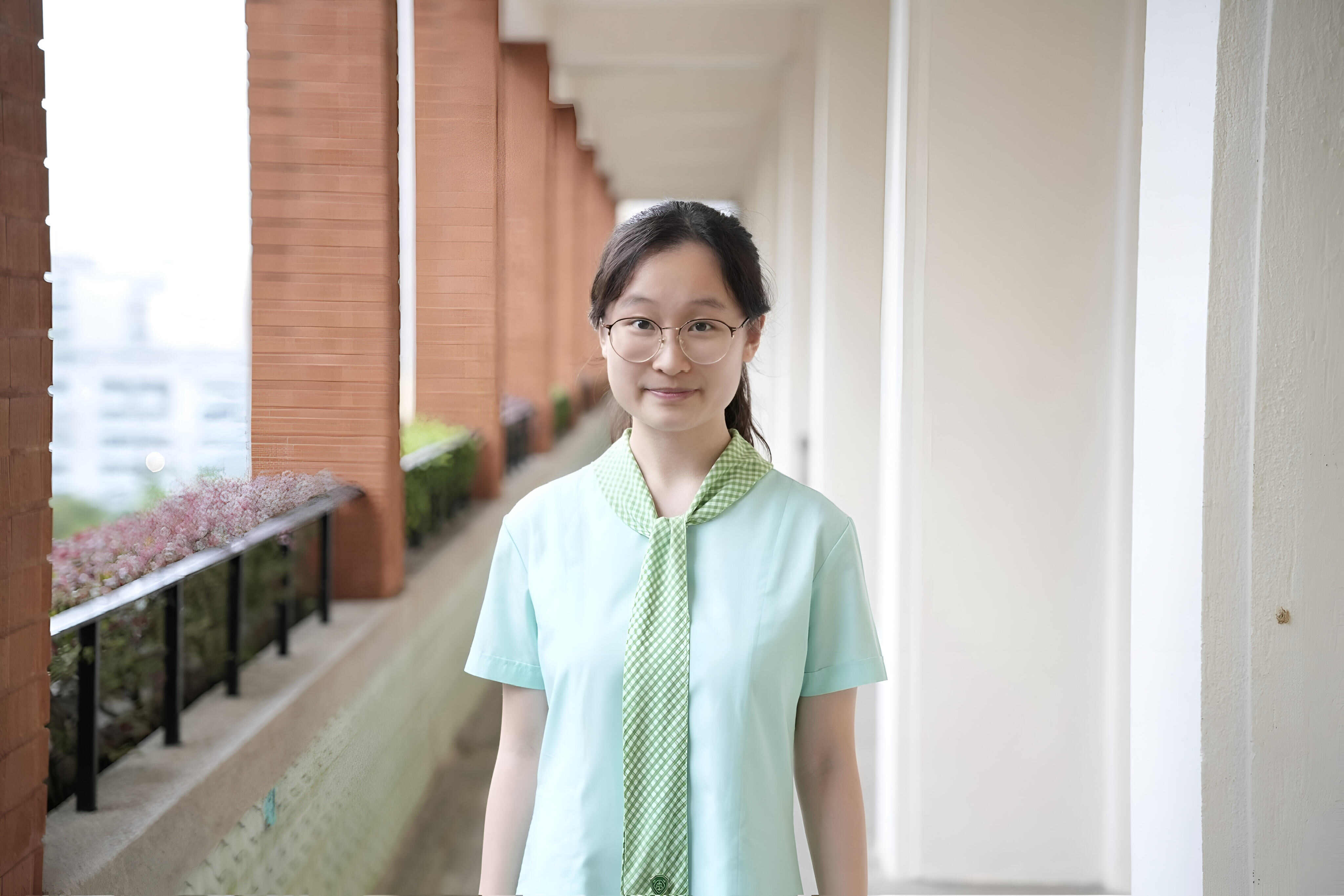
For Megan Lam Ho-ching from Diocesan Girls’ School, her journey into sustainability and inclusive technology is a deliberate unfolding of curiosity and empathy.
Her advocacy began with a policy announcement: in April 2024, the Hong Kong government introduced a solid-waste charge. Although the idea has since been discarded, the policy sparked something in Lam, then the chair of her school’s conservancy club.
“I realised traditional outreach wasn’t enough,” the 18-year-old said. “I wanted something interactive that could actually change habits.”
That impulse led her to use the app-coding skills she had honed in STEM competitions for a clear social purpose.
The result was DGS Zero, an app that lets students track and record their recycling habits.
After the long process of app store submission and approval, her project was integrated into the junior-secondary geography curriculum and adopted by more than 900 users.
Lam views DGS Zero as a gateway, not a destination; success means the app becomes unnecessary because recycling becomes instinctive.
“True success is when the app is obsolete,” she said. She values seeing the ripple effect most, hoping to see students influence their families to recycle.
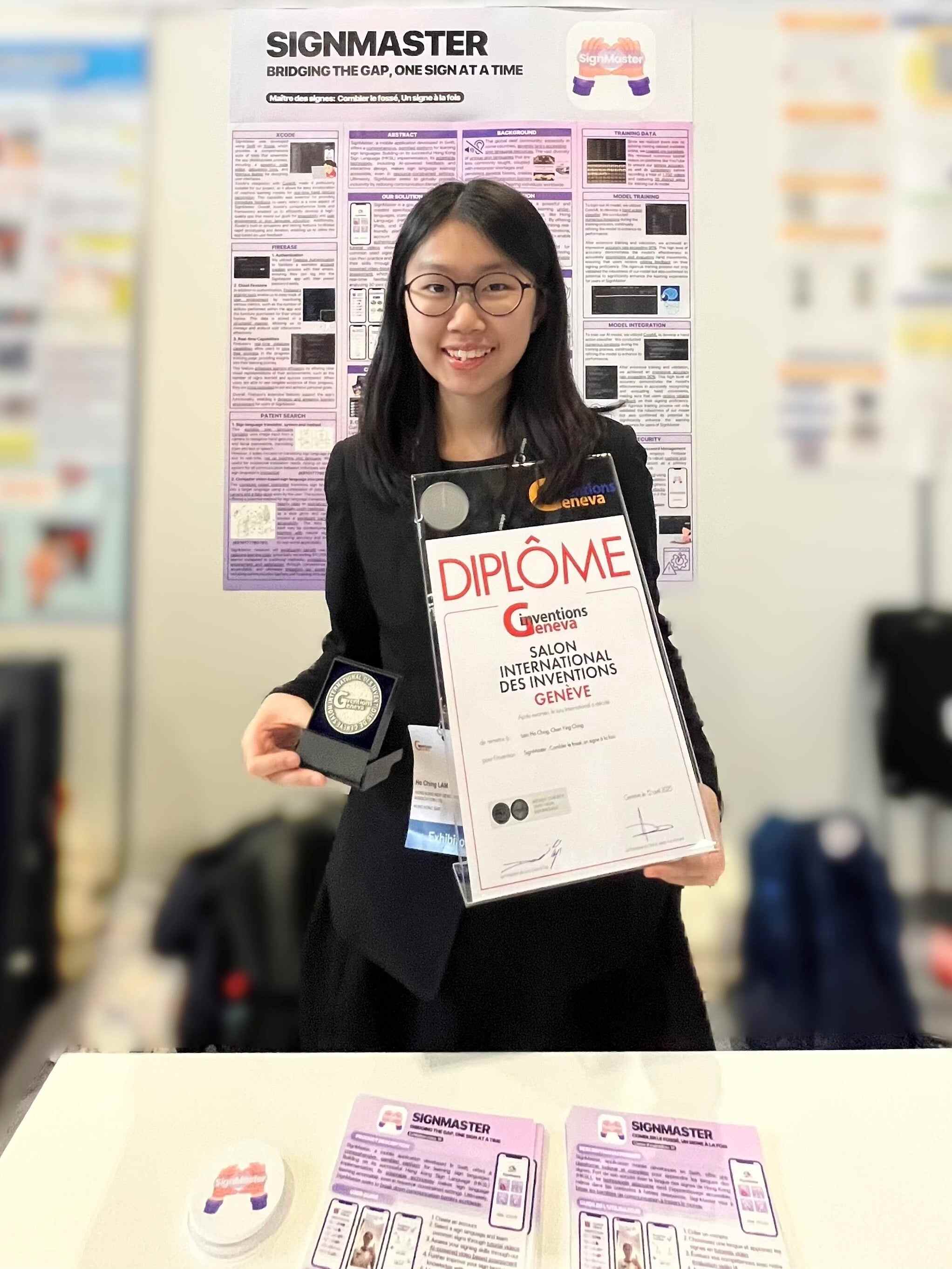
Meanwhile, her work on SignMaster grew from a personal encounter with a communication gap while volunteering at the Hong Kong Society for the Deaf.
Confronted by her own unfamiliarity with Hong Kong Sign Language (HKSL), she researched local resources and found them scarce.
“Sign language is region-specific, and resources for HKSL were surprisingly scarce,” Lam explained.
She designed SignMaster as a gamified learning platform: users earn points for mastering signs and decorate a virtual home as a playful reward.
The backbone of the app is an AI-powered feedback system trained on data that Lam recorded herself – more than 1,800 signing videos – to enable real-time analysis and corrective guidance.
Winning a silver medal at the 50th International Exhibition of Inventions in Geneva validated and inspired Lam.
“Seeing SignMaster recognised internationally affirmed that local solutions can speak to global challenges,” she said. It also confirmed her belief that technology can preserve cultural and linguistic heritage while promoting accessibility.
Conversations with researchers and educators in Geneva broadened her view of pedagogy and scalability, prompting her to refine SignMaster’s architecture and imagine adaptations that could serve diverse linguistic communities without losing its Hong Kong roots.
Lam was recognised for her achievements when she was named a finalist in the Sustainability Advocate category of the 2024/25 Student of the Year Awards, organised by the South China Morning Post and sponsored by The Hong Kong Jockey Club.
Looking ahead, she is eager to deepen partnerships that fuse eco-advocacy with practical tech. She aims to build solutions that are globally informed and locally rooted: “I want to create tangible impact where I belong,” she said.
Her vision is bold but grounded: technology as a tool to change daily habits, preserve culture and scale sustainability.