Before you read:
-
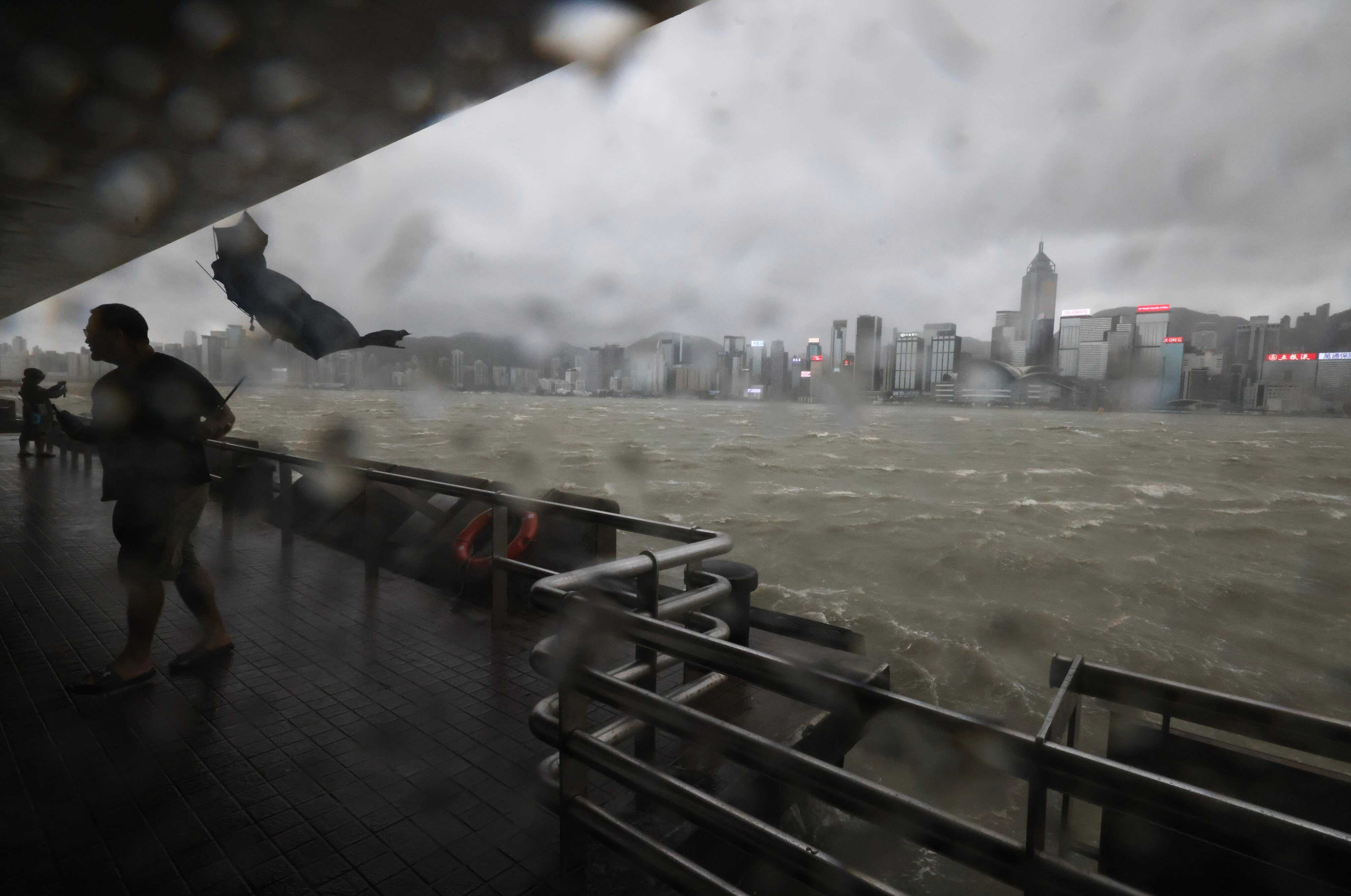
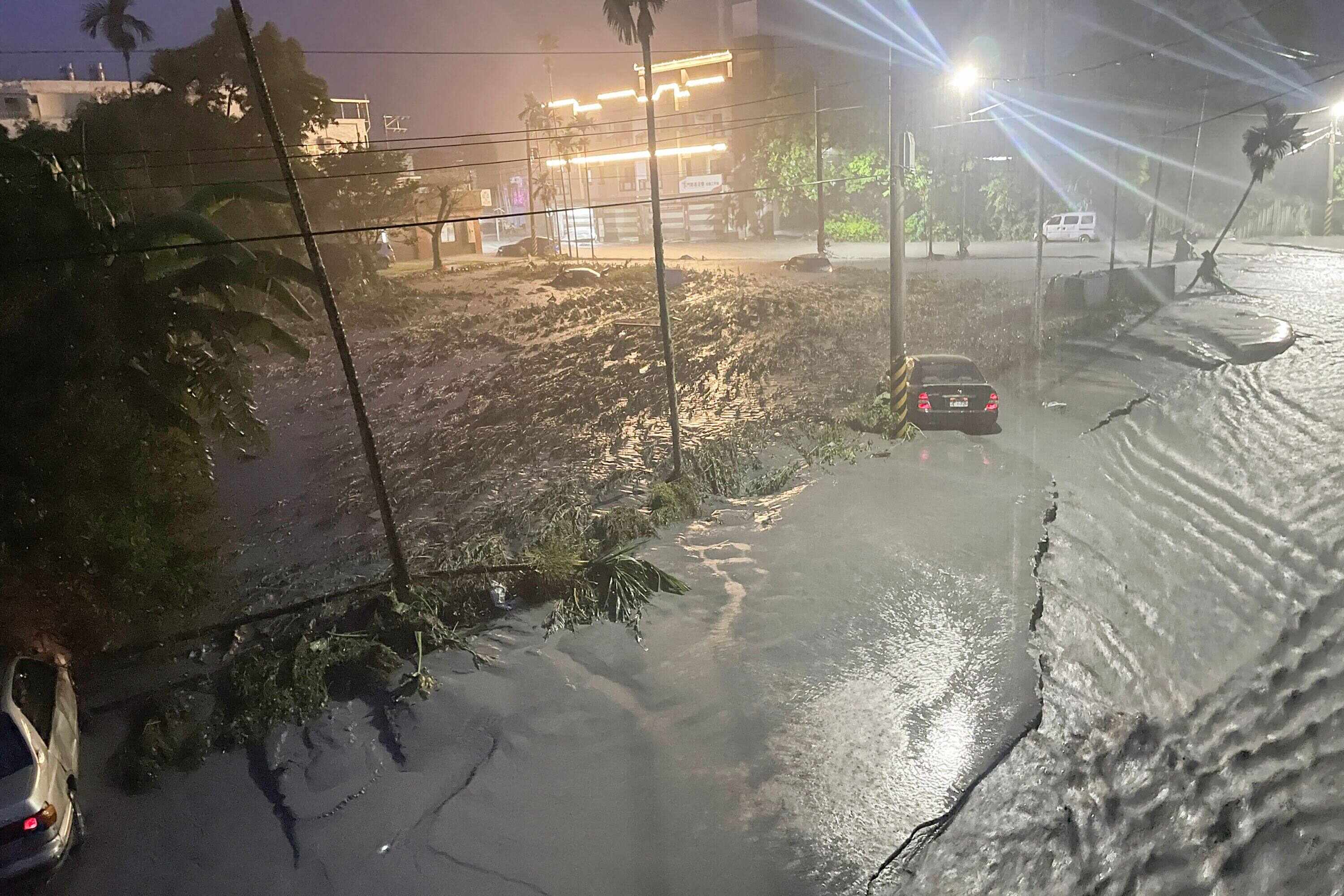
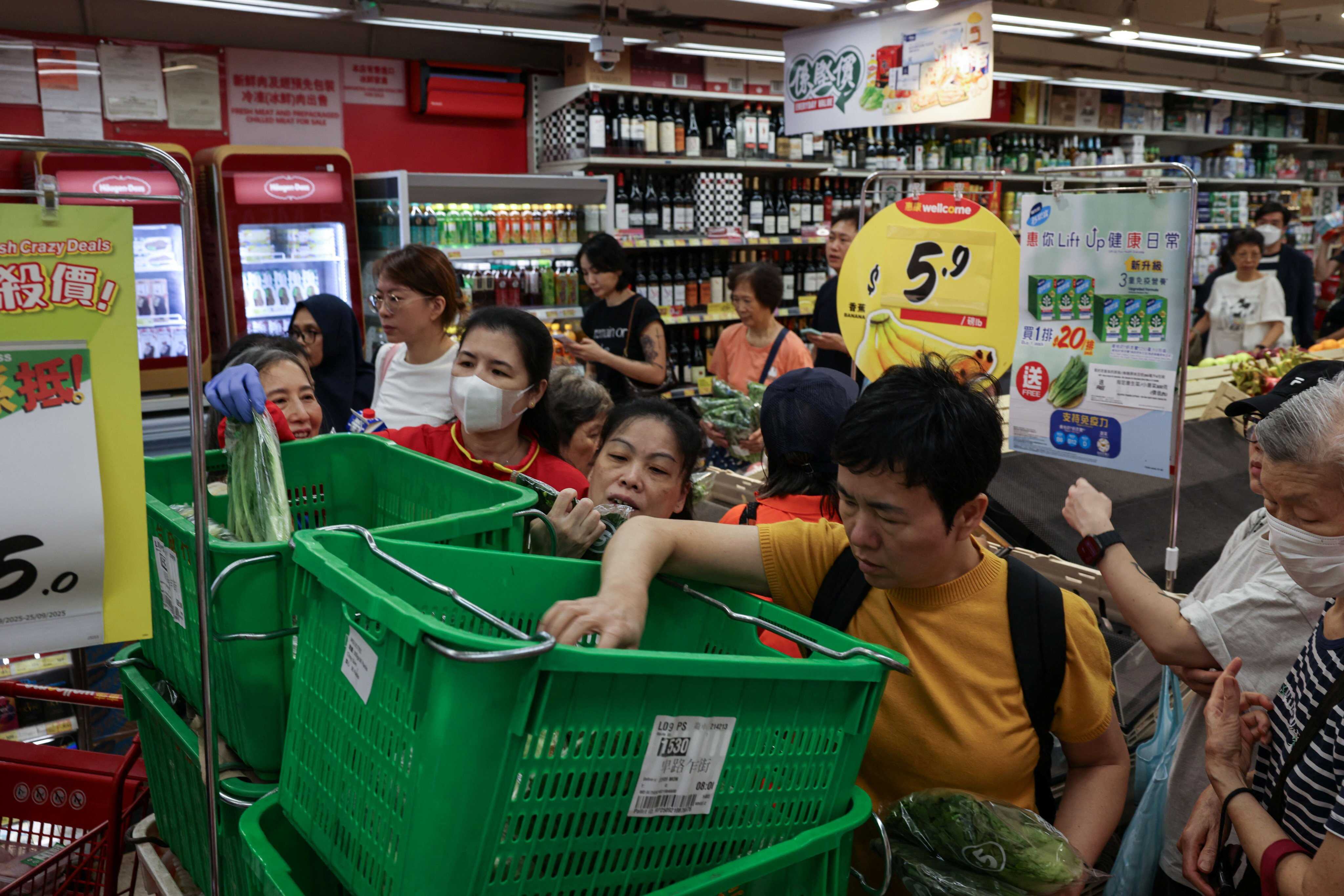
Hongkongers woke up to a city in disarray after Super Typhoon Ragasa hit on September 24
-
The Hong Kong Observatory issued the highest warning, signal No 10, for the second time this year. It is the first time in 60 years that the signal has been issued twice in one year.
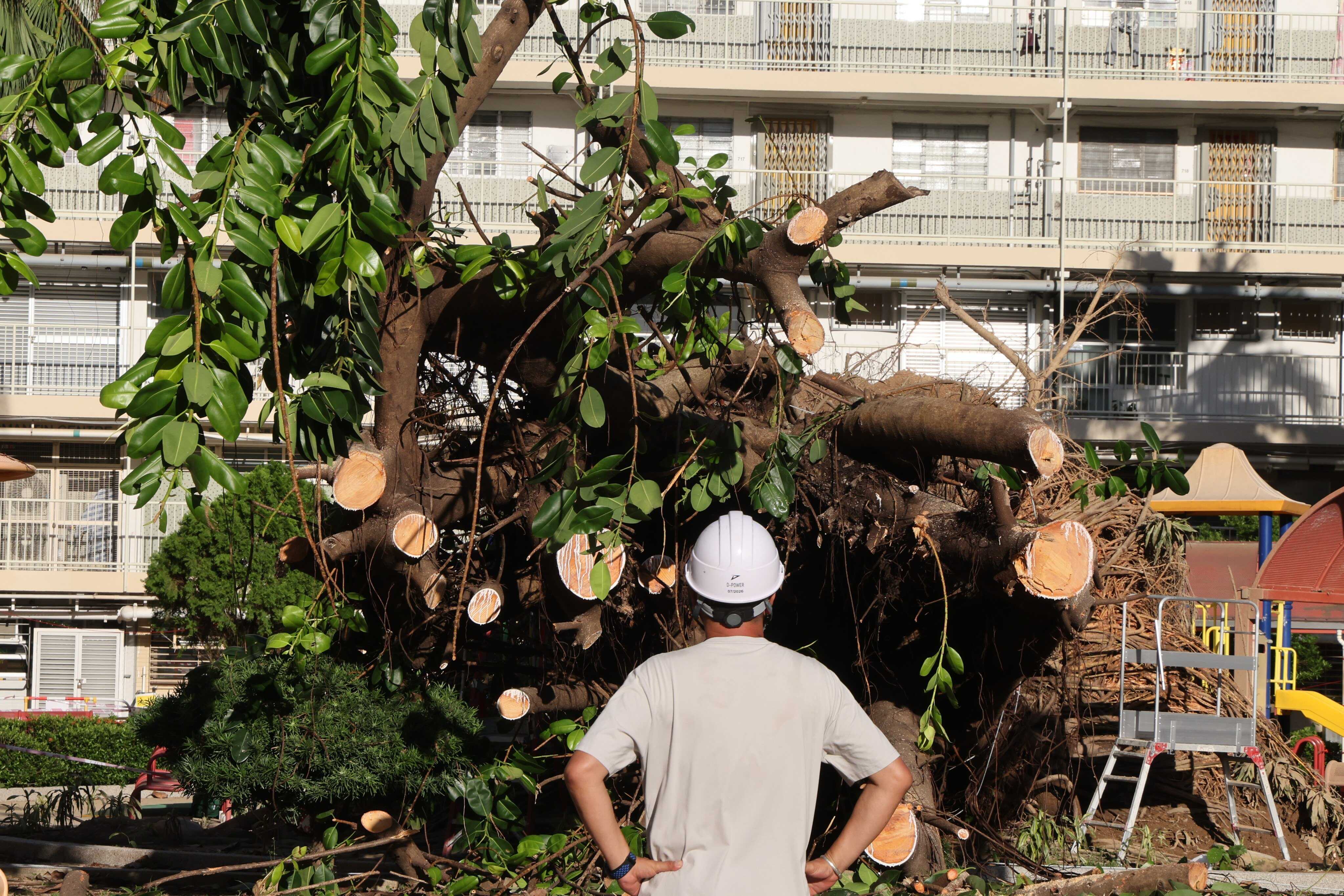
At Oi Man Estate in Ho Man Tin in Kowloon, Lau – who preferred to be known by her surname – stood before a decades-old banyan tree that had been battered by Super Typhoon Ragasa. The 76-year-old said she had watched it grow from a sapling into an eight-storey landmark tree for nearly half a century.
A mother of three, she recalled how her children once played under its branches, lighting lanterns and eating mooncakes during Mid-Autumn Festival.
“It used to look like a lush little forest,” Lau said. “It’s really hard to let go. It brings back so many memories. My son was born here, and now he’s married with a child in university. And the tree, gone.”
The super typhoon on September 24 paralysed and upended the city. As Hongkongers woke up to discover its aftermath, authorities had received reports of more than 1,220 fallen trees, 22 flooding cases and four landslides.
A century-old albizia tree in Kowloon Park, which was listed on the city’s Register of Old and Valuable Trees, was also lost to Super Typhoon Ragasa.
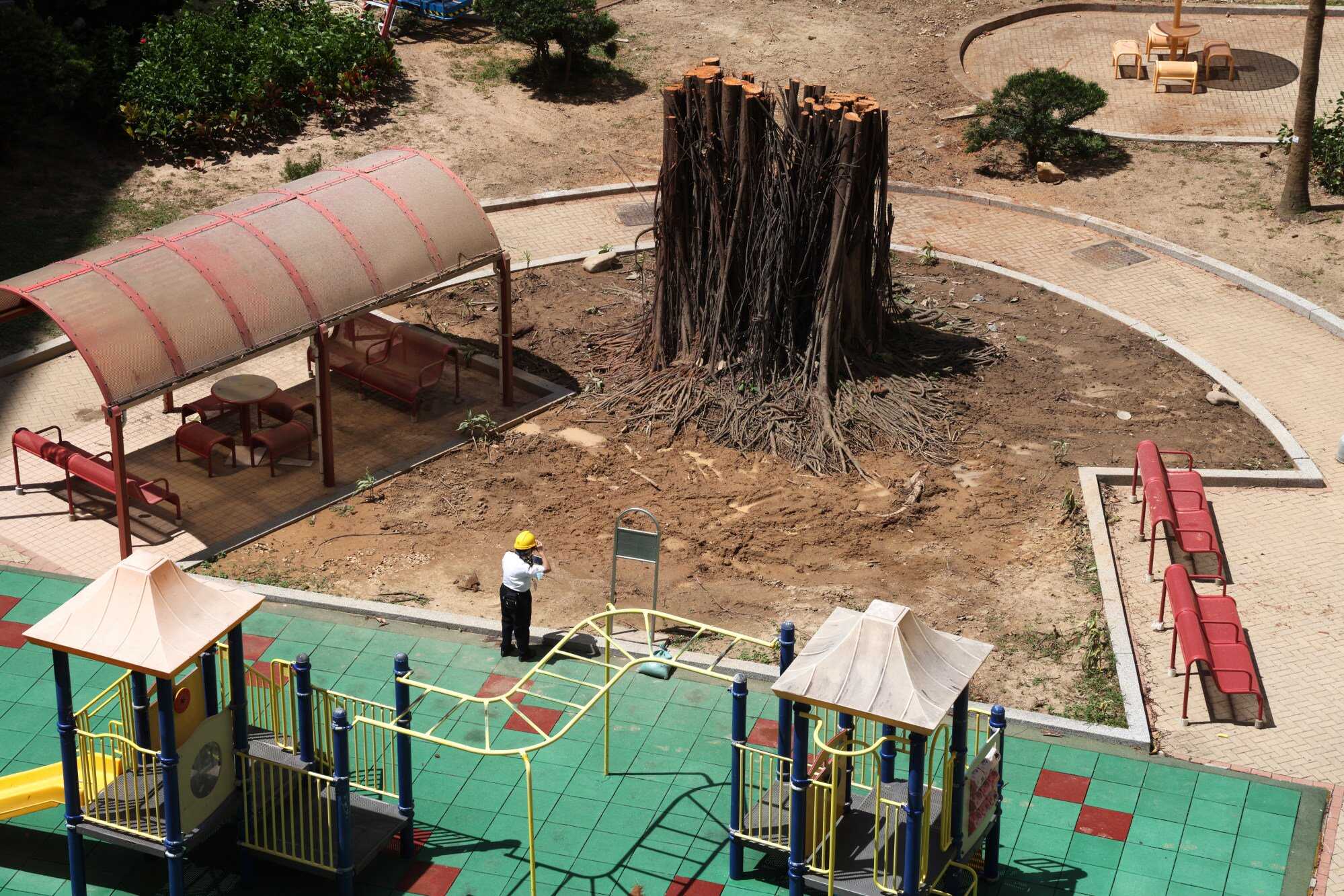
The banyan’s fall prompted the government to launch its first-ever rescue mission for a typhoon-toppled tree. Recognising the sentimental value it held for many residents, workers pulled the tree upright, hoping to give it a new life.
They also trimmed broken branches.

Pieces of banyan
The Housing Authority said it had contacted NGOs near the estate to repurpose some of the timber taken from the trimmed branches. The wood could be used for commemorative crafts or even facilities as a way to give back to the community.
Remaining branches and debris would be transported to Y•Park for processing, while any unusable waste would be sent to a landfill.
Ricci Wong, founder of social enterprise Hong Kong Timberbank, joined the effort to salvage the banyan’s branches. His group recycles timber from typhoons and urban development. It has already collected parts of it for preservation.
“The emotional value of this tree is greater than anything else. It’s [part of] the collective memory of all the residents here,” he said. “It is also a housing estate close to where I lived when I was little. That’s why I really want to save it.”
Hong Kong Timberbank was founded seven years ago, after Super Typhoon Mangkhut hit the city and knocked down more than 60,000 trees. It now houses more than 200 tonnes of recycled timber at its Yuen Long site.
Wong hopes to turn pieces of the banyan into furniture or public amenities and return them to Oi Man Estate.
“I want residents to say goodbye properly, and for the tree to come home,” he said. “I also hope this reminds everyone to genuinely pay attention to the health of old estate trees, and the bond residents have with them.”
Survival remains uncertain
Jim Chi-yung is a leading arborist – a tree surgeon – who has been dubbed Hong Kong’s “tree whisperer”.
He warned that the banyan is now “starving” after authorities stripped it of all branches and leaves, preventing photosynthesis.
“It’s running on stored reserves in its trunk and roots,” he explained. “Those reserves will eventually run out. If the tree cannot rebuild its photosynthetic capacity, it will decline and may even die.”
Jim said survival depends on how many living roots remain, but added that the tree had lain on the ground for days before being lifted, likely causing some root death.
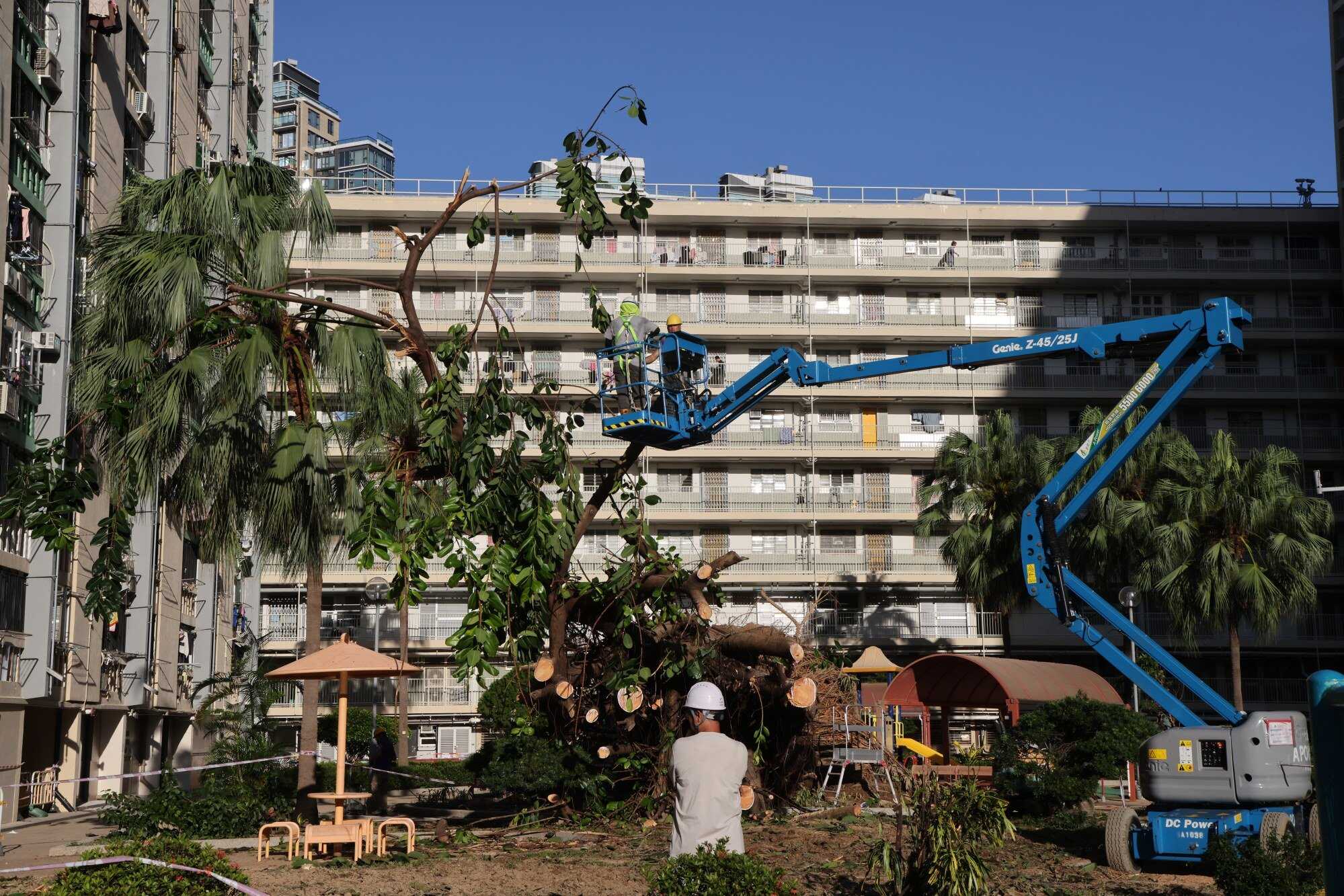
He also noted the missed chance to loosen compact soil under the fallen tree, which could have improved its long-term survival.
“With the tree standing, you can’t touch the roots without harming them. But once it fell, the space was clear. This was a golden opportunity. But they didn’t take it,” he said.
The arborist urged the government to form a “Rapid Tree Rescue Team”.
“Tree rescue must be quick, like an emergency room,” he said. “We can’t afford days of deliberation while valuable trees suffer.”
Jim added that a broader problem was the poor soil, often composed of rubble with little organic matter: “Bad soil means weak trees. It’s that simple.”