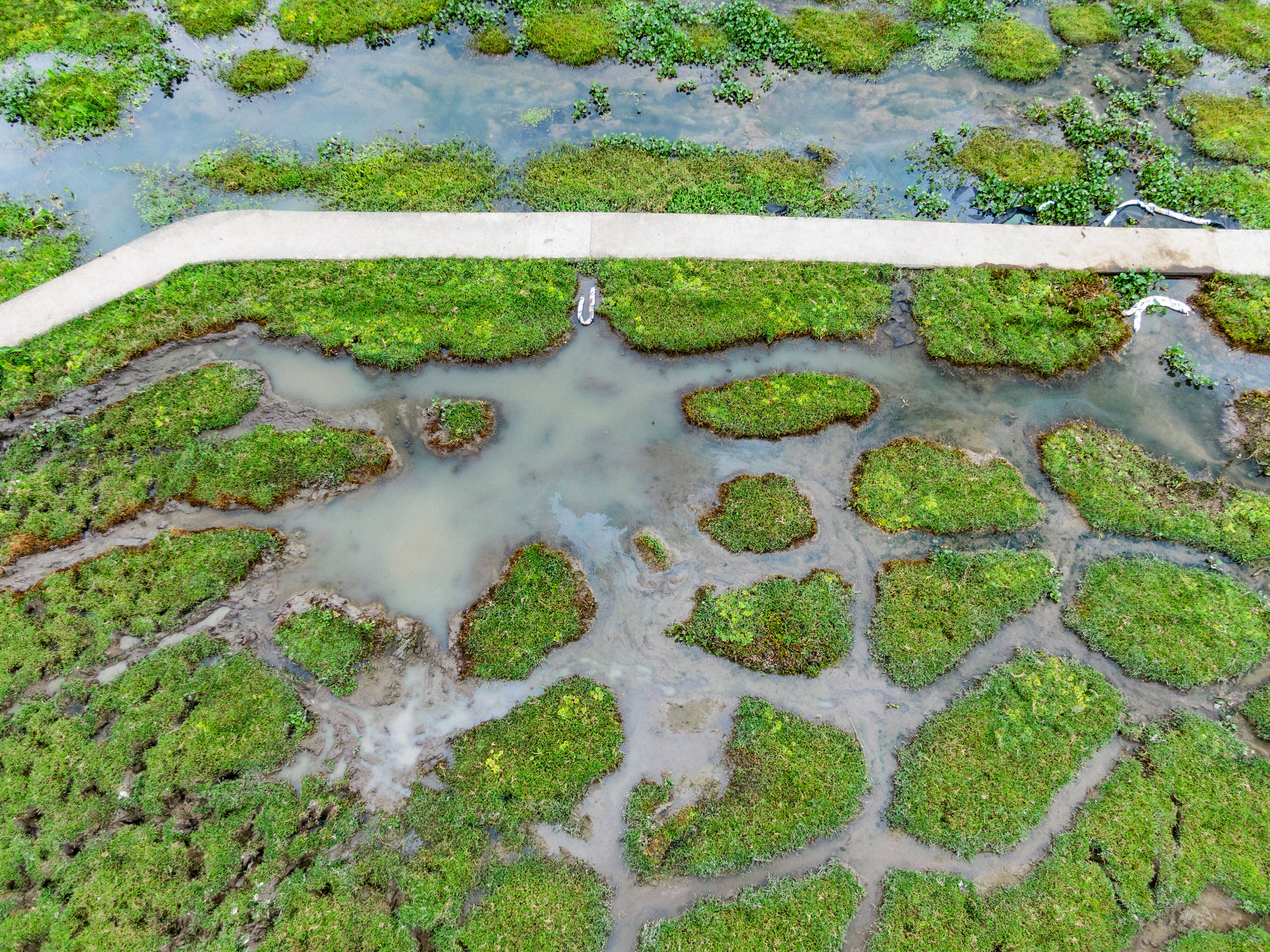
A protected wetland on southern Lantau Island in Hong Kong has recorded high levels of petroleum following an oil spill in September. According to a study by an environmental group, these levels are up to 40 times higher than those in unaffected areas.
Greenpeace Hong Kong stated that this elevated concentration could pose a threat to the local ecology. The organisation is urging authorities to investigate the oil spill and to include unprotected sites of significant ecological value in the priority conservation projects outlined in the Biodiversity Strategy and Action Plan, with clear implementation details and timelines.
The study released on Monday found that 70 per cent of the 18 soil and water samples collected from affected wetlands in a conservation area in South Lantau’s Pui O showed significantly higher petroleum hydrocarbon (TRH) levels.
According to Andy Chu Kong, a campaigner for the group, the Environmental Protection Department said it had received no reports of leaks from nearby construction sites and had only coordinated the clean-up without investigating the source or enforcing regulations.
“This ultimately allowed the matter to be swept under the carpet, amounting to condoning ecological destruction,” Chu said, adding the department would be breaching its conservation commitments if it failed to implement and enforce policies effectively.
“This would also allow Pui O to continue to suffer various forms of environmental degradation, which would result in habitat degradation and fragmentation, threatening the precious natural ecology and rich biodiversity of Lantau Island.”
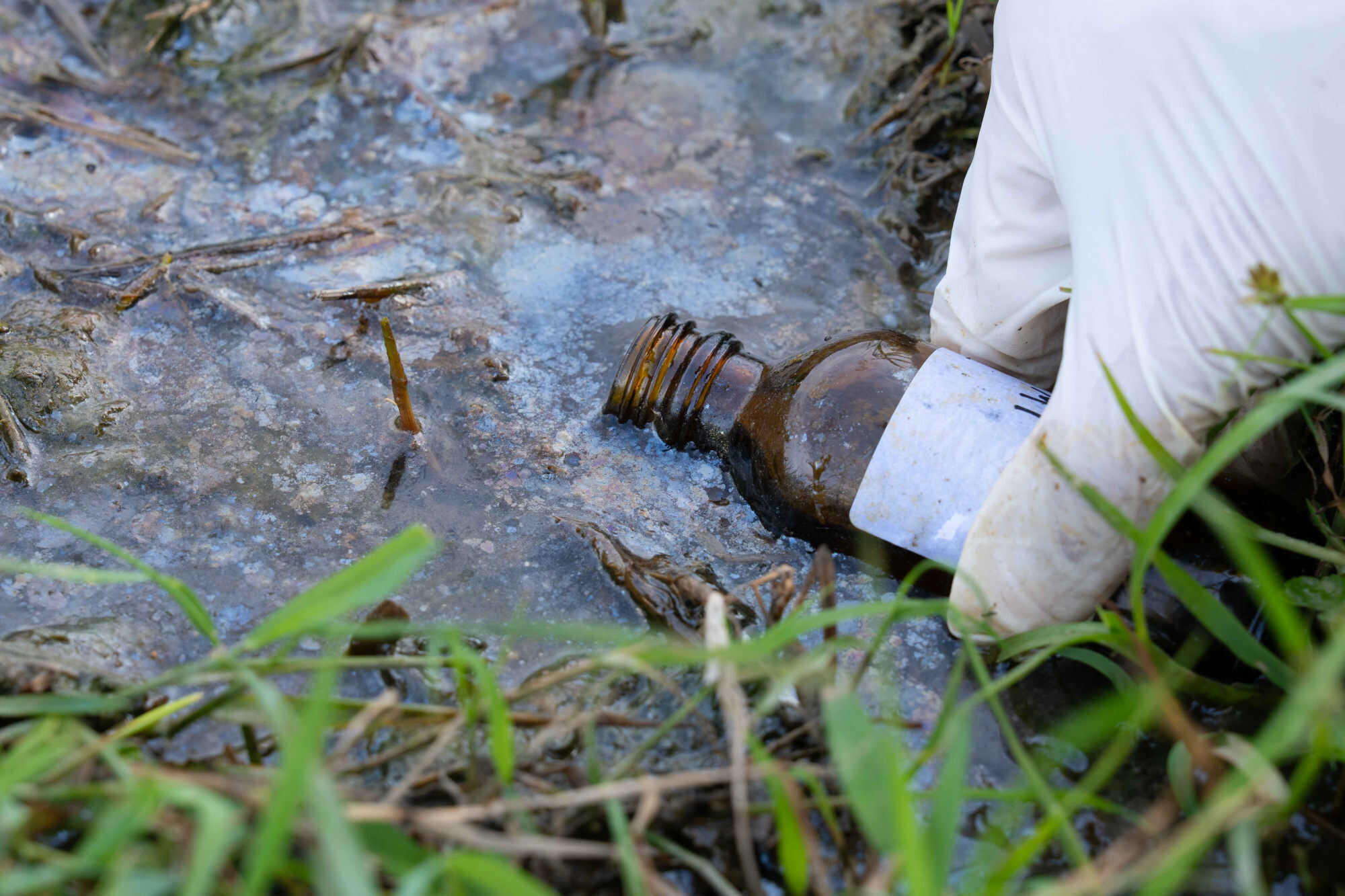
The group’s scientific research team conducted two rounds of TRH testing and analysis in September and December at oil-affected wetlands near Lo Uk Village in Pui O, collecting seven soil and two water samples each round to assess the extent of contamination.
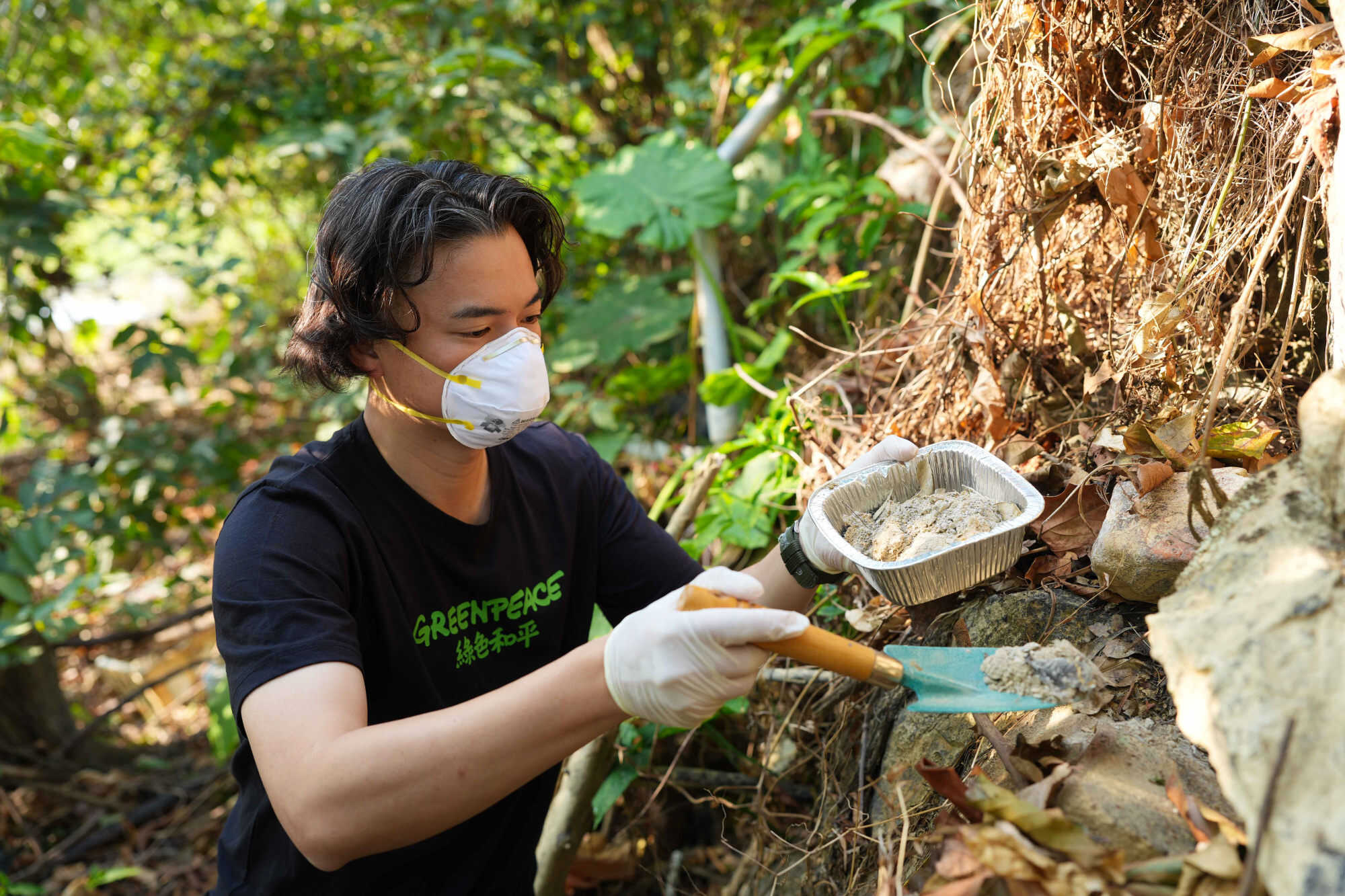
In the first round, the worst soil sample showed a concentration level of 6,820 milligrams per kilogram, which was collected at a sewage discharge point only six metres from a construction site, suggesting the “contamination could be linked to a leak or industrial waste”.
Some soil samples in the second round showed an increase in concentration levels, with one bearing a concentration of 8,680mg/kg, 34 times higher than that of unaffected wetlands.
As for water, a sample from the first round showed a concentration level of 4,521 micrograms per litre, which was 40 times higher than that of wetlands in San Wai Tsuen, close to the city’s border with mainland China.
The group added that high concentrations of TPH could enter the food web through bioaccumulation, causing long-term ecological damage.
“Pui O is the largest freshwater wetland on Lantau Island, which nurtures the largest water buffalo herd in Hong Kong and numerous endangered or near-threatened species, including the Romer’s tree frog,” the group said.
A study conducted by the government in 2021 recorded 252 plant species, 88 bird species and 11 amphibian species in Pui O, rating the area as one of high overall ecological value.
“However, Pui O Wetland has suffered years of degradation. Government departments have failed to formulate proactive conservation policies, relying solely on enforcement measures that lack deterrent effect. This approach is insufficient to eliminate illegal activities at source,” the group said.
He said the department treated the matter with “utmost seriousness” and found a small area of oil contamination of about 0.02 hectares in size, prompting the immediate deployment of oil-absorbent pads to contain the situation.
Department staff also conducted ongoing follow-up investigations over the subsequent month and invited other government agencies to assist with the clean-up, he said, identifying the primary component of the oil spill as TPH.
“[TPH] is commonly in industrial or automotive diesel fuel. Trace amounts of TPH remaining in the natural environment following clean-up will gradually degrade through microbial processes and natural volatilisation, posing no long-term ecological impact,” he said.
The department said it had conducted a joint investigation with the Agriculture, Fisheries and Conservation Department and found the habitat at this location had been progressively recovering since late September, with the ecological environment fully returning to normal now.
It added that the oil spill in September was an isolated case, as it found no oil leakage or pollution sources after having investigated its vicinity, including nearby car parks and refuse collection points.
To prevent similar occurrences, the department has recommended that potential pollution sources be removed from upstream premises and construction sites, and closed-circuit television systems be installed in the vicinity with regular monitoring by staff.