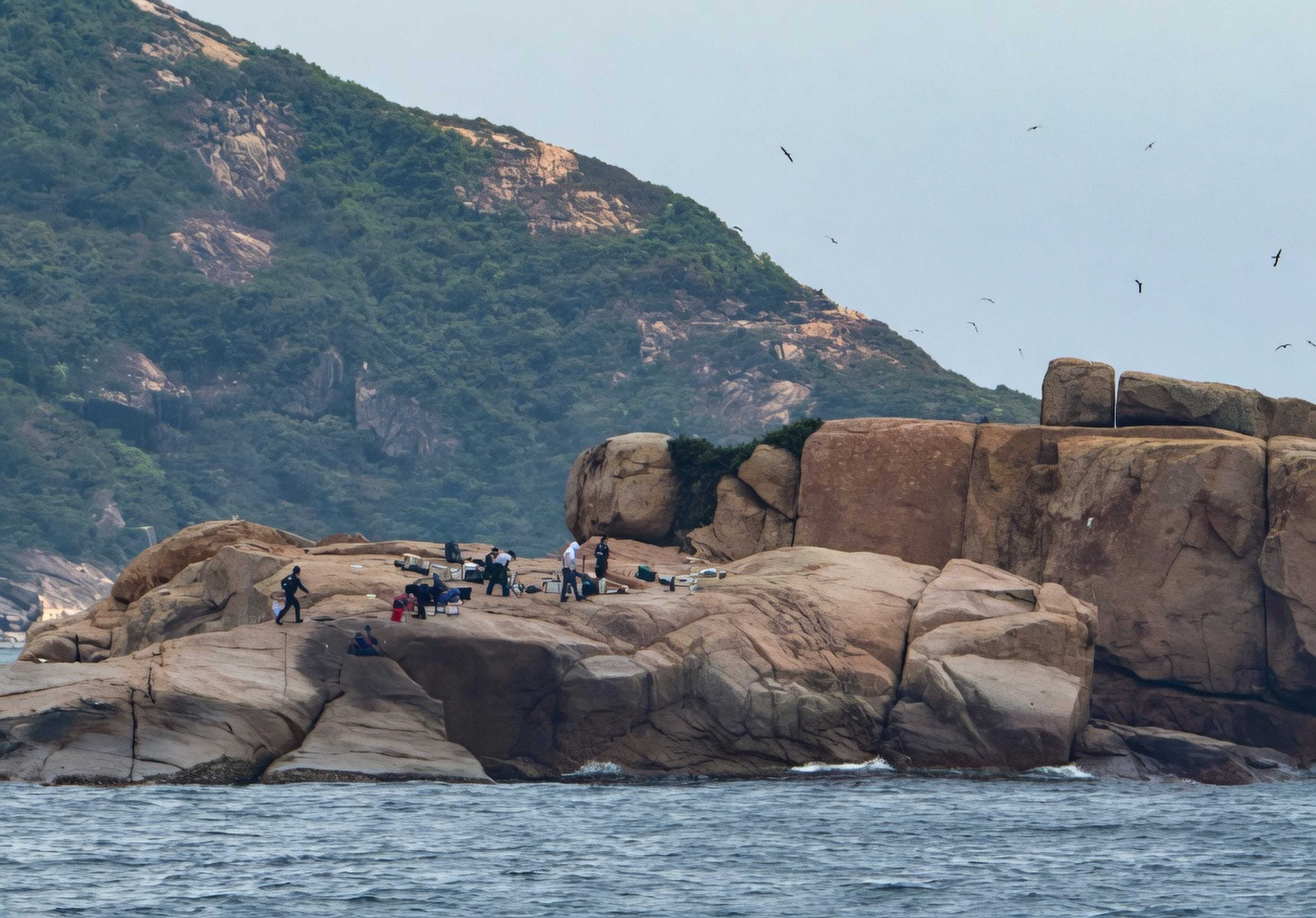
A bird watcher observed people landing on an uninhabited island in the southern waters of Hong Kong, which is known to be a regular breeding site for terns.
This incident occurred during the Labour Day “golden week” holiday in mainland China, according to an environmental organisation.
Terns primarily feed on small fish and aerial insects. While approximately 40 species of terns exist worldwide, 12 have been recorded in Hong Kong.
Three species breed on Hong Kong’s outlying rocky islands during the summer months, with one species found near Po Toi Island.
On the second day of the holiday, a bird watcher saw five people on the island unloading backpacks and other items, according to an online post by non-profit Green Hope Hong Kong. It was not immediately clear who they were.
“These birds are extremely sensitive by nature; if disturbed, they may abandon their nests. Once they abandon their breeding grounds on the island, it is very difficult for them to return in the future,” the post said.
“We urge boat operators and tourists to avoid picking up visitors for transport to, or landing on, these tern breeding islands during the ecologically sensitive period.”
Terns come regularly to breed on small and remote rocky islands in eastern and southern Hong Kong waters, according to the Agriculture, Fisheries and Conservation Department (AFCD).
From 2001 to 2010, the summer population of the three tern species at these breeding sites was 570 on average.
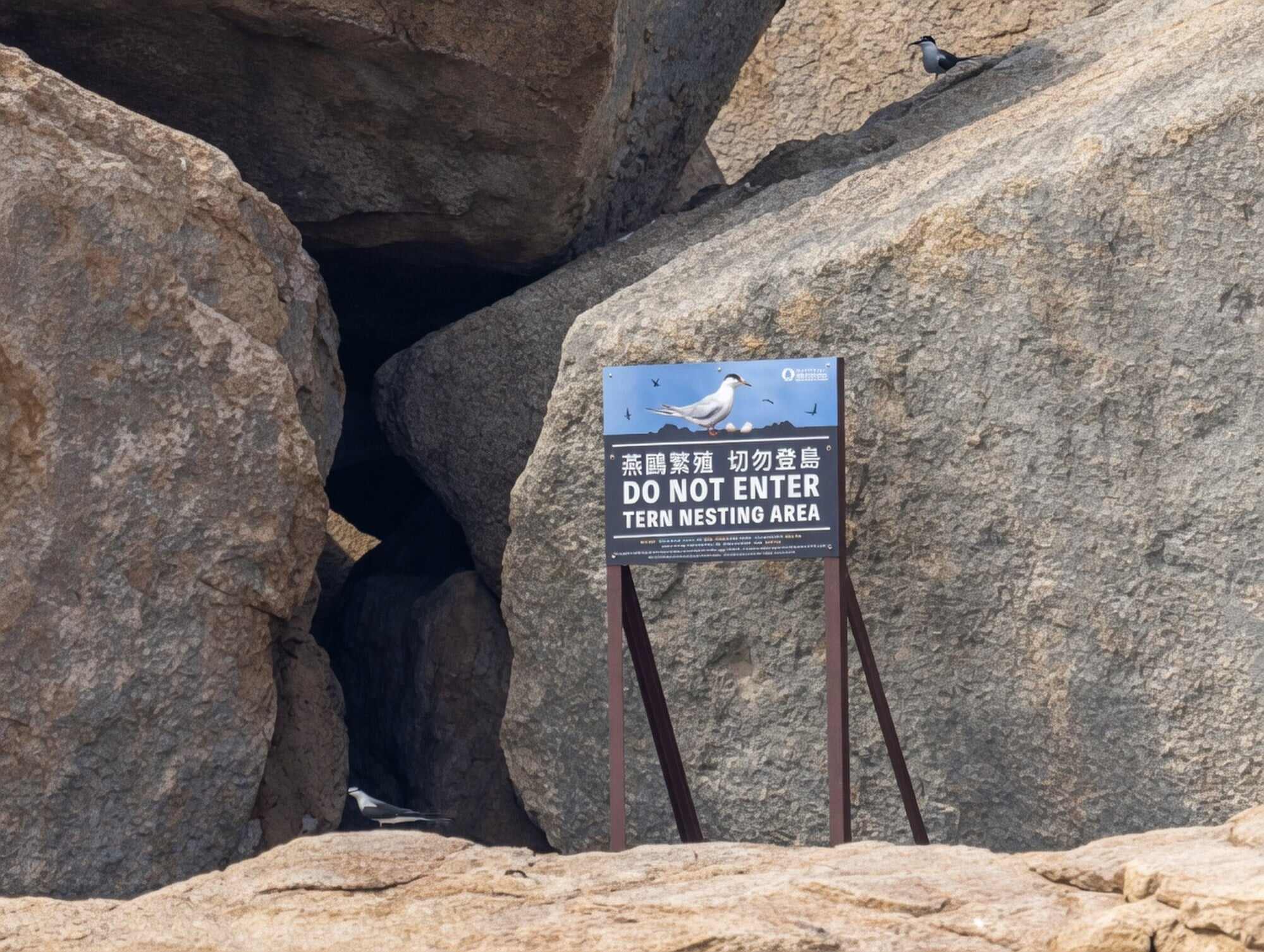
The AFCD has put up warning notices on the island, advising visitors not to land during the breeding period, according to Yu Yat-tung, director of the Hong Kong Bird Watching Society.
“Terns do not develop strong strength or sharp beaks to protect themselves; they only eat fish and rely on avoiding predators to survive,” Yu said.
“The only ‘issue’ is when they reproduce, which they have to do on land, and is why they will choose bare islands with no human activities or predators to lay eggs.”
Yu warned that repeated human disturbance to breeding terns might result in site abandonment, which in turn could reduce breeding success and therefore their local population.
Human disturbance could scare the breeding birds, causing them to take flight and leave their eggs, which might fail to hatch.
He urged members of the public to appreciate birds at an appropriate distance, especially during breeding season or when they were injured.
Yu also urged the AFCD to carry out a multipronged approach that covered prosecution, promotion and education to protect the birds. He suggested that the department could install cameras on these islands to help monitor these ecological sites.
While more frequent patrols might curb traffic on the islands in the short-run, the government should consider long-term strategies, he added.
“If we explicitly declare [the area] as a restricted protected area that no one is allowed to enter … this will also make prosecution easier,” Yu said.
All wild birds, their nests and eggs are protected in Hong Kong under the Wild Animals Protection Ordinance.
It is illegal for anyone to hunt or wilfully disturb any wild bird without permission. Offenders are liable to a maximum fine of HK$100,000 (US$12,760) and one year’s imprisonment.
In a response to the South China Morning Post, the AFCD said one of its contractors had observed individuals landing and camping on the island concerned over the past weekend, and had immediately reminded them not to disturb the wild birds.
Warning notices have been installed at key tern breeding islands and nearby piers to warn the public against landing or disturbing the birds.
The department added it had stepped up patrols at tern breeding islands since May and would continue to monitor the situation closely and strengthen public education efforts.