Animal advocate Bon Chan still remembers rescuing a turtle that could not move. After a decade spent trapped in a small box, its shell had grown to match the container’s restrictive walls.
At the time, Chan was heartbroken but not surprised, noting that cases like this were far from rare in Hong Kong. Turtles, he added, could be remarkably resilient creatures, enduring their suffering in silence.
It was such mistreatment that pushed Chan, who is in his 40s, to found Turtle’s Inn in 2018. This initiative rescues abandoned reptiles and educates the public to take ownership of their pets.
He said: “People think they’re low-maintenance pets – cheap, simple and easy to keep. But they’re not.”
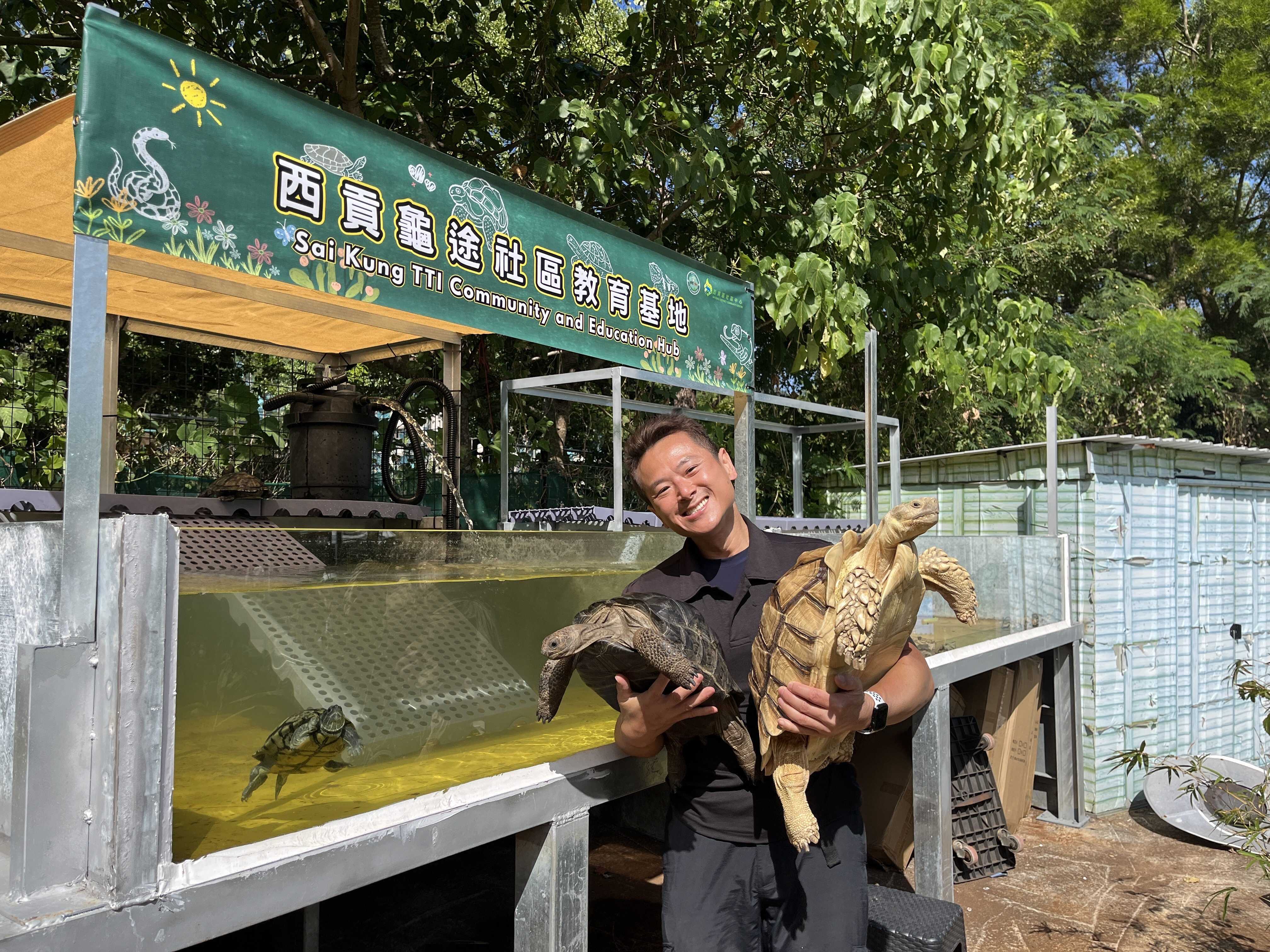
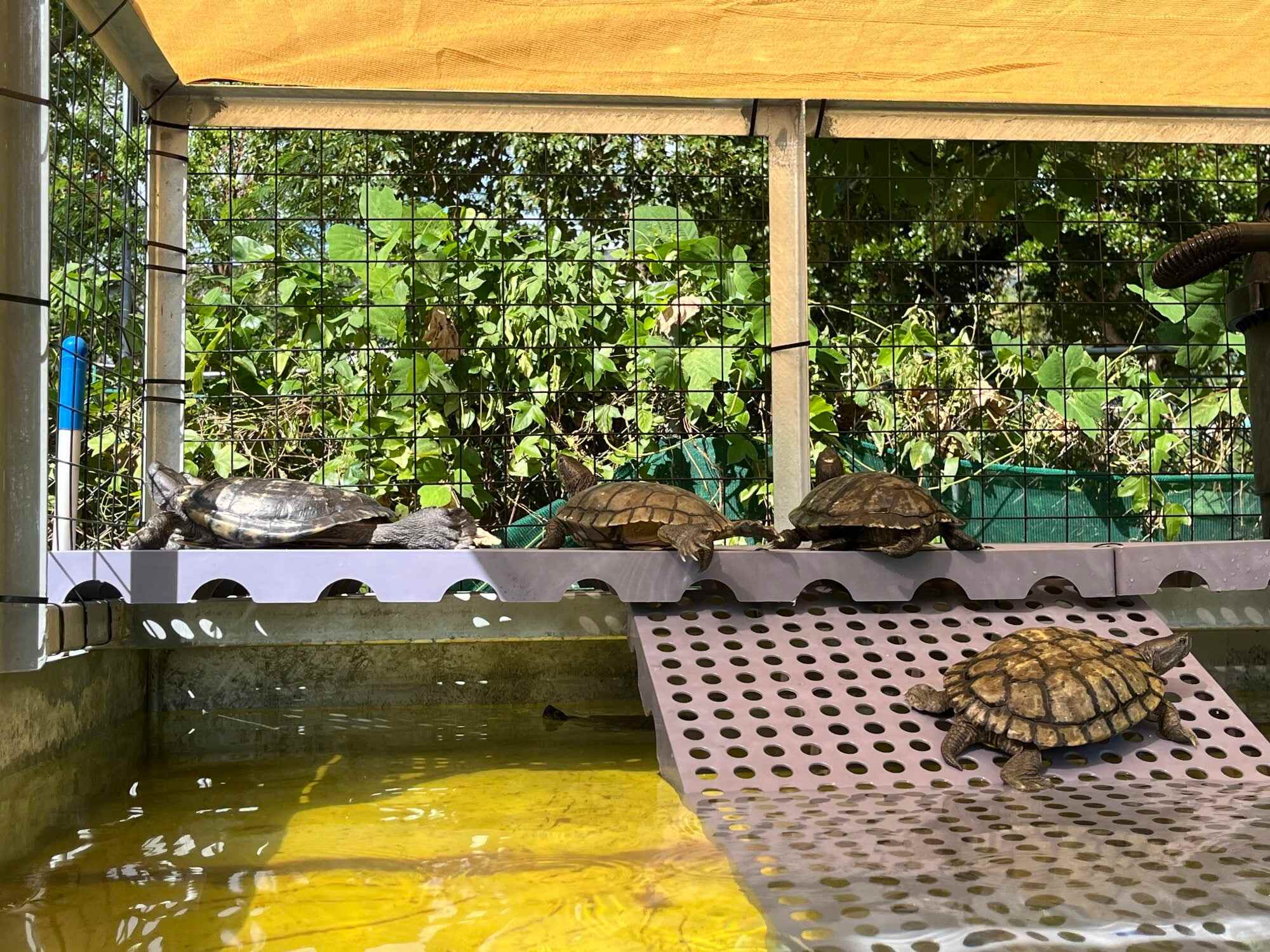
Inside Chan’s animal education space – set to open in January in Sai Kung – a dozen turtles glide through large aquarium tanks, while others bask in the sun, stretching their limbs freely. The contrast is striking when compared with where many of them were rescued.
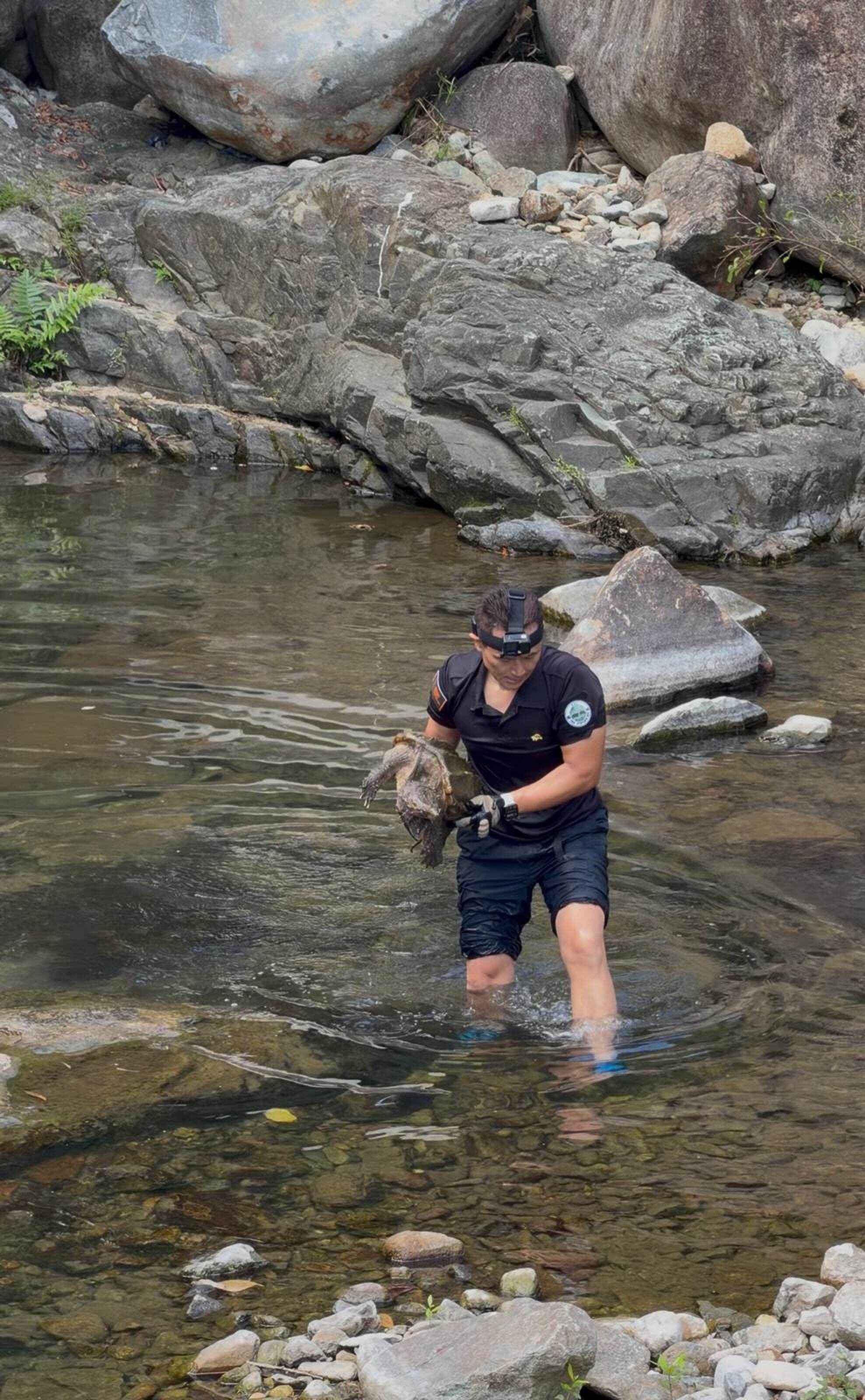
This summer, Chan rescued 108 turtles abandoned in the sweltering heat in a filthy pool at King Lam Estate in Tseung Kwan O. These turtles could die from the heat, he said, adding that in winter, they could get pneumonia.
According to Chan, turtles need to live in a body of water with enough space to swim and regulate their body temperature naturally.
“Aquatic turtles are swimmers,” he said. “Most people think as long as you soak them in a bit of water, they’ll survive. They won’t die, but that’s not really living.”
The animal advocate explained what this might feel like if humans were put in a similar situation.
“It’s like someone wrapping you up tightly, and you can barely move on the floor,” he said.
A home for turtles
Unlike the shallow containers many turtles are confined to in Hong Kong’s cramped homes, Chan keeps those he rescues in large aquariums. For red-eared sliders, deep ponds are their natural habitat, so they need room to swim.
In 2018, Chan, who has always loved reptiles, began taking in abandoned turtles in Hong Kong as an independent volunteer while working part-time as a personal fitness trainer.
“Some people were leaving Hong Kong, and for various reasons, more and more people were abandoning their turtles. Then came the pandemic,” he recalled.
The animal enthusiast has six dogs and six cats in addition to the more than 300 turtles he has rescued. Chan, his fiancée and his domestic helpers work together to make sure the animals are cared for.
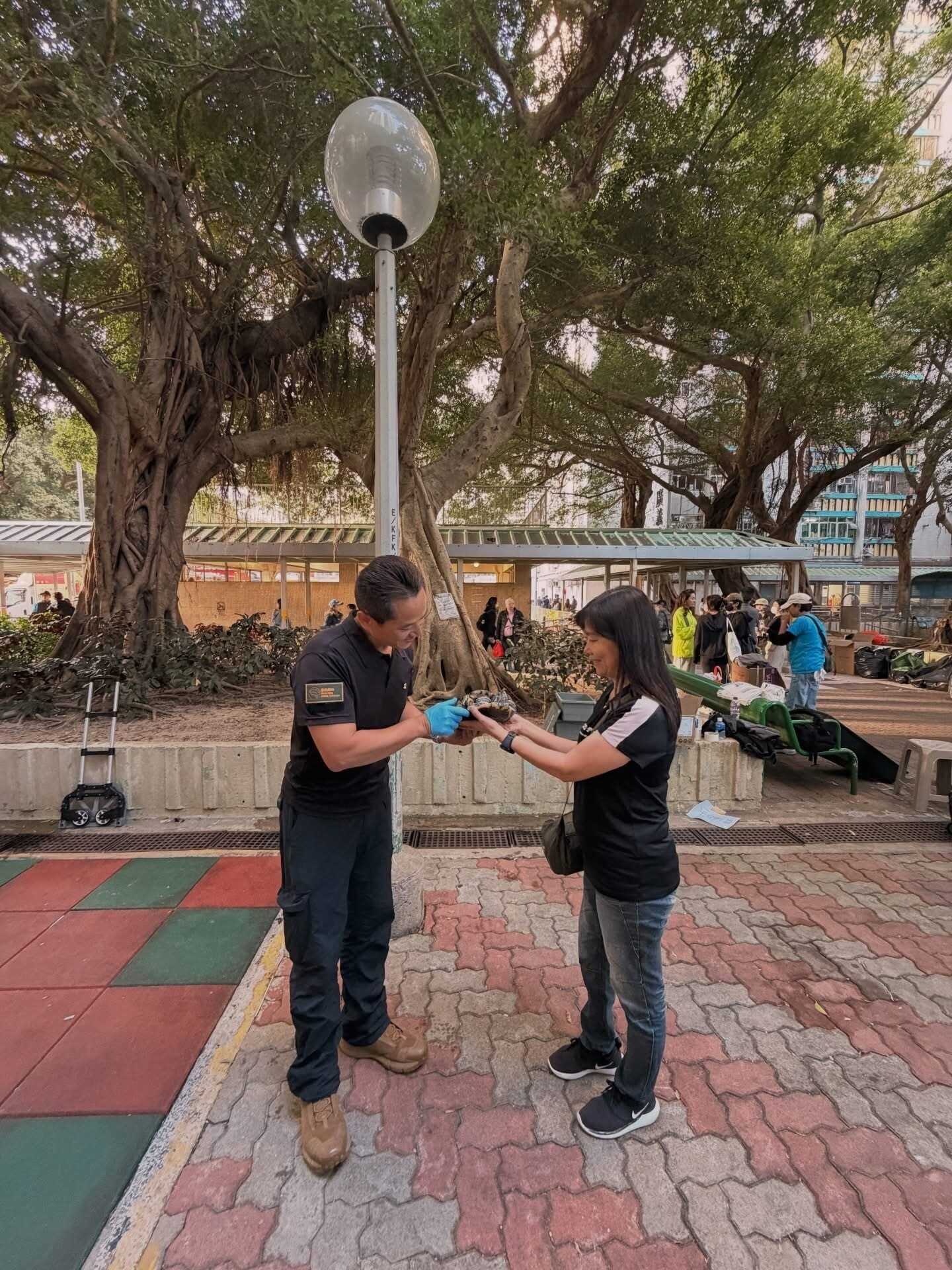
On social media, where he has over 28,000 followers, Chan often posts about his rescues. Most groups adopting these turtles are NGOs and schools, and Chan has ensured that they have space for a large tank.
Since August, Chan has been working on constructing the Turtle’s Inn Community Education Base, which aims to promote reptile conservation among youth.
While he had planned to open the centre on December 20, its launch was postponed to prioritise caring for injured reptiles from the Wang Fuk Court fire. The blaze last month was Hong Kong’s deadliest fire in decades.
But beyond such disasters, pets face the danger of abandonment every day.
Parks and pools are no place for pet turtles
Reptiles, Chan stressed, were among the most easily overlooked animals.
Because many pet owners might not realise that turtles can be a lifelong commitment, they often abandon their reptiles in public spaces. Though this is a crime under Hong Kong law, Chan said that better enforcement and education were needed.
“I witnessed how more than 1,000 turtles were abandoned,” he said.
Two hotspots for turtle abandonment are public parks and pools of water.
“Once there’s a pool with water, it’s like a magnet attracting people to dump turtles into it. As long as there’s one turtle in there, more and more will be added by people,” Chan said.
Many pools in the city’s public housing estates would not have running water to cut costs, Chan noted. This is not healthy for turtles.
In public parks, many people might mistakenly believe that authorities placed the turtles there and were looking after the animals.
To educate the public about this issue, Chan uses social media. A video he posted in August on Instagram showed the plight of the turtles at King Lam Estate and garnered more than 1 million views.
“Many people learned from that video how miserable the turtles living in public parks actually are,” he said. “These parks are ... meant to be seen, not to keep animals.”
Chan warned that many of the pool facilities have hidden traps, such as drainage outlets that create a dangerous suction.
“We’ve actually rescued several where their legs got stuck inside. The gap is very narrow. Once the leg goes in and the turtle twists, it can’t pull it back out,” the animal enthusiast said.
“In the end, those turtles often need to have the limb amputated and be sent for treatment.”
Animal care starts with children
With so many cases of abandonment, Chan soon realised that simply caring for turtles was not enough.
“All these years of rescue work have made me realise that rescue never stops,” the advocate said.
Chan has met government departments to advocate for animal welfare, covering areas such as the pet economy, pet train carriages and even situations in the Northern Metropolis when residents cannot keep their animals after their homes are acquired for public projects.
To turn around the current culture of turtle treatment, Chan knew he had to start by teaching children and building their empathy through hands-on experiences.
He recalled a conversation with a kindergarten principal, who wanted to put a stop to treating turtles like disposable educational tools in schools. The principal said that he had seen more than 20 turtles die in schools.
Chan said: “Everyone buys them for education ... Very often, the turtles are used for a while and then left to die. By next year, they just buy another one. I really want to stop this from happening.”
Through hundreds of workshops and activities in Hong Kong schools, Chan has taught students how to properly care for animals. He guides them in setting up the tanks and other parts needed to create suitable homes for animals.
“We set up everything together ... All of it was made by the children’s own hands,” he said.
“I want the students to interact with me, to feel my passion and to be moved by it. I hope they understand why we do this.”