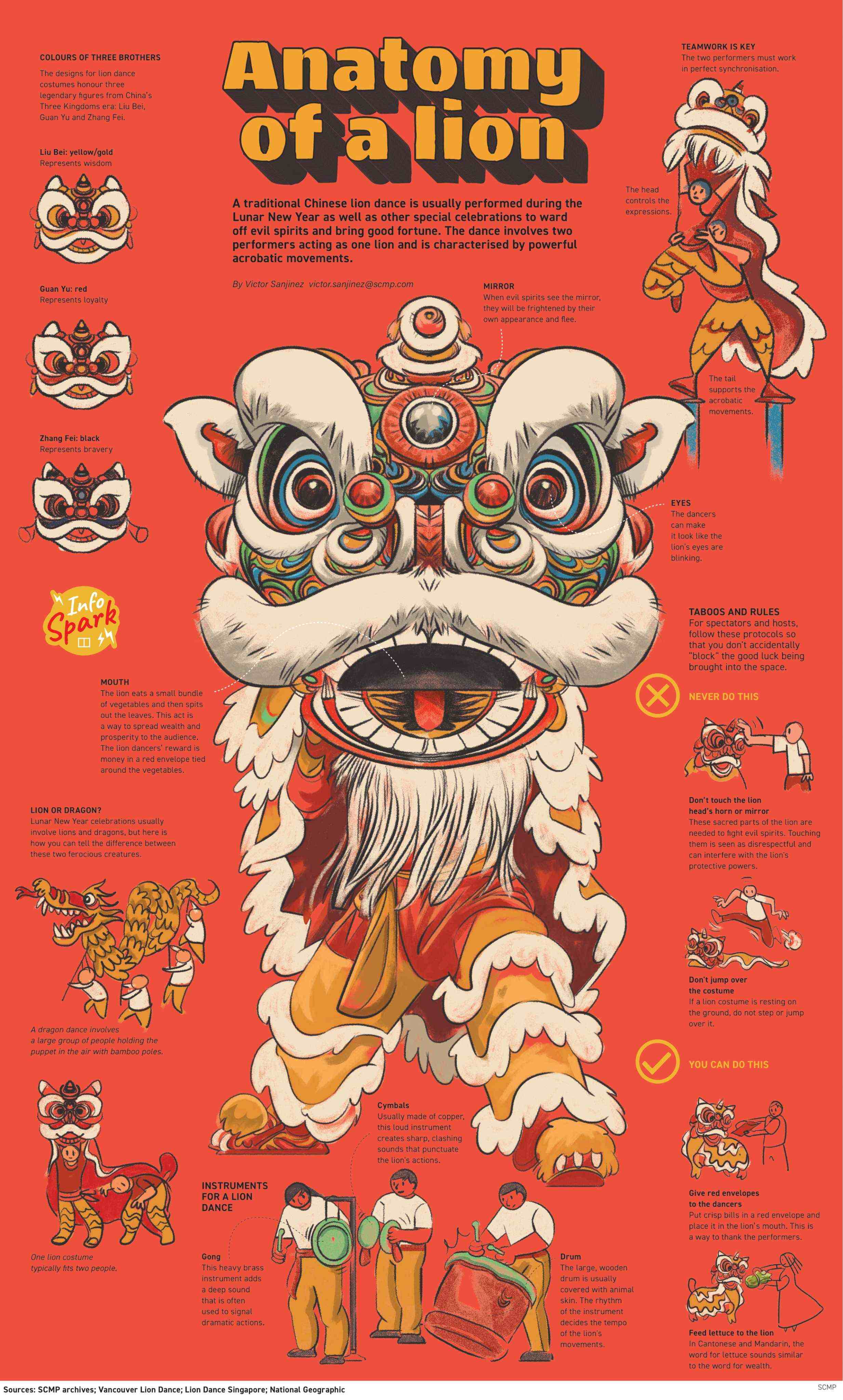
The lion leaps from pole to pole, its eyes blinking as if alive. Beneath its costumed head and body are young athletes, drenched in sweat, jumping in unison.
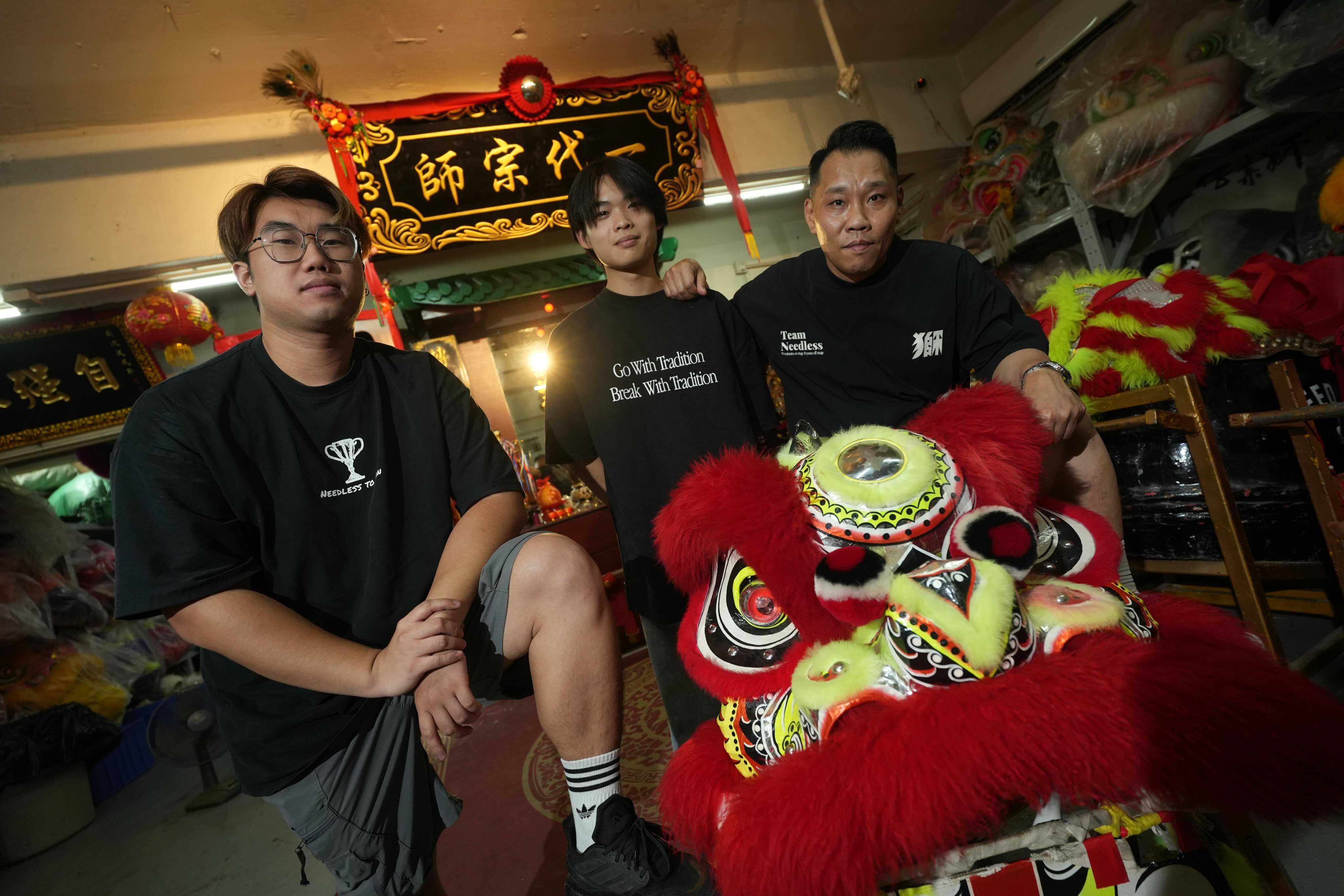
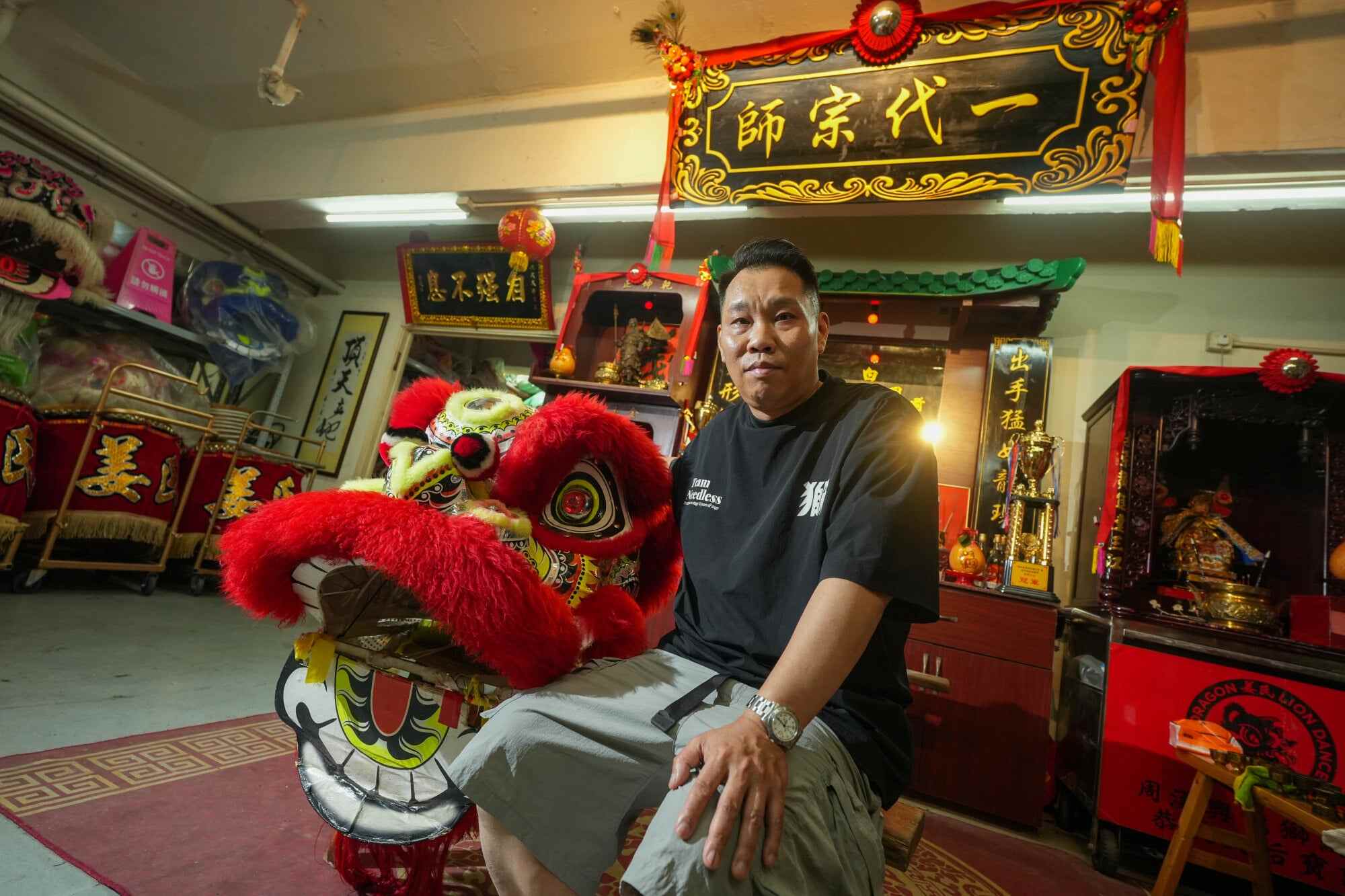
Watching it all unfold is their head coach Keung Wai-hong, who has spent his lifetime preserving the traditional martial art and dance form in Hong Kong through Keung’s Dragon & Lion Dance Team.
“I think I heard drumbeats when I was still in my mother’s womb,” the 52-year-old said, laughing.
Keung’s father was a lion dance athlete who trained in the techniques of grandmaster Chow Hon-hing, a top Chinese martial arts teacher who opened several schools across Guangzhou and Hong Kong.
Keung grew up in Aberdeen, on the southern side of Hong Kong Island. He reminisced about how, during his childhood, he and his two brothers did not play with toy cars but with miniature lion heads.
“After dinner, we would go up to the rooftop with my dad,” Keung said, explaining that the rooftop was his father’s lion dance practice space.
Perseverance and revival
Keung and his brothers eventually joined the same group as his father, which was named after Chow.
But by the mid-90s, the group was falling apart. The athletes lost their rooftop training space when the ageing tong lau tenement building they practised in was demolished. Older team members had also retired.
“It felt like something precious was ending,” said Keung, who was about 20 years old at the time. He and his brothers had little money, no proper training space and barely any equipment.
“We didn’t even have enough to buy a lion,” he said.
Still, they attempted to revive the lion dance team. They trained in a remote temple in Tin Wan, to the west of Aberdeen, owned by someone they knew. They practised late at night, hoping their persistence would pay off.
And it did. In 1998, the group won their first silver medal in a local competition and earned the chance to represent Hong Kong in the Genting World Lion Dance Championship in Malaysia. In 2013, the group was officially established as a team, adopting the name Keung’s Dragon & Lion Dance Team.
Still, challenges remain. There is limited training space and endless noise complaints. Nevertheless, the Keung brothers live by their motto: “Persevere. Enjoy.”
Fresh blood, new cubs
The Keung brothers want to pass their skills on to the next generation, encouraging young athletes to “Go with tradition. Break with tradition”.
Keung’s 20-year-old son, Jay Keung Fung, began following his father to competitions when he was three years old. But it wasn’t until the younger Keung was around 13 that he realised he wanted to be part of his father’s world.
“When I was little, my father would have me practice the drum ... and train in the musical aspect of lion dance,” the son said. “In recent years, I started taking [the] part [of] the lion head.”
The younger Keung committed to being a full-time lion dance athlete last year. He said the sport had taught him about Chinese history and the power of storytelling.
“Each ... routine has a story. The story might be about a lion drinking water, or going up the mountain to pluck the greens,” he said. “You have to be fully immersed in the role. Your movements need to convey that story.”
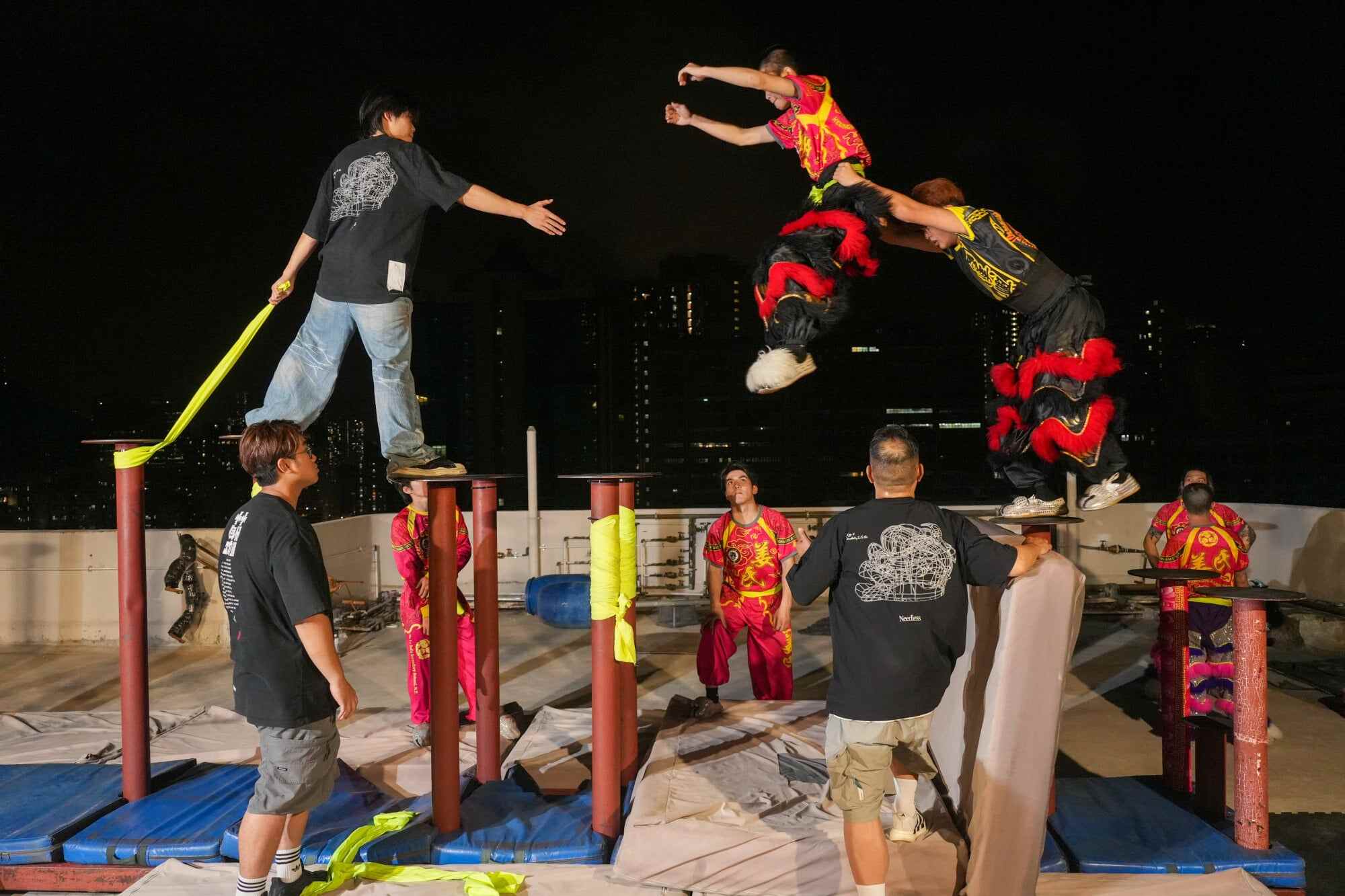
But just one wrong step can be injurious. The younger Keung recalled when his mouth slammed into the poles and knocked out a tooth, an event that left a lingering fear: “Ever since that incident, whenever I go up [on the poles], every time I jump, that image is in my mind.”
Despite that trepidation, he has continued.
“After all that time, the results of my practice can finally be seen by others,” he said.
In addition to the athletics and acrobatics of lion dance, there are also drummers who set the beat for routines.
“The best thing is when you play some more fancy, skilful drumming beats and at the same time synchronise with the lion’s movements,” said John Siu Man-hin, a 23-year-old drummer for Keung’s team. “When there are many great drumming beats that complement the whole piece, [a] sense of confidence or joy rises.”
Siu has been on the team for five years. He first took part in lion dance through an extracurricular class that didn’t have enough participants. “I thought I would quit after a year,” he said. “[But] ... I realised it was actually quite fun. Everyone had so much enthusiasm.”
Life lessons from lion dance
“No matter how good your physical fitness is ... if you don’t actually enjoy doing it ... then it’s meaningless,” Siu said, offering one lesson he has learned from being on the team.
Meanwhile, the younger Keung stressed the importance of trust in the sport, as the lion’s head and tail have to work together: “At the beginning, both of you are scared. You build confidence together.”
The sport has also given father and son a way to bond.
Last year, the night before a final competition, the younger Keung was struggling with the routine. His father offered him the chance to withdraw, but the son refused.
The older Keung later revealed that he had hoped his son would compete and was happy that he stuck it out.
“Persevere. Enjoy. From my early days as an athlete all the way until now, I have always held on to these two words,” he said.