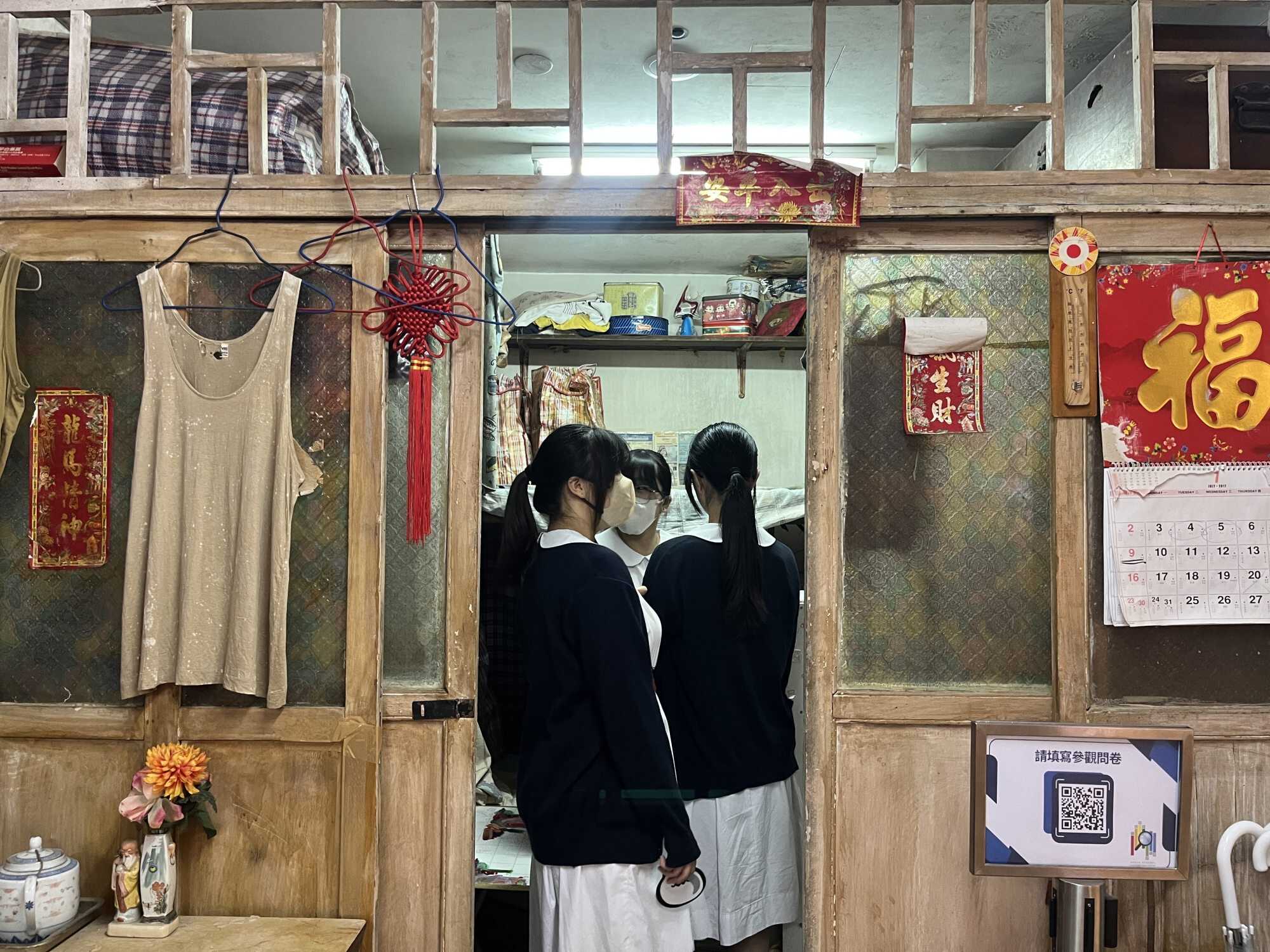
A simulation of a dilapidated subdivided flat confronts visitors who enter Hong Kong’s Urban Renewal Exploration Centre, showing the grim reality of urban decay. The centre, which is located in Central and reopened last month after renovations, displays items collected from former tenants of subdivided flats, including an old television, weathered tableware and a ceiling fan.
Now equipped with sensory devices and immersive audio, this exhibit allows people to step into the hardships of residents living in Hong Kong’s ageing buildings.
The raw, realistic display struck a deep chord with student visitors.
“Just by standing inside that cramped toilet for a few minutes, I already felt incredibly suffocated ... It’s hard for me to believe that some people might live in there for 10, 20 years or even longer,” said Josephine Yiu, a Form Four student from TWGHs Li Ka Shing College.
She added that the experience helped her understand the purpose of city planning.
“Before visiting, I never actually thought about why we strictly need to renew or rebuild a building just because it’s old,” she said, pointing to a simulation that used virtual reality to depict a building’s collapse.
“I put myself in the shoes of the people inside at that moment, thinking about how hopeless I would feel. I’ve come to realise that urban renewal isn’t just about replanning a city; more importantly, it is about improving the lives of ordinary citizens.”
According to data from the Urban Renewal Authority, which runs the centre, the pace of urban ageing outstrips redevelopment in Hong Kong. The number of buildings aged 50 years or above stands at around 14,000 in 2026, but that figure is projected to more than double to over 29,000 by 2046, underscoring the urgent need for proactive renewal strategies.
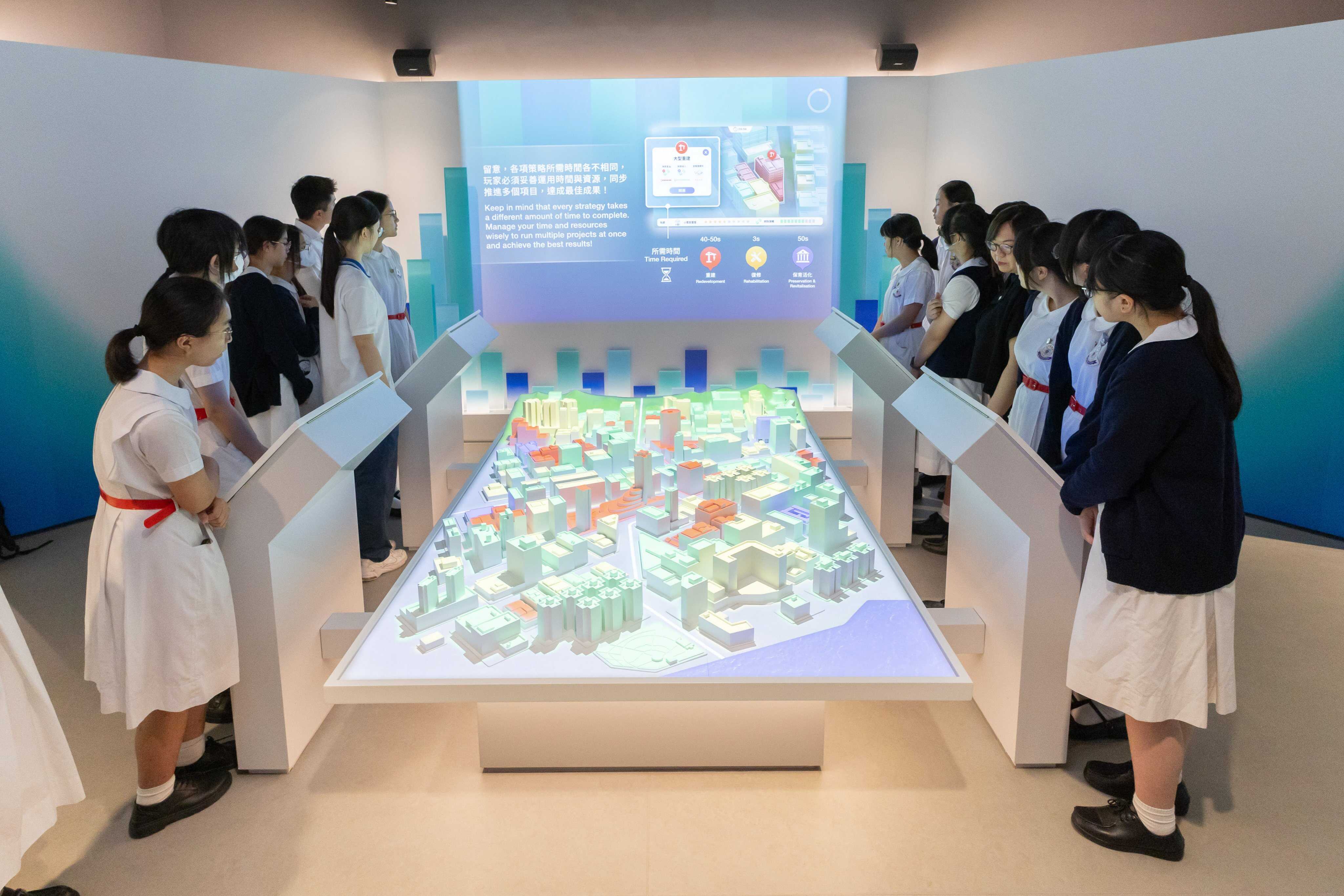
The Urban Renewal Exploration Centre has been educating the public since August 2009. Its recent renovation brought digital technology and interactive multimedia displays across its five zones.
Among the upgrades is the integration of artificial intelligence, which powers smart glasses that offer a virtual tour guide to complement services from human guides.
The centre also has several new interactive games designed to take abstract concepts regarding urban issues and make them tangible.
In the “Urban Squad — City Renewal Mission” Game, visitors collaborate to complete building maintenance and redevelopment tasks in a virtual city. In another, the “Keep Anew Mission” Motion Game, visitors role-play as property owners managing the upkeep of a building.
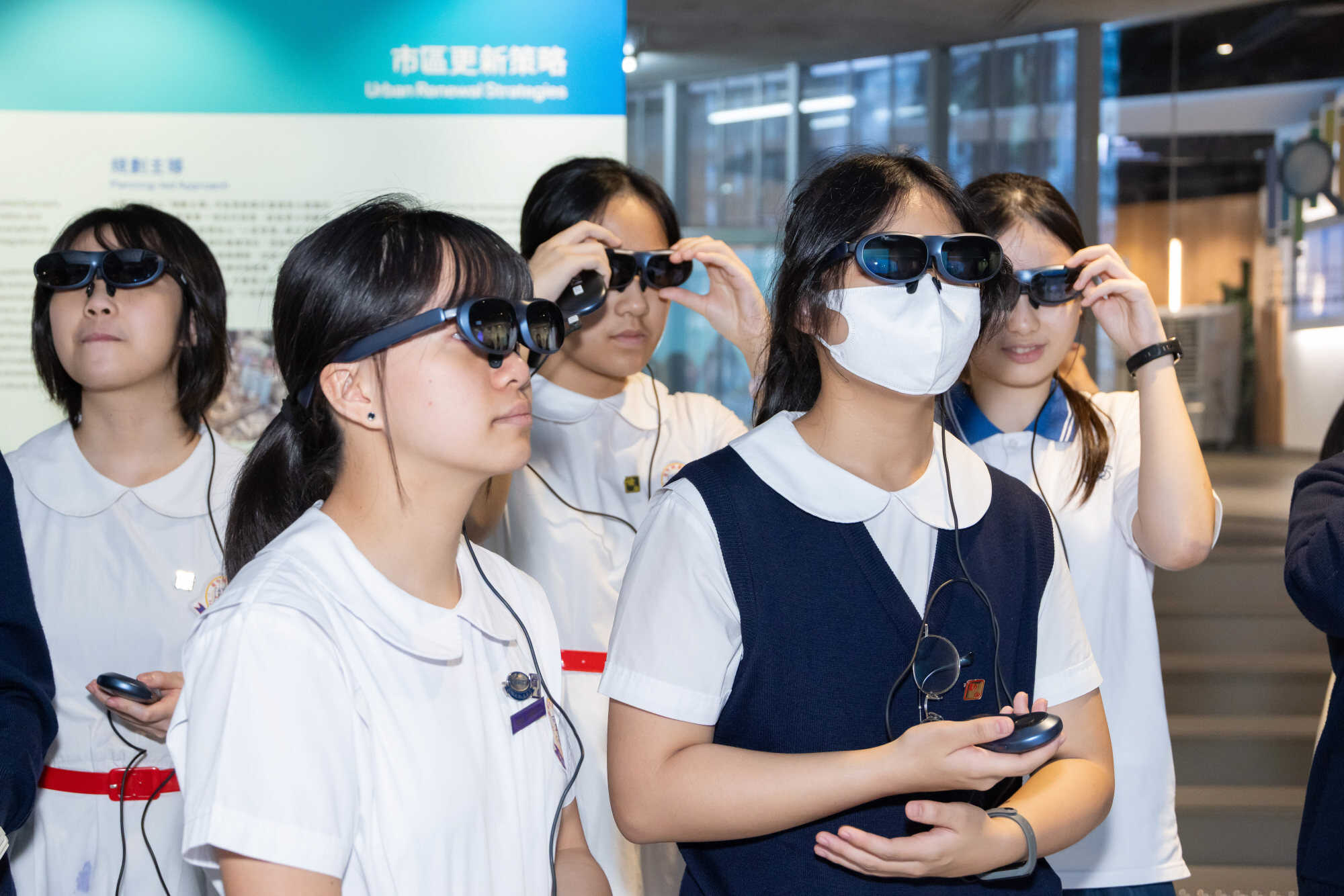
Another Form Four student from TWGHs Li Ka Shing College, Fung Ka-na, found the maintenance simulation particularly eye-opening.
“When it comes to community urban renewal, we usually think it’s only the responsibility of the government or municipal authorities,” Ka-na noted. “But in reality, there are many different stakeholders involved, including the property owners and the local residents themselves.”
Ka-na highlighted that the game underscored the large amount of financial resources required to maintain Hong Kong’s rapidly ageing high-rises, as well as the need for regular government inspections.
“In class, we learned about community urban renewal and methods of land use. But coming here, we truly get to understand what specific purposes each building can serve,” he said.