





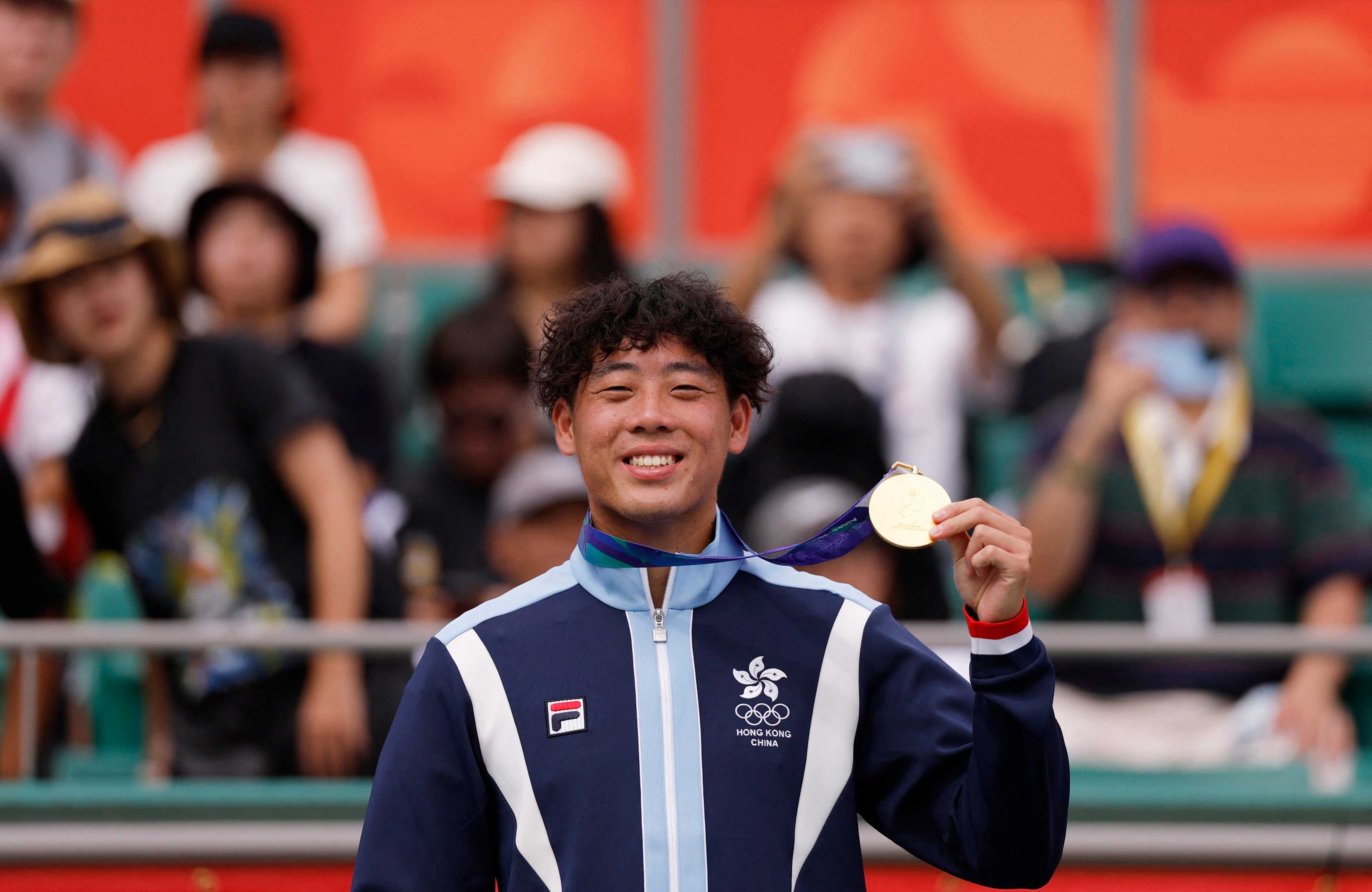
Anyone watching tennis player Coleman Wong Chak-lam win his historic men’s singles title at the Asian Games might have wondered if he even knows what pressure is.
The 22-year-old Hongkonger needed just one chance at victory over China’s Wu Yibing, ranked No 111 in the world. Winning would also come with a place at the Los Angeles Olympics in 2028.
The manner of Wong’s 6-2, 6-4 triumph at Higashiyama Park Tennis Centre would suggest it is the 99 players ranked above him who should worry.
Wong’s gold was the eighth the city’s athletes had won in Japan. Windsurfers Wong Tsz-ho and Cheung Tsz-yuet added two more soon after, making it the most Hong Kong has ever won at a single Games.
Within the city’s overall medal count of 54 is a record 11 golds, three more than in 2023.
“Before the Games started, I was just hoping to win a medal, regardless of the colour,” Wong said. “But honestly, now reaching this point, winning this medal, you can call it unlocking an achievement.”
He also acknowledged the role his family played in getting him to this stage of his tennis career.
“Since I was young, my family always had the mindset of, ‘OK, if you want to do it, just go for it’,” Wong said.
He hopes his success can convince other families in the city to take a leap of faith in sports.
“Sometimes parents in Hong Kong might feel, ‘Ah, is that doable?’ They overthink it. Instead, if kids want to do it, let them give it a try first. This is a huge influence my family had on me,” said Wong, who graduated from Diocesan Boys’ School and won the Sportsperson category in the 2021/22 Student of the Year Awards.
“I went abroad and out into the world to try at a very young age. Losing and winning didn’t matter; it was about going out to improve.”
‘Unlocking an achievement’
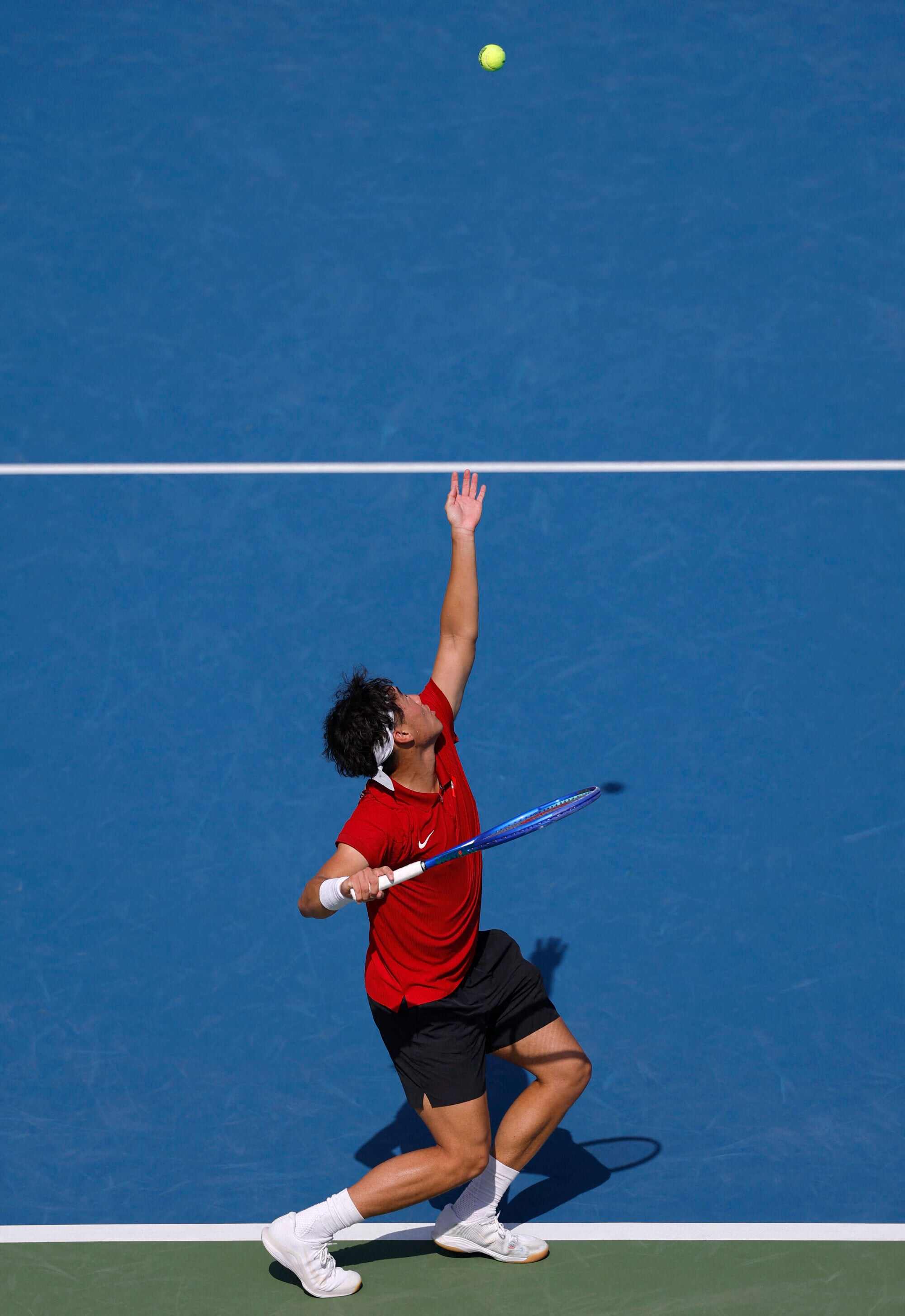
Wong and Wu are no strangers on the court. Three years ago at the Games in Hangzhou, Wong knocked out his mainland rival in the third round; last November, Wu beat Wong in the semi-finals of the National Games.
“He’s a really good player, and we always have a great match every time we play each other,” Wong said. “You can’t think that much at that moment because it’s so fast, and the game, the margin is so slim. So I was just trying to focus on what I can do at that point.”
The groundwork for Wong’s win was done in the first set when the only real moments of menace for Wong came from the three lucky breaks that involved the ball hitting the net and dropping in Wu’s favour.
Otherwise, the silver medallist’s game in the main was characterised by a succession of unforced errors at inopportune moments, namely when winners sailed long on crucial points.
It was a closer affair in the second set, with the pair going toe to toe, and Wu showed signs of the form that once made him world No 54.
“Obviously I was a little bit nervous because I’ve never been to this stage before, but it was tough,” Wong said. “The whole match was really close.”
Wu had every opportunity to hold the game, but he hit potential winners long or wide and struggled with his first serve.
At 5-4 down and with the match on the line, Wu hit Wong’s first serve out and then could only watch as the Hongkonger’s power did the rest.
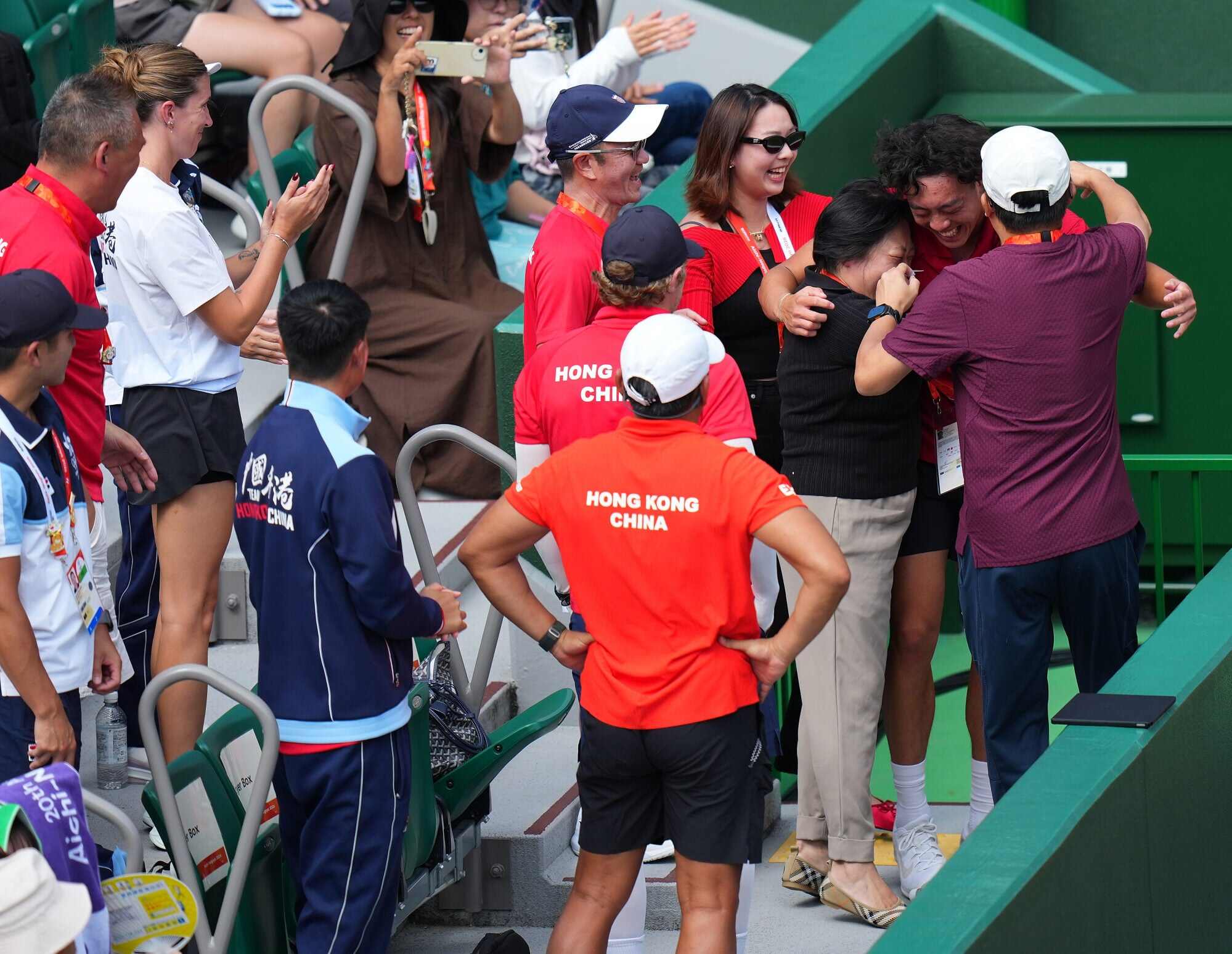
Having won, Wong sank to the floor in celebration before rushing over to the coaches’ box to embrace friends and family.
What’s ahead?
The next generation of Hong Kong athletes will have an opportunity to watch Wong on the Olympic stage in Los Angeles, as long as he remains in the top 500 players in the world.
“It’s a very happy moment indeed,” Secretary for Culture, Tourism and Sport Rosanna Law Shuk-pui told the South China Morning Post. “I’m very glad as we now have every reason to keep tennis in the Sports Institute’s Tier A, and our decision last year to make a special arrangement for tennis has paid off.”
Michael Cheng, president of the Hong Kong China Tennis Association, felt Wong’s gold and the bronze won by women’s doubles pair Eudice Chong and Wong Hong-yi the day before showed “that the long-term investment is bearing fruit”.
Cheng added: “I’m thrilled because it shows the structural alignment is right and hopefully the pipeline will come.”
Wong, meanwhile, has two years before the Olympics, but he won’t be resting on his laurels.
“I feel my current form is pretty good, and I want to keep maintaining it and continue improving, because I feel it’s never enough,” he said. “I still have 99 players ahead of me [in the ATP rankings], so I’ll keep climbing.”


