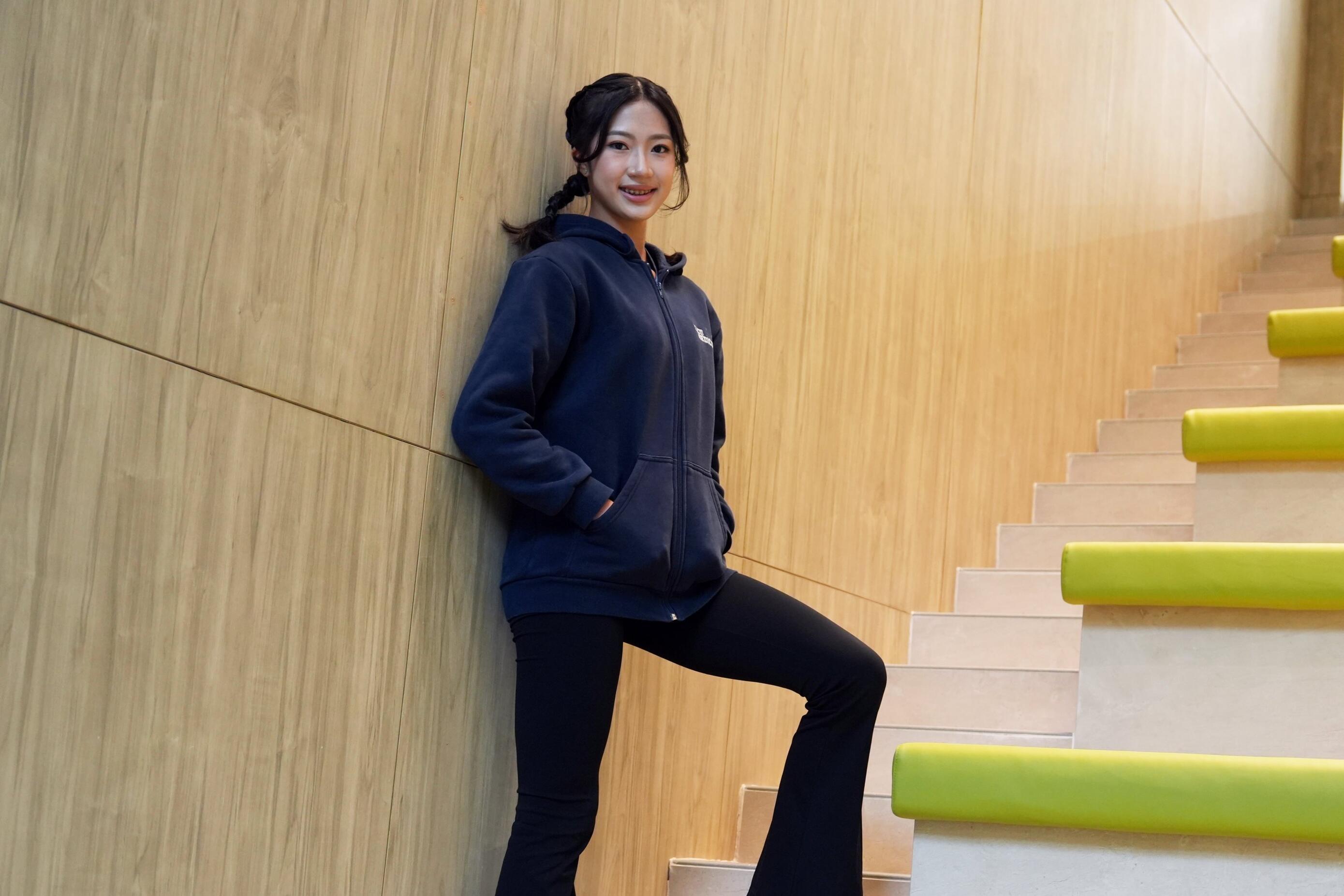
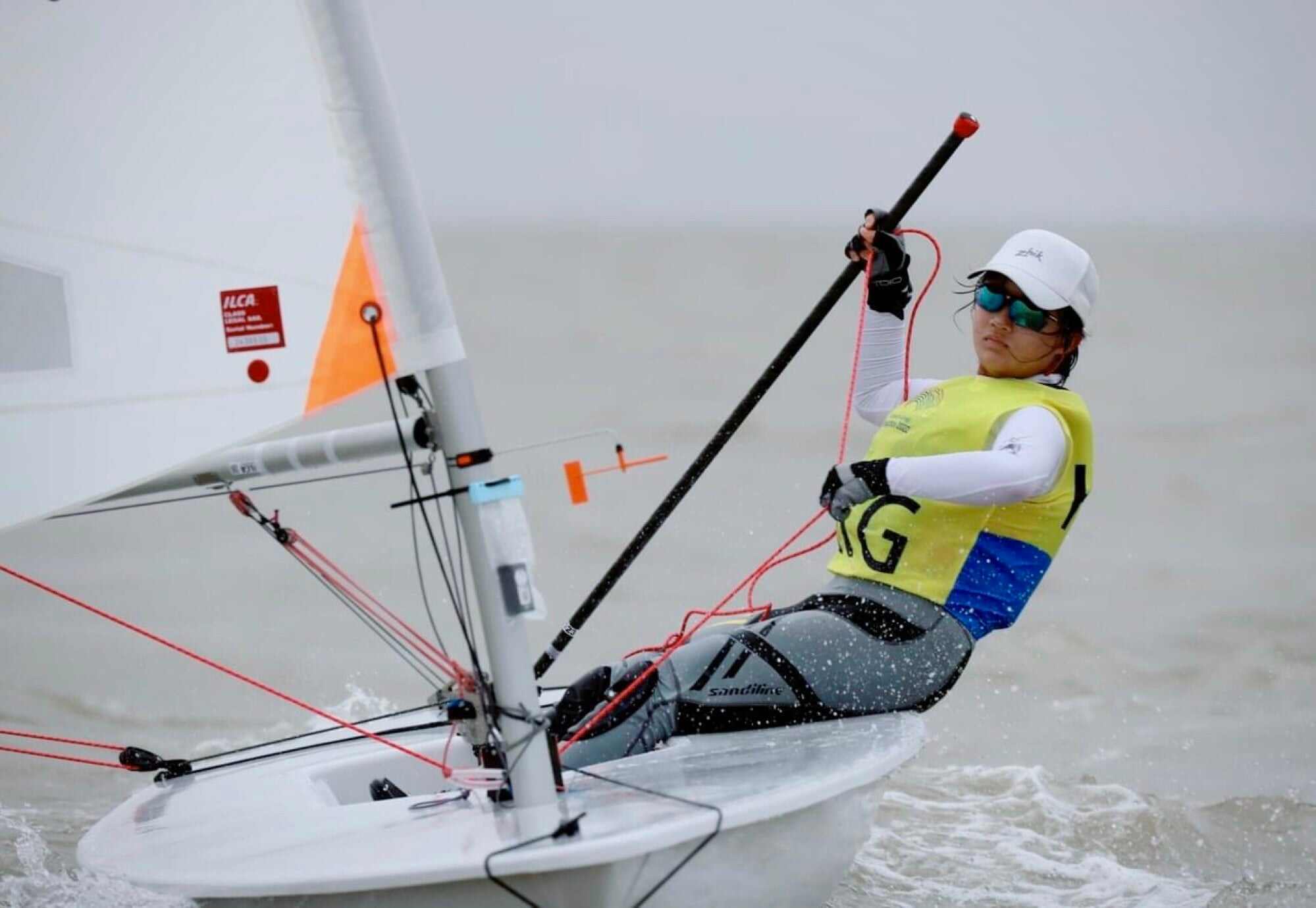
Before joining the Hong Kong national sailing team, 17-year-old Huang Ziyan thought a career in sports meant either competing for a spot on the podium or coaching on the sidelines.
“I was under the impression that opportunities in sport were a lot more narrow,” said Ziyan, who represented Hong Kong at the Asian Games in 2023 and at the Youth Sailing World Championships in 2024 and 2025.
“Going to the [Hong Kong] Sports Institute opened my eyes ... You could be a sports psychologist, a physiotherapist, a strength coach or work in sports science,” explained the student-athlete who is attending Harrow International School Hong Kong.
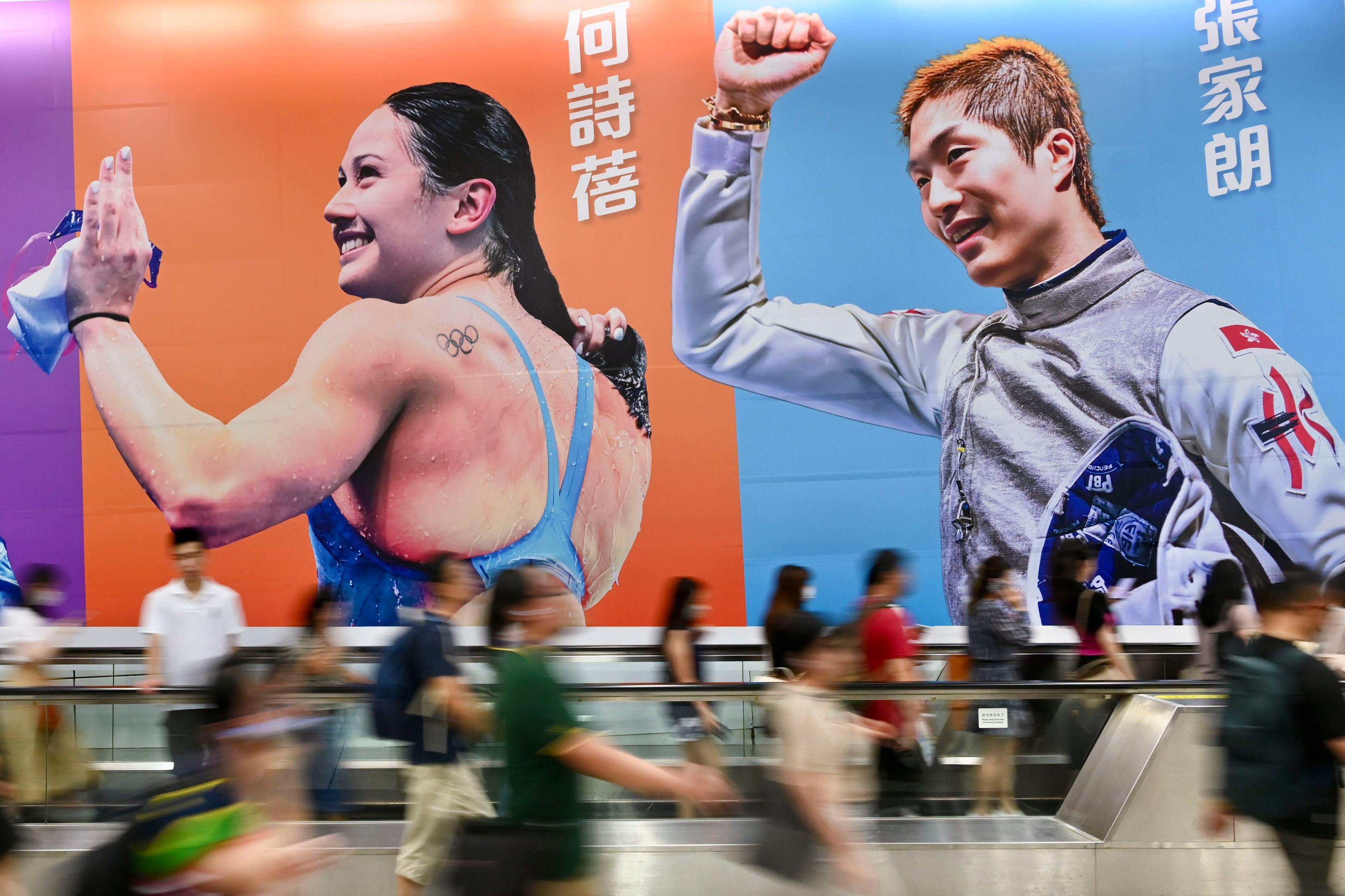
Recent landmark achievements – from Coleman Wong Chak-lam’s historic tennis gold at the 2026 Asian Games to Olympic triumphs by Cheung Ka-long and Siobhan Haughey – have fuelled a surge of youth interest in sports.
But not every dedicated athlete can enter the spotlight, and a think tank is hoping to show young sportspeople how to integrate their passions into a long-term career.
Professional pathways in sports
More than one in four secondary school students in Hong Kong are interested in a career in sports, yet 56 per cent are unaware of professional roles beyond competing or coaching, according to a study released in August by a think tank, Our Hong Kong Foundation.
The research team surveyed 1,098 secondary school students across more than 40 schools.
The NGO found that 28 per cent of students expressed a desire to work in the sports sector, but barriers included unclear entry pathways and a lack of practical exposure.
To unlock the potential of off-field roles, the think tank recommended establishing a dedicated government or NGO team to coordinate career exposure programmes.
It also urged the Education Bureau, Hong Kong Sports Institute (HKSI) and the Culture, Sports and Tourism Bureau to publish citywide dual-career guidelines for schools, standardising flexible timetabling, leave policies and exam rescheduling for student-athletes.
Our Hong Kong Foundation researcher Joyce Chan noted that dual-career pathways could expand athletes’ networks, sharpen their decision-making and ease their transition after secondary school.
Drawing on European Union guidelines, Chan stressed that Hong Kong needed a comprehensive framework to help schools tailor support to individual student-athletes.
“This could include a dedicated resource pack alongside local and overseas case studies,” she said.
She also urged HKSI to expand its Elite Athlete-friendly School Network, which encourages secondary schools to support student-athletes in pursuing sports while maintaining their studies. Currently, only 9 per cent of secondary schools are part of the network.
Sports aren’t limited to one path
Hong Kong student-athletes mainly rely on three paths in progressing to higher education in the city.
The Education Bureau’s School Nominations Direct Admission Scheme (SNDAS) allows schools to nominate students with exceptional performance in non-academic areas – including sports – for university admission.
The Student-Athlete Learning Support and Admission (SALSA) Scheme, offered by the University Grants Committee (UGC), specifically targets elite athletes. Universities also have their own admission schemes for student-athletes.
Funding for the SALSA Scheme, however, has only been allocated until the 2027-28 academic year.
“If the SALSA Scheme becomes a regularised, permanent policy, parents won’t have to worry as much, allowing athletes to truly focus on their sport during their peak competitive years,” said Clara Wong, who led SALSA’s implementation at City University (CityU).
“They can dedicate themselves to athletic excellence knowing that the university system will provide solid support for their degree.”
Once student-athletes have enrolled, managing academic demands alongside high-performance training requires dedicated institutional support.
“My goal when setting up the programme was to show athletes that sports aren’t limited to just one rigid path,” said Wong, who is a senior physical education officer at CityU and a former national table tennis player. “Students eventually realised that ... almost any discipline can be merged with sports.”
She added that managing SALSA was a chance to integrate her sports background with her accounting degree – an experience she hoped to pass on to others.
“When athletes realise they have choices beyond just studying sports, it opens up a whole new world,” she said.
Despite the daily demands of competitive sports, Wong pointed out that student-athletes would still be held to the same academic standards as their peers.
The institutional goal, Wong noted, should be finding a middle ground that maintained academic fairness while guiding professors on alternative evaluation methods.
“As young athletes, our mindset is usually very simple: we just want to win medals and play our sport. We rarely think about what comes next,” she shared.
“Having a mentor or professional coach step in and ask a single critical question – ‘How do you plan to arrange your next three years of study, and what will you do after graduation?’ – completely changes your trajectory. It made me start planning ahead and take my education seriously.”
Wong also pushes students to get involved in sports-related initiatives outside school: “Volunteering is a great way for them to realise how big the world really is and how many opportunities exist beyond the pitch,” she said.
Rather than viewing competitive sports as a phase, Ziyan hopes to study psychology, economics or public policy as a way to stay involved in sports development.
“One thing I’m really passionate about is increasing access to sailing and other sports,” she said. “I’m also interested in psychology because it plays a crucial role in youth development ... for athletes and youth in general.”
Beyond its influence on her future, Ziyan said being a student-athlete had also shaped her holistic development.
“The skills I’ve developed as an athlete – discipline, resilience and organisation – have helped me in my studies. Similarly, being able to focus on things for a long period as a student has helped my training,” she said.