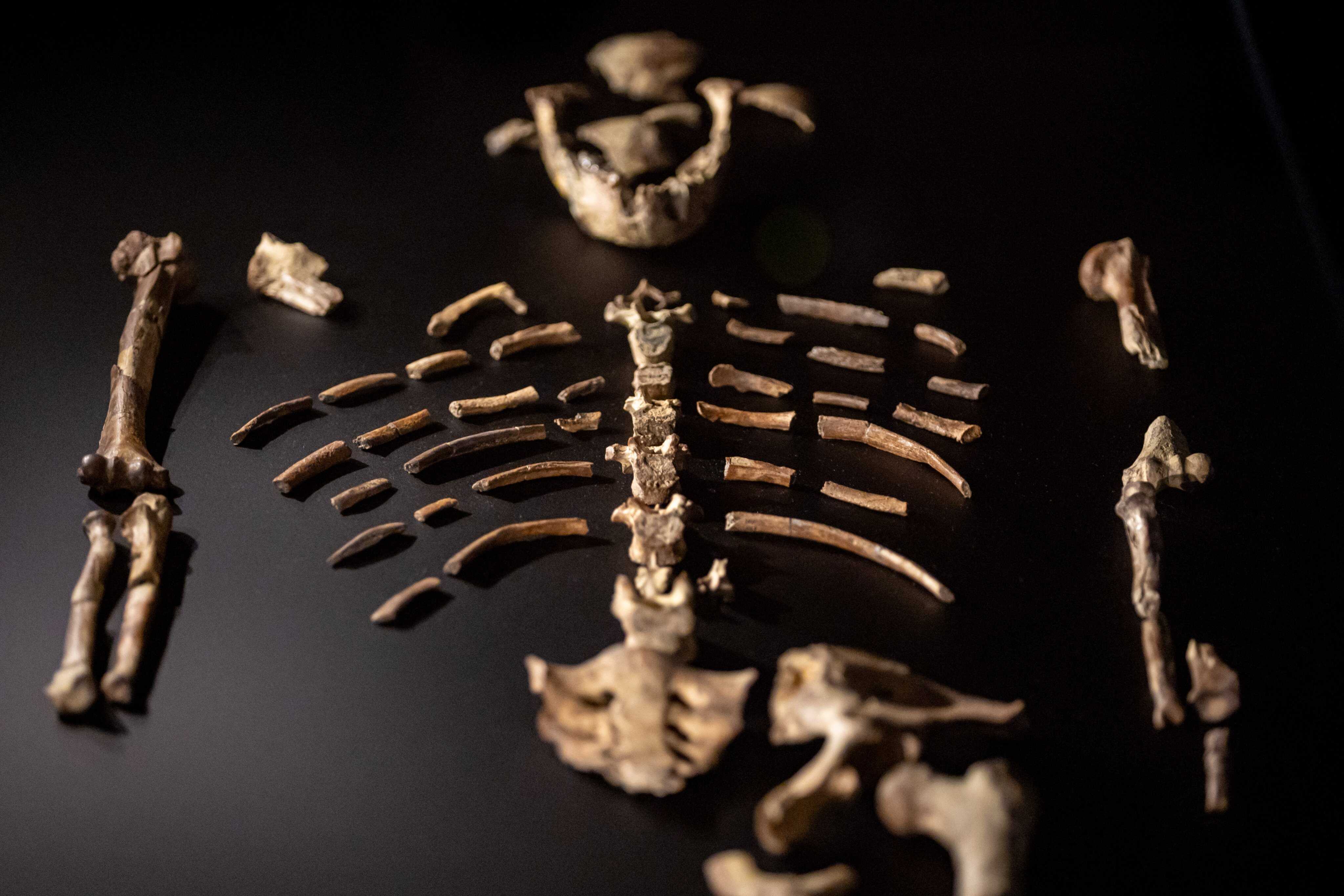
The 3.18-million-year-old bone fragments of human ancestor Lucy, which rarely leave Ethiopia, went on display in Europe for the first time at the Czech National Museum in Prague last month.
The ancient remains of Australopithecus afarensis were discovered in Ethiopia in 1974. At that time, this find was the most complete ever made and revolutionised our understanding of humanity’s ancestors.
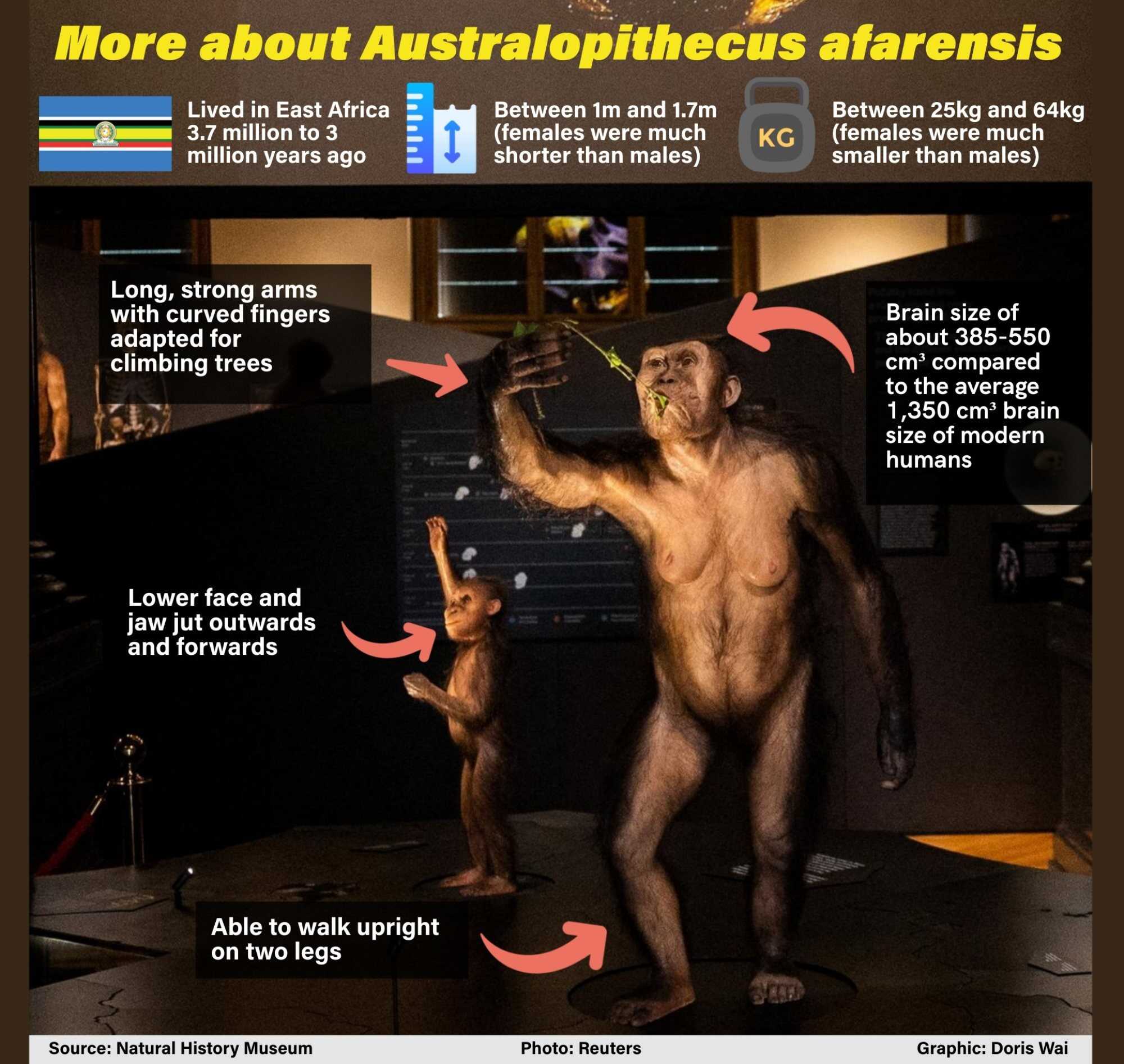
Australopithecus afarensis are considered to be an ancestor of humans. However, they were more apelike, with long, powerful arms relative to their legs. They also lacked key features that uniquely evolved in humans, such as a larger brain capacity (see graphic).
Lucy’s remains are presented alongside Selam, the fossil of a baby Australopithecus who lived about 100,000 years earlier than Lucy and was found in the same place 25 years later.
“Selam has never been displayed outside Ethiopia, and Lucy was only once exhibited in the United States,” said National Museum director Michal Lukes.
The remains, lent by Ethiopia’s National Museum in Addis Ababa, are considered among “the most precious and oldest paleoanthropological exhibits in the world”.
The 52 fragments will be on display for 60 days as part of a “Human Origins and Fossils” exhibition.
Ethiopian Heritage Authority director Abebaw Ayalew Gella said the exhibition “promotes Ethiopia as the land of human origin”.
“Lucy ... revolutionised the course of the study of human ancestors, first because of its completeness and second because of its age,” said Ayalew Gella. “Selam is a unique fossil for its age ... This is a fossil of a baby who died at two years and seven months old.”
In her current form, Lucy consists of fossilised dental remains, skull fragments, parts of the pelvis and femur.
The fossilised skeleton of Lucy stands 1.1 metres tall and weighs 29kg and last left Ethiopia between 2007 and 2013, when it toured museums in the United States. The hominid was named after The Beatles’ song “Lucy in the Sky with Diamonds”, which the team that discovered her listened to after the find.
Once regarded as the oldest human ancestor ever discovered, Lucy lost that title in 1994 when Ardi, a female Ardipithecus ramidus who lived 4.5 million years ago, was found in Ethiopia.
In 2001, Toumai – a skull dated to 6 or 7 million years old – was discovered in Chad, suggesting that the human family may extend much further back than previously believed.
In a 2016 study, researchers indicated that Lucy had strong upper arms, suggesting she regularly climbed trees and nested in branches at night. The study also concluded that she had relatively weak legs that were not used for climbing and were inefficient for walking.
How did Lucy die?
An analysis of a fracture on one of Lucy’s bones suggested that she probably died from a fall from a tall tree.
Scans of her shoulder joint and arms revealed breaks similar to those seen in individuals who fall from great heights, suggesting that she may have reached out to break her fall.
The scans also indicated that the fractures occurred around the time of her death, not during the fossilisation process.
The researchers believe the injuries were severe enough to have also damaged her internal organs.
However, many other scientists contend that there are alternative explanations for the bone breaks, such as being trampled by stampeding animals after her death.