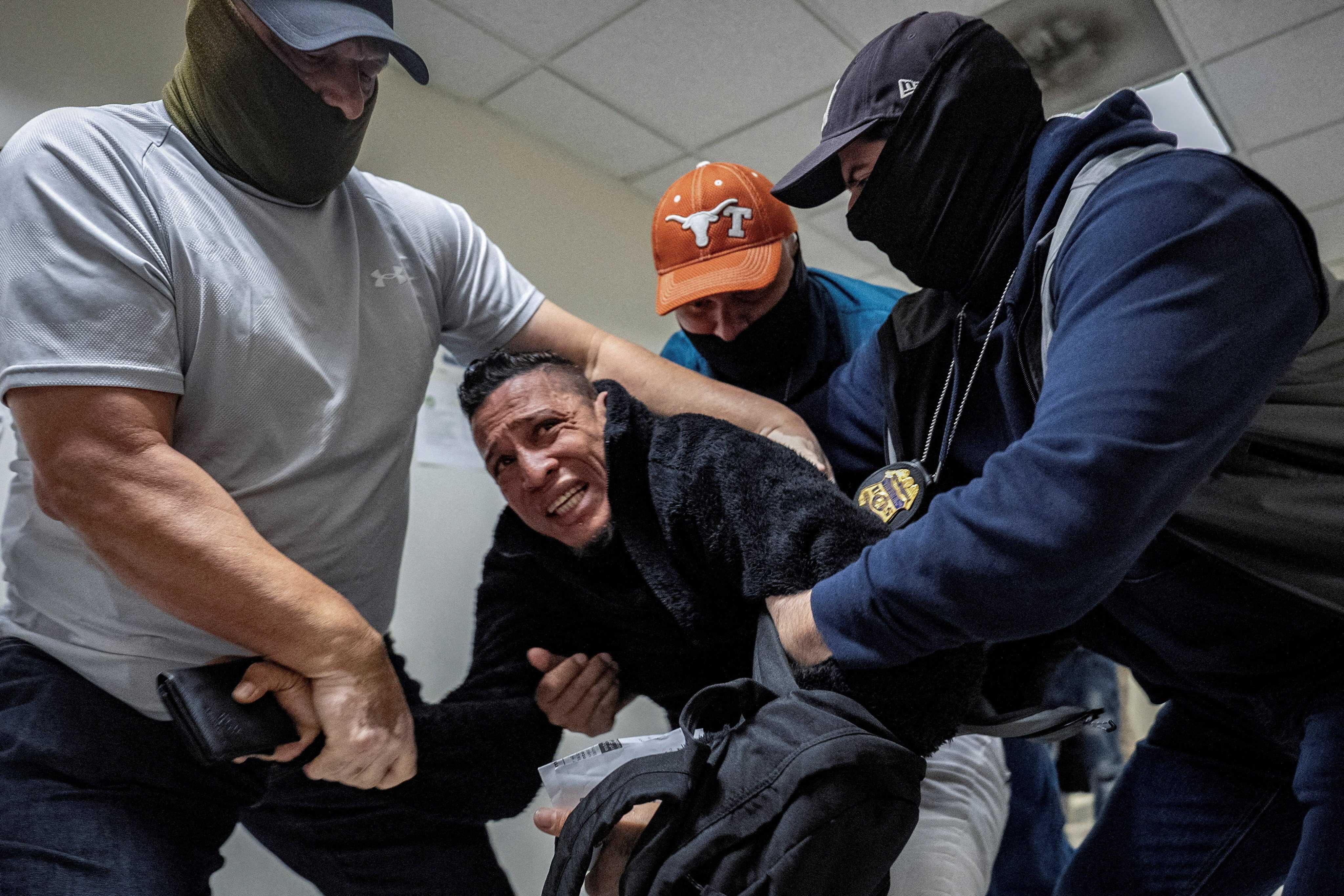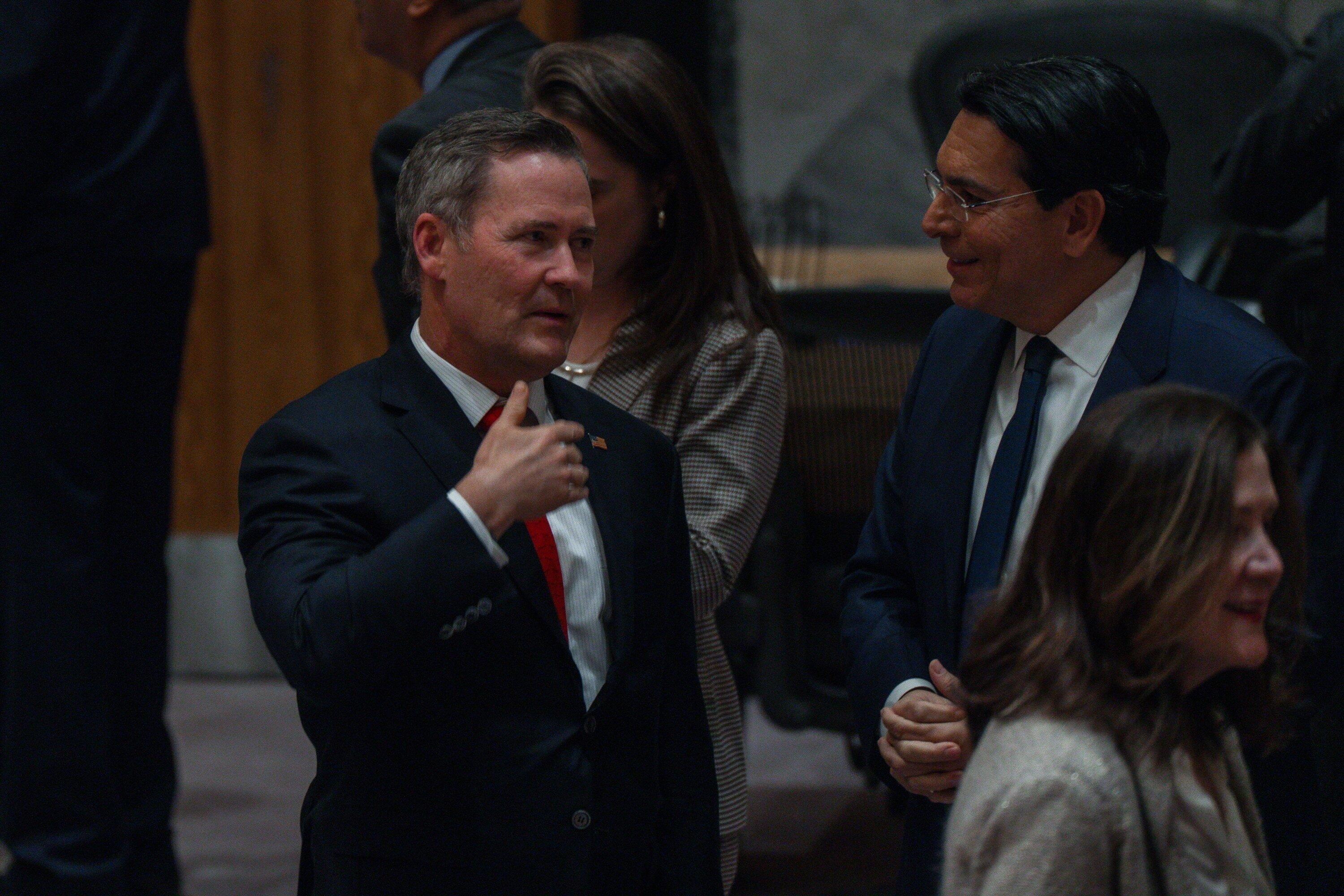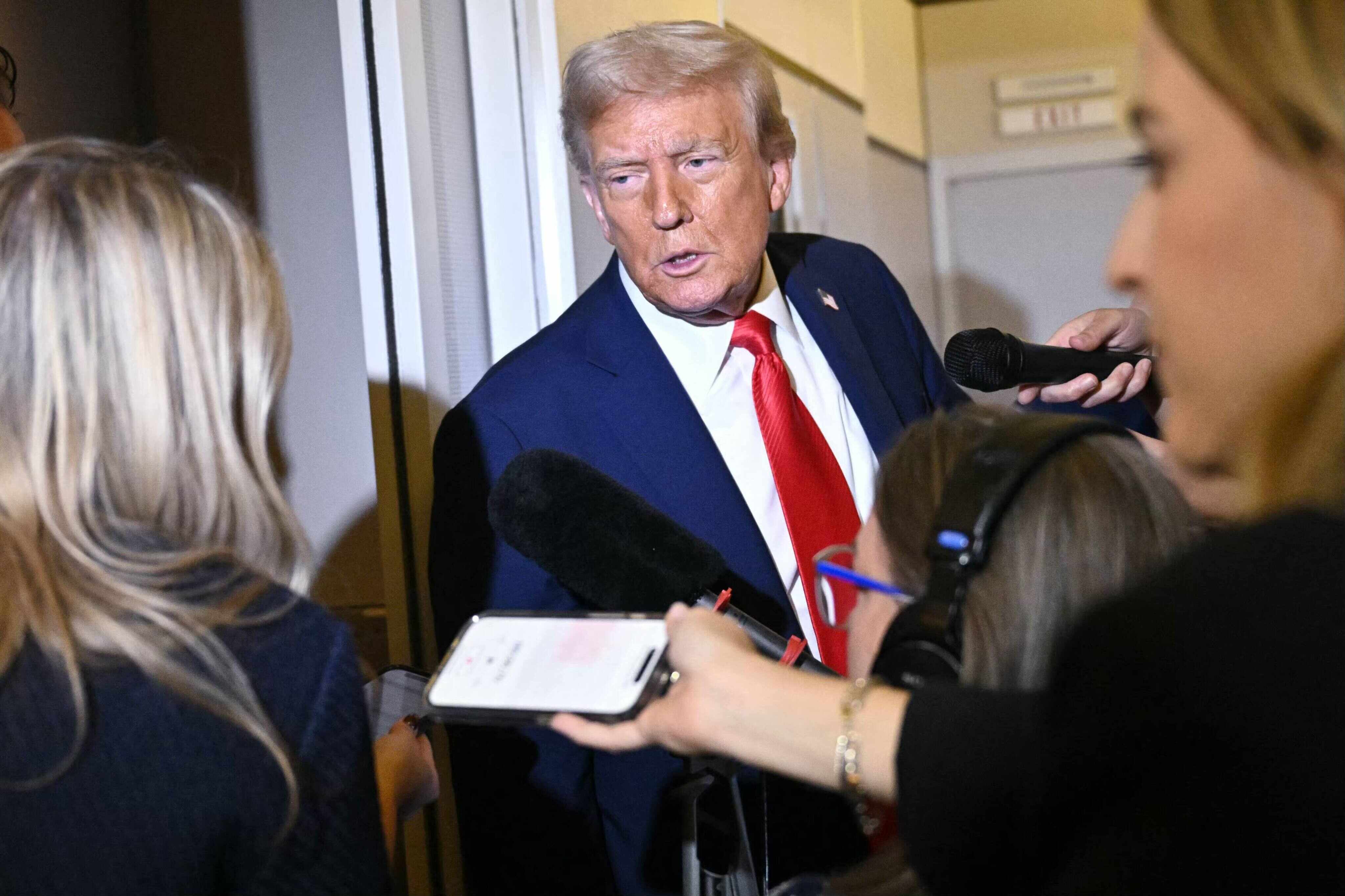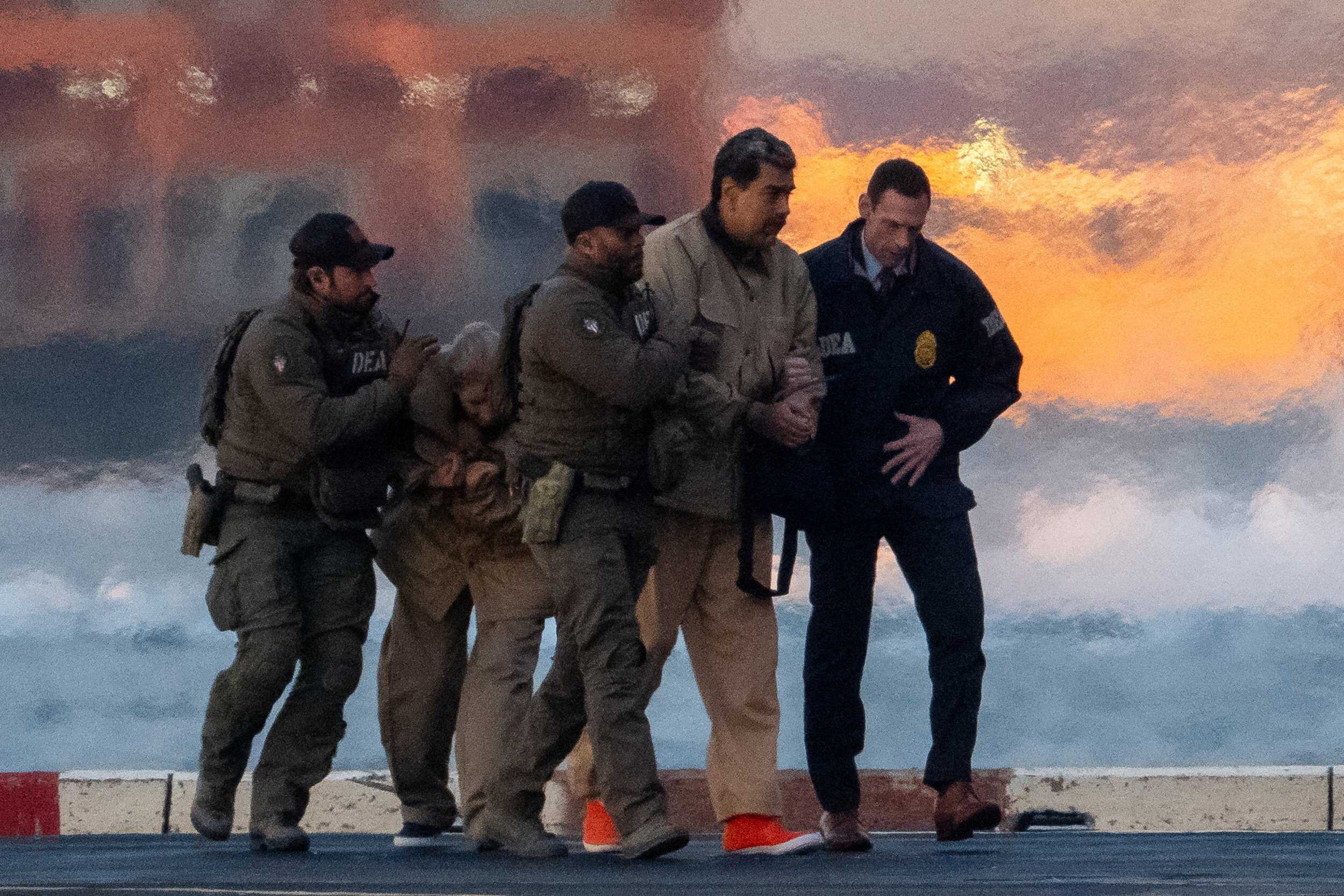
For months, the Trump administration had made threats over Venezuelan leader Nicolas Maduro’s alleged involvement in shipping drugs to the United States. Then, it made its riskiest and most high-profile military operation since killing al-Qaeda leader Osama bin Laden in 2011.
A previous series of deadly missile strikes on alleged drug-running boats had already killed more than 100 people. At 11.46pm local time on Friday, the US struck Maduro’s Caracas compound. Around 60 hours later, on Saturday, helicopters touched down and forcibly took the Venezuelan president and his wife into US custody.
Trump later posted a photograph of the Venezuelan leader on his Truth Social platform, blindfolded and wearing a grey tracksuit.
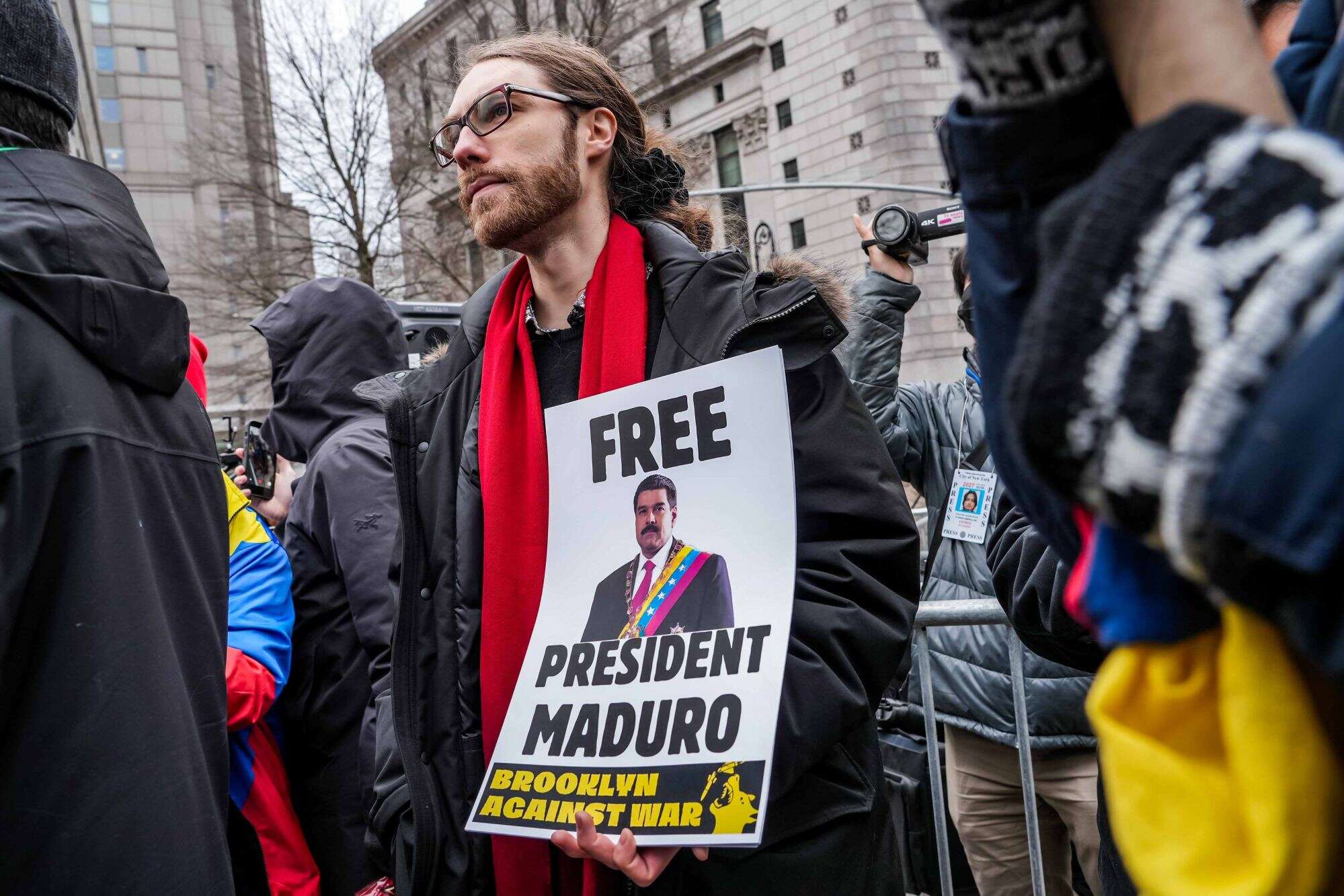
On Monday, the now-abducted leader told a New York court he was innocent and an upright person. Maduro and his wife entered pleas of not guilty on charges of narcoterrorism and possession of illegal weapons.
During the brief hearing, charges were read out and pleas entered. Maduro, 63, took notes and asked the judge to allow him to hold on to them. He also opted not to ask for bail before returning to a detention facility in the nearby borough of Brooklyn.
The couple’s next hearing is set for March 17.
“I’m innocent. I am not guilty. I am a decent man, the president of my country,” Maduro told a judge, according to media in the courtroom, before the judge cut him off, indicating there would be time for lengthy statements later.
His wife, Cilia Flores, identified herself as Venezuela’s “first lady” before being similarly reined in by Judge Alvin Hellerstein.
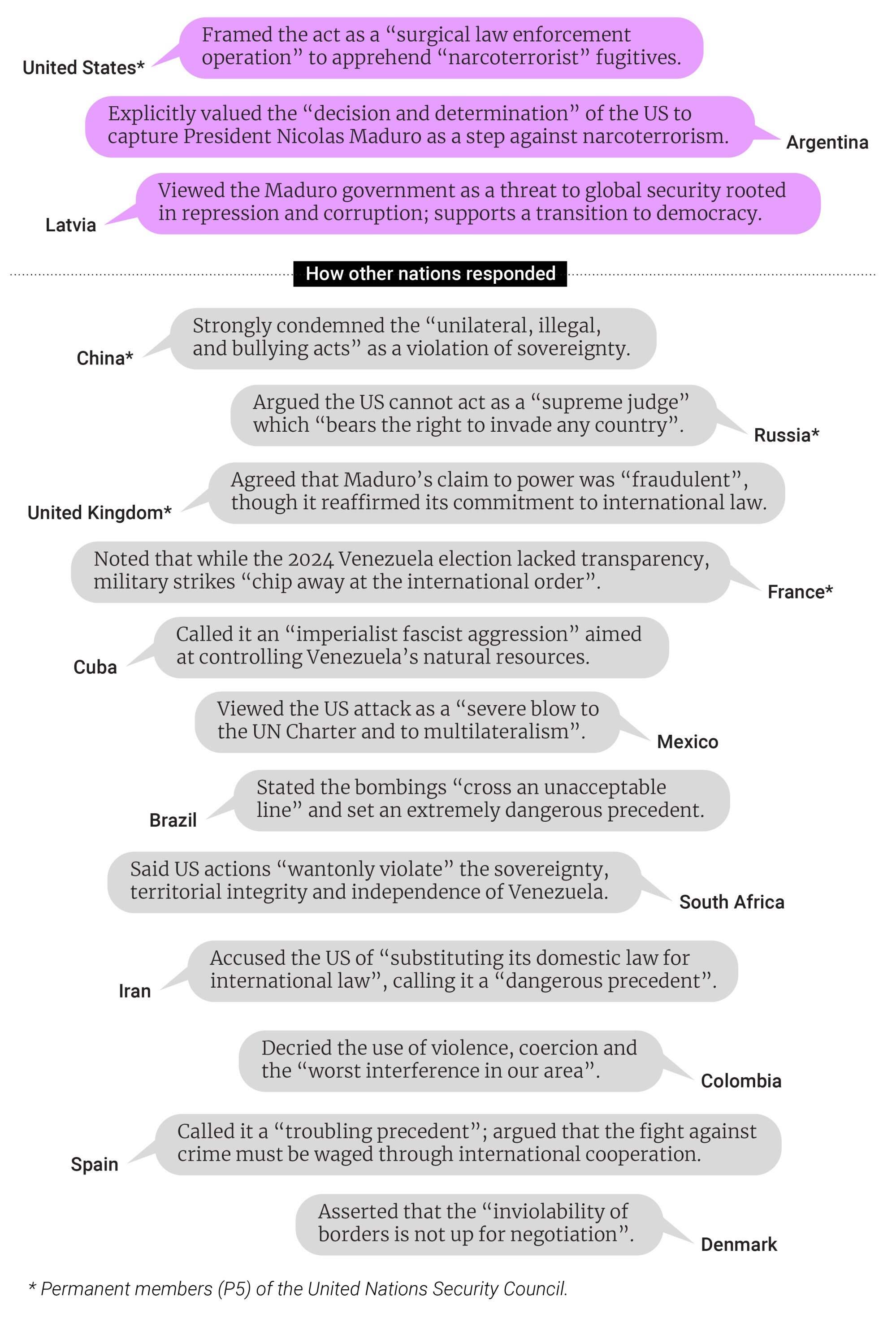
Global political implications
The stark attack on Venezuela reverses a vow US President Donald Trump made when campaigning for his second term – that Washington would stop, not start, wars.
US President Donald Trump issued a stark warning on Sunday to Venezuela’s interim leader, Delcy Rodriguez, saying she would pay a potentially larger price than her former boss, ousted Venezuelan president Nicolas Maduro, if she does not cooperate with the United States.
China expressed “serious concern” over the US capture and forcible removal of the Venezuelan leader, calling on Washington to ensure the personal safety of Nicolas Maduro and his wife and “release them immediately”. Chinese President Xi Jinping said major powers should lead in respecting other nations’ development paths.
But analysts have said that China is likely to be patient and play the long game as it views the new geopolitical chessboard, recalibrating carefully in the wake of US President Donald Trump’s move on Saturday to decapitate Venezuela’s leadership.
The US military strikes and forced governmentchange in Venezuela have also left European countries in a diplomatic bind, as they distance themselves from Washington’s actions while hesitating to criticise them outright.
United Nations chief Antonio Guterres said he was “deeply alarmed” by the US operation.
As for the United States, its Secretary of Defence Pete Hegseth delivered a stark warning to China and Russia on Monday, declaring that the US is rebuilding military dominance to a level so absolute that its enemies would “not dare” test it.