Hongkongers stranded in the Middle East amid a joint US-Israeli attack on Iran have called for greater help from the Chinese embassy and Hong Kong government, as others considered travelling by road to another city to fly back home.
As of Monday, at least 432 residents were stranded in the region, according to immigration authorities.
On social media, some residents wrote they had been unable to contact the Chinese embassy in Dubai in the United Arab Emirates (UAE) by phone and had to pass their information to Hong Kong’s Immigration Department. They said they were considering driving to the embassy to further register their details.
“We hope the Hong Kong government can care more about Hongkongers stranded in Dubai, not just provide an emergency contact number with no further help,” one Threads user said.
“We are very helpless, just waiting every day in the hotel for updates … we want to go home.”
The user added she was told that UAE authorities would cover food and accommodation expenses for stranded travellers and hoped the Hong Kong government could help clarify the situation.
She posted a letter issued by the Department of Culture and Tourism of Abu Dhabi on February 28, which asked hotel managers to extend the stay of stranded guests until they were able to leave. The department pledged to cover the costs of the longer stay.
“We were told to pay out of our pocket first by hotel staff … it will be better if the Hong Kong government could help contact the UAE government to confirm the way to claim our expenses,” the user wrote.
In a statement on Monday, the Immigration Department said it had contacted multiple agencies and bodies, including Chinese embassies across the Middle East and the Commissioner’s Office of China’s Foreign Ministry in Hong Kong, to keep track of the latest developments. It vowed to continue to monitor the situation and take any needed follow-up action.
“The Immigration Department will continue to be in touch with inquiring Hong Kong residents and provide appropriate advice and feasible assistance regarding their itineraries and flight information,” the statement said.
Lawyer Martin Yeung Wan-fung, also stranded in Dubai after his Emirates flight to Hong Kong was grounded on Sunday, said he and several others were considering travelling to Riyadh in Saudi Arabia or Muscat in Oman by road – which takes several hours – but that plan was on hold for now.
“My concern is the air defence system of these cities may not be as strong as Dubai, and also what if there are also no flights back home once we have reached there? There are risks too,” Yeung said.
“The plan is to wait for a few more days to gauge the war developments … if the airspace reopens we will fly home.”
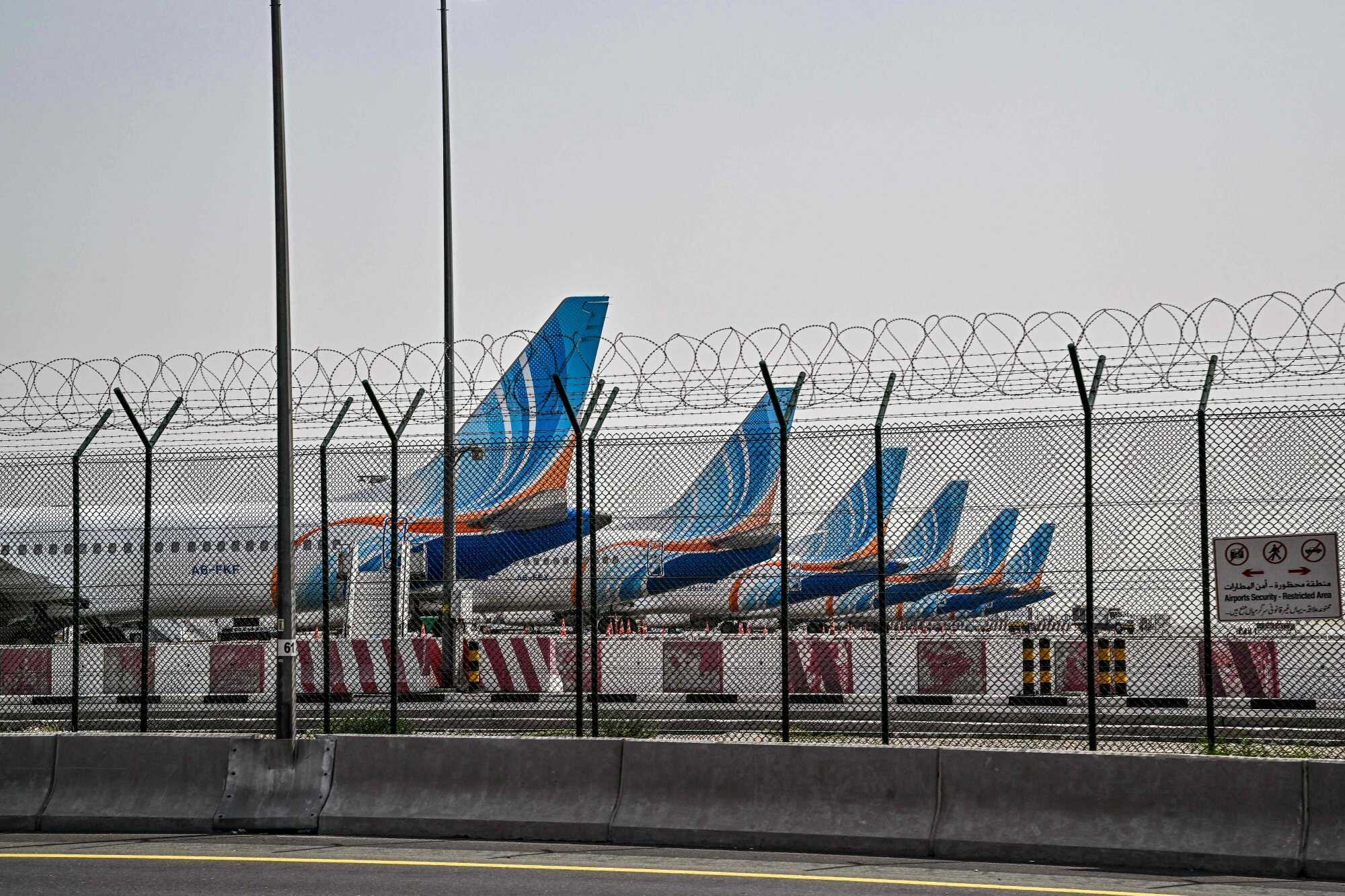
With at least partial airspace closures in Iran, Iraq, Syria, Kuwait, Qatar and the UAE, passengers are stranded around the world as airlines diverted flights to avoid the Middle East.
On Threads, one user asked whether any stranded Hongkongers would be willing to take a bus from Abu Dhabi to Muscat.
Another user, who said he would be unable to leave Dubai until March 9, posted a video of the inside of a local supermarket, expressing surprise about the fully stocked shelves and orderly customers.
“The shelves were filled with water, milk, bread, rice, everything … an auntie smiled and said, ‘Don’t worry, everything okay,’” the user wrote.
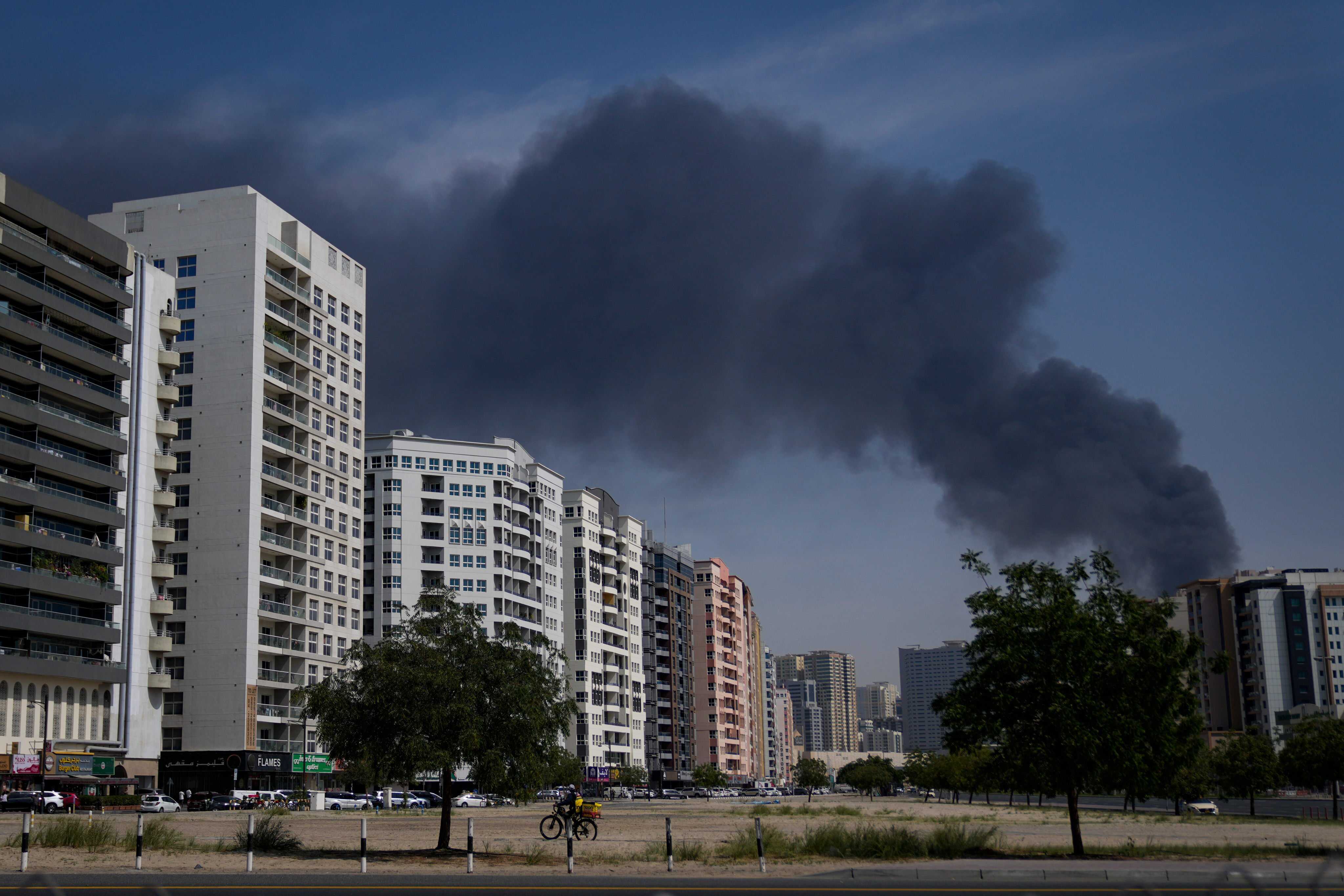
A third user based in Abu Dhabi wrote he was considering switching hotels as his current one was close to the ocean and the airport, which he feared were “missile targets”.
Lawyer Yeung, who arrived in Dubai last Friday, said he now felt safer going out and bought some clothes at a neighbouring shopping centre in the morning.
He also noted that shelves at a supermarket near his hotel were full.
“People’s faces were more relaxed today, everyone felt safer … yesterday morning many were still in shock,” Yeung said.
He said he received a call from the Hong Kong Economic and Trade Office on Monday evening (Hong Kong time) reminding him to register his details with the Immigration Department for the latest updates.
He also had to pay the extra hotel costs as his stay grew longer.
“The best scenario is of course that the Chinese embassy could assist us to return to Hong Kong, although Hongkongers in Iran should of course be prioritised,” Yeung said.