Arctic seals and birds are coming under increasing threat, mainly due to climate change and human activity, according to an updated list of endangered species released last month by the world’s top conservation body.
The International Union for Conservation of Nature (IUCN) said habitat loss driven by logging and agricultural expansion was a threat to birds, while seals were at risk mostly due to global warming and human activities, including maritime traffic.
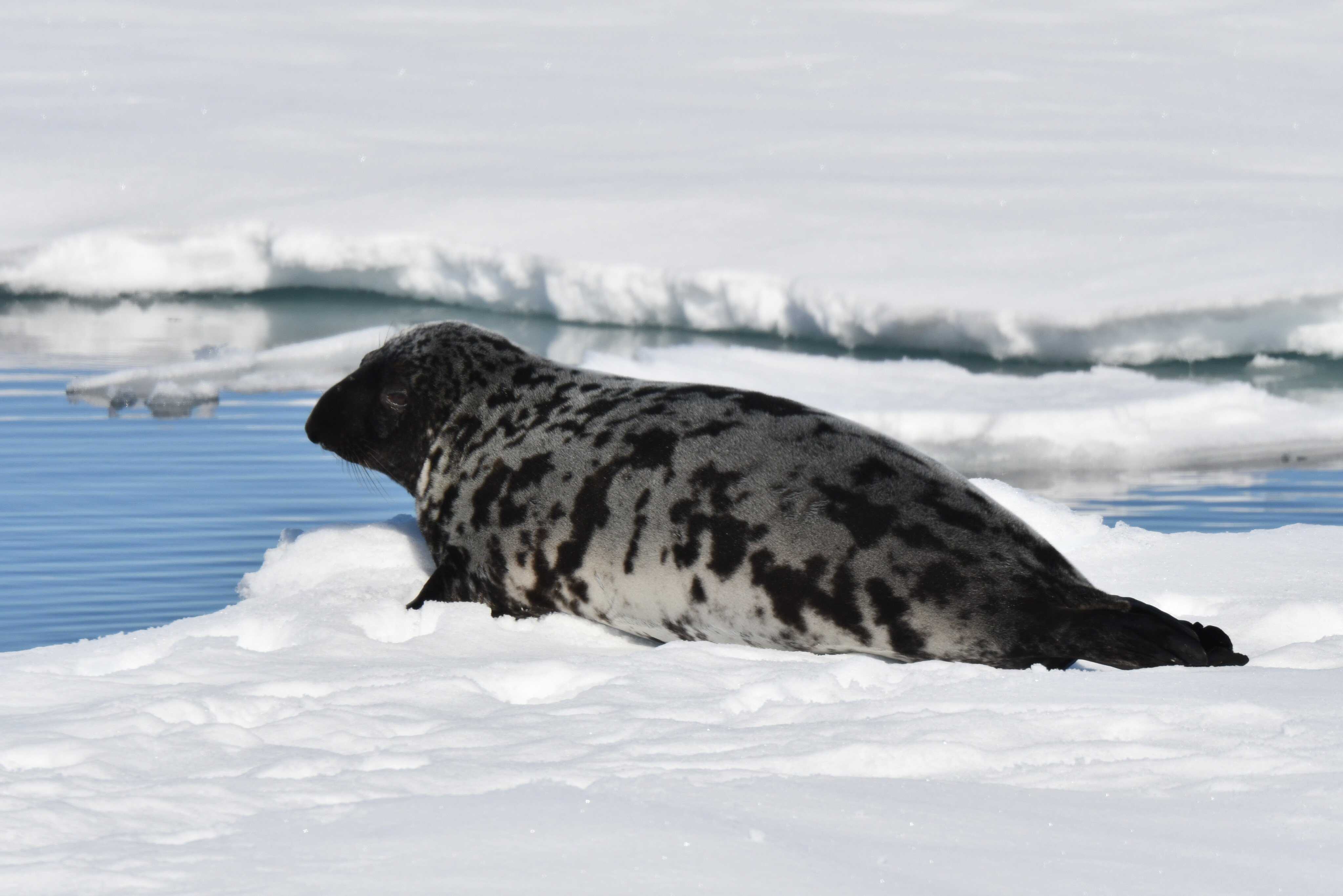
The IUCN said it would change the status of the hooded seal from vulnerable to endangered, while bearded and harp seals are now classified as near threatened.
“This timely global update highlights the ever increasing impact human activity is having on nature and the climate and the devastating effects this has,” IUCN director general Grethel Aguilar told reporters at its World Conservation Congress in Abu Dhabi.
Global warming is destroying the natural habitat of animals, including seals that live in the cold parts of the world.
Maritime traffic, mining and oil extraction, industrial fishing and hunting are among other risks to the species.
“Global warming is occurring four times faster in the Arctic than in other regions, which is drastically reducing the extent and duration of sea ice cover,” the IUCN said.
“Ice-dependent seals are a key food source for other animals,” it added.
They “play a central role in the food web, consuming fish and invertebrates and recycling nutrients” and are one of the “keystone species” of their ecosystem.
The IUCN said its red list of birds is the fruit of nine years of work by “thousands of experts”.
“Overall, 61 per cent of bird species have declining populations – an estimate that has increased from 44 per cent in 2016,” the IUCN said.
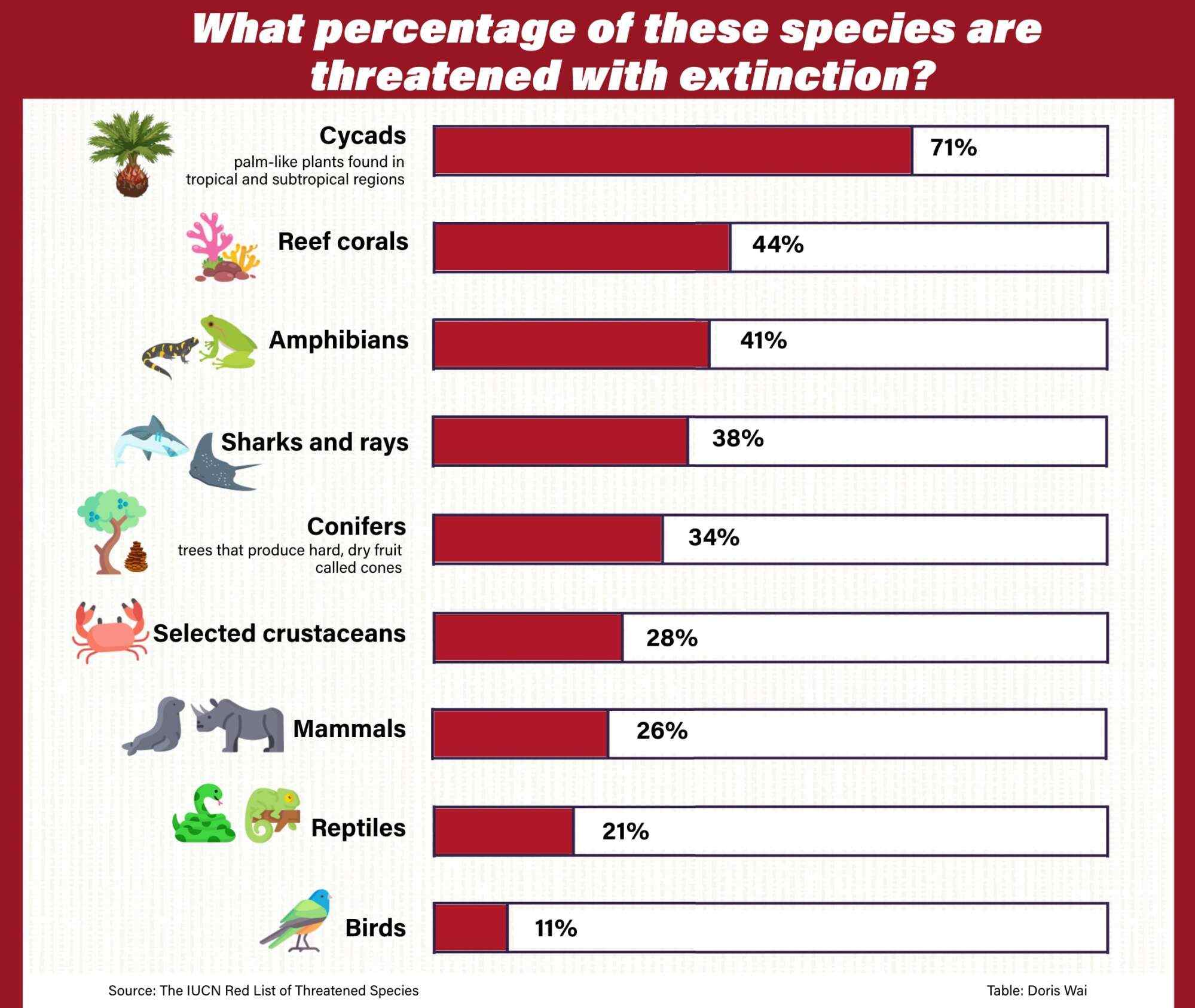
It studied thousands of bird species worldwide and found that “1,256 (11.5 per cent) of the 11,185 species assessed are globally threatened”.
This year’s update focused on regions where the destruction of tropical forests poses a growing threat to birds.
In Madagascar, 14 species were newly classified as near threatened and three others were labelled vulnerable.
Five more bird species were found to be near threatened in West Africa, as well as one more in Central America.
The report also mentioned a positive development. The green turtle is no longer endangered, it said, citing “decades of sustained conservation action” that saw its population recover by 28 per cent since the 1970s.
Nicolas Pilcher, the executive director of the Marine Research Foundation, said this success should spur action, not complacency.
“Just because we have reached this great step in conservation, [it] isn’t a reason to sit back and then become complacent,” he said.
How does the IUCN decide if an animal or plant is threatened?
The IUCN decides whether a species is threatened based on five criteria: how rapidly its numbers are declining, its geographic range, whether its existing population is already very small, whether it has a very small distribution or lives in a restricted area, and how likely it is to die out completely.
According to the IUCN, 48,646 species are threatened with extinction, which represents 28 per cent of all assessed species (see chart). In total, 172,620 species have been assessed for the IUCN Red List.