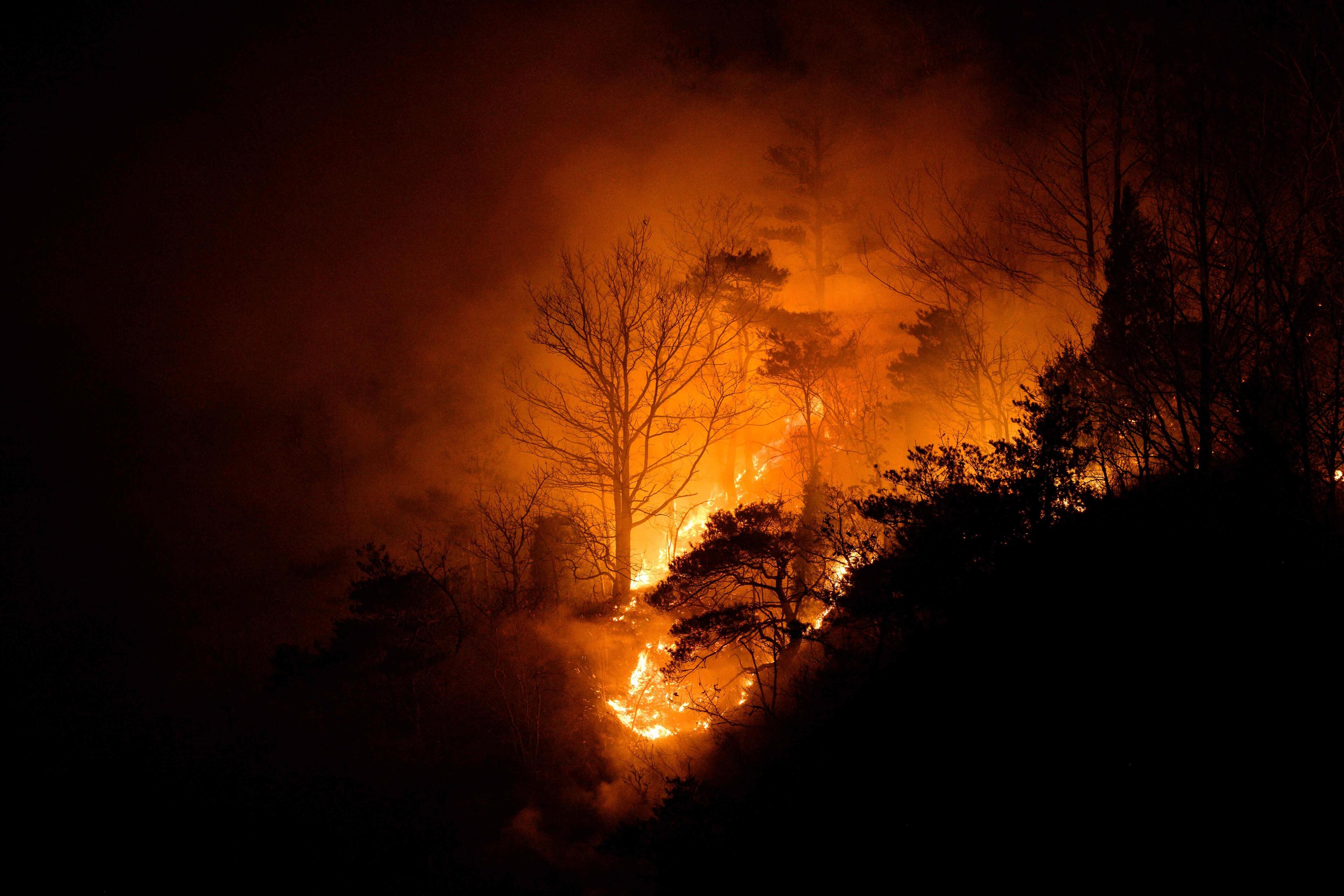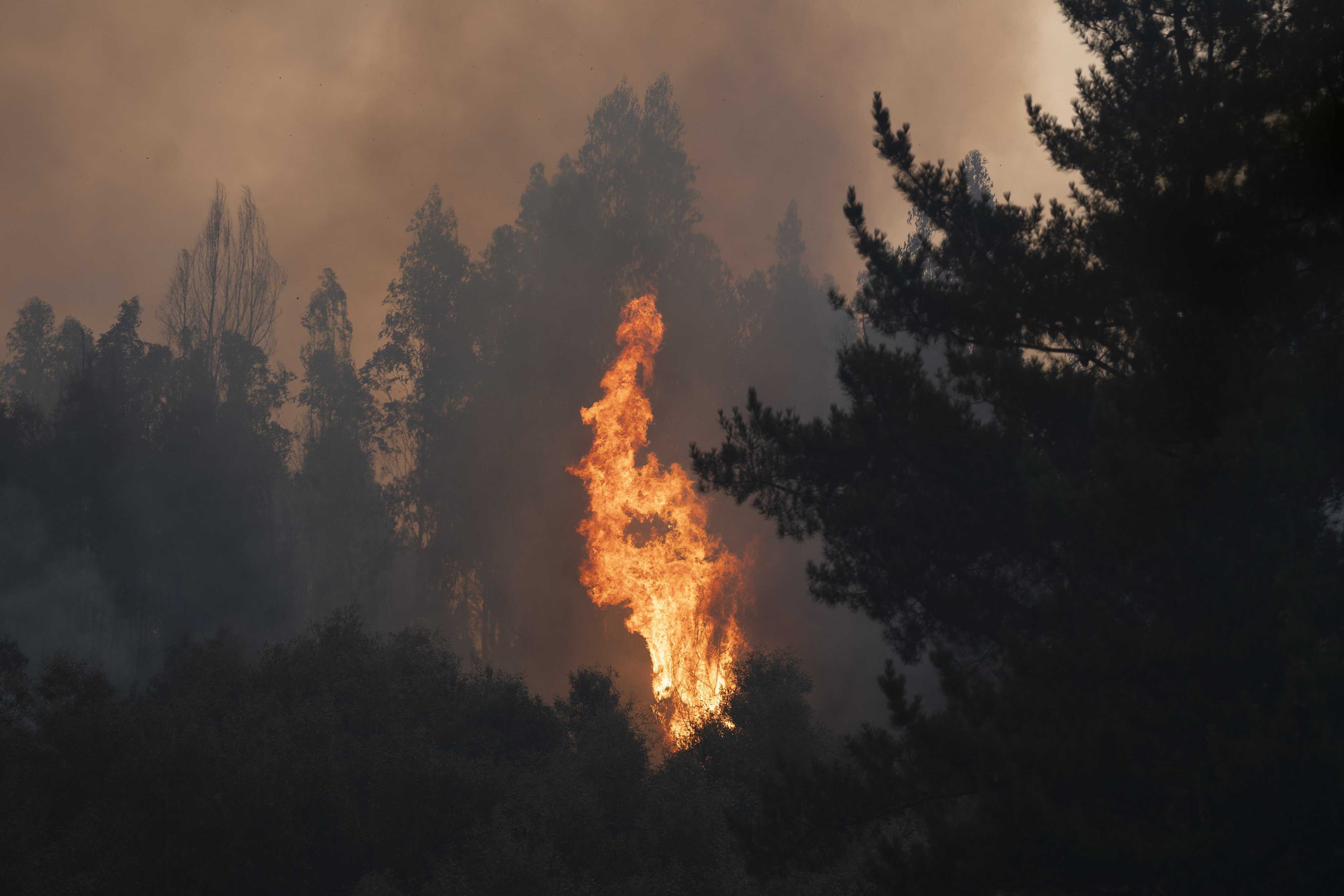
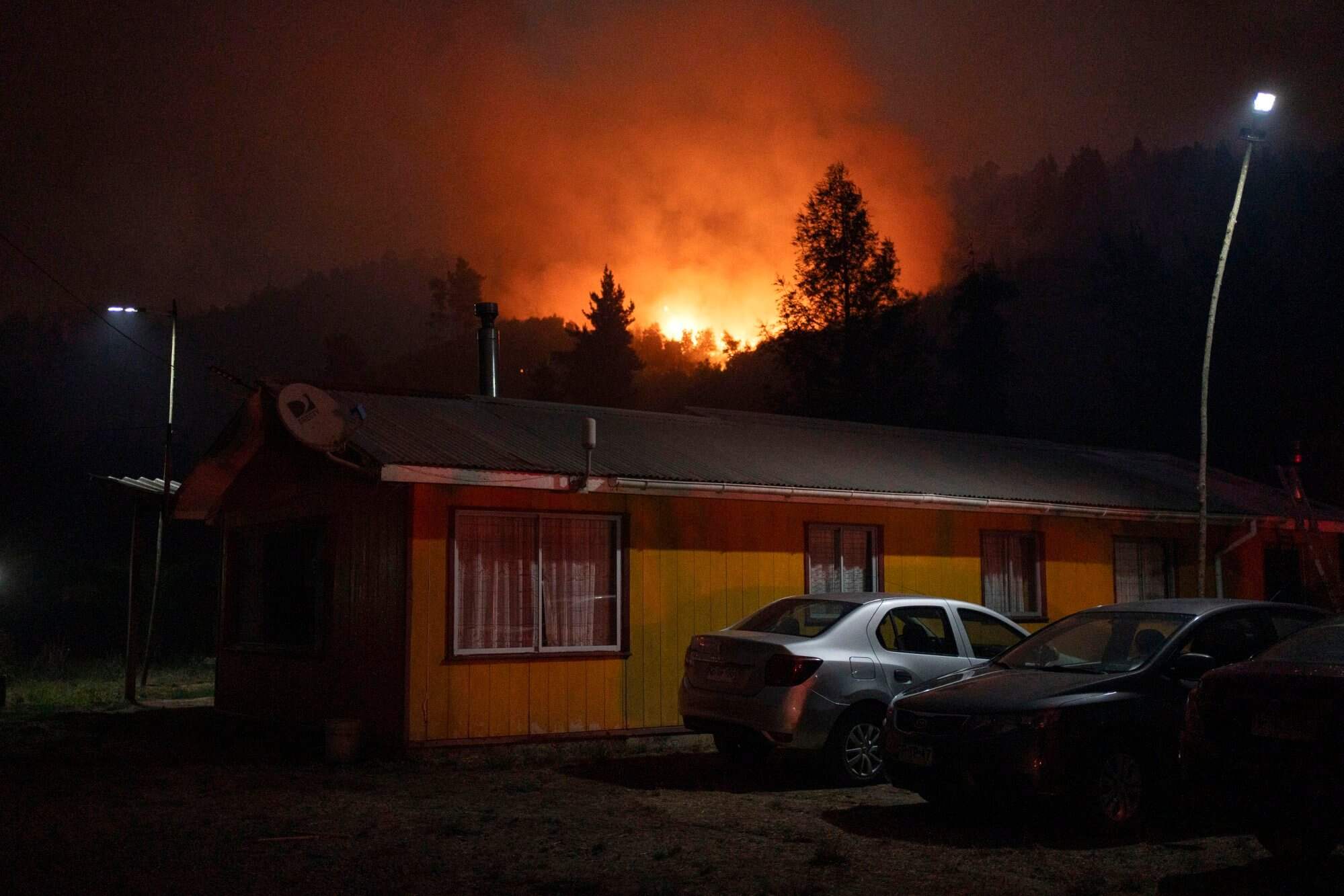
Wildfires in central and southern Chile raged for a third day on Monday, killing at least 20, scorching thousands of acres of forest and wiping out entire towns. The death toll is expected to increase.
Chilean President Gabriel Boric declared a state of catastrophe in the country’s central Biobio region and the neighbouring Nuble region, around 500km (300 miles) south of Santiago, the capital.
Fanned by warm temperatures and strong winds at the height of the southern hemisphere summer, the blazes started Saturday in the Nuble and Biobio regions and have since ripped through the area.
Around 1,000 homes have been destroyed or damaged, officials said.
On Monday, Boric said firefighters had managed to contain some of the blazes but that others remained “very active”. New fires had broken out in the Araucania region bordering Biobio.
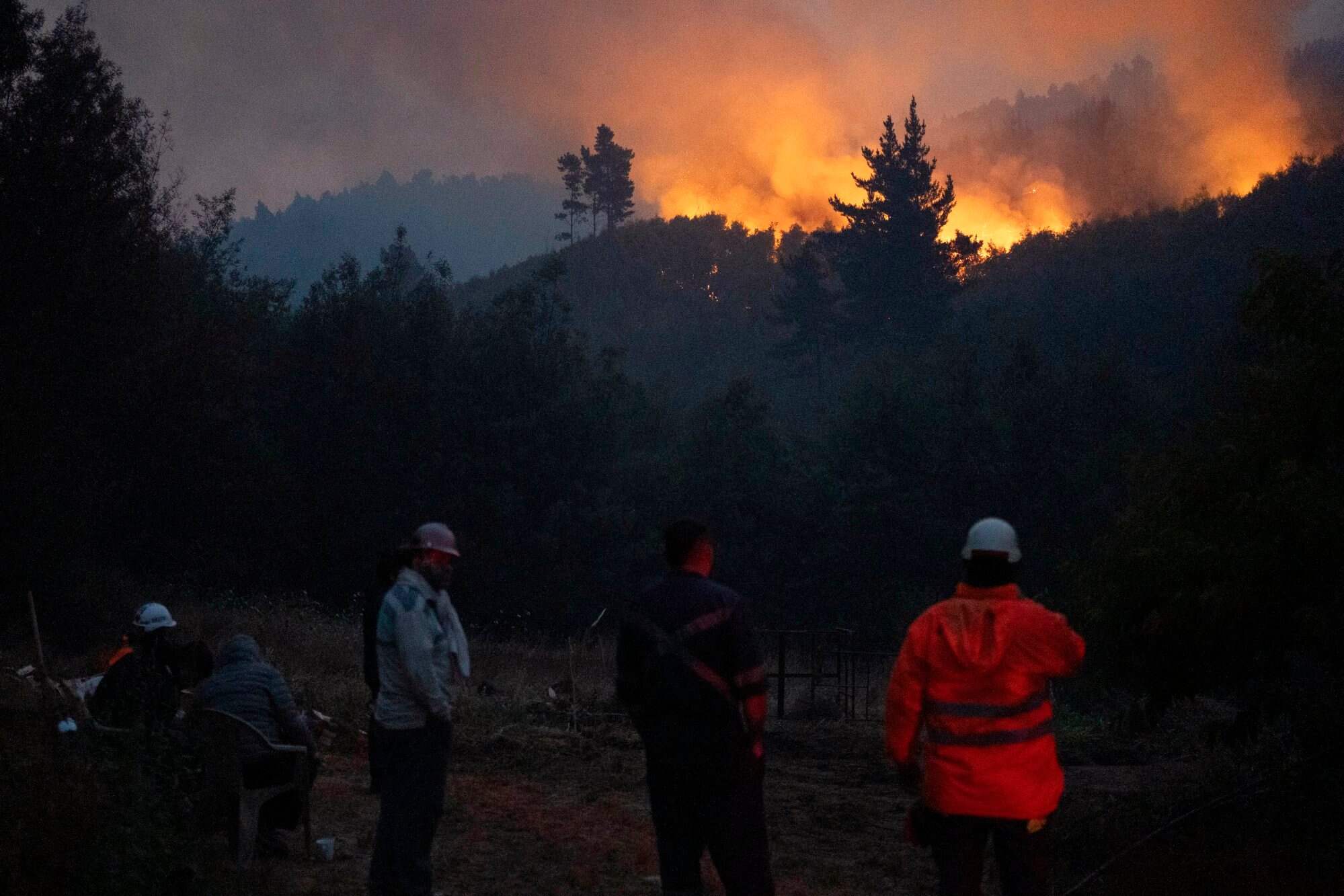
The emergency designation has allowed for military coordination. Soldiers were deployed to Nuble and Biobio, patrolling a desolate landscape of melted cars, twisted metal and houses reduced to rubble.
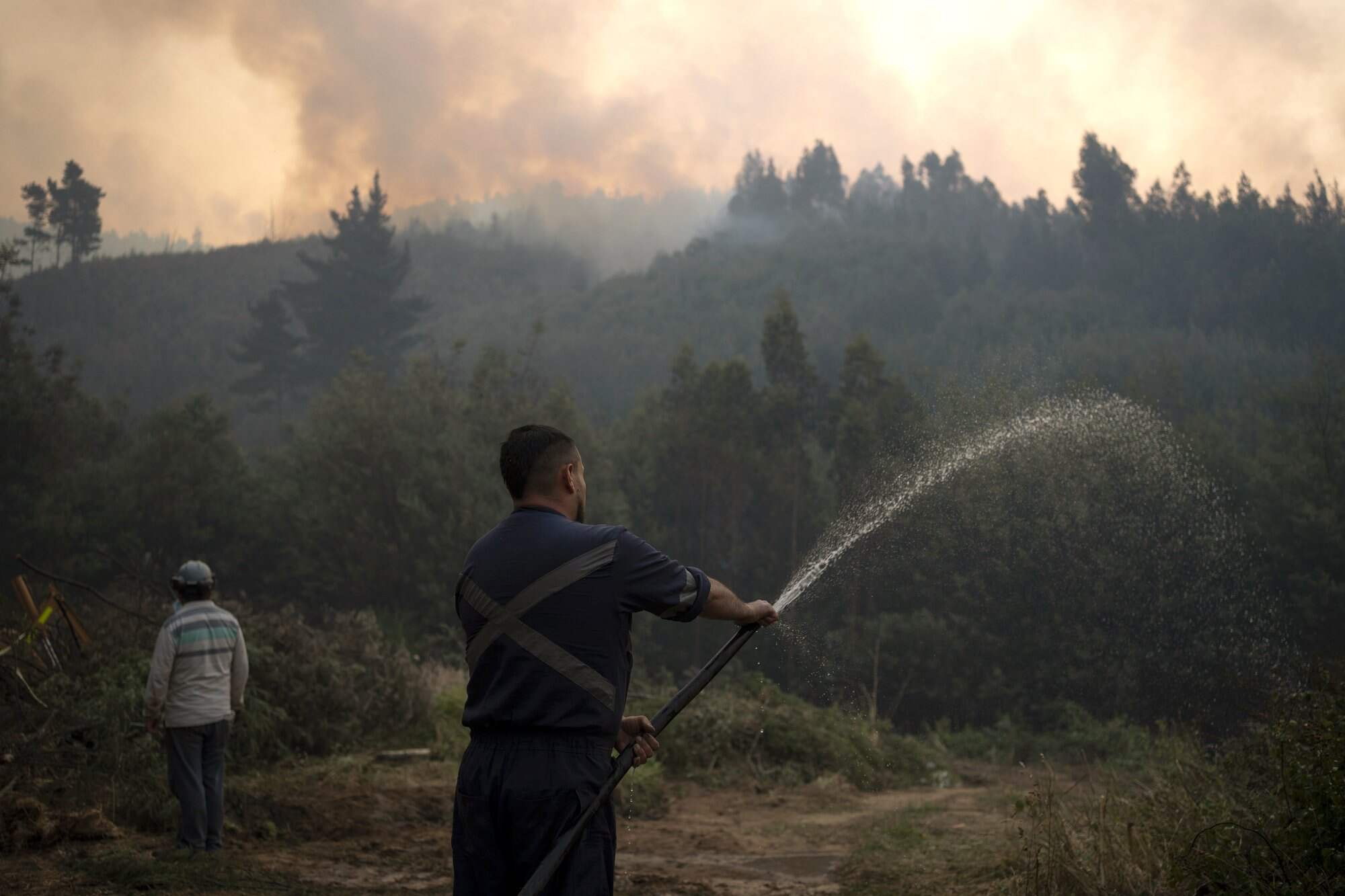
“It was horrible. I tried to wet the house as much as possible, but I saw the flames coming towards my neighbourhood. I grabbed my son, my brother got my dog out, and we fled,” Yagora Vasquez, a resident of the small port town of Lirquen, which was particularly hard hit, told reporters.
Residents returned to what remained of their homes on Monday, digging through the rubble and ash to salvage what they could.
Vasquez said she had chosen to live in Lirquen – on a hill far from the sea – after seeing the devastation wrought by the tsunami of 2010 that killed more than 500 people in the same region of Chile.
But this time the threat came from the forest.
Mareli Torres similarly moved away from the coast after the tsunami, only for her home to be destroyed this weekend in “a wave of fire, not water”.
“This is much worse, much more devastating. In the earthquake the sea surged, there was destruction, but compared to this it’s nothing,” said Torres, 53.
Of the two-storey house she lived in with her family for nearly two decades, only blackened walls and a haze of smoke remained.
More than 3,500 firefighters were fighting the fires in Nuble and Biobio on Monday.
Wildfires have severely affected central and southern Chile in recent years, especially in its warmest and driest months of January and February. Temperatures topped 38 degrees Celsius on Sunday.
In February 2024, several massive fires broke out simultaneously across Chile’s central coastline near the city of Vina del Mar, northwest of Santiago, resulting in 138 deaths, according to the public prosecutor’s office.
Unprecedentedly large areas of the country also burned during the 2016-17 and 2022-23 fire seasons.
A 2024 study led by researchers at the Santiago-based Centre for Climate and Resilience Research found climate change had “conditioned the occurrence of extreme fire seasons in south-central Chile” by contributing to a long-term drying and warming trend.
Elsewhere in southern South America, wildfires have burned more than 15,000 hectares in recent days in Argentine Patagonia.
Additional reporting by Associated Press