If you are interested in joining future Face Off debates, fill out this form to submit your application.
For: Peter Chui Pui-ling, 15, Maryknoll Fathers’ School

Holistic learning is a fundamental principle embraced by many educators, focusing on the comprehensive development of a child, including social, intellectual and physical aspects.
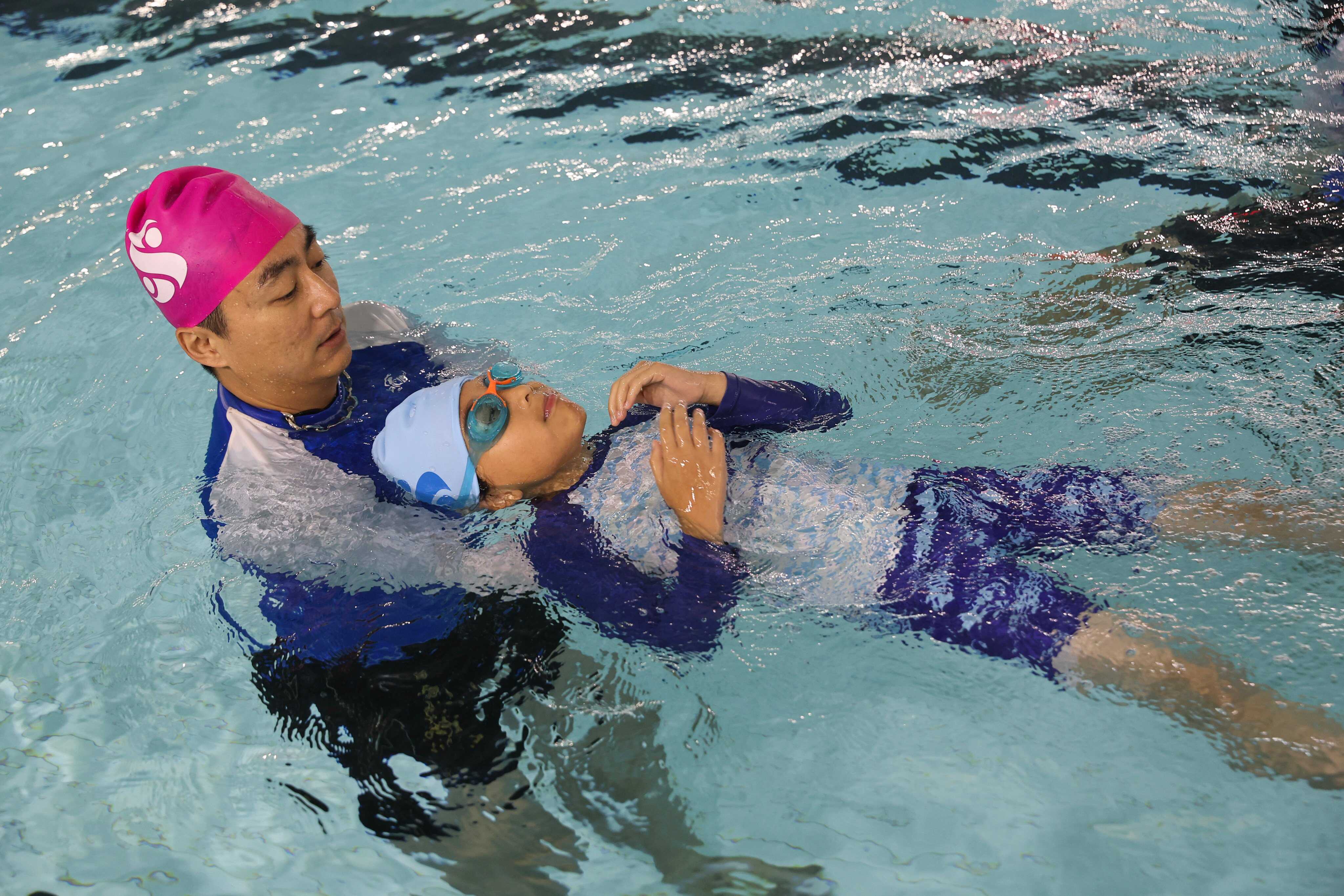
As part of this emerging educational approach, the practice of introducing swimming lessons in kindergarten is key.
Life lessons should be taught from a young age. Taking swimming as a prime example – an essential skill that benefits individuals throughout their lives – it should be introduced early on.
Swimming requires quick decision-making, which helps improve critical thinking skills as children learn to navigate different underwater environments. This type of exercise not only increases body flexibility but also enhances young children’s ability to make instant judgments.
Working under water provides constant, gentle resistance from all directions, encouraging a child’s major muscle groups to work together to propel them forward. Additionally, swimming involves a smooth rhythm of inhaling and exhaling while in the water, which significantly enhances the development of the cardiopulmonary system.
If a child discovers their own interest in swimming, they are more likely to develop a passion for other active sports. Engaging in these activities promotes a healthy lifestyle and fosters lifelong habits, aligning with the goals of a holistic development framework.
Perseverance – a vital skill that helps adults navigate adversity – can be cultivated from a young age through learning to swim. Initially, children may struggle to maintain balance in the water, leading to frustration and a desire to give up.
However, with encouragement from their coaches, they can regain their confidence and rebuild their self-belief. Over time, their mindset shifts, ultimately resulting in the development of perseverance. This valuable trait is accessible to everyone, regardless of the challenges they face.
There are arguments suggesting that swimming may be too dangerous for young children, particularly those in kindergarten. Concerns about safety and the risk of drowning have been raised.
To address these issues, kindergartens should carefully evaluate their instructors’ qualifications and ensure that all teachers are well trained by certified organisations. Additionally, kindergartens must provide a safe environment for each lesson and ensure appropriate supervision.
Against: Valerie Chiu, 16, St Mary’s Canossian College

Swimming can teach children valuable life skills and promote their overall well-being. While some research suggests that kids can learn to swim by the age of four, incorporating swimming into the kindergarten curriculum can be unfeasible, ineffective and even dangerous.
First, the unfeasibility of arranging swimming classes stems from their high costs. Many kindergartens lack adequate swimming pools, and maintaining them can be very expensive. Additionally, without rigorous cleaning, poor hygiene could lead to disease outbreaks, harming the school’s reputation.
Young children typically cannot care for themselves and often struggle to change into their swimming suits and take showers after lessons. Many six-year-olds need help with bathing, according to discussions on online forums.
A study conducted by the Education University of Hong Kong found that 60 per cent of surveyed kindergarten teachers reported feeling “exhausted”. As a result, it is unrealistic to assign teachers the task of arranging swimming classes that involve assisting children with dressing and personal hygiene.
Swimming lessons may place overwhelming pressure on less athletic children, which contradicts the primary goal of kindergartens to encourage exploration and play. Additionally, larger class sizes often result in long waits during practice sessions, ultimately slowing down the overall learning progress.
Some people argue that students have varying abilities in different subjects, such as maths and English. However, it is challenging for students to pursue different paths in swimming, as each stage of their learning requires teacher supervision.
Finally, swimming can be dangerous for young children. Because their muscles and bones are still developing, inadequate supervision by instructors can result in serious injuries that may have lifelong consequences.
Safety should be a top priority in kindergartens, especially as children learn to become more independent and responsible.
Overall, young children who are interested and capable can participate in swimming classes at learning centres that offer small class sizes, often with parental supervision. However, it is advisable not to conduct swimming lessons in kindergarten, as this approach may be counterproductive.