If you are interested in joining future Face Off debates, fill out this form to submit your application.
For: Valerie Shek, 15, Independent Schools Foundation Academy

Kindergartens are places for children to learn and grow; they should not be environments of constant pressure at an age when their brains have barely matured.
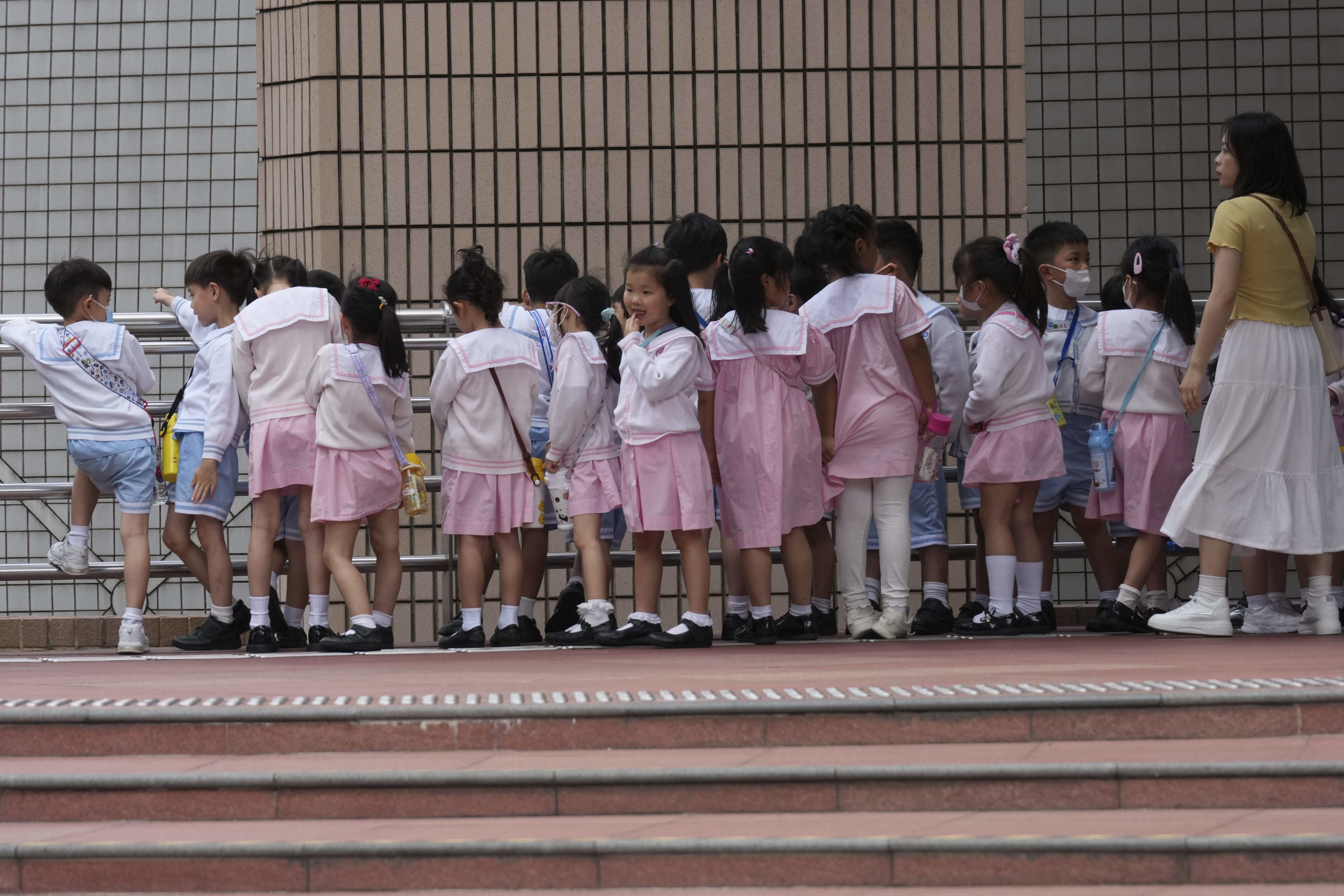
In Hong Kong, kindergartens start at age three and are designed to help children develop social skills, emotional awareness and cognitive abilities through play
and early academic instruction.
At such a young age, children should focus on developing curiosity for the world around them and on social skills – and most certainly not under pressure from formal education lessons.
Forcing children to learn too much content at such a young age can harm their love for learning.
In fact, schools should focus on helping children develop communication skills, creative thinking and, most importantly, confidence. Forcing difficult content on children who have not matured or reached primary school age diminishes their love for learning. Children often start losing motivation when faced with extreme challenges.
Indeed, kindergartens teaching the primary school curriculum would give children a head start. But picture a four-year-old learning information designed for a six-year-old: they would be overwhelmed by the material and lose curiosity when they don’t understand what’s being taught. Kindergartens should be places where children feel safe, happy, and curious to learn, not places where they are anxious about homework or overwhelmed by information.
I think it is also important to note that kindergartens are meant to prepare children for school, and by preparation, that doesn’t mean directly mirroring what primary schools teach.
A Hong Kong Education Bureau report found that children may face learning difficulties when moving from kindergarten to primary school. However, kindergartens should most certainly not turn into primary schools; rather, they should support natural development.
Every child learns and moves at a different pace; we should not force them to learn information that they aren’t ready for.
Although many children are gifted and may be ready for more advanced coursework, they should be supported through gifted programmes rather than forcing the entire kindergarten cohort to learn beyond their developmental stage.
Against: Heer Donda, 16, King George V School

The seedling stage of a plant is not only vital for its ability to grow, but also for the plant to flourish later in its life. Education is no different.
The earliest years of schooling are among the most important not only for developing a child’s basic knowledge but also for nourishing their curiosity, so they are prepared to tackle what comes next. Hence, prohibiting kindergartens from teaching the primary school curriculum may not be the most effective in the long run.
Although banning the primary school curriculum will reduce stress at a young age, it is only a short-term measure that will later create long-term academic barriers, making it harder for students to cope in higher grades. Transitioning from time spent solely in a play-based environment to an institution with high-paced academic demands risks leaving children ill equipped and ultimately under more pressure.
The inclusion of the primary school curriculum is only a fraction of the actual kindergarten content. This amount is minor enough to ensure they are not pressured, but sufficient to provide knowledge that enables open discovery. According to an article by Arizona State University, 90 per cent of the human brain develops before age five, marking the most rapid phase of neural connection.
Since the primary school curriculum may feel overwhelming to many kindergarteners, combining it with a free approach that does not promote stressful, competitive environments would ensure that students are not exposed to pressure but instead can openly develop their curiosity.
The cause of stress in students is not the curriculum itself but the mode we use to convey and test this knowledge.
The moment we recognise that the cause of the problem lies in the structure of education systems, we will be able to bring a long-lasting change that prioritises quality learning rather than performance under pressure.
Every child moves at their own pace, and by banning primary content, we aren’t protecting, but delaying their growth.
Academic burnout isn’t caused by “too much knowledge”, but by a competitive culture in schools that prioritises performance over mastery. Thus, we must evolve our education systems to foster the art of learning rather than the cycle of anxiety.