Have something to say? Send us a letter using this form.
Grounded in reality
Duncan Cheung, Shatin Tsung Tsin Secondary School
My friend – let’s call him Jam – recently argued that nothing actually matters because nothing we know is real. In his view, everything we know as “truth” and “reality” is only known subjectively through our individual perception. Hence, there is no concept of a universal truth.
In Jam’s view, it is highly probable that what we see is just our minds processing a simulation or a hallucination. His doubt is also an idea that has been discussed by some philosophers.
For example, Zhuang Zhou, an ancient Chinese philosopher known as Zhuangzi, wrote a passage called “The Butterfly Dream” about the possibility of erasing the line between the dreamer and the dream. After waking up from his sleep, Zhuangzi writes that he is unsure whether he is a human dreaming of being a butterfly, or a butterfly dreaming of being a human.
Everything and everyone other than ourselves – the ground we walk on and the stars above us – could all be part of our delusion. From this, Jam concludes that our actions are meaningless.
I get where he is coming from. But I find myself unable to align with this pessimistic world view. I refuse to succumb to a philosophy of paralysis. I am brave enough to accept my existence.

Even if my eyes and mind distort things, the material world exists without my permission. As opposed to Jam’s solipsism – the theory that nothing except one’s own mind is real – I think the mind is more objectively real than human consciousness.
My perspective is grounded in materialism, which posits that the universe shapes the mind rather than the mind shaping the universe. Russian revolutionary Vladimir Lenin defended such a view in Materialism and Empirio-criticism, in which he writes that materialism maintains that an objective material reality exists independently of our mind.
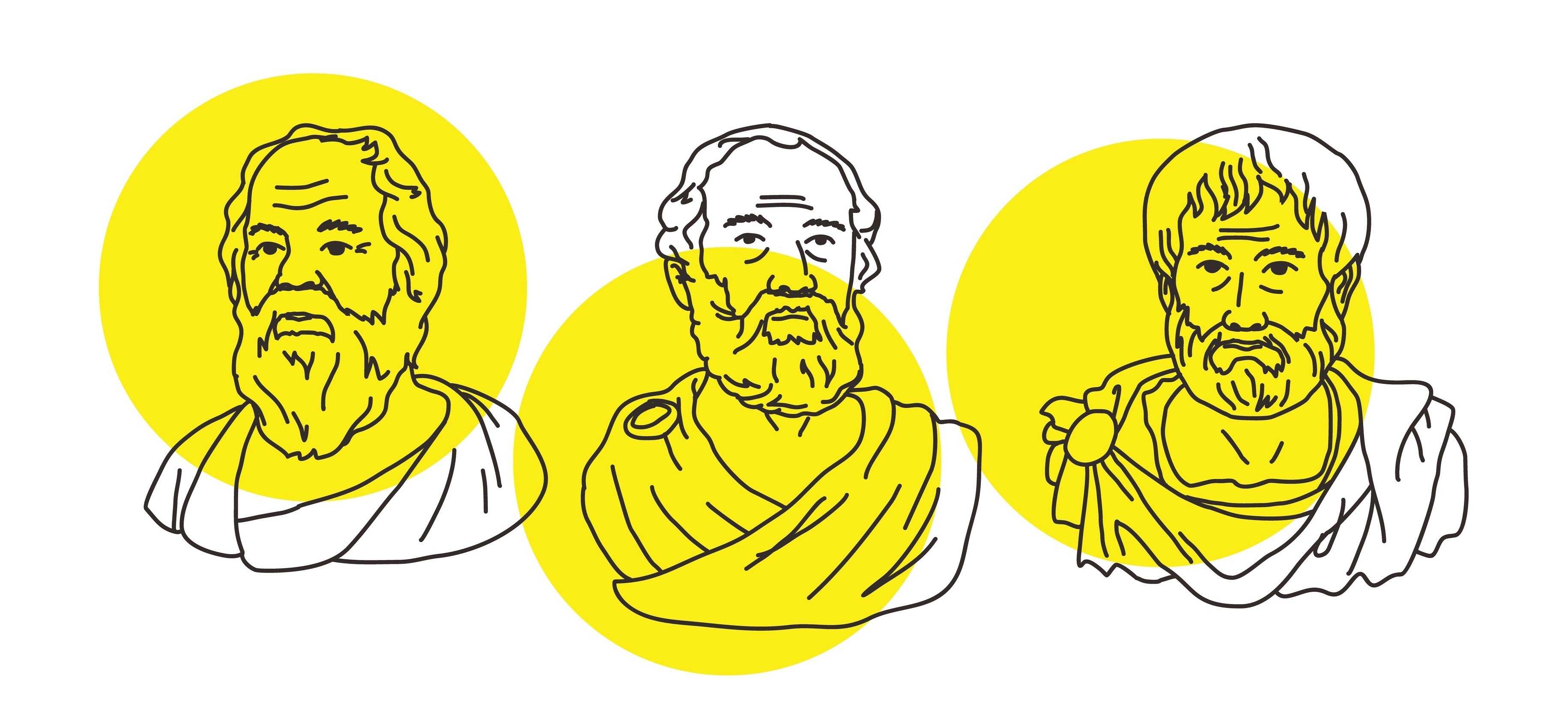
Ancient Greek philosopher Aristotle also wrote that primary substances of the world exist independently of our subjective knowledge. As such, reality objectively exists regardless of our subjective perception.
In my opinion, to get caught up in the pursuit of an unattainable, immaterial truth is meaningless.
As German philosopher Karl Marx states in “Theses on Feuerbach”: “The dispute over the reality or non-reality of thinking that is isolated from practice is a purely scholastic question.” We prove the reality of the world through our actions within it.
I choose to focus on tangible matters like science, politics or the arts – things that for Jam might hold no value as they might not be real.
But I know what matters to me because it is real to me and it is all that I will ever know. I want to travel, read and try new food – I can feel these things. I feel the embrace of joy and the sting of anguish. If I can experience the weight of my emotions and the physical pressure of the world, that is real enough for me.
I would rather find purpose in the material business of being alive than spend my life doubting if the floor beneath me is actually there.
Look up from your phone
Aimee Lau Nga-ying, Pope Paul VI College
I am writing to share my thoughts on a problem many Hong Kong teens face: the lack of true friendship in the digital age. While we are constantly connected on social media, we are actually becoming lonelier.
Nowadays, almost every student has an Instagram or WhatsApp account. We have hundreds of friends online, but how many of them can we truly rely on when we are sad?
The problem is that our interactions have become superficial. We spend too much time worrying about how many likes we get on our photos. We focus on showing a perfect life to others, but we forget how to really share and work with each other. Sometimes, I feel like we are just performing for our followers instead of being ourselves.
There are many reasons for this. First, our school life is extremely busy. Since I started Form Four, the pressure of university entrance exams has become heavier. We have many tests, assignments and extra lessons.

After a long day at school, we are too tired to meet our friends in person. Therefore, we choose the easiest way to socialise: checking our phones. We think that sending a reel or leaving a comment is enough to keep a friendship alive. But relying on phones makes us lose the ability to have real conversations.
The consequence of this is a deep sense of isolation. Have you ever walked past a McDonald’s or a school canteen and seen a group of students sitting together, but no one is talking? Everyone is just looking down at their screens. Even though we are sitting next to each other, we feel miles apart. This lack of communication makes it hard to build a strong bond.
Also, because society is so competitive, we often see our classmates as rivals instead of friends. We are afraid that if we share our study tips, others will get better marks. This culture of rivalry is unhealthy.
To solve this, we must learn how to put down our phones and pick up our feelings. We should join more sports or group activities at school to learn the importance of cooperation over rivalry. When we play a game of basketball together, we have to talk and trust each other. This is much more meaningful than just sending a message online.