




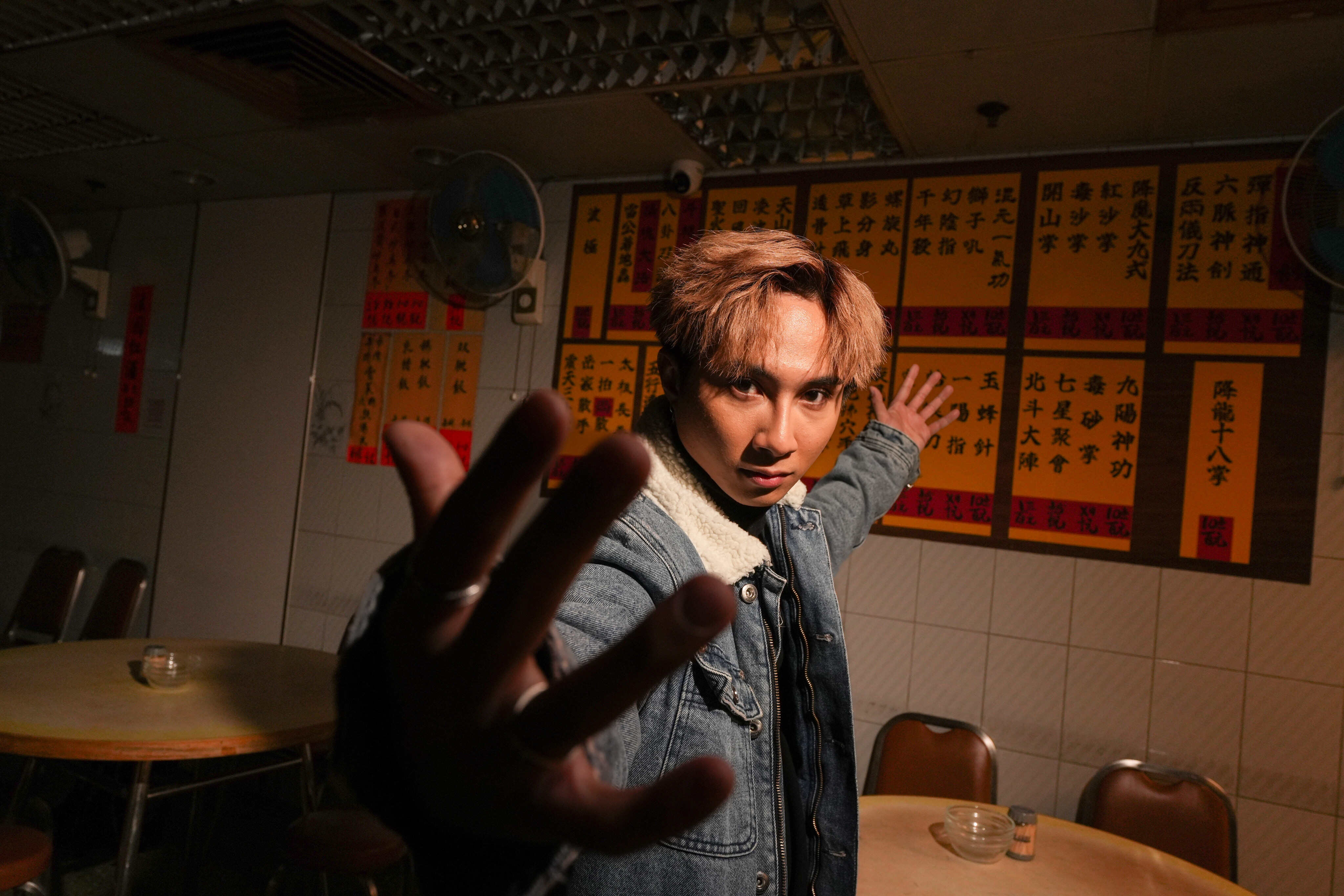
In an old teahouse in Tsuen Wan, one wall has an unusual “menu” of kung fu moves.
This is the setting of “Hoi Lin Teahouse”, the latest song from Hong Kong rapper Billy Choi. He named the song after his family’s dim sum restaurant.
The 27-year-old transformed his family’s teahouse into a kung fu studio in the song’s music video.
Just like how kung fu masters teach their apprentices, Choi’s family has been passing down the craft of running a traditional teahouse.
“The [song’s] inspiration comes from my desire to preserve traditions – whether it’s martial arts, handmade dim sum or teahouses,” the rapper said.
Since debuting in 2019, Choi has been releasing tracks related to Hong Kong’s culture and social issues. His songs tell stories that young people can relate to.
“I’ve written songs about places I grew up ... The main idea is to never forget where you come from,” he said.
Hoi Lin Teahouse
At 15 years old, Choi began helping out at his family’s dim sum restaurant during the summer. There, he learned a lot from how his parents dedicated themselves to the teahouse.
“Some customers would say things to my dad like, ‘Your siu mai isn’t very good,’” Choi recalled.
“But instead of arguing, he’d just nod, saying, ‘Not everyone will like your food.’ That really stuck with me. It’s the same with music.”
He explained: “Not everyone will like my songs, and that’s OK. We don’t need to argue.”
Over the years, he saw the challenges that teahouses face. Many of them do not have enough workers and chefs because most of them are getting old.
Why is Cantopop singer Chau Yan-ting performing at Hong Kong schools?
It also was not easy for Choi to work at the restaurant because his shifts could start as early as 2.30am.
Even during his long shifts, music was always on his mind. Choi would often write lyrics while wrapping takeaway orders.
“Everyone gets distracted, but for me, it was because I was writing lyrics,” he said.
Those moments of distraction gave rise to “Time’s Up” (夠鐘), a song that Choi wrote entirely at the teahouse.
Even though his family’s restaurant is a big part of his life, Choi knew he had to leave his comfort zone to pursue his dream of music.
“I decided I wouldn’t take over the business even though I’d come back to help sometimes,” he shared.
“When you’re chasing a dream, you can’t leave yourself an easy way out.”
Hong Kong’s hip-hop scene
Choi’s most famous song, “Sorry, This is Hong Kong”, is about the shared experiences of living in a high-pressure city. It is also his most personal track as it discusses his childhood struggles.
“Even though my family seemed supportive on the surface, every family has their share of challenges,” he said.
The track also uses sounds from “Gei Hui Feng Yu” (幾許風雨), a Cantopop classic that Choi learned about from a siu mei chef at Hoi Lin Teahouse.
“This chef knew I was into music. One day, while chopping roast meat, he started singing lines from ‘Feng Yu’,” he said. “The way he sang it, with so much emotion while doing his job, stuck with me.”
Looking ahead, his bigger goal is to help the hip-hop scene grow in Hong Kong.
“It’s not mainstream yet,” Choi said.
“I hope that by building my career and showing others it’s possible to make a living through rap, I can inspire young people to pursue this art.”
-
Why this story matters: Many Hong Kong traditions – old tea houses, kung fu and more – could disappear if the younger generation does not preserve them. Billy Choi’s Cantonese raps bring new life to old traditions.
-
Reflect: What song do you think reflects Hong Kong culture?
