Have you ever wondered how Earth’s moon was created?
Some scientists think the moon formed about 4.5 billion years ago after a collision between an early version of Earth and a small planet called Theia. This crash released a huge amount of debris that eventually came together to form the moon we see today.
This is known as the giant-impact hypothesis.
Dark skies all day
When sunlight reaches Earth, it is scattered by gases and particles in Earth’s atmosphere. Blue light is scattered more than other colours because of its short wavelength. That is why our sky looks blue.
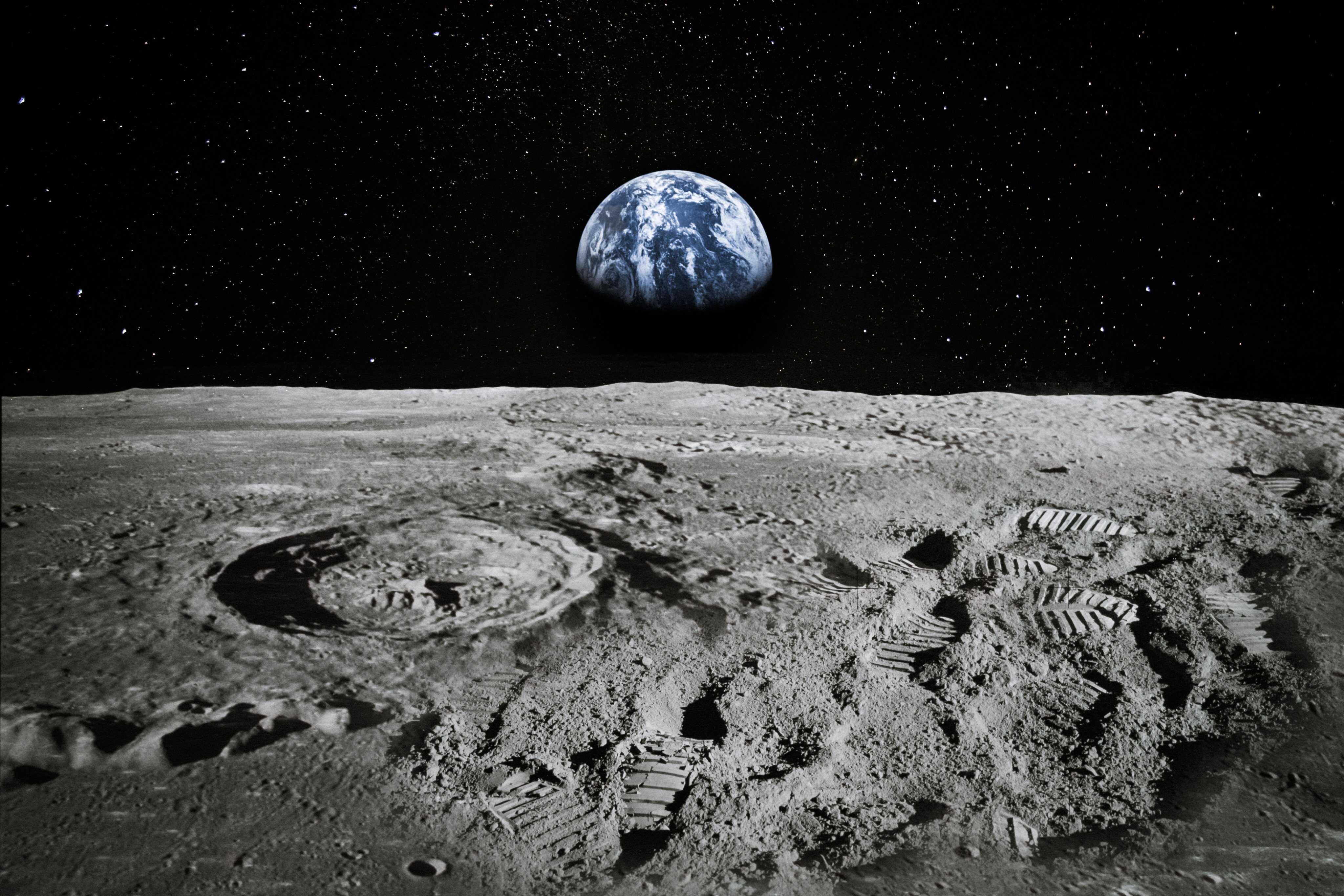
In comparison, the moon has only a thin layer of air. Even when it is daytime there, the sky looks black. Because the sky is pitch-black, you can even enjoy seeing the stars during the day.
It’s hot, then it’s cold
The moon’s outer atmosphere is very thin, and it does not have enough air to hold onto the sun’s heat.
During the day, temperatures on the moon can reach about 120 degrees Celsius. At night, they can drop to around -170 degrees.
The areas near the moon’s north and south poles are likely to experience even lower temperatures because they do not get much sunlight.
What’s on the moon?
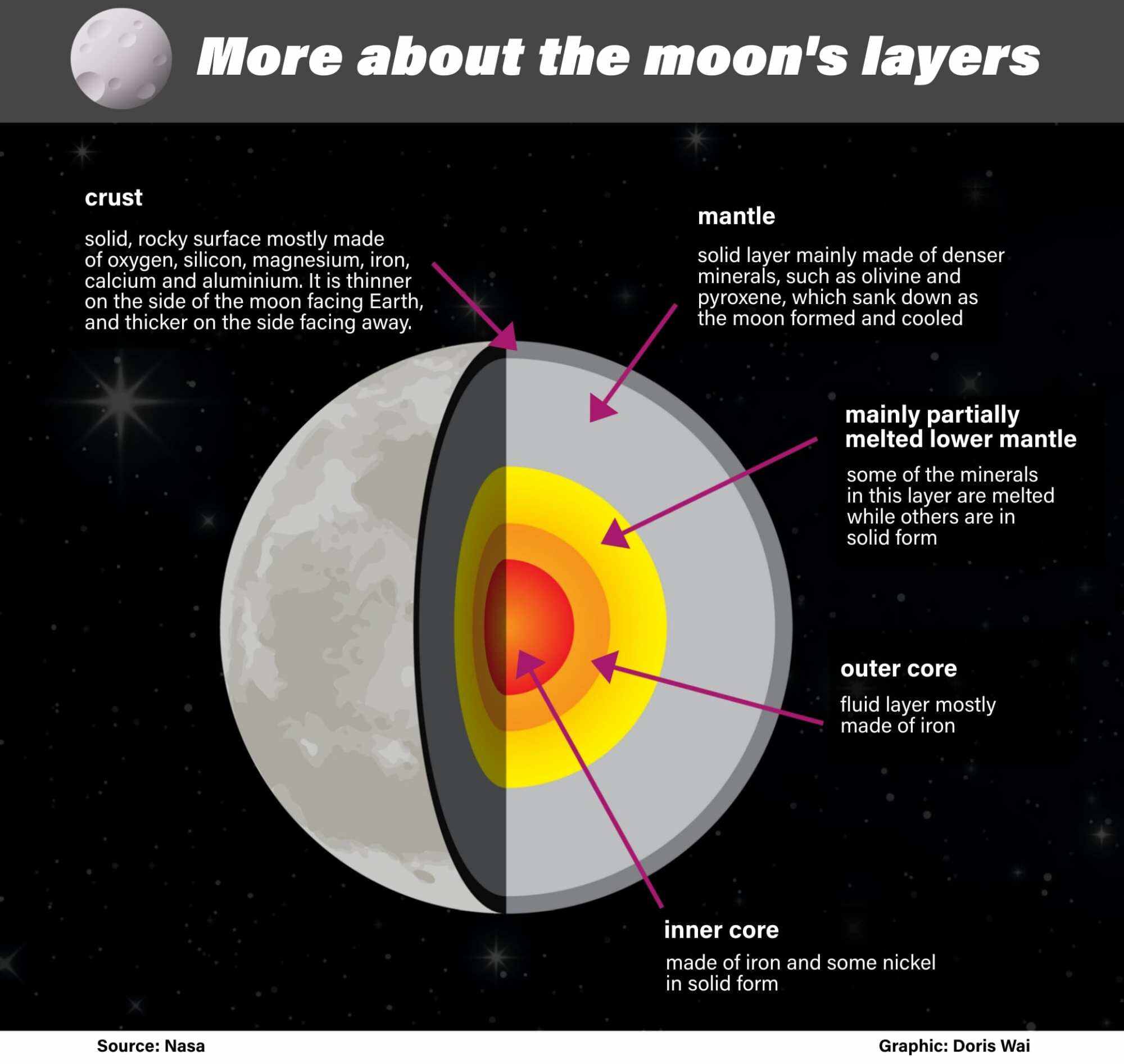
Decades of research has found that the moon has layers. On the outside is a crust. A mantle is below that, and a core is at the centre. Each layer is made of different materials (see graphic).
The moon’s surface has a lot of helium-3. It is released by solar wind from the sun. There is a lack of helium-3 on Earth because our planet has a strong magnetic field that deflects the charged particles from solar wind.
Helium-3 has potential to create energy through nuclear fusion, but its usefulness has not been proven. Some companies are interested in bringing the moon’s helium-3 back to Earth for scientists to conduct more experiments.
Lunar eclipse
A lunar eclipse happens when the Earth is between the moon and sun, blocking the sunlight that usually shines on the moon. This makes its surface appear darker to us when we look at it from Earth.
A total lunar eclipse will be visible from Hong Kong on September 8. If you miss it, you will have to wait another three years for the next one.