With the rise of generative artificial intelligence (AI), chatbots can now produce essays within seconds. These tools have become popular study companions that can respond instantly to almost any prompt.
But writing is more than putting words on a page. It demands creativity, structure and, above all, critical thinking.
So, in an era where machines can churn out paragraphs in seconds, has our relationship with writing changed? And does authentic human writing still matter?
To find out, we spoke with a professor and two secondary school teachers in Hong Kong.
What it means to be human
Roberto Castillo, an associate professor of cultural studies at Lingnan University, cautioned against delegating writing tasks such as reflections or analytical essays to machines.
“If we hand that over to automated writing systems, we lose a fundamental part of what it means to be human ... the ability to reflect and think critically,” he said.
Castillo argued that writing is not just about description, but also about interpretation and self-expression.
“The act of writing is complex – it’s a multilayered engagement with reality,” he noted.
“AI might help us describe reality, but it could also weaken the ways we connect our individuality and our minds to our experiences.”
For him, our consciousness is irreplaceable in writing.
“AI cannot reproduce the emotional and cultural value that human writing carries. That value is tightly bound to consciousness itself,” he said.
Still, he believes AI’s growth will eventually force society to redefine authorship, originality and creativity.
“All of these ideas, which have long dominated cultural production, will be radically transformed by the widespread use of AI,” he said.
“In the next decade, or even just in the coming years, AI will be so deeply embedded in our realities, in our technologies, and in our everyday lives that there will be no real possibility of not depending on it.”
The genie was out of the bottle, and there would be no turning back for AI, he said.
In the classroom
This shift is already visible in schools, with teachers noting that students are increasingly relying on AI for assignments, often copying and pasting responses instead of thinking through problems themselves.
For Li, a secondary school teacher who asked to use only her surname, her concern is that AI dependence may hollow out the act of thinking.
“Students will get used to accepting information at face value and eventually degenerate into robots in human form, while AI grows ever more intelligent,” she noted. “Wouldn’t that be profoundly tragic?”
Still, Li acknowledged that learning to use AI responsibly should be a vital skill.
“I don’t see AI as our enemy,” she said. “I’ve grown increasingly dependent on it myself, both professionally and personally. Asking students to avoid AI is like asking them to abandon modern civilisation.”
As a teacher, she uses AI to help brainstorm classroom activities, draft sample essays and prepare feedback for her students.
For her students, Li believes that AI can support their learning and writing if they use it mindfully.
“They can gain a lot of insights if they use AI in the right way, such as asking AI for feedback, suggesting alternative [or] modified versions of their writing or even asking AI to design [a] supplementary exercise to help them correct common mistakes,” Li explained.
“It’s all about whether students have the right mindset when engaging with AI.”
When it comes to the role of writing in an AI era, she stressed that it was “indispensable training for the mind”.
“It’s about consolidating wisdom and knowledge, generating new insights, and presenting your thoughts to others to make an impact,” she said.
“If one develops a unique voice, humorous, witty or otherwise, that’s the icing on the cake.”
Ansley Lee, an English teacher at Kiangsu-Chekiang College, added that writing also involved imagination and communication – crucial skills for long-term development.
“Writing offers a quiet time for students to consolidate their thoughts and feelings. They can then share their experiences with others, which is essential in daily life,” she said.
Background: writing and generative AI tools
Writing is a way to express ideas and emotions across time and space. From the earliest days of human history, people carved symbols and images into stone and clay to record their lives. As one of humanity’s greatest inventions, writing has played a vital role in preserving knowledge, history and culture.
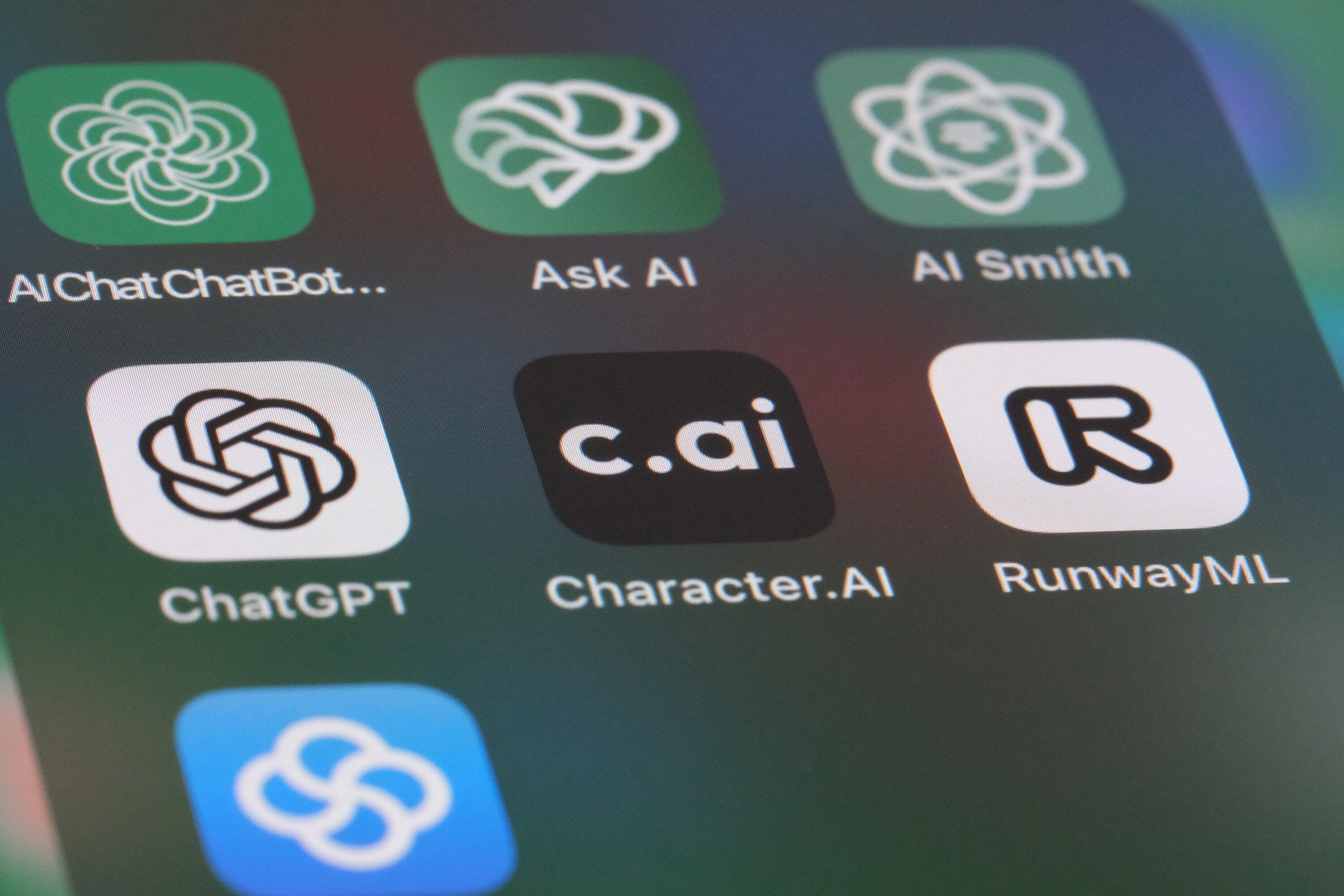
When ChatGPT’s app reached 100 million monthly active users in January 2023, its ability to generate text from user input sent ripples across classrooms, newsrooms and businesses around the world.
As AI continues to reshape the educational landscape, a critical question arises: is writing still important for students in the age of AI? And if so, how will it evolve?