Background: As more generative sound tools appear on the market, their use to “compose” music brings up an array of issues. To regulate, China has turned to strict guidelines and supervision, while the United States appears to be taking a case-by-case route using courts, copyright suits and settlements. This includes suits against AI music platforms Suno and Udio for allegedly exploiting the recorded works of professional musicians, filed only after the tools had already been trained on copyrighted music.
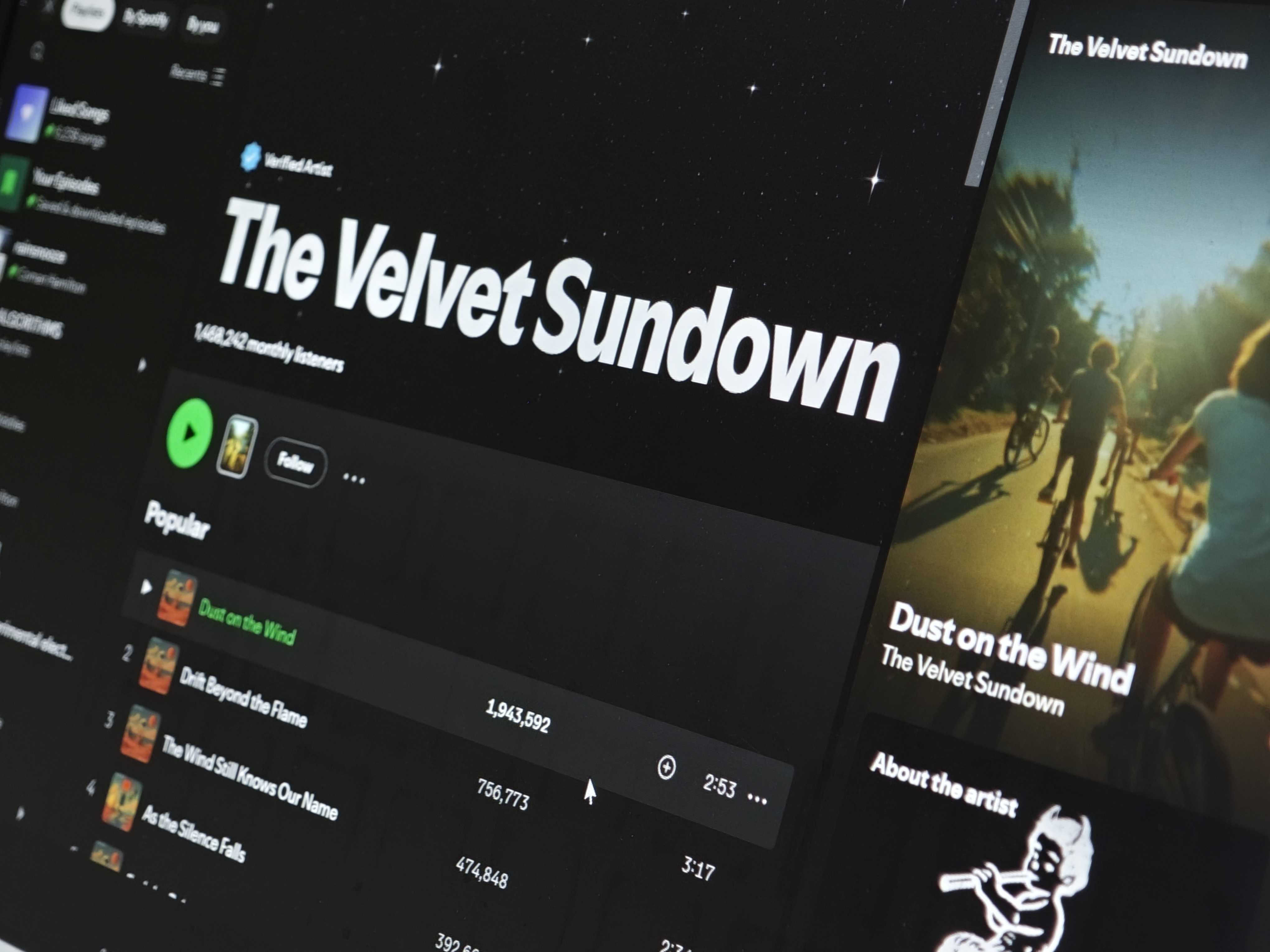
Dressed like 1970s rock stars, The Velvet Sundown may seem to be a real human band. But don’t be fooled – the group has been generated by artificial intelligence (AI).
AI-generated music is exploding. But the United States and China are approaching it in very different ways. The ways these two countries moderate the technology could shape the future of how artists work and how listeners consume for years to come.
“I would describe AI music as a full-on tsunami,” said Josh Antonuccio, director of the Ohio University School of Media Arts and Studies and an AI music industry expert. “It’s really something that everybody is trying to figure out in real time.”
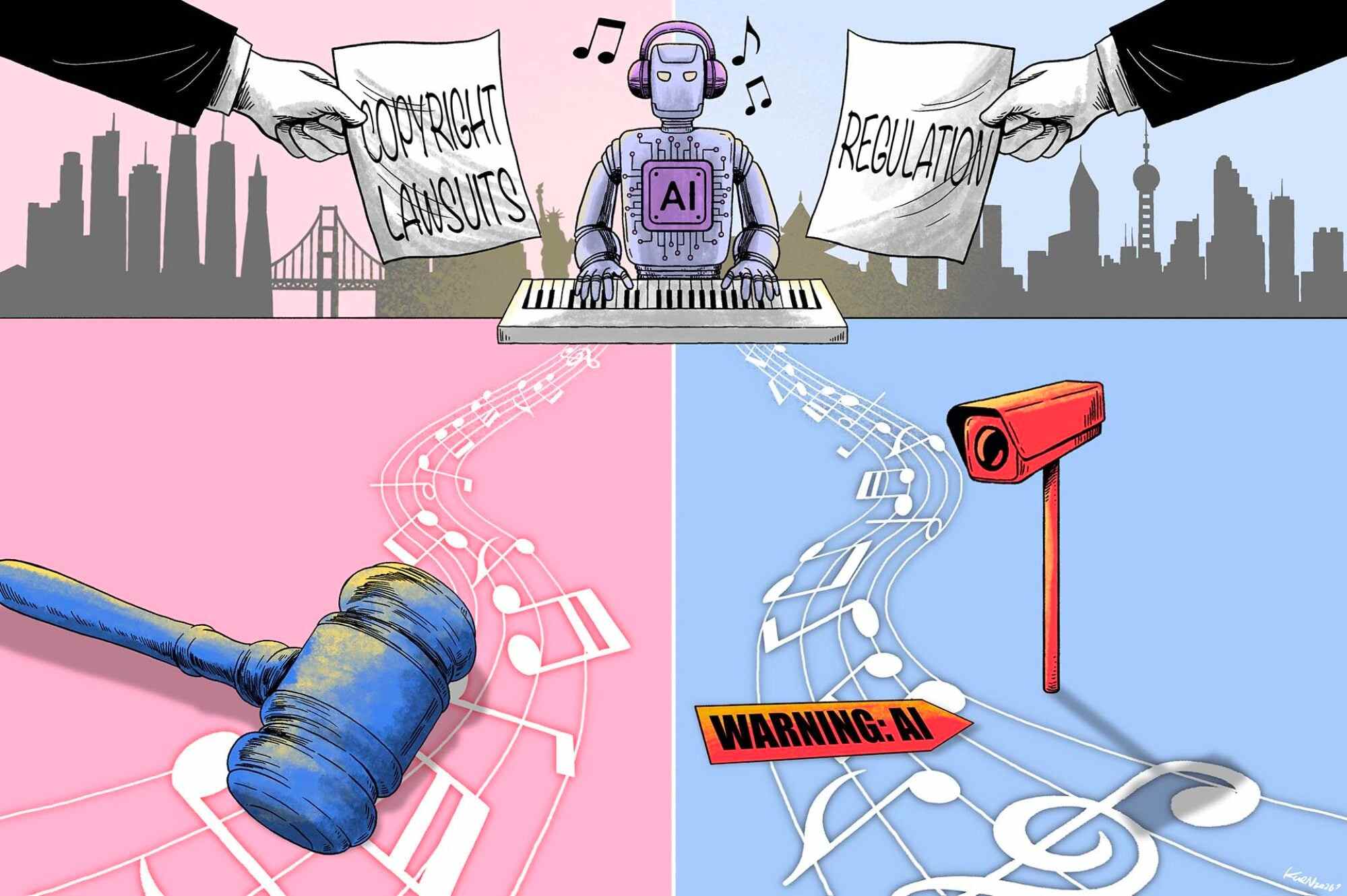
When it comes to a regulatory approach, China is going its usual centralised, top-down route. The US is taking a more typically litigious standpoint with copyright lawsuits and settlements.
China was also more lenient in the AI training phase, but has much stricter government mandates for labelling and transparency.
The music industry’s use of AI is not technically new. But generative platforms have put sophisticated tools in the hands of amateurs and fans, upending the way people make music. Both countries have at least one thing in common: key legal and ethical questions about copyright, creativity and control in this new cultural battleground.
But even here, the approach differs.

State-mandated regulation
China is developing its regulatory framework along two parallel tracks, said Shengcheng Yuan, a Beijing-based generative AI music scientist.
This includes a general governance framework for generative AI content and the existing legal structure for music copyright and related rights.
“China has adopted relatively explicit rules on labelling AI-generated or AI-synthesised content,” Yuan said. “These rules apply across modalities, including audio and music, and emphasise clear disclosure and traceability.”
China’s mandatory rules requiring clear labels on AI-generated content, including music, came into effect in September. The measures align with a wider push to tighten oversight of AI in China. Other regulatory issues include how platforms identify and review AI-generated content, as well as the safety of generative algorithms.
Using litigation to moderate
The United States is facing similar hurdles but lacks the regulatory framework that China is developing. Instead, the country’s rules are being shaped through litigation.
In 2024, Sony Music Entertainment, Universal Music Group and Warner Music Group filed lawsuits against AI “music” generating tools Suno and Udio for allegedly training on copyrighted songs.
Antonuccio, at Ohio University, explained: “They launched to a massive fan base and user base and then were, of course, immediately sued by the major labels, which has led to some striking recent licensing deals.”
The settlements differ, with specifics dependent on the deal. Suno and Warner’s licensing agreement, for instance, lets artists decide whether their work can be used in AI, generating new revenue streams.
The major labels are looking to create “partnerships that by their definition would feel ethical and honouring to the artists that they represent”, Antonuccio said. “Whether anybody likes it or not, this is the future.”
Universal Music announced a partnership with computing chipmaker Nvidia in early 2026. Music discovery, fan engagement and creation tools will be part of the collaboration. Artists such as Taylor Swift and Elton John are signed to Universal.
Explosive growth
This has all called into question whether fans will be able to tell what is AI-generated and what is not.
In a November report, music service Deezer said 50,000 fully AI-generated tracks were uploaded to its streaming platform every day, up from 30,000 in September. And according to a November survey by Deezer and market research company Ipsos of 9,000 people from eight countries – including the US, France and Japan – a massive 97 per cent of listeners were not able to distinguish between human-made and artificial intelligence-generated music.
Not only were most of them unable to tell the difference, but most felt bad that they were unable to tell the difference. When the music of The Velvet Sundown surfaced, so did AI-generated images of the band. Many consumers were left fooled and wondering if this could be a real band.
A social media statement confirmed that the project was “guided by human creative direction and composed, voiced and visualised with the support of artificial intelligence”.