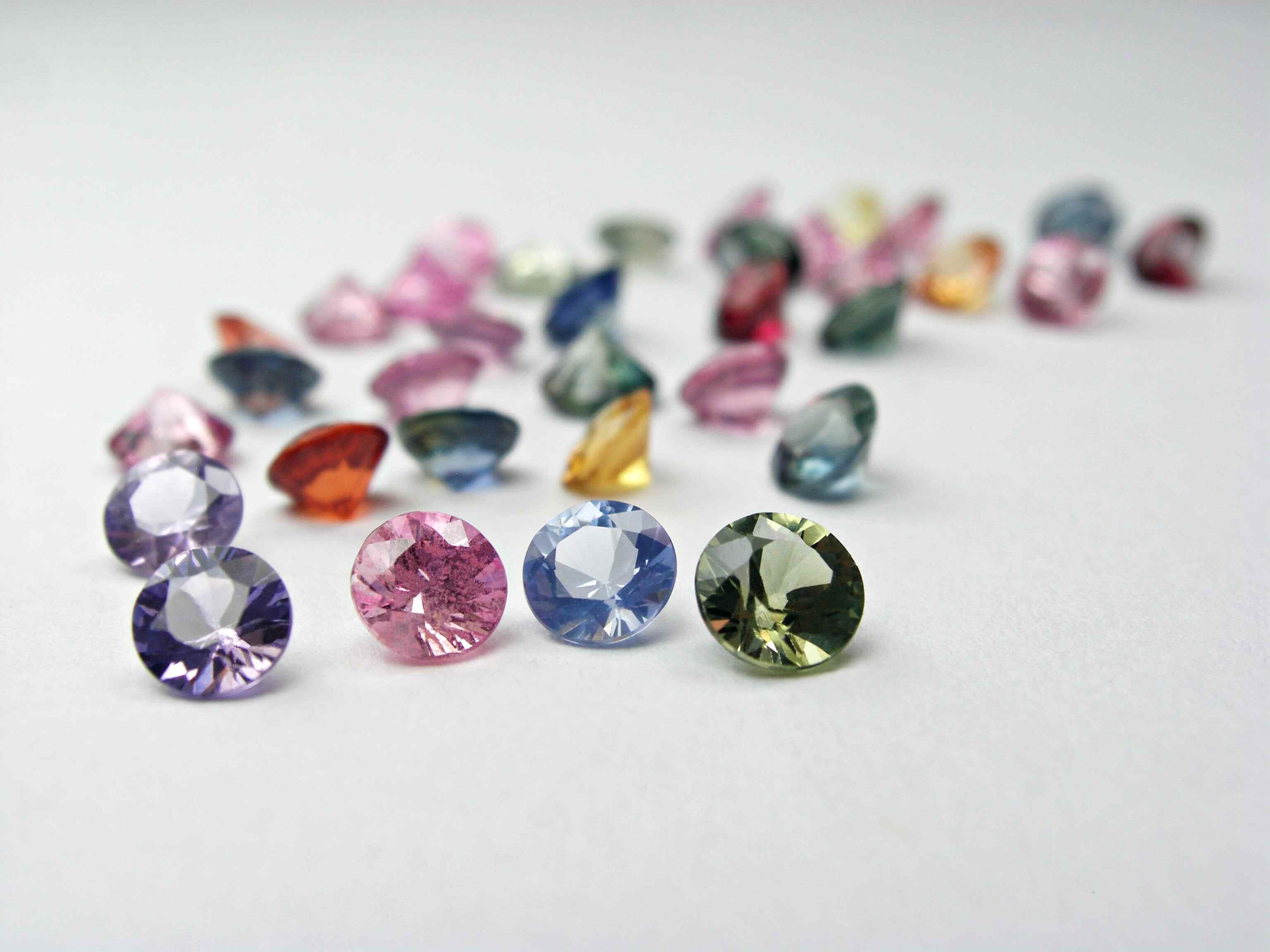
Most people imagine expensive jewellery when they think about sapphire. But did you know this gemstone is also inside many gadgets we use every day?
Far from being just a luxury gem, sapphire is also useful in modern technology and engineering.
Sapphire is a type of mineral called corundum, a compound known chemically as aluminium oxide (Al₂O₃). Over millions of years, natural sapphires form under extreme heat and pressure deep within the Earth’s crust, where aluminium-rich minerals recrystallise into solid corundum.
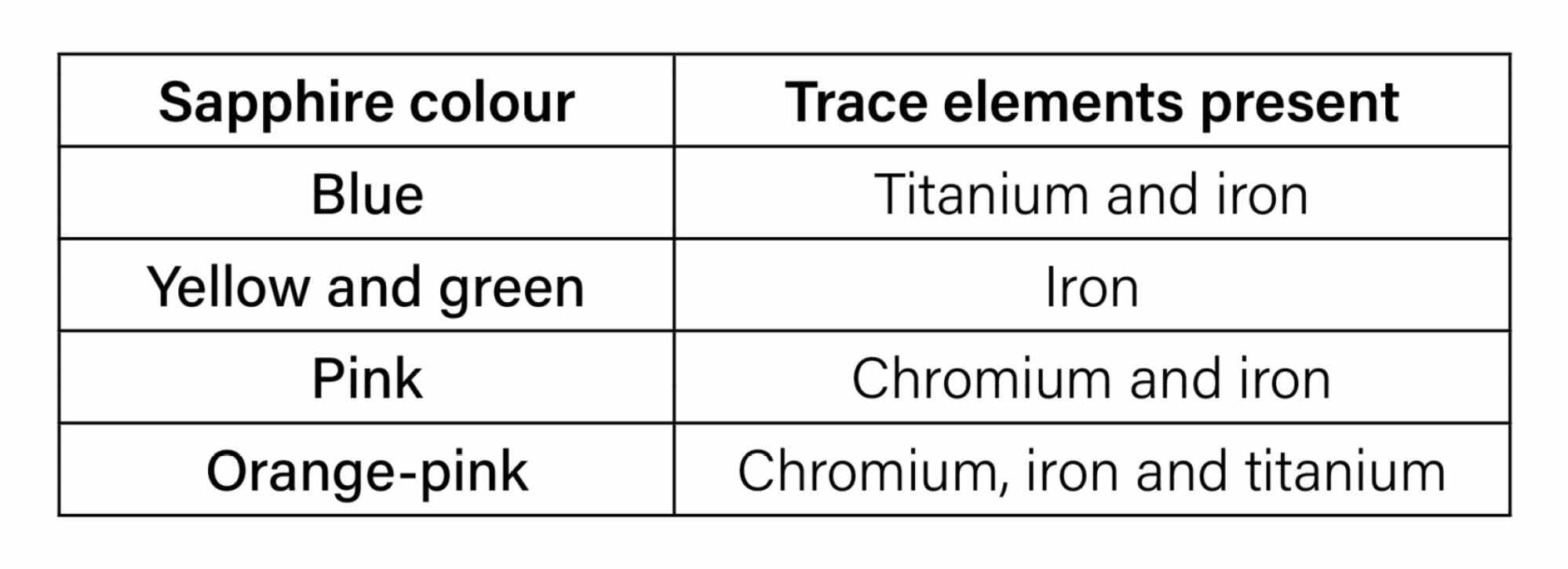
Pure sapphire is colourless and transparent, but the presence of trace elements can create a spectrum of vibrant colours, including yellow, green and pink (see chart). In fact, rubies are closely related to sapphires as they share the same chemical formula (Al2O3). When corundum contains a higher concentration of chromium, it exhibits a red hue and is classified as a ruby.
What makes sapphire so tough?
In a sapphire crystal, aluminium ions (Al³⁺) and oxide ions (O²⁻) are bound together in a highly ordered, repeating 3D lattice. These ions are packed in a specific direction-dependent pattern, making sapphire an anisotropic crystal. This means its properties, like light refraction, vary depending on the direction of measurement.
The exceptionally strong bonds between the aluminium ions (Al³⁺) and oxide ions (O²⁻) give sapphire its remarkable physical characteristics.
-
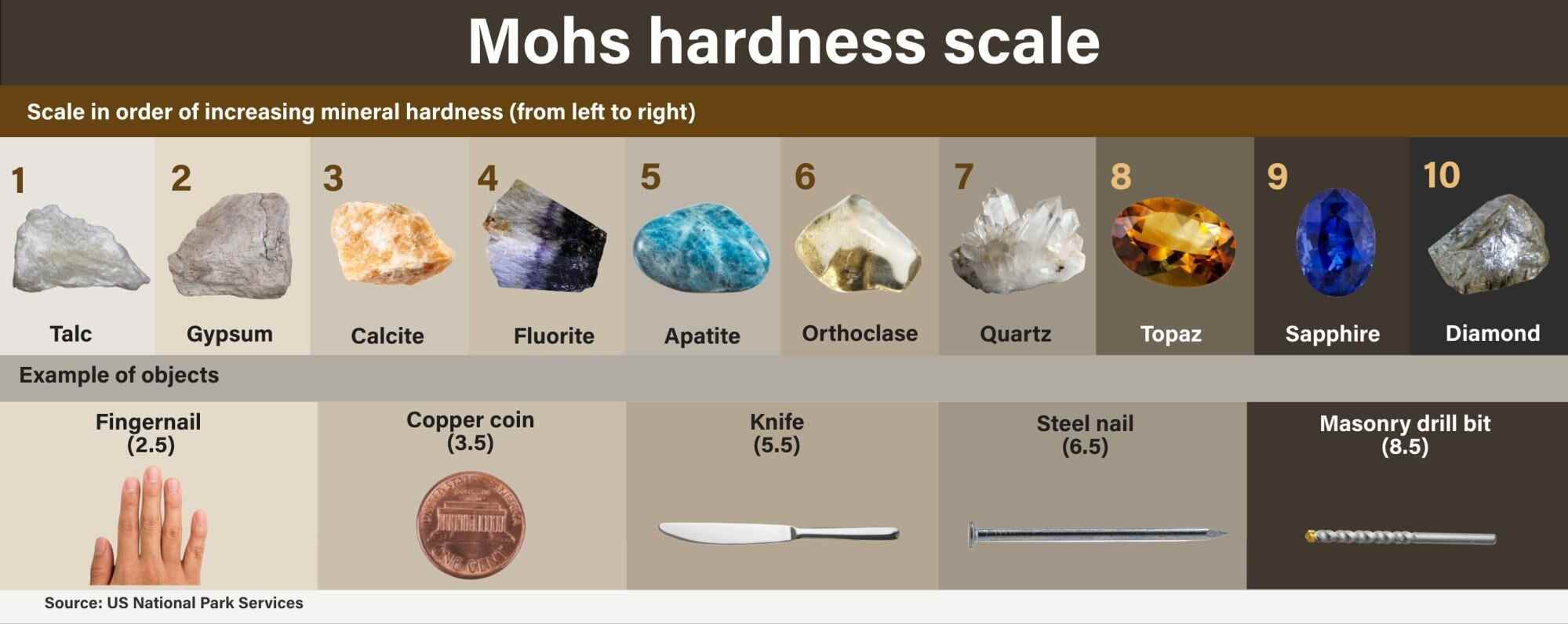
Extreme hardness: Ranking nine out of 10 on the Mohs hardness scale (see graphic) – second only to diamond – sapphire resists surface scratches and abrasive wear.
-
High thermal stability: With a melting point of about 2,030 degrees Celsius, sapphire easily tolerates intense heat without expanding or warping.
-
Electrical insulation: The electrons located on the outermost shells of sapphire atoms are tightly held by ionic bonds, so there are no free electrons to conduct electricity. This makes sapphire an excellent electrical insulator.
-
Chemical inertness: Sapphire’s tightly packed ionic structure is extremely stable, allowing it to resist attack from most strong acids and alkalis at room temperature.
-
Broad optical transparency: Pure sapphire transmits a wide range of wavelengths – from ultraviolet (UV) and visible light to infrared (IR).
From the lab to industrial applications
Natural sapphires are too rare, small and flawed for industrial use. To solve this, engineers grow large, flawless synthetic sapphire crystals in high-temperature furnaces. They are then sliced into ultra-thin discs called sapphire wafers, which are essential for modern technology.
-
Scratch-resistant protective covers: Synthetic sapphire’s extreme scratch resistance makes it a perfect protective material to cover luxury wristwatches, smartphone camera lenses and screen protectors.
-
LED lighting and displays: Sapphire is often used as a base layer for gallium nitride (GaN) films, which are used to make blue and white LEDs, power electronics and high-electron-mobility transistors (HEMTs). HEMTs are key for high-power and high-frequency applications such as satellite systems and electric vehicles.
-
Silicon-on-sapphire (SOS) technology: Thin layers of silicon deposited onto sapphire substrates help reduce electronic interference. This technology is crucial for high-performance radio frequency (RF) chips, which are used in satellite communications and mobile signal transmissions.
-
Optoelectronics: Sapphire’s high transmittance allows UV, visible and IR light to pass through, making it a crucial material for laser diodes, optical sensors and light-transmitting lenses.

Young Post has partnered with Hong Kong Science Museum and Hong Kong Space Museum to encourage your pursuit of science. Every month, the museums answer questions about the world around us, the cosmos and beyond.